London Falling Summary: The Boy, The Balcony, The Lie And The City That Swallowed Him
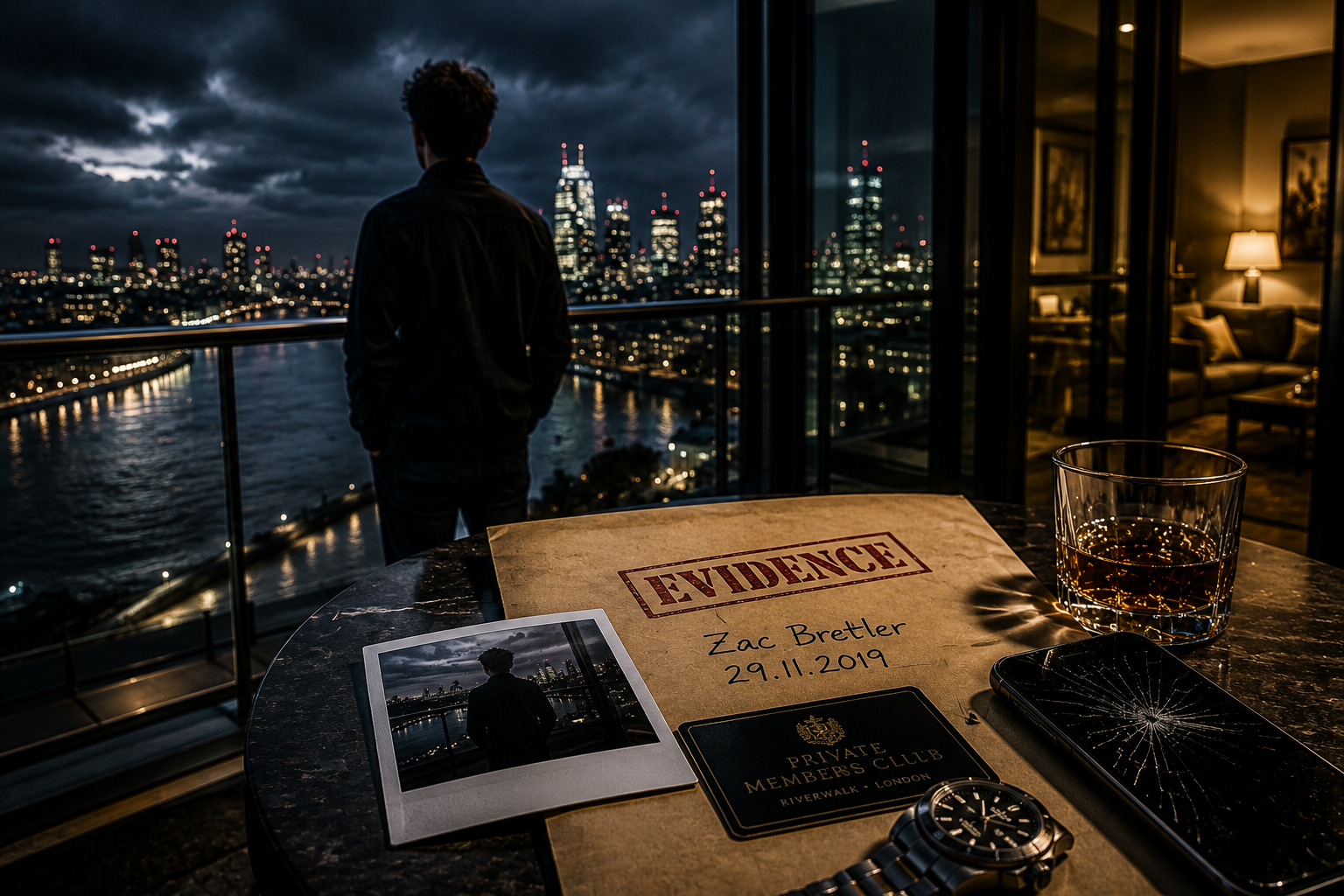
The Teenager Who Invented An Oligarch Life And Fell Into London’s Darkest World
The Teenager Who Invented An Oligarch Life And Fell Into London’s Darkest World
London Falling: A Mysterious Death In A Gilded City And A Family’s Search For Truth by Patrick Radden Keefe.
The book was published in 2026 and expands from Keefe’s 2024 New Yorker investigation, “A Teen’s Fatal Plunge Into The London Underworld.” The published book is described by Penguin Random House as the account of a family devastated by the sudden death of their nineteen-year-old son, only to discover he had created a secret life that led him toward London’s criminal underworld.
The Big Idea Of The Book
London Falling is about a teenager who wanted a more powerful life than the one he had, a family who did not know how deep his fantasy had gone, and a city where invented wealth could open doors to very real danger.
At the centre is Zac Brettler, a nineteen-year-old from a comfortable London family who began presenting himself as someone else: Zac Ismailov, supposedly the son of a Russian oligarch and heir to immense money. That lie was not a harmless teenage pose. It became a passport into casinos, luxury flats, private clubs, suspicious business circles and men whose lives blurred wealth, intimidation and criminality.
The book’s central question is brutally simple: did Zac Brettler kill himself, jump because he was terrified, or die because a corrupt city and a failed investigation left too many powerful people protected?
Keefe does not turn this into a neat murder mystery. He makes it something more disturbing: a story where the emotional truth is clearer than the legal truth. A boy was in far too deep. His parents were left trying to reconstruct a son they loved but did not fully know. London itself becomes part of the case.
The Plot In One Flow
The story begins after the catastrophe, with Zac Brettler’s parents, Rachelle and Matthew, facing the impossible fact of their son’s death.
In the early hours of 29 November 2019, Zac fell from the balcony of a luxury apartment in the Riverwalk complex beside the Thames. He was nineteen. He struck the river wall and ended up in the water. The official question became whether he had jumped to end his life, jumped to escape something, or died in circumstances that could never be properly established.
The first horror for the family was death itself. The second horror was discovery.
Zac had not been living the life they thought he was living. He had been constructing another identity, a richer and more dangerous version of himself. To people in a world of wealth, gambling, private clubs and criminal adjacency, Zac was not simply Zac Brettler. He was Zac Ismailov, the son of a Russian oligarch, a young man supposedly connected to large fortunes and future inheritance.
This matters because the lie was not just social vanity. It gave Zac access. It made him interesting to people who might not otherwise have cared about a teenager. It created the impression that he was close to serious money. And in the kind of London Keefe describes, the appearance of money can be enough to attract predators.
Zac came from a loving, middle-class Jewish family. His parents were not neglectful caricatures. They were present, worried, involved, but they did not understand the full scale of his double life. Zac had difficulties, but they did not experience him as someone preparing to die. According to the book’s public description, his parents believed he had “had his troubles,” but did not seem suicidal; they only later discovered the fictitious alter ego.
This gap between what parents know and what a child hides becomes one of the book’s deepest emotional wounds. Rachelle and Matthew loved Zac. But love is not surveillance. A child can live an interior life behind ordinary family conversations, and the modern city gives that secret life endless places to grow.
Zac’s fantasy had a specific social direction. He was not pretending to be a pop star or a gangster in the crude sense. He was pretending to belong to the world of oligarchic money: Russian wealth, private clubs, high-end gambling, international connections and young men with access to things ordinary people only read about.
This is where London Falling becomes more than a family tragedy. The city is not background. It is machinery.
Keefe’s London is not the postcard city of monarchy, pubs and theatre. It is the capital of dirty money, anonymous wealth, luxury property and social performance. It is a city where a young man can look at glass towers, casinos, private members’ clubs and oligarch culture and decide that ordinary identity is not enough.
Zac wanted to be bigger than he was. That desire is not unusual. Most teenagers invent versions of themselves. But Zac’s invention met a city willing to reward the lie before punishing it.
His path brought him into contact with Akbar Shamji and Verinder Sharma, also known as Dave Sharma. Shamji appears as a slippery, status-conscious figure connected to money and dubious circles. Sharma appears more physically menacing, a man with a reputation and a past that suggests violence. Public reviews identify them as two men who believed, or at least entertained, Zac’s false claim that he was “Zac Ismailov,” heir to great money.
Zac’s ruse depended on momentum. A lie like this must keep moving. The liar has to talk as though money is coming, connections exist, deals are happening and status is real. The danger is that the longer the performance continues, the more other people begin to make decisions based on it.
That is the trap Zac built for himself.
He was not merely lying to impress girls or classmates. He was dealing with adults who had their own motives. If people thought Zac had access to money, he became valuable. If they realised he did not, he became a problem. The lie that opened doors could also provoke anger, humiliation or retaliation once exposed.
This pressure gathers around Riverwalk, the luxury apartment building near the Thames. Riverwalk becomes the physical symbol of the book: glass, height, water, money and danger. It is where fantasy meets consequence.
Zac had moved through spaces that made him feel closer to the person he wanted to be. He told stories about wealth and contacts. He associated with people older and harder than himself. He seemed drawn to the performance of elite masculinity: money, risk, gambling, secrecy and bravado.
But Keefe’s reconstruction makes the reader feel the childishness underneath the performance. Zac was nineteen. That age matters. He was legally an adult, but emotionally still unfinished. He was old enough to make dangerous choices, but young enough not to understand how quickly a fantasy can become a debt.
In the final hours, Zac was at Sharma’s apartment in Riverwalk. Shamji was also involved that evening. CCTV, phone records and later investigative reconstruction become crucial because nobody trustworthy simply explains what happened.
The New Yorker investigation reports that shortly after 9 p.m., cameras captured Zac and Shamji arriving at Riverwalk in Shamji’s red Mercedes. They went up to Apartment 504. Later, Sharma’s daughter Dominique arrived. At around 1:25 a.m., Shamji and Dominique left with Shamji’s dog, Alpha Nero, went to the garage, and talked before leaving separately.
Zac remained in the apartment with Sharma.
That is the terrible narrowing of the story. The social performance, the invented identity, the months of deception, the underworld contacts and the glamour of London all reduce to one young man in one flat in the middle of the night.
Sharma later claimed that he had passed out around 12:30 a.m. after drinking and taking a sedative, and that Zac must have killed himself while he slept. He denied responsibility. But Keefe’s reconstruction raises problems with that account.
The New Yorker investigation reports that Sharma had lied about going to sleep for the night. At 2:12 a.m., shortly after Zac had emailed his mother, Sharma phoned Shamji from the apartment. Shamji was on his way back to Mayfair, but something caused him to turn around and head back toward Riverwalk. At 2:24 a.m., a camera on the MI6 building captured Zac’s fall from the balcony.
That timing is central.
Zac had communicated with his mother not long before he died. Earlier that evening, he had used Rachelle’s credit card to pay for a driving test and emailed her about it. His parents later argued that this did not look like a boy calmly preparing suicide. He had future plans, ordinary errands, practical expectations.
This does not prove what happened. But it complicates the easiest explanation.
The footage apparently showed Zac alone on the balcony when he went over. That matters because it weakens the simplest murder theory: no visible figure pushes him. But a person can jump because he wants to die, or because he is terrified, cornered, threatened, humiliated or desperate to escape. Keefe’s mystery lives in that distinction.
The question is not only was Zac pushed?
The deeper question is: what was happening inside that apartment that made him go over the balcony?
After Zac fell, behaviour by the men around him became suspicious. According to the New Yorker account, Shamji returned to Riverwalk, went to the apartment, left, then walked to the river promenade and looked over the wall near the place Zac had fallen. The later coroner concluded Shamji had almost certainly known Zac had gone off the balcony and was looking for him.
That image is one of the darkest in the entire story: a man looking over the river wall after a teenager has fallen, then leaving without the clear emergency response one would expect if this were simply a tragic accident discovered in real time.
The apartment itself raised further questions. Police did not enter the flat until four days after the fall. When officers inspected it, it was described as immaculate. On the balcony glass partition, near where Zac had jumped, they noticed an area that appeared to have been recently wiped clean, though they could not establish what had been removed. They also found the broken parts of a burner-style phone that had belonged to Zac, suggesting it had hit the floor with force.
The body also raised questions. Zac had injuries consistent with the fall, but the pathologist noted a broken jaw that could not as readily be attributed to it. There was no trace of heroin. The physical evidence did not produce a clean story. It produced ambiguity.
For grieving parents, ambiguity is torture.
A clear suicide would be devastating. A clear murder would be devastating. But an unclear death, surrounded by lies, suspicious conduct, possible intimidation, police hesitation and powerful men, becomes almost impossible to survive. Rachelle and Matthew were not only mourning Zac. They were forced into investigation.
They had to become detectives in the wreckage of their own family.
They examined records. They pushed police. They tried to understand who Zac had become and who had surrounded him. The more they looked, the more the story moved away from a troubled teenager and toward a wider system of moral rot.
Keefe shows that Zac’s fantasy was personal, but it was also cultural. He did not invent his false self in a vacuum. London had already made oligarch wealth glamorous. It had already turned property into a hiding place for global capital. It had already taught young men that status could be performed through cars, watches, clubs, flats and proximity to danger.
Zac’s lie was immature, but the world that rewarded it was adult.
This is where the book becomes morally uncomfortable. Zac was not innocent in the simple sense. He lied repeatedly. He manipulated impressions. He wanted status without substance. He placed himself around dangerous people and seems to have believed he could manage the performance.
But the book does not allow that to become a death sentence. His mistakes do not explain away the conduct of others. His deception does not cancel his vulnerability. He could be dishonest and still be exploited. He could be foolish and still be a victim.
That moral distinction is vital.
The Brettlers feared that institutions treated Zac’s lies as permission to care less. If he had misled people, if he had gone “in over his head,” if he had moved through dangerous circles, then his death could be filed away as self-inflicted chaos. Keefe’s account resists that lazy closure.
The police investigation becomes one of the book’s great failures. The New Yorker reports that officers repeatedly seemed inclined to treat the case as the suicide of a troubled young man. Blood-like smears found in the apartment were apparently not forensically tested because police had already concluded there was no obvious assault. Highly suggestive texts did not produce all the basic investigative steps the Brettlers expected.
This is not just procedural incompetence. In the moral universe of the book, it feels like institutional exhaustion, class deference and perhaps something darker. The system appears far more comfortable with ambiguity than the family can ever be.
That is another major tension. The police can live with uncertainty. Parents cannot.
When officials cannot prove a prosecutable crime, they can close files, decline charges, issue statements, and move on to the next case. But a mother and father do not move on. Their son remains dead every morning. The unanswered question remains alive.
The Crown Prosecution Service eventually declined to prosecute Shamji. According to Keefe’s New Yorker account, the logic was that because the state could not prove an underlying crime, it did not make sense to pursue ancillary charges against someone who might have obstructed the investigation. When the Brettlers sought review, they were denied on the ground that they were not victims.
That detail is almost grotesque.
The parents of a dead teenager are told, in effect, that the system does not recognise them in the way they need to be recognised. Their son is dead. They are searching for accountability. But the machinery of law converts grief into categories, and then tells them the category does not fit.
The inquest later clarified some matters without resolving everything. It stripped away certain ambiguities. The coroner concluded that Shamji almost certainly knew Zac had gone off the balcony, and that when he looked over the river wall he was looking for Zac. The coroner also concluded from testimony and retrieved messages that Zac was obviously scared before he died.
That is as close as the story comes to a final moral verdict.
Zac was scared.
He may have gone over the balcony alone, but he was not simply alone in the wider sense. He was inside a chain of lies, pressure, adult menace and institutional failure. The final physical act may have been his, but the circumstances were not created by him alone.
This is why the book refuses easy genre satisfaction. It is true crime without the comfort of a solved case. It is a family memoir without the healing arc. It is social criticism without a clean policy answer. It is a mystery where the mystery itself becomes evidence of corruption.
The final emotional image from Keefe’s earlier New Yorker piece is devastating. In the summer before Zac died, his family crossed Vauxhall Bridge and called him as planned. He had recently moved into Riverwalk. They looked up at the building and saw him on the fifth-floor balcony, a tiny figure, waving.
That moment changes the whole story.
The balcony was not only the place of death. It had once been a place where Zac stood above London and waved to his family. To them, he was still their son. To himself, perhaps, he was already halfway inside another life. To the city below, he was almost invisible.
The horror is that everyone saw a different Zac.
His parents saw the boy they loved. His dangerous acquaintances saw potential money, deception or liability. Zac saw the person he wanted to become. The police may have seen a troubled teenager whose choices explained too much. Keefe sees all these versions at once, and the book’s power comes from refusing to let any one version erase the others.
The Main Characters Inside The Plot
Zac Brettler is the centre, but he remains partly unknowable. That is the point. He is charismatic, restless, imaginative, status-hungry and self-destructive. He wants to escape the limits of ordinary identity. He wants to be seen as rich, connected and important before he has become any of those things.
His tragedy is that he understands the symbols of power better than the consequences of entering their world. He knows that wealth opens doors. He does not fully understand what kind of people wait behind some of them.
Rachelle and Matthew Brettler are the emotional spine of the book. They are not passive mourners. They become investigators because the official investigation leaves too much undone. Their motivation is not revenge in the crude sense. It is the need for reality. They want to know what happened to their son because grief without truth becomes a permanent second death.
Akbar Shamji occupies the ambiguous middle ground between glamour, deceit and danger. He is one of the men drawn into Zac’s invented identity, and his behaviour after the fall becomes deeply troubling. The book’s public materials and reviews identify him as one of the dangerous figures Zac connected with through his false oligarch persona.
Verinder “Dave” Sharma is the harder edge of the story. He is associated with intimidation, violence and the Riverwalk apartment where Zac’s final moments unfolded. His account of the night does not resolve the mystery. It intensifies it.
London itself is the final main character. The city gives Zac the stage for his fantasy. It offers luxury as theatre, money as disguise and anonymity as protection. It allows a teenager to pretend upward and adults to operate downward, into a world where legality and criminality blur.
The Central Conflict Inside The Plot
The central conflict is between fantasy and consequence.
Zac wants to become someone more powerful than himself. His parents want to understand who he really was. The men around him want money, advantage, control or self-protection. The police want a case that can be processed. London wants to keep selling the illusion that wealth is legitimacy.
Those forces collide in one death.
The emotional conflict is even sharper: how do parents grieve a child whose hidden life they discover only after losing him?
That is what gives the book its force. Zac’s parents are mourning him and learning him at the same time. Every discovery brings them closer to the truth and further from the son they thought they knew.
The Turning Points Inside The Plot
The first major turning point is Zac’s creation of the Zac Ismailov identity. This is where ordinary adolescent exaggeration becomes a structurally dangerous lie. He no longer merely wants wealth. He performs proximity to it.
The second turning point is his entry into circles around Shamji, Sharma and Riverwalk. The fantasy acquires witnesses, expectations and potential financial meaning.
The third turning point is the final night. Zac is left in Sharma’s apartment, phone records contradict accounts, Shamji returns, and Zac goes over the balcony.
The fourth turning point is the family’s discovery of the secret life. Their grief becomes investigative.
The fifth turning point is the institutional failure to provide a clean answer. Police delay, missed forensic opportunities, prosecutorial refusal and legal categorisation leave the parents with knowledge but not justice.
The final turning point is the coroner’s recognition that Zac was scared. It does not solve the case, but it changes the moral meaning. This was not merely a glamorous boy’s reckless end. It was a frightened teenager’s death in a room full of unanswered questions.
The Emotional Journey Inside The Plot
The book begins in shock and moves into dread.
At first, the reader wants to know what happened. Then the question changes. The more Keefe reveals, the less satisfying any single answer becomes. Suicide is too simple. Murder is too difficult to prove. Accident does not fit the emotional pressure. Corruption explains the atmosphere but not every fact.
The emotional journey is therefore not from mystery to solution. It is from innocence to contamination.
The family’s world is contaminated by Zac’s lies. Zac’s fantasy is contaminated by real criminal danger. London’s glamour is contaminated by dirty money. The investigation is contaminated by missed opportunities and possible institutional cowardice.
By the end, the reader is left with a brutal feeling: Zac may have died in a way the law cannot name, but that does not make the death meaningless or morally neutral.
The Ending Explained
The ending does not deliver a courtroom resolution. There is no final conviction, no clean confession, no single moment where the case locks shut.
Instead, the ending leaves Zac’s death officially unresolved but morally narrowed. The evidence suggests he was afraid. Shamji almost certainly knew he had gone over the balcony. The men around Zac did not behave like innocent bystanders desperate to save a boy. The police did not investigate with the urgency and precision the circumstances demanded.
The most likely emotional reading is that Zac’s false identity collapsed around him. He had convinced dangerous people that money was coming. When the lie unravelled, he became trapped between humiliation, fear and possible threat. Whether he jumped to escape immediate danger or from unbearable panic, the book strongly suggests he did not die in a vacuum.
The ending changes the meaning of the whole story. Zac’s lie was reckless, but London’s systems made it fatal. His fantasy was personal, but the danger was structural. His parents could not bring him back, but they forced the world to look harder at the darkness around his death.
The Story Anchor
The strongest image is Zac on the balcony, waving to his family from Riverwalk months before his death.
That image contains the whole book. A son waves down at his parents. A family sees ordinary life continuing. A young man stands above the Thames inside a building that represents the life he wants. The same height that makes him feel elevated will later become the place of his fall.
It is not melodrama. It is architecture turned into fate.
If You Only Remember Three Ideas
First, fantasy becomes dangerous when other people start pricing it as reality.
Zac’s invented identity was not just a lie. It became a social and financial signal. In a city organised around wealth, the claim to be rich can attract attention before anyone verifies the truth.
Second, a victim can make bad choices and still be a victim.
The shallow reading is that Zac lied, entered dangerous circles and caused his own downfall. The deeper reading is that foolishness does not justify exploitation, intimidation or investigative neglect.
Third, institutions often prefer ambiguity when certainty would be expensive.
The police did not need to prove every philosophical truth. But the family needed basic seriousness, forensic rigour and moral urgency. The gap between those needs is where the book’s anger lives.
The Sentence That Explains The Entire Book
London Falling is the story of a boy who invented wealth to escape ordinary life, then discovered too late that the performance of power can summon real predators.
Why This Book Matters
The book matters because it captures a modern disease: status without substance.
Zac’s story belongs to the age of Instagram wealth, crypto money, oligarch London, private clubs, luxury flats and identity as performance. He wanted the symbols before the reality. The tragedy is that the city had already normalised that bargain.
It also matters because it asks whether London has become too comfortable with dirty money. Keefe’s broader interest is not crime alone, but the intermingling of licit and illicit worlds and how people drift from conventional morality by degrees, as he explained in a New Yorker Radio Hour interview about the book.
Misconceptions
Most people will treat this as a story about a teenager who lied and got caught.
That is too small.
The book is really about what happens when personal insecurity enters a city designed to monetise illusion. Zac’s lie mattered because London had already made wealth, secrecy and moral ambiguity aspirational.
The internet version will likely flatten the story into a lurid headline: teenager pretends to be oligarch’s son, enters underworld, dies mysteriously.
That version misses the grief.
It misses the parents reading backwards through their son’s life, trying to separate ordinary teenage secrecy from fatal deception. It misses the institutional coldness. It misses the question of whether modern London has become a place where money can distort not only behaviour, but attention, policing and truth itself.
The Taylor Tailored Interpretation
The Taylor Tailored reading is this: London Falling is a warning about borrowed status.
Borrowed status is power you do not actually control. It is the rented flat, the implied inheritance, the name-drop, the luxury signal, the false proximity to money. It can work briefly because people often respond to symbols faster than facts.
But borrowed status creates debt. Eventually, someone asks where the money is, where the connection is, where the proof is. When that happens, the fantasy does not simply disappear. It turns against the person who built it.
Zac Brettler’s tragedy is that he entered a world where everyone was performing, but he had the least protection when the performance failed.
The Real-Life Test
The real-life lesson is not “never dream bigger.”
It is sharper than that: never build an identity whose maintenance requires escalating deception.
In careers, this means do not exaggerate competence until you are trapped by expectations you cannot meet. In relationships, do not perform confidence while hiding chaos. With money, do not imitate wealth before building stability. In leadership, do not confuse proximity to powerful people with actual power.
The test is simple: if the image collapses, what remains?
If the answer is nothing, the image has become dangerous.
How To Apply The Lessons Without Turning Them Into A Fantasy
Measure behaviour, not image.
Ask what is real, funded, earned, documented and repeatable. Reduce dependence on performance. Do not enter rooms where your only asset is a lie. Do not mistake access for belonging.
Most importantly, notice when admiration becomes hunger. Wanting respect is human. Needing to look powerful at any cost is where the trap begins.
Five Questions To Test Whether You Actually Understood This Book
What did Zac’s false identity give him that his real identity did not?
Why did the Riverwalk apartment matter symbolically as well as factually?
What is the difference between saying Zac made reckless choices and saying Zac deserved what happened?
Why was the police response so central to the family’s suffering?
What does the book suggest about London’s relationship with dirty money, status and truth?
The Final Lesson
The final lesson of London Falling is that fantasy is not harmless when it enters the marketplace of power.
Zac Brettler wanted a grander life. He wanted the world to see him as richer, more connected and more significant than he felt. For a while, the lie worked. Then it reached people and places where lies are not just embarrassing. They are dangerous.
The tragedy is not only that a boy fell from a balcony into the Thames. It is that he first fell into a city where the worship of money had made the fake and the real almost indistinguishable.
