
History: Civilisations, Empires & Turning Points
Explore the people, events and decisions that shaped the past, from ancient civilisations and imperial expansion to conflict, industrial change and social upheaval. Our historical explainers examine causes, consequences and the evidence behind familiar narratives. Discover how historians interpret the past and why some questions remain contested.

Remembrance Day Explained: Why the Silence Begins at 11—and Why Poppies Divide Opinion
Remembrance Day connects a precise moment in 1918 with a continuing debate about how societies remember war. Discover the origins of the two-minute silence, the role of the Cenotaph, the differences between red and white poppies, and why respect for service does not require agreement about every conflict.

Under Siege: The Real Palace of Justice Siege Behind the Netflix Drama
Under Siege returns to Colombia’s Palace of Justice, where a 1985 guerrilla takeover and military response became a national catastrophe. This historical companion explains the attack, the evidence concerning survivors, the disputed Escobar connection and why judgments against a state must be distinguished from verdicts concerning individual officers.

Bonfire Night’s Forgotten Past: Religion, Street Rituals and Whats To Come
Bonfire Night has carried different meanings across four centuries. Explore the rise and decline of penny for the Guy, the foods that survived, and the local customs still shaping 5 November. Announced 2026 events reveal how traditional fires, charity displays and drone shows now share the season.

Guy Fawkes Wasn’t the Mastermind: The Men Behind the Gunpowder Plot
The Gunpowder Plot depended on more than the soldier caught beneath Parliament. Robert Catesby recruited men who supplied property, money, horses and political connections. Discover how the thirteen conspirators worked together, why their family relationships created divided loyalties and how Guy Fawkes became more famous than the man who led them.

The Letter That Helped Foil the Gunpowder Plot
Ten days before the planned attack on Parliament, Lord Monteagle received an anonymous warning. Francis Tresham remains a leading suspect, but the surviving evidence leaves a crucial gap between a plausible motive and proven authorship.

Why the Soviet Union Failed in Afghanistan: Nine Reasons Ranked
Why did a superpower leave Afghanistan without securing the political result it wanted? This episode ranks nine explanations for Soviet failure, beginning with the government Moscow defended and the resistance it could not permanently suppress.
The account follows the role of Pakistan and foreign assistance, the difficulty of holding territory after military operations, and the efforts to adapt Soviet forces to an unexpected war. It also examines civilian suffering, Afghan institutional dependence and Gorbachev’s decision to reassess the commitment against wider priorities.
The final sections test two familiar claims: that Stinger missiles alone drove the Soviets out, and that Afghanistan single-handedly destroyed the Soviet Union. By separating the 1989 withdrawal from the Afghan government’s fall in 1992, the episode explains why ending an intervention and ending a war were different achievements, with different consequences for the people left behind.

Why France Fell So Quickly in 1940: Nine Reasons Ranked
How did France suffer defeat in roughly six weeks when it possessed substantial forces, modern weapons and the experience of the First World War? This episode examines the sequence that turned a German breakthrough into a national catastrophe.
Nine ranked explanations connect the Allied move into Belgium, the Meuse crossings, command delays and Germany’s ability to combine weapons at decisive points. The discussion also gives Allied counterattacks and air operations their place, explains the limits of the Maginot Line and separates the evacuation at Dunkirk from a recovery of the campaign.
The closing sections address the surrender stereotype and the alternatives available to French leaders. Rather than treating German victory as inevitable, the episode shows how opportunities narrowed as decisions fell behind events—and why the military defeat and the political choice of an armistice need to be understood separately.

Why Napoleon’s Invasion of Russia Failed: Nine Reasons Ranked—Beyond the Winter
Napoleon took Moscow, yet Russia would not make peace. This episode explains why that refusal turned a spectacular advance into a campaign whose objectives slipped further away with every mile.
Nine ranked reasons connect the survival of Russian armies, the strain on transport, losses among men and horses, and the decision to wait in Moscow. The retreat then brings those pressures together: exhausted roads, continued Russian attacks, severe cold and the struggle to cross the Berezina. The ranking distinguishes the causes of strategic failure from the conditions that made the final losses so devastating.
The episode also considers what an earlier withdrawal might have changed, why removing winter does not automatically produce a French victory, and how the disaster weakened Napoleon beyond Russia. A clear account of 1812 that gives weather its proper weight without allowing it to explain everything.

Why Afghanistan’s Army Collapsed So Quickly in 2021: Eight Reasons Ranked
How did Afghanistan’s security forces collapse after almost twenty years of international support? This episode moves beyond comparisons of troop numbers to examine the military system those forces actually depended on.
Eight ranked explanations connect withdrawal, contractor support, supply failures, political interference and Taliban negotiations. The analysis shows how isolated defeats could spread across a country when soldiers and officials stopped expecting reinforcement, and why surrender did not necessarily imply support for Taliban rule.
It also addresses the Doha agreement, the claim that Afghan soldiers simply would not fight, and the difficult counterfactual of keeping a foreign force in place. Drawing on official investigations and specialist analysis, the episode distinguishes delaying a collapse from building institutions capable of surviving independently.
The focus is the failure of a system, with room for the courage, mistakes and constrained choices of the people within it.

Why Hitler’s Invasion of the Soviet Union Failed: Nine Reasons Ranked
Germany won enormous battles during Operation Barbarossa, yet the Soviet Union did not collapse. Why did victories that destroyed whole armies fail to bring the campaign to an end?
This episode ranks nine explanations, including Soviet mobilisation, the survival of organised resistance, Germany’s transport problems and the competing demands of Moscow, Ukraine and Leningrad. It distinguishes the damage caused by winter from weaknesses already visible before the coldest weather, and examines why a tank count or a map of territorial gains cannot measure an army’s remaining strength.
The final sections test two familiar arguments: that capturing Moscow would certainly have won the war, and that Hitler alone ruined an otherwise sound plan. A detailed account of the gap between winning battles and forcing a state to surrender, with historical evidence separated from counterfactual possibilities.

Why Russia’s Quick Victory in Ukraine Failed: Nine Reasons Ranked—and Could It Try Again?
Why did Russia’s attempt to defeat Ukraine quickly become a prolonged war? This episode ranks nine explanations, from mistaken expectations about political collapse to Ukrainian battlefield resistance, the defence of Kyiv, air power and the difficulty of keeping an invading army supplied.
It also examines one of the invasion’s most memorable stories: reports that Russian troops brought ceremonial uniforms for a victory parade. What did Ukrainian forces actually claim, and how much does the evidence establish?
The final section considers what could happen next, distinguishing a local breakthrough from a renewed attempt to seize Kyiv. Drawing on military research and reporting checked on 1 November 2026, the analysis explains why Russia’s initial failure does not make future offensives harmless—and why another attempt at rapid victory would still face substantial obstacles.

Matthew Perry’s Struggle During Friends: What We Saw and What He Later Revealed
Matthew Perry’s years on Friends included addiction, serious illness, treatment and periods of recovery. This detailed chronology examines his changing appearance, the injury that introduced Vicodin, his relationships and the cast’s responses. It separates what Perry disclosed from what viewers can only speculate about, including the wedding scenes he filmed while living in treatment.

The Most Expensive Human Errors in History, Ranked
The most expensive human errors often involved much more than one bad decision. This countdown examines eight documented failures, explaining how unit mismatches, concealed losses, misleading tests and weak oversight produced extraordinary bills. It distinguishes company losses from wider economic estimates and asks which safeguards could have interrupted the damage.

The World’s Most Mysterious Disappearances
The world’s most mysterious disappearances left more evidence than their legends suggest. Examine the Mary Celeste, Flannan Isles, Roanoke, Amelia Earhart and Fred Noonan, D. B. Cooper and MH370 through their surviving records. Discover why a plausible explanation can remain unproved, what recent searches established and which findings could genuinely move each case forward.
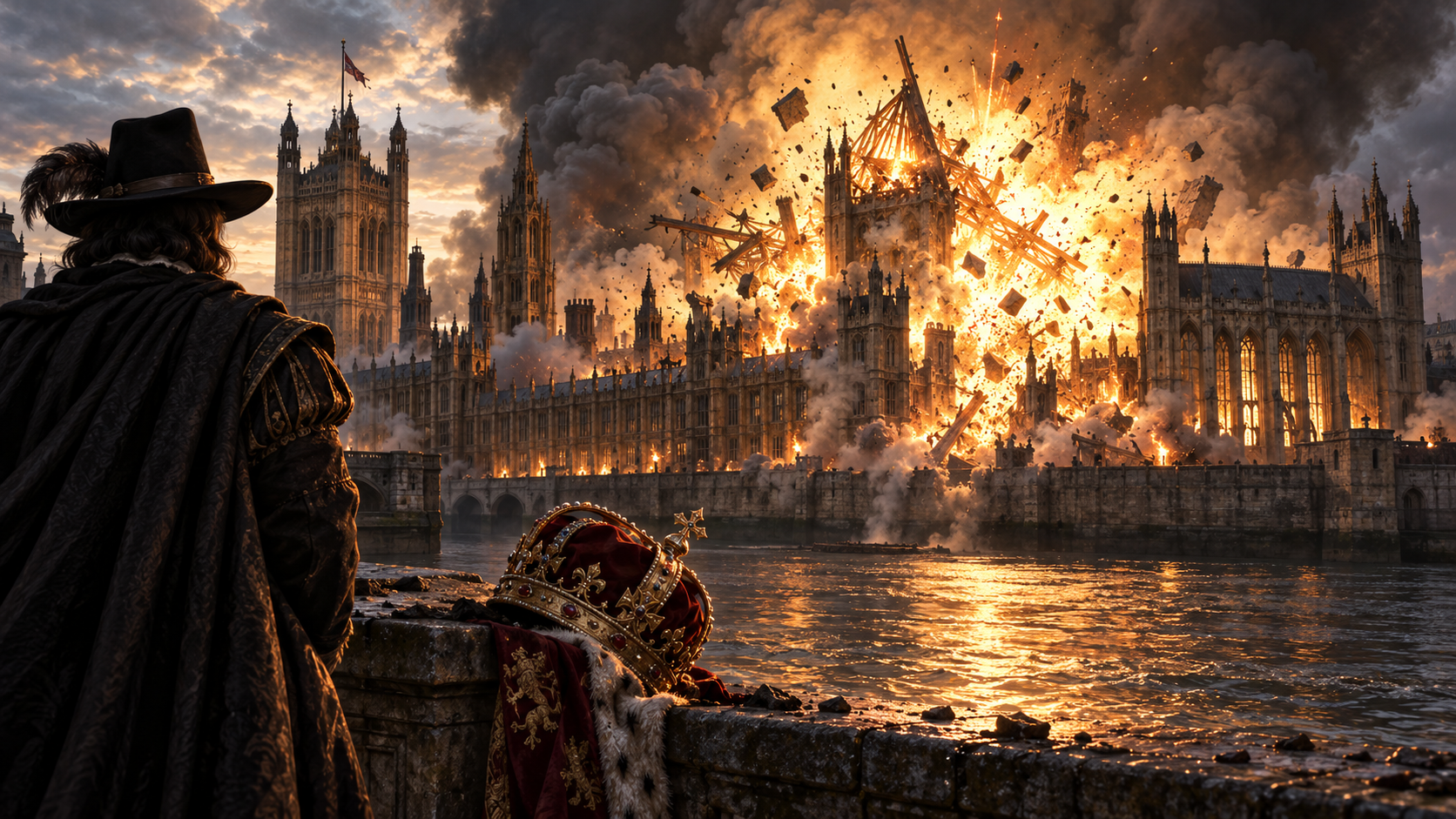
What If the Gunpowder Plot Had Succeeded? The Explosion Was Only the Beginning
The Gunpowder Plot was meant to kill James I and much of England’s leadership—but the explosion was only the first stage. Robert Catesby’s conspirators also planned to seize Princess Elizabeth and launch a Midlands uprising. Explore why the conspiracy failed, what a successful attack might have changed, and the connections with Cato Street, the Brighton bombing and Flight 93’s intended target.

The History of Halloween: What We Inherited, What We Invented and What Comes Next
The history of Halloween brings together seasonal customs, Christian remembrance, migration and commercial reinvention. Discover how turnip lanterns became pumpkins, why people knocked on doors for soul cakes, and how cinema helped shape modern celebrations. Then consider what artificial intelligence, rising costs and more reusable traditions could mean for Halloween’s future.

Why America Hired Nazi Scientists After Defeating Hitler
Operation Paperclip brought German and Austrian specialists into American research after the Second World War. This episode examines why Washington wanted their expertise, how competition with rival powers shaped recruitment, and what happened when Nazi backgrounds threatened to block admission.
From Wernher von Braun and the V-2 programme to forced labour at Mittelbau-Dora and the later investigation of Arthur Rudolph, follow the distinction between scientific achievement, historical responsibility and criminal conviction. Explore the evidence behind one of the Cold War’s most troubling bargains. Follow Taylor Tailored for more evidence-led history.

MKUltra Explained: What The CIA Actually Did—and What The Evidence Cannot Prove
MKUltra’s surviving records reveal covert drug experiments, concealed funding and serious failures of consent. This explainer separates documented abuses from claims about mind control that the evidence cannot establish.

Michael Jordan Almost Rejected Nike. His Decision Created a $7 Billion Empire
Michael Jordan originally wanted Adidas, not Nike. But a $2.5 million endorsement agreement signed in 1984 became the foundation of one of sport's most valuable commercial partnerships. With Jordan Brand generating more than $7 billion annually, the story reveals how a reluctant rookie helped transform Nike, reshape athlete endorsements and build a fortune extending far beyond basketball.

Why America Lost the Vietnam War: The 10 Biggest Reasons, Ranked
America lost the Vietnam War because battlefield strength could not secure a durable South Vietnamese state. This ranked analysis examines ten connected causes, from political weakness and Hanoi’s resilience to attrition, civilian harm and the failed settlement. It also explains why American withdrawal in 1973 and Saigon’s fall in 1975 must be understood separately.