Every Major Assassination Attempt and Plot Against Donald Trump Explained
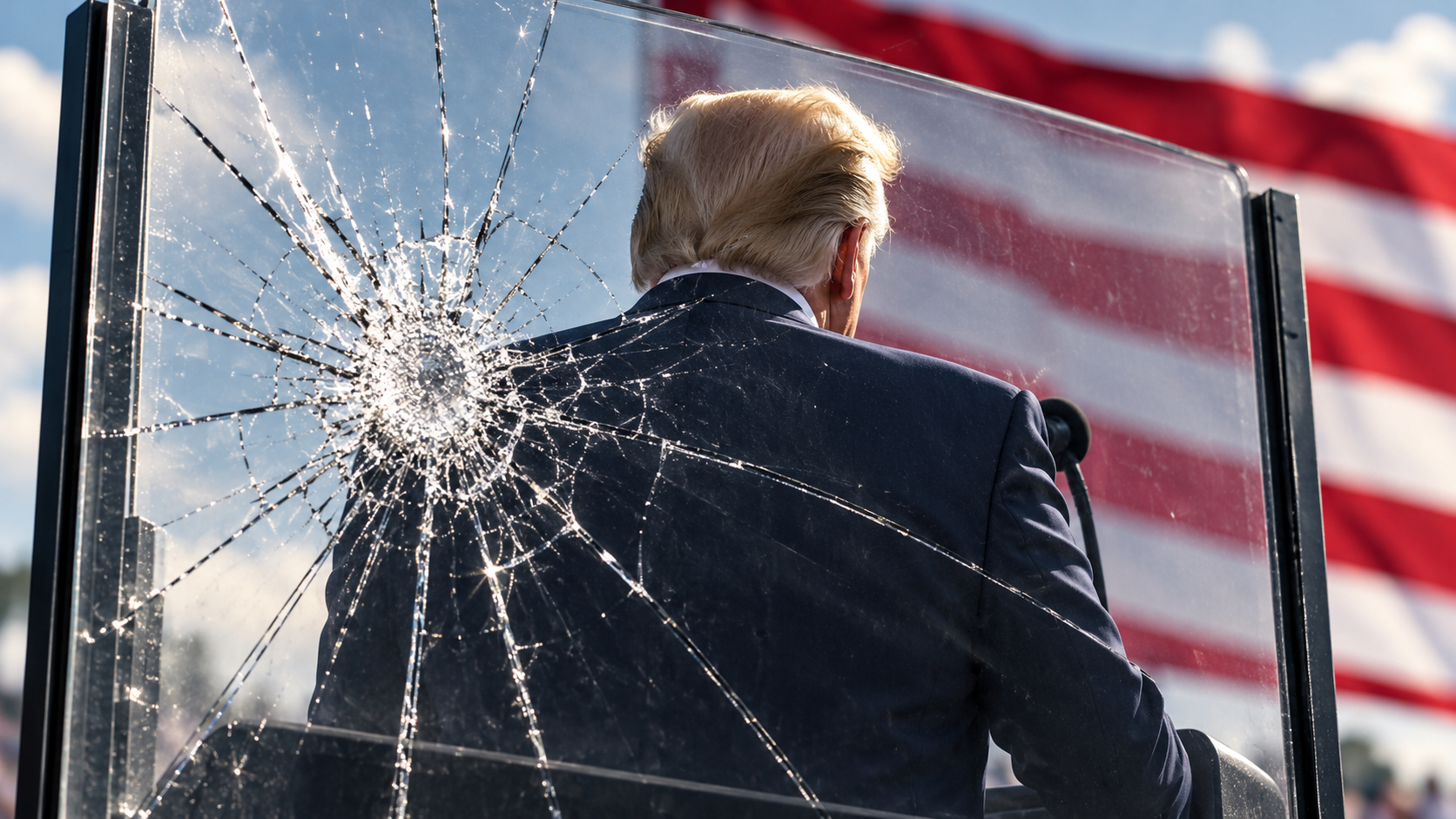
Bullets, Poison and Murder Plots: The Threats Against Donald Trump
From Butler to the White House: The Attacks and Plots Against Donald Trump
The documented chronology includes a rally gun grab, a poisoned letter, the Butler shooting, a golf-course ambush and alleged attacks on major Washington events.
Donald Trump was speaking in Butler, Pennsylvania, on 13 July 2024 when a gunman opened fire from a nearby roof. Trump was wounded in the ear. Corey Comperatore, who had come to watch the rally, was killed. Two other spectators were seriously injured.
That shooting remains the most consequential attack on Trump’s life. It was neither the beginning nor the end of the danger. The wider record includes an attempt to seize a police officer’s pistol in 2016, a threatened attack on his limousine, a letter containing ricin, Iranian assassination schemes, an armed ambush at his Florida golf course and further alleged plots during his second presidency.
There is no honest single number that captures all of those events. A gunman firing at a candidate, a criminal hiring supposed assassins and an armed visitor stopped at a checkpoint are different propositions. Their differences determine what investigators can establish and what a court must decide.
This chronology covers the major publicly documented cases and the most important disputed incidents, with developments checked through 17 October 2026. It does not count every threatening message as a developed assassination plot. Nor does it treat a prosecutor’s allegation as a conviction.
June 2016: The Gun Grab at a Las Vegas Rally
On 18 June 2016, Michael Steven Sandford entered a Trump campaign rally at the Treasure Island casino in Las Vegas. The previous day, the 20-year-old British citizen had practised shooting with a rented handgun at a local gun range.
Inside the rally, Sandford approached a uniformed Las Vegas police officer and asked about getting Trump’s autograph. As the officer answered, Sandford grabbed the officer’s pistol with both hands and tried to pull it from its holster.
The officer retained control. Sandford was arrested and removed. Nobody was shot.
The Justice Department’s account of the prosecution establishes the preparation at the range and the attempted seizure of the weapon. In September, Sandford pleaded guilty to unlawful firearm possession by a person unlawfully in the United States and to disrupting an official function. In December, he received a sentence of 12 months and one day.
The precise offences matter. His sentence was not an attempted-assassination sentence, even though the episode belongs in any serious history of the threats around Trump’s candidacy.
It also shows why the absence of gunfire cannot settle whether an incident was dangerous. Sandford tried to obtain a loaded weapon from an officer inside an event protected by the Secret Service. The intervention happened at the point of physical contact, before he could control the gun.
Calling that successful prevention does not require pretending that a shot was fired or that Trump sustained an injury. The documented conduct is serious enough on its own.
September 2017: A Stolen Forklift and the Presidential Limousine
The next major case involved an unlikely proposed weapon.
During Trump’s visit to Mandan, North Dakota, on 6 September 2017, Gregory Lee Leingang stole a forklift and entered the restricted motorcade area. Federal prosecutor Brandi Sasse Russell subsequently described his intention as reaching the presidential limousine, overturning it and killing Trump.
The machine became stuck or immobilised before Leingang reached the president. He abandoned it and fled. Police caught him.
Leingang later pleaded guilty to a federal restricted-area offence involving a dangerous weapon. In February 2019, he was sentenced to time served and a year of supervised release. He was already imprisoned for other offences.
The distinction between an intended attack and an actual collision is essential. Trump’s limousine was not overturned. Leingang did not reach the vehicle. The case concerned movement towards a protected area and the intention prosecutors attributed to that movement.
An unusual plan can be dangerous without being a realistic description of how close an attacker came to success. The public record supports including Leingang’s scheme. It does not support presenting the president as having narrowly escaped a forklift striking his car.
That qualification also avoids turning a criminal’s ambition into a measure of operational capability. Those are separate questions throughout this history.
November 2017: Threats During the Manila Visit
Trump’s trip to Manila for the regional leaders’ summit produced another incident frequently placed on assassination timelines. The strongest accessible public description is narrower than some later retellings.
A documentary made with Secret Service access followed agents during the visit. Its production account describes the pursuit of a suspected Islamic State member and a person who had threatened the president on social media. It also identifies the agency’s intelligence work around the trip.
Those details establish a protective response to potential threats. They do not, by themselves, establish a publicly adjudicated assassination conspiracy or an attacker firing at Trump.
Manila therefore belongs in the chronology as a documented overseas threat investigation. Its evidential footing differs from a guilty plea or a jury verdict. An arrest, a credible warning and a completed attack should not acquire identical labels simply because each prompted urgent action by presidential protection officers.
2018 and 2020: The Threat Arrives Through the Post
Presidential danger does not always come from someone near a stage.
In October 2018, federal prosecutors charged William Clyde Allen III over threatening letters sent to Trump and other senior officials. The indictment alleged that the letter to the president contained castor bean material. The wider case included a charge of threatening to use a biological toxin as a weapon.
That description needs care. Castor bean material and a verified preparation of ricin should not be used interchangeably. The indictment establishes what prosecutors alleged was mailed, rather than proving every subsequent shorthand description of a “ricin attack”.
The 2020 case against Pascale Ferrier is much clearer on that point because it ended in admissions and a substantial prison sentence.
Ferrier, a dual Canadian and French citizen, admitted making ricin at her home in Quebec and sending it in threatening letters to Trump and eight Texas law-enforcement officials in September 2020. Her letter to Trump demanded that he abandon his election candidacy.
The presidential letter was intercepted before delivery to the White House. Trump was not poisoned.
In August 2023, Ferrier was sentenced to 262 months in prison, followed by lifetime supervised release. That is 21 years and ten months, rather than an imprecise claim that she received exactly 22 years.
The interception changes the account of exposure, but it does not erase the offence. Ferrier had moved beyond expressing hatred and dispatched a dangerous substance to named recipients.
These two postal cases illustrate a useful progression in evidence. An indictment records an accusation. A guilty plea can establish admitted conduct. A sentencing announcement records the punishment imposed. Reading all three as equivalent “attempts” conceals what is actually known.
April to July 2024: Asif Merchant’s Murder-for-Hire Scheme
Before the Butler shooting, a separate investigation was already developing around a plan to recruit killers in the United States.
Asif Merchant arrived in April 2024. According to trial evidence later summarised by the Justice Department, his assignment from Iran’s Islamic Revolutionary Guard Corps involved political assassination and other criminal activity.
Merchant approached an acquaintance, Nadeem Ali, for assistance. Ali informed law enforcement and became a confidential source. The supposed hired killers Merchant subsequently met were undercover officers.
In June, Merchant paid them a 5,000-dollar advance. He was arrested in July before leaving the country. No assassination took place.
On 6 March 2026, a federal jury convicted Merchant of murder for hire and attempting an act of terrorism transcending national boundaries. At trial, Merchant acknowledged his involvement with the Revolutionary Guard while arguing that fear for his family had driven his actions. The jury convicted him nevertheless.
Trump was among the possible political targets discussed in the case. The scheme should not be simplified into a completed contract with an established date and location for killing Trump.
Its importance lies in the recruitment, payment and foreign direction established through the prosecution. Those elements distinguish it from an angry declaration made online.
Its timing also creates an obvious temptation. Merchant was arrested shortly before Butler. That proximity does not establish that he directed Thomas Matthew Crooks or that the two cases were connected. A chronology can place events beside each other without supplying a causal link between them.
The evidence required for such a link would concern communication, instruction, money or another demonstrable connection. The existence of an Iranian operation against American politicians cannot supply those missing facts by itself.
13 July 2024: Thomas Matthew Crooks Opens Fire in Butler
The Butler attack crossed the threshold that earlier interventions had prevented. A gunman obtained a firing position and shot into a presidential campaign event.
The FBI identified him as Thomas Matthew Crooks, a 20-year-old from Bethel Park, Pennsylvania. He fired from the roof of a building in the nearby AGR complex, outside the rally’s secure perimeter. A Secret Service counter-sniper killed him.
Trump survived with an ear wound. Comperatore did not survive. The injured spectators included David Dutch and James Copenhaver.
Those casualties must remain central. Reducing Butler to the photograph of Trump raising his fist removes the people who were killed or wounded while attending a political rally.
The FBI’s reconstruction showed preparation. Crooks registered for the event, researched the site and practised shooting before the attack. Investigators also established that he had flown a drone near the rally grounds earlier that afternoon.
The bureau said the rifle had originally been bought legally by his father and subsequently transferred to Crooks. Investigators recovered explosive devices from his vehicle and another device at his home. Their presence broadened the investigation, but they should not be described as explosions at the rally: they did not detonate there.
Forensic examination matched eight cartridge cases recovered from the roof to Crooks’s rifle.
His searches included material about both Trump and Joe Biden. On 6 July, he searched for the distance between Lee Harvey Oswald and John F. Kennedy. These records help establish preparation and interests. They do not establish a complete political motive.
In its August 2024 briefing, the FBI said it had found no credible evidence that Crooks had conspired with anyone and no indication that a foreign entity had directed the attack. That is a dated investigative finding, rather than a claim that investigators can prove the absence of every conceivable undiscovered contact.
The distinction leaves room for legitimate scrutiny without promoting speculation into evidence. Investigators can know who fired, identify the weapon and reconstruct movements while still lacking a definitive explanation for why that person chose to kill.
An unanswered motive is an investigative limitation. It is not, on its own, evidence of an undisclosed sponsor.
Why Butler Became a Security Scandal
The assassination investigation and the investigation of protective failures addressed different questions.
The FBI examined Crooks’s conduct. Congressional investigators and other reviewers examined how he had been able to act. Confusing those inquiries can produce the mistaken impression that identifying the gunman also answers the institutional failures.
The Senate’s bipartisan interim findings described preventable failures in planning, communication and coordination. The AGR roof had been recognised as a concern, yet it was not adequately secured. Information about a suspicious person did not produce a timely protective decision.
The failures were connected. Different teams held different information. Responsibilities were unclear. Crucial warnings did not reach the people who could stop Trump taking the stage or move him away.
The significance is organisational as well as physical. Recognising something suspicious is useful only if the observation reaches a person with authority to respond. A collection of officers can possess enough information collectively while the protective detail still lacks the picture it needs.
The Senate chairman’s July 2025 report added criticism of resource decisions and accountability. It recorded disciplinary action against six personnel, including suspensions without pay, and said nobody involved had been fired.
That later chairman’s report should not be casually described as identical to the earlier bipartisan interim report. Their institutional authorship and timing differ, even where their findings overlap.
The public evidence supports severe criticism of the security operation. It does not establish that the officers who failed were collaborators in an assassination. Negligence, fragmented communication and deliberate assistance are different allegations, requiring different proof.
Keeping those categories separate strengthens accountability. It directs attention towards decisions that can be examined and corrected instead of allowing every documented failure to disappear inside a theory that cannot be tested.
15 September 2024: Ryan Routh Waits Beside the Golf Course
Two months after Butler, the danger moved to Trump International Golf Club in West Palm Beach, Florida.
On 15 September, Secret Service agent Robert Fercano was patrolling ahead of Trump when he spotted a rifle protruding from concealment beside the course. Fercano fired. Ryan Wesley Routh fled and was later arrested after a witness helped identify his vehicle.
Trump was not injured. Routh did not fire at him.
The absence of a shot by Routh does not leave the legal outcome uncertain. In September 2025, a jury convicted him of attempted assassination of a major presidential candidate, assaulting a federal officer and firearms offences. On 4 February 2026, he was sentenced to life in prison plus 84 months.
Investigators recovered a scoped SKS rifle, ammunition, protective metal plates and a camera positioned towards the course. Phone records placed Routh near the club and Mar-a-Lago on repeated occasions before the incident.
The equipment and the location formed part of the evidence considered at trial. The case reached a verdict rather than remaining an initial description of an “apparent” attempt.
Routh’s prosecution also explains why a simple count of shots fired produces a misleading history. Attempted assassination can be established before a defendant discharges a weapon. The relevant question includes intent and conduct towards carrying it out.
Operationally, the contrast with Butler is clear. The officer ahead of Trump detected the threat and acted before the president reached the position. That intervention prevented the proposed attack from becoming a shooting at the protected person.
It did not mean no danger had existed. It meant a protective action interrupted it.
Autumn 2024: Farhad Shakeri and the Alleged Iranian Assignment
The next major Iranian case was disclosed after the American election.
On 8 November 2024, the Justice Department announced charges involving Farhad Shakeri and two alleged associates. Prosecutors described a network linked to the Revolutionary Guard and schemes against several targets.
The Trump allegation rested importantly on Shakeri’s own statements in recorded interviews with American law enforcement. He said he had been tasked on 7 October with providing a plan to kill Trump. He also claimed that he had not intended to produce a plan within the required timeframe.
That combination belongs in the account. Quoting only the alleged instruction and omitting Shakeri’s qualification would overstate what his statements establish.
The announcement also described surveillance of an Iranian-American dissident. The two men arrested in the United States were connected to that alleged operation. Their arrests should not be rewritten as the capture of two gunmen on their way to shoot Trump.
The Shakeri allegations show why foreign-threat cases demand particular precision. A network can have several targets, different assignments and participants with unequal knowledge. Evidence about one intended victim does not automatically establish every accusation concerning another.
The broader context includes Iran’s declared desire to avenge the January 2020 killing of Qasem Soleimani in an American drone strike. That context helps explain the threat assessment. It cannot replace proof of a particular operation or establish Iranian responsibility for every attack on Trump.
April 2026: The Correspondents’ Dinner Shooting
On 25 April 2026, Trump attended the White House correspondents’ dinner at the Washington Hilton. The event became the scene of another alleged attempted assassination.
Prosecutors accused Cole Tomas Allen, of Torrance, California, of travelling across the country with weapons and booking a room at the hotel beforehand. The initial criminal complaint was announced on 27 April.
According to the government’s account, Allen rushed through a screening checkpoint towards the area leading to the ballroom. Prosecutors alleged that he fired a shotgun and struck a Secret Service officer in the chest. The officer was wearing a protective vest.
Allen was restrained and arrested. Trump was not shot.
On 5 May, a grand jury returned an indictment charging attempted assassination of the president, assault on a federal officer with a deadly weapon and firearms offences. Allen pleaded not guilty on 11 May.
The incident therefore belongs among the major alleged attempts, with its procedural status stated plainly. The indictment is a formal accusation. It is not the equivalent of Routh’s conviction.
Nor should the account drift into saying Allen reached Trump or fired inside the ballroom. The public charging account describes an interception at the security approach.
This case exposes another distinction in protective work. A checkpoint can become the scene of violence while still preventing an assailant from reaching the principal gathering. Assessing the planning, the immediate response and the defendant’s alleged intention requires attention to all three.
The fact that the president survived cannot alone prove that every arrangement worked. Equally, the occurrence of gunfire cannot by itself establish that officers failed to stop the alleged attacker reaching him.
June 2026: The Alleged Plot Against the White House UFC Event
Another alleged conspiracy concerned the UFC Freedom 250 event held at the White House on 14 June 2026.
The Justice Department initially announced charges against five men. A July indictment brought eight defendants together on conspiracy charges involving alleged material support to terrorists and planned killings of officials and others on federal territory.
Prosecutors alleged that participants communicated online, discussed an attack on the gathering and assigned roles. Officials also described weapons and ammunition recovered during the investigation. The alleged plan combined explosive-carrying drones with gunfire against people leaving the event.
These are allegations, not findings of guilt against each defendant. No such attack was carried out at the gathering.
The investigation began after the parents of an Ohio participant alerted police to his weapons purchases and concerning online activity. That intervention provides a different prevention story from a counter-sniper’s shot or an officer confronting a gunman.
It moved information from outside the security operation into investigators’ hands before the event. Subsequent inquiries extended across several states.
The alleged conspiracy belongs in a chronology of major threats surrounding Trump’s presidency. However, the public charging descriptions concern multiple government officials and attendees. They do not justify narrowing every defendant’s alleged objective to the personal assassination of Trump.
The group’s claimed plans must also be distinguished from its demonstrated ability to execute them. Possessing firearms, discussing coordinated violence and successfully carrying out a complex attack are separate stages. Prosecutors can bring a conspiracy case without proving that the planned operation would certainly have succeeded.
For readers, that means two errors are possible. Dismissing the case as mere internet conversation ignores the alleged preparation. Presenting it as a narrowly averted, fully operational assault on the president exceeds what has been established publicly.
The Incidents That Should Not Be Counted as Proven Attempts
Some of the most widely repeated additions to this history have weaker foundations.
At a Reno rally in November 2016, Trump was rushed from the stage after someone shouted about a gun. No weapon was found. The protective response was understandable; the claim that a gunman had attempted an assassination was unsupported.
The Coachella incident in October 2024 produced a more complicated dispute. Deputies arrested Vem Miller at a checkpoint near a Trump rally after finding firearms. Riverside County Sheriff Chad Bianco said officers had probably prevented another assassination attempt.
Miller denied intending to harm Trump. The Secret Service said Trump had not been in danger. The sheriff’s interpretation did not amount to proof of an assassination plan.
Miller’s gun charges were dismissed following diversion in July 2026. That outcome should accompany any retrospective account of his arrest.
Security officers do not need to wait for certainty before acting on an immediate risk. Historical accounts have a different task: they must describe what the subsequent evidence established. The threshold for stopping a person is not the threshold for declaring that person an assassin.
That distinction protects the accuracy of the whole chronology. Once unsupported additions enter the total, the number becomes a political talking point rather than a useful measure of danger.
What the Record Finally Establishes
The cases show several routes by which threats became actionable: physical movement towards a protected person, the dispatch of poison, payment to supposed killers, sustained preparation and alleged coordination between participants.
They also show several ways an attack can be stopped. An officer retained his pistol. A letter was intercepted. An acquaintance contacted investigators. An agent saw a concealed weapon. Parents alerted police.
Those interventions should be examined alongside Butler’s failures. Prevention depends on people recognising danger and on institutions using the information they receive. Neither courage at the final moment nor sophisticated intelligence elsewhere can compensate automatically for a warning that fails to reach the right place.
The legal outcomes now provide firmer conclusions in some cases: Ferrier admitted sending ricin; Merchant was convicted over the murder-for-hire scheme; Routh was convicted of attempted assassination and sentenced to life. The Allen prosecution and the UFC conspiracy allegations require the continuing distinction between charge and proof.
Butler leaves the clearest human consequence. Comperatore died at a rally where the protection system failed to stop a gunman taking a firing position. Any assessment of reform must ultimately address the practical question his death makes unavoidable: whether the next credible warning reaches someone able to act before the first shot.
Sources
U.S. Senate Homeland Security and Governmental Affairs Committee — Bipartisan Interim Report Announcement, 25 September 2024 — Findings on Butler’s planning, communications and protective failures.
WPXI / Cox Media Group — North Dakota Man Pleads Guilty to Using Stolen Forklift in Trump Assassination Attempt, 11 December 2018 — Plea details and attributed prosecution statements about Leingang’s intended attack.
U.S. Department of Justice — Eight Men Indicted over Alleged White House UFC Event Plot, 9 July 2026 — Scope and legal status of the alleged multi-state conspiracy.
