JFK assassination conspiracy theories: the 10 most persistent stories, ranked
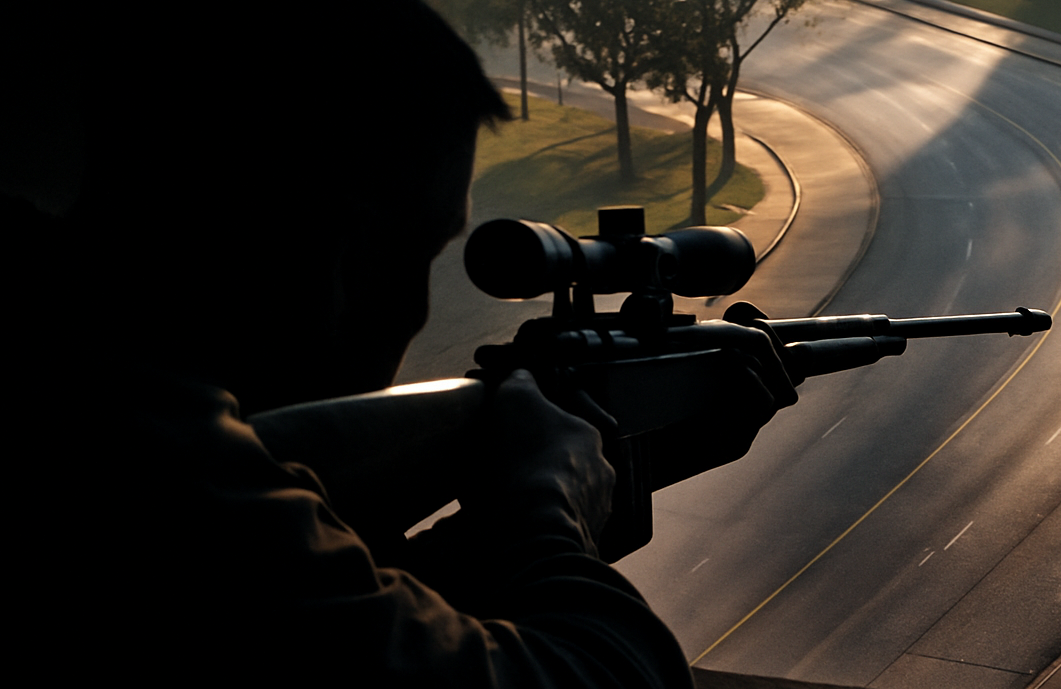
All claims described in this article reflect conspiracy theories circulated online and in public discourse; they are not supported by verified evidence.
The killing of President John F. Kennedy in Dallas in 1963 has been investigated, re-investigated, and revisited for six decades, yet the public argument over what really happened has never gone away. Official inquiries point to a lone gunman, Lee Harvey Oswald, but millions of people remain unconvinced and keep returning to the same cluster of alternative explanations.
At the heart of the debate is a simple clash: a single, unstable man with a rifle versus a web of powerful actors with motives and secrets. One version feels sparse and random; the other feels as big and tangled as the Cold War itself.
This article ranks the ten most persistent JFK assassination conspiracy theories, explains what each one claims, and sets out why none of them has settled the argument. By the end, the reader can see how politics, culture, and psychology have kept these stories alive long after the gunfire in Dealey Plaza stopped.
The story turns on whether a lone gunman with a cheap rifle can explain a moment that changed the course of history.
Key Points
The official record concludes that Lee Harvey Oswald acted alone, but public belief in JFK assassination conspiracy theories has stayed strong for decades.
The most persistent theories cluster around the CIA, organized crime, Cuba, the Soviet Union, and senior figures in Washington.
New document releases and fresh interpretations tend to fuel doubt rather than close the case, because they add fragments without delivering a single, decisive answer.
These theories are less about ballistics alone and more about trust in government, the Cold War, and the fear that powerful institutions hide their worst actions.
A large industry of books, films, and online content has turned the JFK assassination into a permanent battleground over truth, secrecy, and narrative control.
Background
On November 22, 1963, President John F. Kennedy was shot and killed while riding in an open limousine through Dealey Plaza in Dallas, Texas. Within hours, police arrested Lee Harvey Oswald, a former Marine with a history of defection to the Soviet Union and a chaotic personal life. Two days later, nightclub owner Jack Ruby shot Oswald on live television, denying any future jury the chance to hear direct testimony from the accused assassin.
The Warren Commission, created by President Lyndon B. Johnson, concluded in 1964 that Oswald acted alone. Later reviews revisited the evidence, with one congressional committee in the late 1970s suggesting that a second gunman might have fired, while still finding no clear sponsor or mastermind. The release of additional classified files over the decades has provided more detail on Cold War intelligence operations, but no agreed smoking gun that contradicts the lone-gunman conclusion.
Against that backdrop, conspiracy theories flourished. Some focused on the physics of the shots: bullet trajectories, the timing between rounds, and the famous home movie of the motorcade. Others zoomed out to geopolitics, organized crime, and domestic power struggles, asking who had the motive, means, and opportunity to remove a sitting president.
The result is a layered debate in which official reports, eyewitness memories, forensic studies, and perceived gaps in the record collide with a public unwilling to accept that history can hinge on a single, small figure with a rifle in a window.
The top 10 JFK assassination conspiracy theories
1. The CIA plot
The most discussed theory places the Central Intelligence Agency at the center of the story. In this view, elements within the CIA saw Kennedy as too soft on communism, too unpredictable on Cuba, or too willing to question the agency’s power after the failed Bay of Pigs invasion. The theory claims that rogue officers or a covert internal network organized the assassination and then helped steer investigations away from any link back to Langley. Supporters point to Kennedy’s clashes with the intelligence community and unexplained gaps in some files, while critics stress that no conclusive documentary trail has emerged tying specific CIA officials to a murder plan.
2. The Mafia and organized crime
Another long-running theory blames organized crime bosses who allegedly feared Kennedy’s Justice Department. Under Attorney General Robert Kennedy, federal pressure on the mob increased, and some crime figures had ties both to anti-Castro operations and to political machines. This conspiracy scenario imagines a coordinated hit by mobsters using professional shooters, with Oswald either framed, used as a distraction, or involved as a minor player. The theory leans heavily on motive and on links between certain mob figures and Cuban exile groups, but hard proof of a direct order to kill the president has not surfaced.
3. Cuban government revenge
In this version, the Cuban government under Fidel Castro ordered Kennedy’s assassination in retaliation for US attempts to overthrow or kill Castro. The Bay of Pigs invasion and covert plots against Havana provide the emotional core of the story: a tit-for-tat killing in the shadow of the Cold War. Some point to Oswald’s pro-Cuban sympathies and his attempts to contact Cuban officials as hints of a deeper connection. Skeptics note that starting a direct conflict with the United States by killing its president would have been an extreme and risky step for Havana, with no clear evidence that the Cuban state actually took it.
4. Anti-Castro Cuban exiles and US hardliners
A related, but distinct, theory shifts blame from Havana to anti-Castro exiles who felt betrayed by Kennedy after the Bay of Pigs. These exiles, some trained and armed by US agencies, were furious at what they saw as weak support. In this narrative, angry Cuban exiles, possibly working with sympathetic US intelligence or military figures, took matters into their own hands. The idea tries to explain both the level of expertise some believe the attack required and the Cold War anger of the period. Yet again, the leap from shared rage to an organized assassination plot lacks a clear, verifiable chain of command.
5. Soviet or KGB operation
Given Oswald’s defection to the Soviet Union and his time in Minsk, it is unsurprising that some theories point to Moscow. This scenario imagines that Soviet intelligence either recruited Oswald as an assassin or used his existing hostility toward the United States to steer him toward action. The stakes would have been enormous: killing an American president at the height of the Cold War risked nuclear confrontation. Critics of the theory argue that the cost-benefit logic for the Soviet Union makes such a move unlikely, and the declassified record to date has not established a direct KGB plot to kill Kennedy in Dallas.
6. Lyndon B. Johnson and political rivals
Another persistent claim suggests that Vice President Lyndon B. Johnson, or powerful allies around him in Texas and Washington, had a role in the assassination. The theory builds on accounts of personal and political tension between Kennedy and Johnson, as well as LBJ’s own troubles and ambitions. In this telling, removing Kennedy clears the path for Johnson to the Oval Office and secures the interests of certain political and business networks. The idea relies heavily on presumed motive and hearsay rather than on physical evidence tying Johnson or his inner circle to a murder plan.
7. The military-industrial complex
This theory connects Kennedy’s death to his perceived stance on Vietnam, nuclear weapons, and the broader Cold War. It argues that Kennedy was on the verge of scaling back US involvement in Vietnam, easing tensions with Moscow, or challenging powerful defense interests. In this narrative, unnamed figures in the Pentagon and the arms industry conspired to eliminate a president they saw as a threat to their budgets and strategic worldview. The weakness of this theory lies in its vagueness: it names a broad cluster of institutions rather than specific individuals and offers few concrete links from boardroom to sniper’s nest.
8. The “grassy knoll” and multiple shooters
The most iconic image in the JFK conspiracy world is the grassy knoll—an area to the front and right of the motorcade where some witnesses thought a shot originated. This theory focuses on perceived inconsistencies in the number of shots, the timing, and the direction from which they came. It usually keeps Oswald in the story but adds at least one more shooter and sometimes more. Supporters argue that the pattern of wounds and the sound of gunfire point to multiple gunmen. Critics counter with ballistic reconstructions that show three shots from the Texas School Book Depository can account for the injuries, without needing extra rifles hidden behind fences.
9. The Secret Service accident theory
A more niche, but striking, theory claims that one of the Secret Service agents in the follow-up car fired the fatal shot by accident while reacting to Oswald’s first rounds. In this scenario, an agent loses control of an automatic rifle as the cars lurch forward, and the government covers up the error to protect the agency and avoid scandal. The theory leans on specific interpretations of ballistics and witness accounts about weapons in the motorcade. It remains controversial because it asks the reader to accept both an extraordinary accident and an enduring institutional cover-up with limited documentary support.
10. The “deep state” and permanent cover-up
The final theory on this list is less about who pulled the trigger and more about what happened afterward. It argues that a network of officials across agencies suppressed or shaped evidence to protect institutions, allies, or secret operations. In this framing, the puzzle pieces never quite fit because they were never meant to: files vanish, witnesses contradict each other, and official narratives shift over time. This theory thrives on ambiguity rather than specifics, turning every missing document, redaction, or delay in release into proof of a deeper, hidden hand.
Analysis
Political and Geopolitical Dimensions
Every major JFK assassination conspiracy theory is rooted in the Cold War. Whether the finger points to Havana, Moscow, Langley, or the Pentagon, the backdrop is the same: nuclear standoffs, proxy wars, and constant fear of espionage. The idea that the president could have been removed as part of a covert operation fits the anxious mood of the era, even if the evidence for any one scenario remains incomplete.
Domestically, these theories also reflect battles over the direction of US power. A president seen by some as too cautious on Cuba, too open to détente, or too willing to question the national security establishment becomes the focal point for stories in which powerful actors refuse to accept his choices. The persistence of those stories shows how unresolved the political arguments of the early 1960s still feel to many people.
Economic and Market Impact
The assassination itself shook markets at the time, but the economic story that persists today sits elsewhere. Over decades, a cottage industry of books, films, documentaries, conferences, and online channels built around JFK assassination conspiracy theories has emerged. Publishers, studios, and content creators profit from each new angle or supposed revelation, reinforcing the sense that there is always another layer to uncover.
This commercial ecosystem does not prove any particular theory. It does, however, create strong incentives to keep the case open in the public imagination. A story with a settled ending is harder to sell than one that keeps promising a hidden chapter still to come. That economic reality blends with genuine curiosity and distrust to keep the embers of speculation glowing.
Social and Cultural Fallout
Culturally, the JFK assassination marked a turning point in how Americans view their leaders and their government. Many people see it as the end of a more optimistic era and the start of a darker one, marked by Vietnam, riots, and scandal. Conspiracy theories tap into that sense of rupture. They offer narratives in which the tragedy was not random but the result of betrayal by insiders, enemies, or both.
These stories also serve as a kind of folk history. People who did not live through 1963 still encounter the assassination through films, novels, and online debates that treat conspiracy as the default frame. For some, questioning the official story becomes a marker of skepticism and independence; for others, it is a sign of how deeply distrust has seeped into the culture.
Technological and Security Implications
Technology has shaped both the investigation and the conspiracy culture around the assassination. Early on, the Zapruder film and audio recordings offered fodder for frame-by-frame and second-by-second analysis. Later, advances in ballistics, imaging, and acoustic modeling allowed experts and amateurs alike to run new simulations and claim fresh insights. Each wave of technology changed how people argued about shot angles, timing, and the number of gunmen.
In the digital era, social media and video platforms have turned JFK assassination conspiracy theories into a permanent, global conversation. Clips, diagrams, and commentary circulate far beyond academic or official circles. Algorithms that reward engagement tend to push provocative takes and simplified narratives, making it even harder for more cautious explanations to gain traction.
What Most Coverage Misses
Most coverage of JFK assassination conspiracy theories focuses on who might have done it and how the shots were fired. Less attention goes to the psychological need these stories meet. A lone gunman with a cheap rifle feels too small for a world-changing event. Grand conspiracies, even when frightening, can feel more satisfying because they make history seem orderly rather than chaotic.
Another under-discussed point is how partial secrecy feeds the problem. When governments release documents in stages, leave redactions in place, or withhold files for decades, they may be acting out of caution or bureaucratic delay. To a suspicious public, though, each gap looks like deliberate concealment. In that environment, every missing page can carry more weight than a thousand mundane ones, and the absence of evidence becomes evidence of absence.
Why This Matters
The enduring debate over JFK assassination conspiracy theories is not just about one crime in Dallas; it is about trust in democratic institutions. If people conclude that presidents can be removed by hidden forces and that the truth will never be told, confidence in elections, law enforcement, and intelligence agencies erodes. That distrust does not stay confined to the 1960s. It spills over into how citizens view later crises and investigations.
For policymakers and archivists, the case is a lesson in the costs of long-term secrecy. Each delay in releasing material makes eventual transparency less effective at rebuilding trust. For educators and media, it highlights the challenge of explaining complex historical events in a way that acknowledges uncertainty without surrendering to speculation.
In the near term, debates about further document releases, classification rules, and digital content moderation will keep the JFK assassination in the background. Longer term, the case stands as a warning: once public faith in the basic story of an event fractures, it is very difficult to repair.
Real-World Impact
A high school history teacher in a small Midwestern town faces a classroom where half the students have already seen videos insisting that every official account of the assassination is a lie. The teacher must decide how to present the evidence in a way that respects curiosity but pushes back against unfounded claims.
A retired intelligence analyst watches each new wave of JFK assassination conspiracy theories with mixed feelings. On the one hand, the analyst knows how messy real investigations can be; on the other, they see how easily ordinary bureaucratic errors can be turned into “proof” of grand plots.
A documentary filmmaker planning a series on Cold War crises struggles with whether to lean into the more sensational JFK assassination theories that guarantee attention, or to stick to the more sober but less dramatic lone-gunman conclusion. The choice will shape not only ratings but also how a new generation understands the event.
An algorithm designer at a major video platform quietly tests changes that would slow the spread of extreme conspiracy content. They see, in real time, how small tweaks to recommendations can either calm or inflame debates around the assassination and many other topics.
Legacy
The argument over JFK assassination conspiracy theories sits at the intersection of evidence, emotion, and power. Official investigations have produced a coherent lone-gunman account, but they have never convinced everyone who finds that explanation too thin for such a seismic event. In the space between what the record shows and what people feel should have happened, ten core conspiracy stories continue to compete for attention.
The fork in the road is clear. One path accepts that history sometimes turns on the actions of a single, troubled individual and that imperfect but extensive investigations have roughly captured the truth. The other path assumes that large, hidden forces arranged the killing and then hid their tracks so effectively that only scattered clues remain. The choice between those paths shapes more than views of 1963; it shapes how people approach every contested event that follows.
In the years ahead, the most telling signals will not be dramatic new revelations but quieter shifts in how institutions handle secrecy and how societies teach critical thinking. If future document releases, educational efforts, and media practices move toward clarity and consistency, the hold of the wildest theories may slowly weaken. If they do not, the echoes of Dealey Plaza will keep bouncing through public life for generations to come.
