

Every Assassination Attempt on Trump: The Full Chronology of Threats, Motives and Unanswered Questions
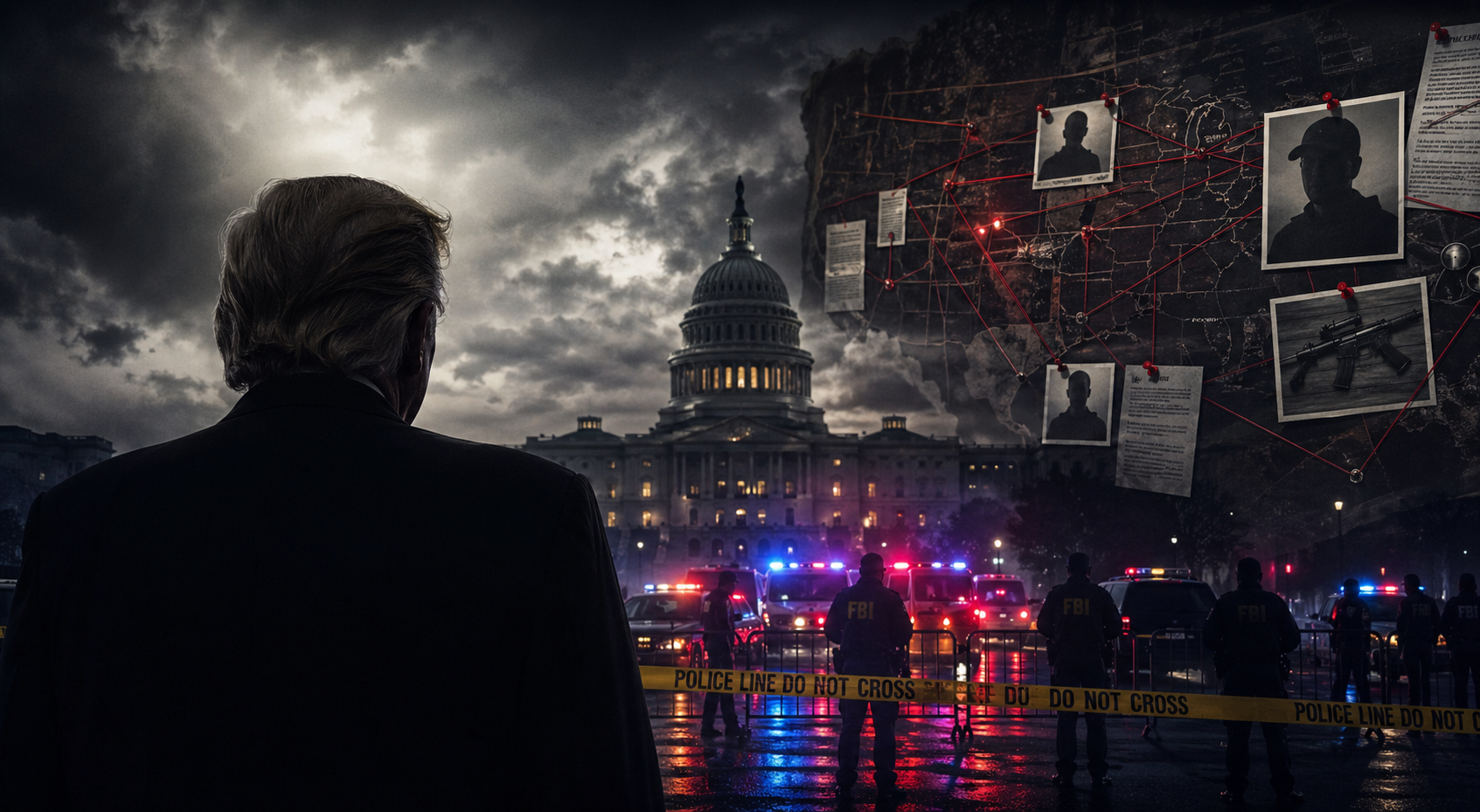
From Las Vegas to Washington: The Complete Timeline of Attempts on Trump’s Life
Trump and the Age of Political Violence: Every Known Assassination Attempt So Far
The Real Story Is Not Just the Number of attempts—it is how often the Motive Disappears Into the fog.
The most disturbing part of the assassination-attempt timeline around Donald Trump is not only that the list exists but also
Because the list keeps growing.
From a failed gun grab at a Las Vegas campaign rally, to poison letters, to a rooftop shooting in Pennsylvania, to an armed stakeout at a Florida golf course, to the latest shooting incident at the White House Correspondents’ Dinner in Washington, the pattern is now impossible to treat as isolated noise. Trump has become one of the most repeatedly targeted political figures in modern American life.
However, the underlying issue is more peculiar than the headline suggests.
In some cases, the stated motive is blunt. One attacker wanted to stop Trump becoming president. Another wanted him to withdraw from an election. Another was convicted over a carefully planned attempt after lying in wait near a golf course. In other cases, the motive remains frustratingly unclear. The attacker leaves no clean manifesto, no coherent ideology, no simple explanation that lets the public file the event away.
That uncertainty creates a vacuum. Into it rush speculation, conspiracy, partisan blame, amateur psychology, and online myth-making.
The known facts are serious enough without invention.
What follows is the chronological record of the major known assassination attempts, attempted attacks, and closely related security incidents targeting Trump to date, including the latest Washington incident. It separates confirmed facts from motive, motive from inference, and genuine assassination attempts from broader threats or suspicious breaches.
Because that distinction matters.
A timeline without discipline becomes propaganda. A timeline with discipline shows something more unsettling: the violence around Trump has come from different directions, different personalities, different methods, and different levels of planning. The common thread is not one ideology. It is the recurring collapse of political obsession into physical threat.
June 2016 — Michael Sandford and the Las Vegas Gun-Grab
The first widely known assassination attempt against Trump came before he entered the White House.
On June 18, 2016, Michael Steven Sandford, a British national, attended a Trump campaign rally in Las Vegas. During the event, Sandford tried to grab a police officer’s firearm. The plan, by his own later admission, was to use the weapon to shoot Trump. He had reportedly gone to a gun range beforehand, and investigators said he had considered trying again at another rally if the Las Vegas attempt failed.
The attempt failed immediately. Sandford was overpowered before he could take the weapon. He later pleaded guilty to charges including being an illegal alien in possession of a firearm and disrupting an official function.
The motive was unusually direct.
Sandford told investigators he wanted to kill Trump to stop him becoming president. That does not mean the case was ideologically neat. Court accounts and later descriptions also pointed to serious mental-health issues, including autism-related difficulties and other psychological problems. The sentencing judge reportedly treated the case as a dangerous but deeply troubled act rather than the work of a sophisticated political assassin.
This perspective is one reason early Trump assassination-attempt coverage did not remain dominant for long. It was dramatic, but not operationally advanced. It did not involve a firearm brought into the venue by the attacker. It did not involve a network. It did not produce casualties. The legal case was real, but the attempt itself collapsed at the first physical step.
Still, it mattered.
It established a pattern that would return again and again: a person fixated on Trump, acting alone or apparently alone, with motive visible in outline but psychologically messy underneath.
September 2017 — Gregory Leingang and the Forklift Plot
At first glance, the next major incident seemed almost bizarre enough to dismiss. It should not be.
In September 2017, Gregory Lee Leingang, a North Dakota man, stole a forklift during Trump’s visit to Mandan, North Dakota. His aim, according to later court reporting, was to use the forklift to attack the presidential limousine route and flip the vehicle. He pleaded guilty after admitting the plan.
The method was crude. The danger was still real.
Leingang’s plot was not a cinematic assassination plan involving sniper nests or explosives. It was an improvised attack using industrial equipment near a presidential movement. That makes it easy to mock. But presidential security is built around exactly these unlikely vectors: the truck that should not be moving, the worker who should not be there, the vehicle that becomes a weapon because it is in the wrong place at the wrong moment.
The motive appears to have been openly violent toward Trump, but the wider psychological picture was again complicated. Public accounts referenced a serious psychiatric crisis.
This incident receives less attention than the later shootings for obvious reasons. Nobody was injured. Trump was not physically reached. The method was unusual. It did not produce the kind of instantly legible image that defines public memory.
Yet it belongs in the chronology because it shows that attempts on Trump were not limited to campaign rallies or firearms. They emerged around movement, access, proximity, and improvisation.
That is the security nightmare: not only the trained assassin but also the unstable individual who converts whatever is nearby into a plan.
2018 — The Ricin-Letter Threats
In 2018, another form of threat reached the Trump era: poison by mail.
Letters containing material derived from castor beans, the source from which ricin can be produced, were mailed to Trump and senior military officials. The material was intercepted before reaching the intended recipients. A Utah man, William Clyde Allen III, was arrested in connection with the envelopes.
This incident is sometimes grouped with assassination attempts, though the precise categorization requires care. The letters were threatening and dangerous. They involved a biological toxin-related substance. But public reporting and official descriptions did not produce the same clear, simple assassination narrative as later cases where an attacker physically positioned himself to target Trump with a weapon.
The motive was less publicly clear than in the Sandford case. The known facts point to hostile targeting of Trump and senior officials, but the public record has never carried the same widely understood motive statement.
That partly explains why the perpetrator’s details are not deeply embedded in public memory.
Poison-letter cases often sit in a strange zone. They are serious enough for federal response, but if intercepted early, they lack the visible drama of an attack scene. The suspect may be named, charged, and processed, but unless a trial produces a clear manifesto, a public ideology, or a large investigative revelation, the case fades into the wider archive of threats against officeholders.
That fading does not mean it was minor. It means the public attention system is visual, episodic, and causality-driven.
A letter intercepted in a mail-screening system is a security success. It is also, almost by definition, less visible.
September 2020 — Pascale Ferrier and the Ricin Letter to the White House
The 2020 ricin case was clearer and more politically explicit.
In September 2020, Pascale Cecile Veronique Ferrier, a dual citizen of Canada and France, sent a letter containing homemade ricin to then-President Trump at the White House. The letter was intercepted before reaching him. She also sent similar letters to Texas law enforcement officials.
Ferrier later pleaded guilty. She was sentenced to nearly 22 years in prison. The letter urged Trump to give up and withdraw from the election, making the political motive unusually direct.
This case is important because it combines three elements: a toxic substance, a direct threat to the president, and a written political demand.
Unlike the Butler shooter, Ferrier did not leave investigators guessing about the broad direction of her grievance. The message itself was the motive document. It connected the act to Trump’s political position and the 2020 election.
Yet even here, public attention did not hold for long.
Why?
Because the letter was stopped. Trump was not physically harmed. The case became a legal story rather than a live national trauma. The sentence was severe, but the image did not sear itself into American political memory in the way the Butler rally image later would.
That difference matters. Assassination attempts are remembered not only by intent but also by spectacle. A stopped poison letter can produce a long prison sentence. A bullet at a rally produces an era-defining photograph.
July 2024 — Thomas Matthew Crooks and the Butler Rally Shooting
The Butler, Pennsylvania, shooting changed everything.
On July 13, 2024, Trump was speaking at an outdoor campaign rally when Thomas Matthew Crooks, a 20-year-old from Bethel Park, Pennsylvania, fired from a nearby rooftop. Trump was wounded in the ear. One rally attendee, Corey Comperatore, was killed. Others were injured. Crooks was shot and killed by a Secret Service counter-sniper. The FBI investigated the shooting as an assassination attempt and potential domestic terrorism.
This was no longer a failed grab, an intercepted letter, or a strange improvised plot.
This was a live-fire attack in public view.
The motive, however, has remained one of the most difficult parts of the case. The FBI identified Crooks as the attacker and investigated his digital life, searches, devices, and possible associations. Publicly available information indicated that he had looked up Trump, other public figures, rally dates, and assassination-related material. Yet investigators did not produce a clean ideological explanation. Later accounts continued to describe the motive as unknown or unresolved.
This is the point most people still underestimate.
The Butler shooting is remembered politically. It is interpreted politically. It is used politically. But the attacker’s motive has not been publicly reduced to a simple left-right explanation.
That does not make the attack apolitical. The target was a presidential candidate. The act was political violence by its nature. But motive is narrower than target. To know why Crooks chose Trump, investigators needed more than the fact that Trump was the target. They needed intent, ideology, grievance, fantasy, a plan, and psychological meaning.
The public record has not supplied all of that.
Crooks appears to have acted alone, and investigators did not publicly establish a foreign link or co-conspirator. That absence matters because conspiracy theories thrive precisely where evidence is incomplete. When the motive is not clean, people manufacture one.
Butler also exposed a second story: security failure.
A congressional task force report later described the attempt as an event that forced scrutiny of security planning, coordination, and response. The Secret Service also issued updates on its changes after the attack.
That is why Butler remains the central event in the Trump assassination-attempt timeline. It was the moment when threat, image, death, injury, politics, and institutional failure all collided.
It was also the moment when Trump’s personal mythology changed.
After Butler, the idea of Trump as a target was no longer abstract. It was visible in blood, movement, panic, and the raised fist that became one of the defining images of his political life.
September 2024 — Ryan Wesley Routh and the Florida Golf Course Attempt
Two months later, Trump faced another assassination attempt.
On September 15, 2024, Ryan Wesley Routh was found near Trump International Golf Club in West Palm Beach, Florida, while Trump was playing golf. Prosecutors said Routh had positioned himself near the course with a rifle. A Secret Service agent spotted the weapon and fired. Routh fled and was later arrested.
The case later moved from suspected attempt to conviction and sentence. In February 2026, the Justice Department announced that Routh had been sentenced to life in prison for the attempted assassination of President Trump and related offenses.
The motive here was clearer than Butler, though still surrounded by political noise. Public case summaries and later accounts described Routh as motivated by preventing Trump’s return to power. Prosecutors portrayed the act as planned rather than spontaneous.
This attempt differed from Butler in a crucial way.
Crooks fired. Routh did not. Crooks died at the scene. Routh survived, was prosecuted, convicted, and sentenced. That means the legal system had more room to build a record around Routh’s preparation and intent.
The Florida attempt also reinforced a frightening reality: the protective challenge around Trump was not confined to rallies. Golf courses, private properties, and semi-predictable movements carry different vulnerabilities. They are not open campaign fields, but they are not sealed bunkers either.
The Routh case receives significant attention because it came so soon after Butler. In any other era, an armed attempt near a former president and candidate would dominate political memory. In Trump’s case, it became the second shock in a sequence.
That compression changed the national psychology.
One attempt can be framed as an aberration. Two attempts in two months begin to look like a condition.
February 2026 — Mar-a-Lago Armed Breach
In February 2026, an armed man was shot and killed by Secret Service agents after attempting to enter the perimeter of Trump’s Mar-a-Lago residence in Florida. Public accounts identified the man as Austin Tucker Martin, 21, and said he was carrying a shotgun and a fuel can. Trump was not at Mar-a-Lago at the time.
This incident should be handled carefully.
It was a serious armed breach at a Trump property. It involved the Secret Service. It raised obvious questions about intent, mental state, and security. But based on the available public information, it should not be treated in the same category as Butler or Routh without qualification, because Trump was not present and the motive was still under investigation.
That distinction is not pedantry. It is factual discipline.
Not every armed breach is an assassination attempt. Not every threat to a protected site is proof of a plan to kill the protected person. But in the broader chronology, it matters because it shows the pressure around Trump’s protective environment continuing into his current presidency.
The unanswered motive is again the key.
When an armed person approaches a protected residence, the public wants a clean explanation. Was it political? Psychological? Personal? Random? Imitative? Something else?
Often, the answer does not arrive quickly. Sometimes it never arrives in a form that satisfies public appetite.
That is not always because authorities are hiding something. It is often because motive is difficult to prove, especially when the suspect is dead, mentally unstable, incoherent, isolated, or leaves behind no reliable statement of purpose.
April 2026 — The White House Correspondents’ Dinner Shooting Incident
The latest incident is still developing and needs the strictest language.
On April 25, 2026, Trump, First Lady Melania Trump, Vice President JD Vance, and other senior figures were attending the White House Correspondents’ Dinner at the Washington Hilton when shots were fired near the event’s security area. Trump and others were evacuated. A Secret Service agent was injured but reportedly protected by a ballistic vest. A suspect, identified in current public accounts as Cole Tomas Allen, 31, of California, was taken into custody.
Officials have described the suspect as apparently acting alone, and early public accounts say the motive remains under investigation. Some official commentary has indicated Trump and other administration figures were likely targets, but the public record is still developing.
That means the responsible framing is this: the Washington dinner incident appears to be a suspected assassination attempt or attempted armed attack targeting Trump and other officials, but the final motive, target selection, and full investigative picture remain unresolved.
This is not weakness. It is accuracy.
The pressure to declare the motive instantly is enormous. The internet wants a culprit class before investigators have finished the first layer of work. Partisans want the attacker to confirm what they already believe. Commentators want the cleanest possible story.
But early motive claims are often the least reliable part of any political violence case.
The Washington incident also has symbolic force. The venue is not just a hotel. It is a known political-media gathering point. It is a place associated with the performance of power: presidents, officials, journalists, donors, security, ceremony, and status all compressed into one room. An armed attack at that kind of event sends a message even before investigators determine whether the attacker had a coherent message of his own.
The immediate security outcome appears to have prevented something worse. The suspect did not reach the central event space. Trump was not injured. Senior officials were moved out.
But the fact that the incident happened at all adds a new entry to the Trump threat chronology.
It also sharpens a question the country has still not answered: how does a political system function when one of its central figures is repeatedly placed under lethal threat?
Why the Motives Are Often Unknown, Unclear or Underreported
The public often assumes motive should be obvious.
It rarely is.
In ordinary conversation, people use “motive” casually. They mean the apparent reason. The grievance. The political tribe. The thing the attacker seemed angry about.
Investigators need more than that. They need evidence.
A motive must be supported by something concrete: writings, searches, statements, communications, planning behavior, witness accounts, purchase history, travel patterns, target selection, timing, associations, and sometimes psychological analysis. Even then, the result may be incomplete.
In Trump-related cases, the motives fall into three broad categories.
First, the explicit cases. Sandford said he wanted to kill Trump to stop him becoming president. Ferrier’s letter urged Trump to withdraw from the election. Routh’s prosecution produced a clearer record of anti-Trump intent and planning.
Second, the unstable or psychologically complicated cases. These may involve genuine political targeting, but the attacker’s mental state, incoherence, or lack of organized ideology makes the motive difficult to summarize without distortion.
Third, the unresolved cases. Butler remains the most important example. Crooks targeted Trump and fired at him. That is clear. But the deeper reason he chose that act has not been publicly settled in a way that matches the scale of the event.
This is where responsible reporting often looks thinner than the public expects.
There are also legal reasons details may be limited. If a suspect is alive, prosecutors may avoid releasing material that could affect trial fairness, reveal investigative methods, taint witnesses, or create grounds for appeal. If digital devices are still being analyzed, officials may not know what matters yet. If the suspect is dead, the absence of testimony can freeze the case around fragments.
Then there is the copycat problem.
Authorities and responsible publishers often avoid over-glorifying attackers. They may limit biographical detail, avoid romanticizing grievance, avoid repeating manifestos, and avoid turning a perpetrator into a dark celebrity. That restraint can look like secrecy, but it is partly designed to reduce imitation.
There is another reason too: sometimes the details are simply not satisfying.
The public expects villains to come with manifestos. Real attackers often come with contradiction, loneliness, obsession, delusion, resentment, opportunism, and half-formed fantasy. Their motives may be intense without being coherent.
That is why some perpetrator profiles feel underreported. The available facts do not always build into a stable narrative.
What Media Misses
The weakest way to cover Trump assassination attempts is to treat each incident as a standalone drama.
That misses the pattern.
The pattern is not that every attacker comes from the same ideological source. The record does not support that. The pattern is that Trump’s political presence acts as a magnet for multiple forms of fixation: partisan rage, personal instability, symbolic targeting, anti-government fantasy, notoriety-seeking, and in some cases a direct desire to alter the course of an election through violence.
That is a broader and more dangerous reality than any single partisan explanation.
It means the threat environment around Trump is not just about one movement hating another movement. It is about the way modern politics turns certain figures into symbols so large that unstable individuals begin to treat them not as people, but as shortcuts to history.
Kill the symbol. Change the world. Become remembered. Stop the election. Punish the system. Send a message. Enter the story.
That is the logic beneath many attacks on public figures. It does not require strategic brilliance. It requires obsession and access.
The other missed point is that uncertainty itself becomes politically weaponized. When the motive is unknown, everyone tries to own the blank space. One side blames rhetoric. Another blames conspiracy. Another blames mental illness. Another blames security failure. Another blames the media. Another insists the entire story is not what it seems.
The unanswered motive becomes a second crime scene.
And in Trump’s case, that second crime scene is almost as volatile as the first.
The Chronology in One Line
The chronological picture is stark.
In 2016, Sandford tried to grab a gun at a rally. In 2017, Leingang admitted a plan involving a stolen forklift and Trump’s limousine route. In 2018 and 2020, poison-letter threats targeted Trump, with the 2020 case producing a severe sentence and an explicit election-related demand. In July 2024, Crooks shot Trump at a rally and killed a rally attendee, while leaving behind no publicly settled motive. In September 2024, Routh was stopped near Trump’s Florida golf course and later sentenced to life. In February 2026, an armed man breached Mar-a-Lago’s perimeter while Trump was elsewhere. In April 2026, a gunman was taken into custody after a shooting incident at the Washington dinner attended by Trump and senior officials.
That is not normal political background noise.
It is a sustained security condition.
What Happens Next
The next phase will be legal, investigative, and institutional.
In the Washington dinner case, investigators will have to establish the target, motive, planning, weapon access, digital history, travel, possible prior warning signs, and whether anyone else had knowledge of the suspect’s intent. Early accounts point toward a lone actor, but that remains part of the investigative process rather than a final explanation.
For the Secret Service, the pressure is immediate. Butler already triggered intense scrutiny of perimeter control, communication, local coordination, and advance planning. The Florida golf course attempt raised questions about protecting semi-private movements. The Washington dinner incident now raises a different question: how secure is a high-profile political gathering inside a known public venue?
The most likely next phase is a harder security posture around Trump: tighter venue control, more aggressive screening, wider perimeters, more intelligence-led threat monitoring, and less tolerance for spontaneous exposure.
The most dangerous next phase is imitation.
Repeated attempts can create a grim feedback loop. One attacker fails, but the image travels. Another sees a path to notoriety. A third studies the security response. A fourth wants to go further. That does not require coordination. It only requires attention.
The most underestimated next phase is public fatigue.
When threats become frequent, people begin to process them as political weather. Another scare. Another suspect. Another lockdown. Another press conference. That numbness is dangerous. Political violence should never become routine simply because it keeps happening.
The Final Meaning of the Trump Assassination Timeline
The attempts on Trump’s life are not all the same.
Some were crude. Some were intercepted. Some were confused. Some were explicit. Some remain mysterious. Some were direct assassination attempts. Others sit in the wider category of armed breaches, threats, and violent plots around a protected political figure.
But taken together, they show a country living with an ugly reality: political symbolism has become physically dangerous.
Trump is not just a former president, current president, candidate, party leader, or media figure. To supporters, he is a defender, a disruptor, a fighter, a vessel for grievance and restoration. To enemies, he is a threat, a symbol, a provocation, a figure onto whom vast political fear is projected.
That symbolic weight does not cause violence by itself. Responsibility belongs to attackers.
But symbolic weight changes the threat environment. It makes the target larger in the minds of unstable people. It turns ordinary movements into security problems. It turns unclear motives into national arguments. It turns every new incident into both a criminal investigation and a test of whether the political system can still condemn violence without instantly converting it into factional ammunition.
The lesson is not that Trump is uniquely vulnerable because of one ideology or one enemy.
The lesson is darker.
In an age where politics is identity, fame is oxygen, grievance is currency, and violence can turn a nobody into a name, the most dangerous person is often not the organized conspirator with a flag.
It is the isolated individual who decides history is something he can enter with a weapon.
