Why America Lost the Vietnam War: The 10 Biggest Reasons, Ranked
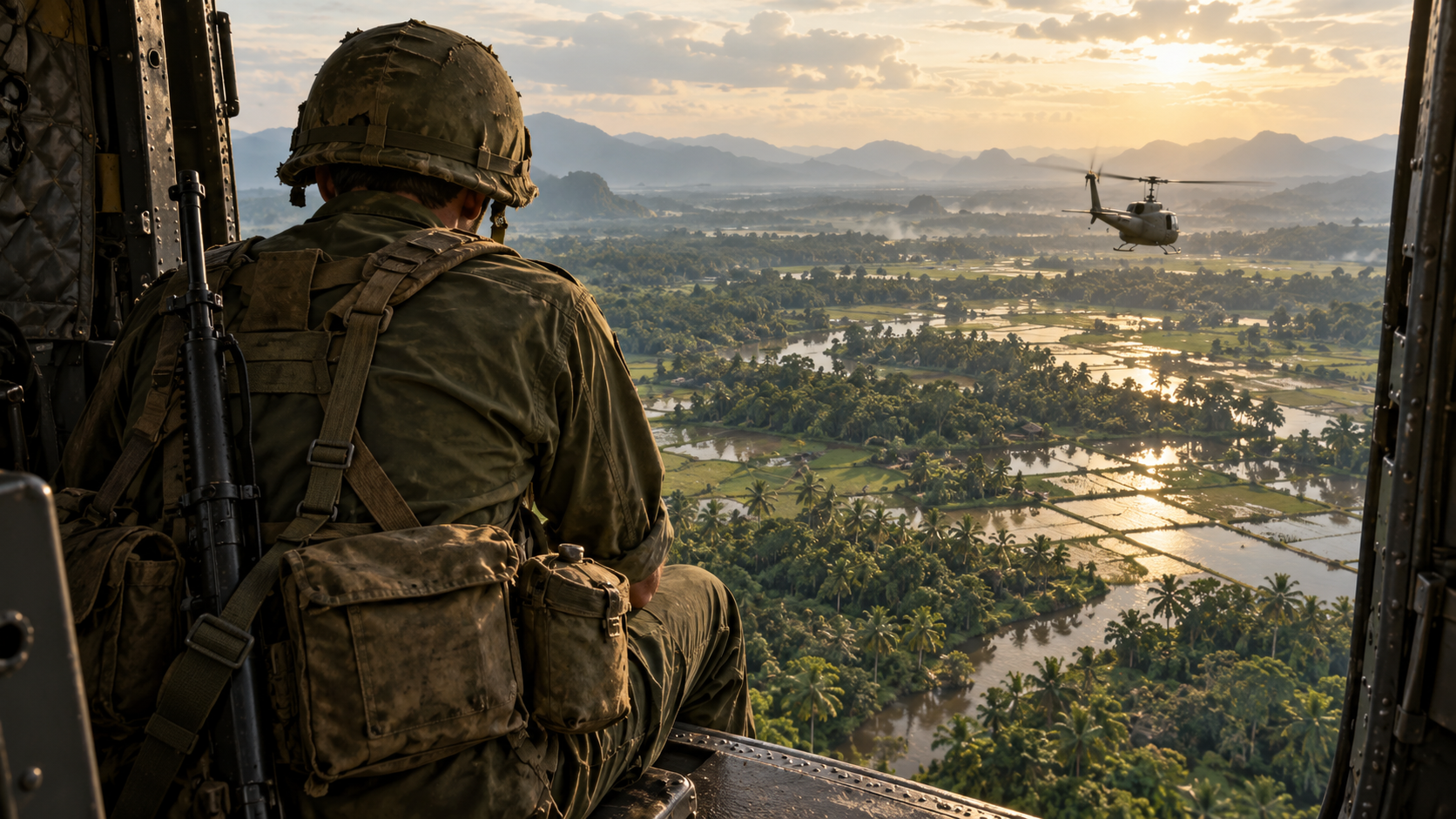
How America Won Battles in Vietnam and Lost Its War
America Had the Firepower. Why Couldn’t It Win in Vietnam?
Political weakness, a resilient enemy and a strategy built around destruction left Washington unable to secure the South Vietnamese state it had committed to defend.
On 30 April 1975, North Vietnamese tanks entered the presidential palace compound in Saigon. The United States had withdrawn its combat forces two years earlier. The government it had spent years defending was finished.
America failed in Vietnam because its military power could not secure its central political objective: a durable, non-communist South Vietnam. Its ally struggled with legitimacy and effective government. Its enemy combined local insurgency with a determined northern state, outside assistance and an ability to absorb enormous punishment. Washington kept increasing the pressure without establishing how that pressure would produce a lasting settlement.
That does not mean American troops were incapable, that every operation failed or that defeat was inevitable from the first day. The United States and its allies won important engagements, disrupted communist operations and prevented earlier collapses. South Vietnamese soldiers also fought hard, often under conditions that later accounts reduce to caricature.
The failure lay in what those achievements could sustain. A battle could end favourably while the political conditions needed to finish the war remained out of reach.
The following ranking weighs causes by their contribution to that strategic failure. It is an editorial judgement, not a statistical formula or an agreed league table among historians. Several causes reinforced one another. The order places the underlying political problem above the operational difficulties that made it harder to solve.
1. America Could Not Build a South Vietnamese State Strong Enough to Survive
The most important weakness was inside the government America was defending.
Washington needed South Vietnam to become a functioning state with enough public support, administrative reach and military strength to withstand communist pressure. Supplying weapons was only part of that task. Officials had to provide security, resolve grievances and persuade people that the government deserved their cooperation.
An internal American memorandum from August 1962 shows that this problem was understood early. Joseph Mendenhall, a former political counsellor at the US embassy, argued that President Ngo Dinh Diem’s government suffered from organisational inefficiency and an inability to rally the population. He connected weak public support directly to poor intelligence and continued communist recruitment.
Mendenhall was offering an assessment, not measuring every Vietnamese person’s allegiance. Nevertheless, the mechanism he described mattered. Villagers who distrusted officials, feared retaliation or doubted that government forces would stay had reasons to withhold information. An army could enter an area without establishing reliable authority there.
Diem’s overthrow and assassination in November 1963 did not solve the problem. Political instability continued. American leaders increasingly treated additional military involvement as a way to prevent the consequences of that instability.
This created a damaging relationship between rescue and dependence. American forces could stop an immediate defeat, but their presence could also postpone the moment when South Vietnamese institutions had to function without them.
South Vietnam was never simply a population waiting to welcome communism. Many people opposed communist rule, and many served the southern state at great personal cost. The narrower and stronger conclusion is that successive governments failed to convert sufficient support into durable national power.
This ranks first because even a better bombing campaign or a more successful offensive still required a viable state to inherit the result.
2. Hanoi Had the Organisation and Commitment to Keep Fighting
American explanations sometimes make the enemy disappear. Vietnam becomes a story about Washington’s mistakes, as though victory would otherwise have followed automatically.
North Vietnam and the communist movement in the South actively shaped the outcome. They organised recruitment, maintained political networks, moved supplies, replaced losses and adjusted their methods. Their leaders made grave mistakes, but they remained capable of imposing new problems on a much richer opponent.
Their commitment also exceeded what American planners could reliably break through punishment. Communist leaders pursued revolutionary rule and national reunification. They were prepared to continue after losses that Washington hoped would force a change of policy.
That determination should not be confused with universal consent. Communist organisation included coercion, repression and violence. Vietnamese nationalism was contested; it did not belong exclusively to Hanoi. Recognising the strength of the communist cause does not require accepting its claim to represent every Vietnamese person.
The strategic importance was practical. American plans often depended on the enemy deciding that continued resistance had become too costly. If Hanoi instead accepted those costs, the United States needed another route to its objective.
The communist side could also change the balance between political struggle, guerrilla attacks and larger military operations. The war was never only a contest between American infantry and lightly armed fighters hiding in vegetation.
By the final campaign, North Vietnam could concentrate conventional forces against the South. Its victory required more than patience. It required the survival and development of an organisation capable of exploiting American departure.
This ranks above individual American tactical errors because the enemy’s continued capacity made those errors consequential over time. Washington was fighting an opponent that could recover, learn and return.
3. Attrition Measured Destruction More Easily Than Progress
American commanders had a formidable capability: they could find enemy formations and bring concentrated firepower against them.
Under General William Westmoreland, attrition became central to the American ground war. The underlying hope was that communist losses could exceed the enemy’s ability to recruit and replace personnel. Body counts became a prominent way of judging progress.
The problem was the relationship between the measurement and the objective.
Enemy deaths could weaken a formation. They did not necessarily show that a district was securely governed, that recruitment had stopped or that Hanoi was approaching political surrender. Even an accurate count could answer the wrong strategic question.
The approach also depended on difficult estimates. Commanders needed to know the enemy’s strength, replacement capacity and tolerance for losses. An apparently favourable exchange could be misleading if the opponent could sustain it longer than the United States could sustain its own commitment.
Institutional incentives made the problem worse. When success is expressed through enemy casualties, units face pressure to produce that result. Activity becomes easier to demonstrate than lasting control.
This does not mean every search operation was pointless. Destroying experienced enemy units could protect communities, disrupt attacks and buy time. The failure was expecting repeated battlefield damage to add up to a political result without sufficiently secure institutions underneath it.
Pacification, which sought to extend government security and authority, was also part of American policy. It should not be erased from the account. Yet its existence did not remove the tension between pursuing enemy forces and protecting people consistently.
A village might benefit from a nearby communist unit being defeated. Its residents still needed to know who would protect them after the operation ended. The difference between those two achievements explains why military statistics could improve while victory remained uncertain.
4. The Enemy’s Supply System Extended Beyond the Battlefield America Could Control
The war’s geography gave communist forces room to survive.
The Ho Chi Minh Trail was a network of routes, facilities and supply arrangements rather than a single road. Routes through Laos and Cambodia connected North Vietnam to southern battlefields. Border areas also provided bases and places to regroup.
For American commanders, this complicated the relationship between winning an engagement and removing the enemy’s ability to return. A force could withdraw, reorganise and receive replacements beyond the area a particular operation could hold.
Air attacks imposed real costs on these systems. They destroyed supplies and infrastructure, forced repairs and complicated movement. They did not reliably seal the southern battlefield.
North Vietnam also benefited from Chinese and Soviet assistance. American assessments documented equipment ranging from vehicles and radar to aircraft and air-defence weapons. The image of a modern superpower confronting an enemy supplied only by ingenuity and bicycles leaves out a major part of the war.
Hanoi was not merely taking orders from its patrons. Rivalry between Beijing and Moscow could give North Vietnamese leaders room to seek support while pursuing their own priorities. Washington could not assume that improving relations with either communist power would make Hanoi abandon its aims.
The United States eventually expanded operations into neighbouring countries, but those actions brought additional political and military costs. Crossing another border could disrupt a base without producing control over the whole network.
This ranks fourth because sustained replenishment undermined attempts to make battlefield losses decisive. The enemy’s resilience had a material foundation: people, weapons and supplies continued reaching the fight.
5. Civilian Harm Undermined the Political Purpose of the War
A government seeking public cooperation faces a severe problem when the war fought in its defence destroys civilian lives and communities.
American firepower could save allied soldiers and stop attacks. It could also kill civilians, damage homes and deepen hostility. The strategic effect depended on circumstances, but the contradiction was unavoidable: methods intended to defeat the insurgency could make the government’s claim to offer protection less convincing.
The My Lai massacre on 16 March 1968 was an extreme and criminal example. American soldiers murdered unarmed civilians. The subsequent concealment compounded the atrocity and the damage to military accountability.
My Lai should not be presented as representative of every American soldier. Some servicemen tried to protect civilians, including helicopter crew members who intervened during the massacre. Those distinctions matter because responsibility belongs to actual decisions and conduct.
They do not diminish the wider strategic problem. Civilian protection depended on leadership, discipline, accurate information and accountability. Failure in any of those areas could have consequences far beyond a single operation.
Earlier approaches to controlling the countryside carried related risks. Mendenhall’s 1962 assessment criticised the implementation of strategic hamlets, including forced labour and pressure to complete settlements without the conditions needed to make them effective. A programme designed to separate villagers from insurgents could alienate the people it was supposed to secure.
The communist side also used terror and coercion. That makes civilian experience more complicated, not less important. People could fear both sides while choosing whatever seemed most likely to keep their families alive.
This ranks fifth because political support was partly produced through daily experience. The credibility of promises made in Saigon or Washington could be damaged by what happened in a hamlet.
6. Washington Pursued an Ambitious Objective Within a Limited War
American leaders wanted to prevent communist victory while avoiding a much larger conflict.
Those aims imposed limits on how the war could be fought. An invasion of North Vietnam or attacks extending towards China raised risks beyond the immediate battlefield. The experience of Chinese intervention in Korea formed part of the strategic background.
Restrictions could frustrate commanders and leave opportunities unused. They were also responses to the possibility that escalation would create a war more dangerous than the one America was already struggling to manage.
This is why the familiar argument that politicians simply refused to let the military win is incomplete. It assumes that removing restraints would have produced success at an acceptable cost. That is a counterfactual claim, not an established result.
Operation Rolling Thunder, the sustained bombing campaign begun in 1965, exposed the difficulty. Air attacks could destroy infrastructure without compelling Hanoi to abandon the southern struggle. Limits, pauses and gradual escalation affected the campaign, but so did the underlying assumption that a particular amount of damage would change the enemy’s political decision.
Later air campaigns demonstrated that airpower could be highly effective against exposed conventional forces and their support systems. That does not establish that bombing could independently create a stable South Vietnamese state.
The Cold War confrontation between the superpowers helps explain this constraint. Local military choices could carry consequences for relations with nuclear powers.
This ranks sixth because the mismatch was substantial, but the alternative was uncertain. Washington accepted obligations that might require a level of escalation it had powerful reasons to avoid.
7. Official Optimism Made Strategic Correction Harder
American officials did not lack warnings. They struggled to turn warnings into a durable change of course.
A paper prepared by Assistant Secretary of Defense John McNaughton on 10 March 1965 assigned 70 per cent of American aims to avoiding a humiliating defeat damaging the country’s reputation as a guarantor. It was one official’s internal formulation, not a scientifically measured account of the entire administration’s motives.
Its significance lies in what it reveals about the argument for continuing. Protecting American credibility could become a reason to deepen the commitment even when confidence in the local outcome was weak.
Once that reasoning takes hold, evidence of difficulty does not necessarily encourage withdrawal. It can support another increase in effort, because leaving appears to confirm the failure everyone wants to prevent.
Public optimism created a separate problem. The Tet Offensive in early 1968 brought communist attacks to cities and other targets across South Vietnam. American and South Vietnamese forces repelled the assaults and inflicted severe losses. Yet the offensive demonstrated that the enemy retained an ability to mount a major coordinated effort.
That was damaging after official claims suggesting stronger progress towards victory. The issue was not simply that television images frightened viewers. The events exposed a gap between public assurances and visible enemy capability.
Tet therefore had different military and political effects. Calling it an uncomplicated communist battlefield victory is misleading. Treating the military response as proof that nothing strategically important had changed is equally weak.
This ranks seventh because distorted expectations delayed adjustment and damaged trust. Leaders needed public support for a long commitment while weakening the credibility of the information used to justify it.
8. America’s Commitment Had a Political Time Limit
The United States could replace aircraft and equipment more readily than it could replenish public confidence in an apparently open-ended war.
Americans disagreed about Vietnam from several directions. Some opposed intervention on moral grounds. Others supported fighting but doubted the strategy. Still others concluded that the costs were no longer justified by the prospect of success.
Those positions should not be collapsed into a single story about protesters forcing an otherwise victorious army to leave. Political opposition developed in response to the war’s conduct, duration and results. It also placed real limits on future military choices.
For Hanoi, continued resistance offered a possible route through this problem. It could seek to survive American pressure until Washington reduced its commitment. That was a strategy with enormous costs and no guaranteed outcome, but it exploited a difference between the two sides’ priorities.
America was fighting a distant war connected to wider strategic interests. Communist leaders were fighting for control of Vietnam itself. That did not make American resolve trivial or Vietnamese resolve uniform. It meant the costs of abandoning the objective were understood differently.
Nor does the argument depend on democracies being incapable of prolonged war. They can sustain long conflicts when the purpose remains persuasive. In Vietnam, leaders found it increasingly difficult to explain what additional sacrifice would achieve and when it would become sufficient.
This ranks eighth because declining support became a decisive constraint, but it was also a consequence of earlier failures. Public patience did not collapse independently of events. It was worn down by an unresolved war and an unconvincing route to its conclusion.
9. Personnel Turnover Made a Demanding War Harder to Learn
The political and operational problems were made worse by the way American institutions staffed the war.
The Army’s one-year tour policy generated continual personnel turnover. It offered individuals a defined endpoint to service in Vietnam, but it also required units to absorb replacements and lose experience throughout the campaign.
In a war where local knowledge mattered, that carried costs. Relationships, familiarity with terrain and the ability to interpret behaviour could take time to develop. New arrivals had to learn while already facing danger.
Rotation was not inherently evidence of incompetence. Keeping troops indefinitely would have created its own serious problems. The relevant question is what the policy required the institution to rebuild repeatedly.
The same challenge applied more broadly to the division of responsibilities. Large combat operations, training, intelligence, civilian development and local government support had to reinforce one another. Success in one field could be lost if another organisation could not maintain it.
American military histories record attempts to improve coordination and adapt operations. It would be inaccurate to describe an army that learned nothing. The harder judgement is that adaptation did not consistently overcome the pressures of turnover, competing tasks and a changing enemy.
The war demanded both the ability to fight major formations and the patience to establish local security. Preparing for one did not automatically produce the other.
This ranks ninth because it magnified the larger problems rather than creating them. Better continuity could improve performance. It could not, by itself, settle the political future of South Vietnam or eliminate Hanoi’s ability to wage war.
10. The Exit Agreement Did Not Resolve the Military Contest
The final reason concerns the difference between ending American participation and securing the survival of America’s ally.
Vietnamisation sought to transfer more responsibility to South Vietnamese forces as American troops withdrew. The South possessed real fighting capacity. But handing over equipment and responsibilities was not the same as replacing the full system of support the United States had supplied.
The 1972 Easter Offensive demonstrated both capability and dependence. South Vietnamese defences helped stop the offensive, while American air and naval power played a major role. The lesson was more complicated than either total southern helplessness or full military self-sufficiency.
The Paris agreement signed on 27 January 1973 enabled American withdrawal and the return of prisoners of war. It did not remove North Vietnamese forces already in the South or produce a lasting end to fighting.
Afterwards, American promises of a forceful response were not upheld. Domestic opposition to renewed involvement, congressional resistance, economic pressures and Watergate restricted Washington’s choices. North Vietnam rebuilt and prepared another offensive.
By 1975, South Vietnamese leaders faced severe military pressure. Decisions to retreat into more defensible areas contributed to a rapidly deteriorating situation. The final collapse involved leadership, logistics, confidence and enemy action as well as the limits of American assistance.
This ranks tenth as a root cause because it belongs to the end of a much longer process. It was nevertheless crucial to the timing and form of defeat. A different level of American support might have changed events; claiming that it would certainly have secured permanent survival goes beyond what the historical record can establish.
Why “America Never Lost a Battle” Does Not Answer the Question
The claim is too sweeping to serve as reliable history. More fundamentally, it mistakes a favourable battlefield record for the achievement of a war’s purpose.
Military engagements have different objectives. A force may inflict greater losses, hold its position or recover a city while failing to obtain the wider result for which those actions were undertaken. Tactical performance matters enormously to the people fighting. It cannot be used as a substitute for assessing strategy.
Vietnam also changed over time. Insurgency, political struggle, bombing, conventional offensives and negotiation interacted. Explaining the outcome solely through jungle ambushes overlooks the North Vietnamese state. Explaining it solely through American withdrawal overlooks the reasons withdrawal became policy.
The distinction between defeating an opponent and establishing a viable political order also appears in the history of the American decision to invade Iraq. The conflicts had different origins and outcomes, so the comparison should remain limited. Military superiority still left political questions that firepower could not settle.
America’s Vietnam policy ultimately depended on a South Vietnamese government that could continue after American combat forces went home. On 30 April 1975, the collapse of that government provided the answer to the test Washington had spent years postponing.
Sources
US Department of State, Office of the Historian — Memorandum From Joseph Mendenhall, 16 August 1962 — Contemporary assessment of government weakness, recruitment, intelligence and strategic hamlets.
US Department of State, Office of the Historian — Action for South Vietnam, 10 March 1965 — McNaughton’s internal formulation of American aims and the risks of escalation.
US Department of State, Office of the Historian — Ending the Vietnam War, 1969–1973 — Vietnamisation, the 1972 offensive, the Paris settlement and the failure of the post-agreement order. This historical overview also covers the 1975 collapse.
Next Reads
The Cold War Explained: How America and the Soviet Union Nearly Destroyed the World — The containment policy and escalation risks surrounding American intervention.
Why Did the USA Invade Iraq? The Real Reasons Behind the 2003 War — Another examination of American war aims, official assumptions and political outcomes.
Why Empires Fall: Power, Resources And The Myths Of Collapse — How resources and local loyalties help explain the limits of central power, without treating different historical cases as identical.
