My Friends by Fredrik Backman: Summary, Characters and the Ending Explained
Spoiler warning: this guide covers the whole plot of My Friends, including the ending. The novel also deals with grief, addiction, domestic violence and abuse; this summary refers to those themes without graphic detail.
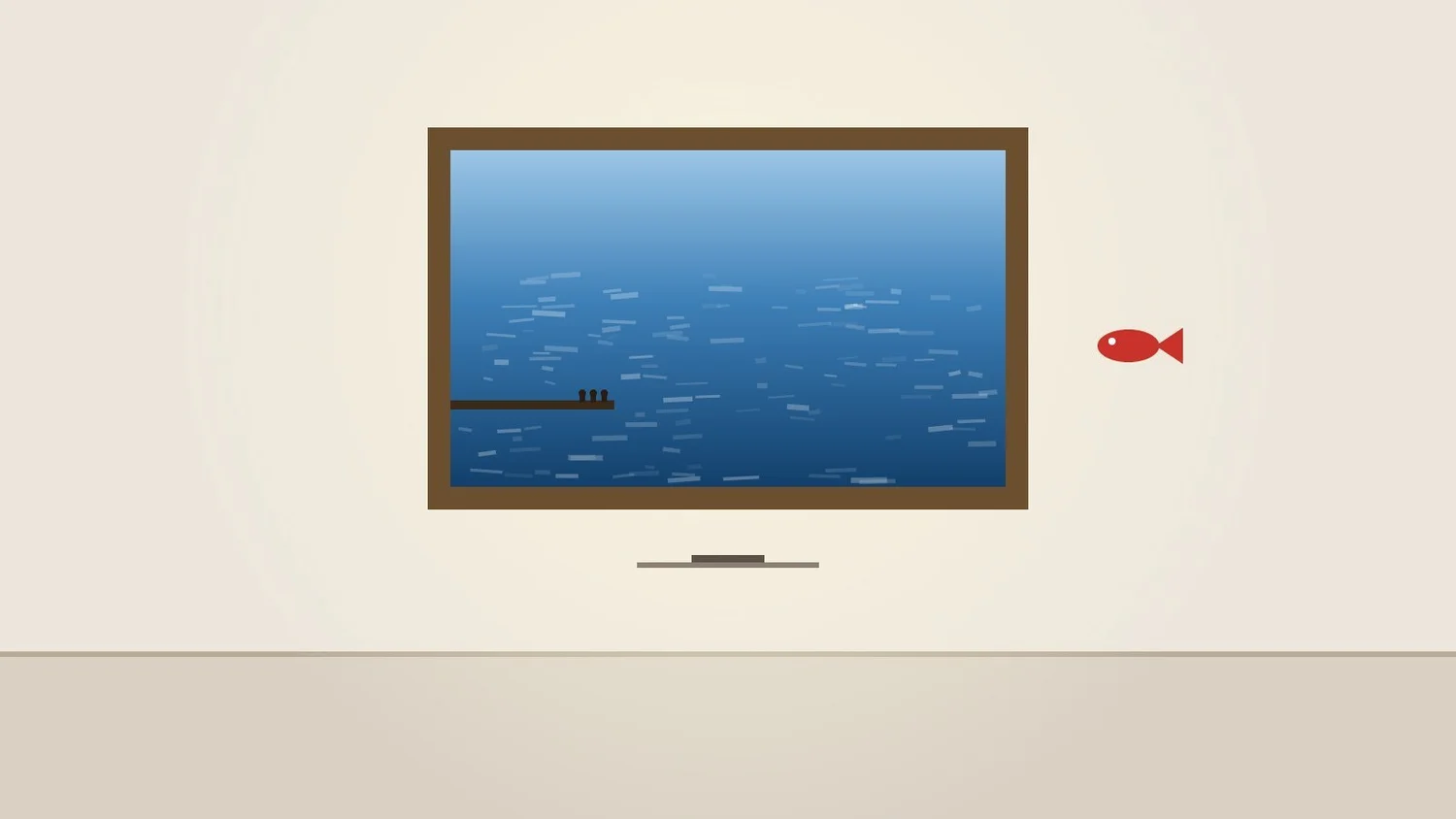
Fredrik Backman has built a career on people who look ordinary from a distance and turn out to contain whole worlds. My Friends, published in English in May 2025 in a translation by Neil Smith, makes that idea literal. At its centre is a famous painting that most people think is a picture of the sea. Look closely and there are tiny figures on a pier. Look closer still, the novel argues, and you find a summer, a group of teenagers and a kind of love that saved their lives.
The book has become one of Backman's most loved novels, and it is a reading-group staple well into 2026, when its paperback edition reached a fresh wave of readers. It is also a novel people finish with questions: who the figures in the painting really are, what happened to them, and why Louisa makes the choice she does at the end. This guide explains the story in order, then unpacks the ending.
What Is My Friends About?
The novel runs on two timelines roughly 25 years apart.
- The present: Louisa, a teenage runaway from the foster system, is grieving her best friend Fish. She breaks into an auction to see The One of the Sea, the first painting by the reclusive, world-famous artist known as C. Jat.
- The past: a summer in a rough harbour town, when four 14-year-olds sat on a pier and one of them painted the others. That painting became The One of the Sea.
The two stories are joined by Ted, one of the friends from that summer, who ends up telling Louisa the whole story while they travel together across the country. Backman uses his structure the way the painting uses its tiny figures: the present is the big blue surface, and the past is what you see when you lean in.
The Main Characters
In the present
- Louisa – a graffiti artist on the edge of turning 18, who has moved between foster homes and carries a postcard of The One of the Sea everywhere.
- Fish – Louisa's best friend from foster care, the person who taught her to break into places. Fish has died before the novel begins, after struggling with substance use. Louisa believes she really died of being sad all the time.
- Ted – a nervous, pedantic schoolteacher and the artist's oldest friend.
In the past
- Kimkim, "the artist" – the shy, gifted boy who later becomes C. Jat.
- Joar – the fiercest and most protective of the group, whose home life is dominated by a violent father.
- Ali – a funny, reckless girl who arrives in town that summer and changes the group's chemistry. It was her idea that the artist should paint the friends.
- Ted – the anxious one, whose family home becomes the friends' refuge.
- Christian – an older young man who encourages the artist's early talent and whose death leaves a lasting mark on him.
How the Story Begins: The Auction
The novel opens with Louisa slipping into an auction held in a converted church. The guests see The One of the Sea as an investment: blue, famous and very expensive. Louisa sees something else. She has studied the postcard for years and knows there are three small figures on the pier, children she has quietly adopted as an imaginary family.
When she hears wealthy bidders discussing the painting as if it were a bank balance, she crosses the rope and paints a small red fish on the wall beside it, a tribute to her dead friend. Security throws her out.
In an alley behind the building she meets a sick, unkempt man who seems to be homeless. They talk, he cries at her postcard, and they paint a wall together. She does not realise that he is C. Jat himself, close to death and hiding from the art world. That night he dies in hospital.
The bequest
Ted, who has bought the painting back at the auction for his dying friend, is given one last instruction: find the girl from the alley and give her The One of the Sea. He tracks Louisa down around her 18th birthday. She is suspicious, he is anxious, and neither of them knows what to do with a painting worth a fortune. They set off by train to the artist's hometown, carrying the painting and his ashes.
The Summer on the Pier: Ted's Story
Most of the novel is Ted telling Louisa about the summer the painting was made. It is funny, chaotic and often painful.
Four friends and a town that wants to break them
The harbour town is hard and violent. Joar's father beats him; Ali lives with a father whose drinking keeps them moving from place to place; the artist is gentle in a place that punishes gentleness. Ted's family offers the only real stability, and the friends spend their evenings in his basement reading comics and reciting superhero quotes.
Backman lets the friends be genuinely funny. There are pranks, plans, terrible jokes and a long-running gag that ends up hidden in the painting itself. That laughter matters: much of the novel's emotional force comes from the fact that these children are happy together in spite of everything around them.
The painting and the competition
Joar spots a newspaper advertisement for a young artists' competition, with the promise that the winning painting will hang in a museum. He is certain the artist will be famous one day. Joar sells his bicycle to pay for paint, and Ali suggests the subject: the friends themselves, on the pier. The artist works through the summer while the others sit nearby.
The knife and Joar's father
The darkest thread concerns Joar's father. After a particularly brutal beating, Ali gives Joar a knife, and for much of the summer it sits in his bag like a decision waiting to be made. In the end Joar never has to use it. His father is badly injured in an accident at the harbour and left permanently disabled. The violence stops, but the question of what Joar was prepared to do hangs over the rest of his life.
Grief arrives early
The summer also brings losses. Ted's father dies, and the funeral shows how differently each friend copes. The artist loses Christian, the older mentor who first told him his work mattered. The novel never treats these deaths as plot devices; they are the reason the friendship feels so urgent.

The Journey: Louisa, Ted and Joar
In the present, the train journey becomes a slow negotiation between two people who have each lost the person who held them together. Louisa carries Fish's cigarettes; Ted carries the artist's ashes. Along the way they argue, get lost, swim in the sea at dawn and gradually admit how frightened they are.
In the harbour town they find Joar, now an adult who has spent his life fighting other people's battles, sometimes with his fists. He fills in parts of the story Ted cannot bring himself to tell, including what really happened to his father.
What happened to Ali
Ali is the friend the reader is warned about from the start. Joar once predicted that not all of them would still be alive as adults, and he was right. Ali moved away after that summer and later died in an accident at sea. Her death is the wound at the centre of the story, which is why Ted finds it so hard to finish telling it.
How Does My Friends End?
By the time they reach the town, Louisa understands what the painting is: not a seascape but a portrait of children who loved one another, and of a moment of shared laughter that may have been the last time all of them laughed together.
Louisa's decision
The painting is Louisa's to sell. It would make her rich and solve every practical problem in her life. Instead, she decides it should belong to everyone. With Ted, Joar and Christian's mother, she stages a kind of reverse heist: they break into the local museum and hang The One of the Sea on the wall, without asking anyone's permission.
It is the museum from the original competition, the place where the teenage artist was told his painting might one day hang. The ending closes that loop. A picture that began as a dream of being seen in a museum finally gets there, not through money, but through friends.
The epilogue
The final chapters jump forward. Ted pays for Louisa to go to art school and finds his way back to teaching. Louisa becomes a celebrated artist in her own right and uses that success to look out for young people like the one she used to be. The novel ends with her calling Ted to tell him she has found a new young talent: someone who, in the novel's spirit, is one of them.
The Ending Explained
Why Louisa doesn't sell the painting
Throughout the novel, adults describe art in terms of price. Louisa is the only person at the auction who looks at The One of the Sea and sees people. Selling it would turn her into one of the bidders who treat it as blue and expensive. Hanging it in a public museum puts it where it can do for strangers what the postcard did for her: offer company to someone who has none.
Why the artist chose Louisa
The artist met Louisa for less than an hour, but he recognised her immediately. She was a gifted, angry child with nowhere to go, exactly as he and his friends had been. His bequest is not charity. It is an attempt to give her what Joar, Ali and Ted gave him: proof that someone believed in her.
Friendship as family
Every major character in My Friends has been failed by at least one parent. Backman's argument is that the people who save us are not always the people who are supposed to. The novel's title is not sentimental decoration; it is the book's thesis. These children raised one another.
Grief that becomes a gift
Louisa begins the book barely able to say Fish's name. She ends it by turning her loss into work that helps someone else. The red fish she paints at the auction is an act of vandalism; the life she builds afterwards is the same impulse turned into something lasting.
Themes at a Glance
| Theme | How the novel treats it |
|---|---|
| Art and value | The painting's worth lies in who is in it, not what it costs. |
| Found family | Friends replace parents who cannot or will not protect their children. |
| Grief | Loss is carried rather than resolved, and can be turned towards others. |
| Class and place | A tough harbour town shapes, and nearly destroys, the four friends. |
| Seeing closely | Only people who lean in notice the figures on the pier, or the child in trouble. |
How My Friends Fits Backman's Work
Readers who know A Man Called Ove or Anxious People will recognise the mix of comedy and heartbreak, the narrator who addresses the reader directly and the faith in small kindnesses. My Friends is closer in mood to the Beartown novels, with their tough towns and damaged teenagers, but it is more hopeful. Many readers have compared it to Stephen King's novella The Body and its film adaptation Stand by Me: a group of children, one summer, and an adult narrator who has never quite left it.
The novel was praised by trade reviewers on release, including a starred review from Kirkus, and became a bestseller. Backman told interviewers around publication that he was unsure whether he would publish again, which gives the book's preoccupation with legacy an added edge.
The Verdict
My Friends is a novel about looking properly: at a painting, at a stranger, at a child everyone else has written off. Its ending refuses the obvious happy outcome of a teenager made rich overnight and offers something Backman clearly values more. Louisa gives the painting away, keeps the story, and spends her life passing on what four friends on a pier once gave one another.
Sources
- Simon & Schuster: My Friends by Fredrik Backman (publisher's page)
- Kirkus Reviews: My Friends (starred review)
- Publishers Weekly: My Friends review
- LitCharts: My Friends summary
- SuperSummary: My Friends plot summary and themes
- The Common Reader: Fredrik Backman Foils the Critics (and Me)
Next Reads
- Theo of Golden Explained: The Quiet Bestseller About Kindness, Grief and the Old Man Who Changed a Town
- To the Lighthouse Summary and Ending Explained: The Ramsay Family, the Lost Years and Lily's Painting
- Kin Summary: Tayari Jones's Novel About Motherhood, Friendship and Family
- Flowers for Algernon Explained: The Heartbreaking Story of a Man Who Became a Genius
