The God Of The Woods Summary: The Summer Camp Mystery That Becomes A Family Autopsy
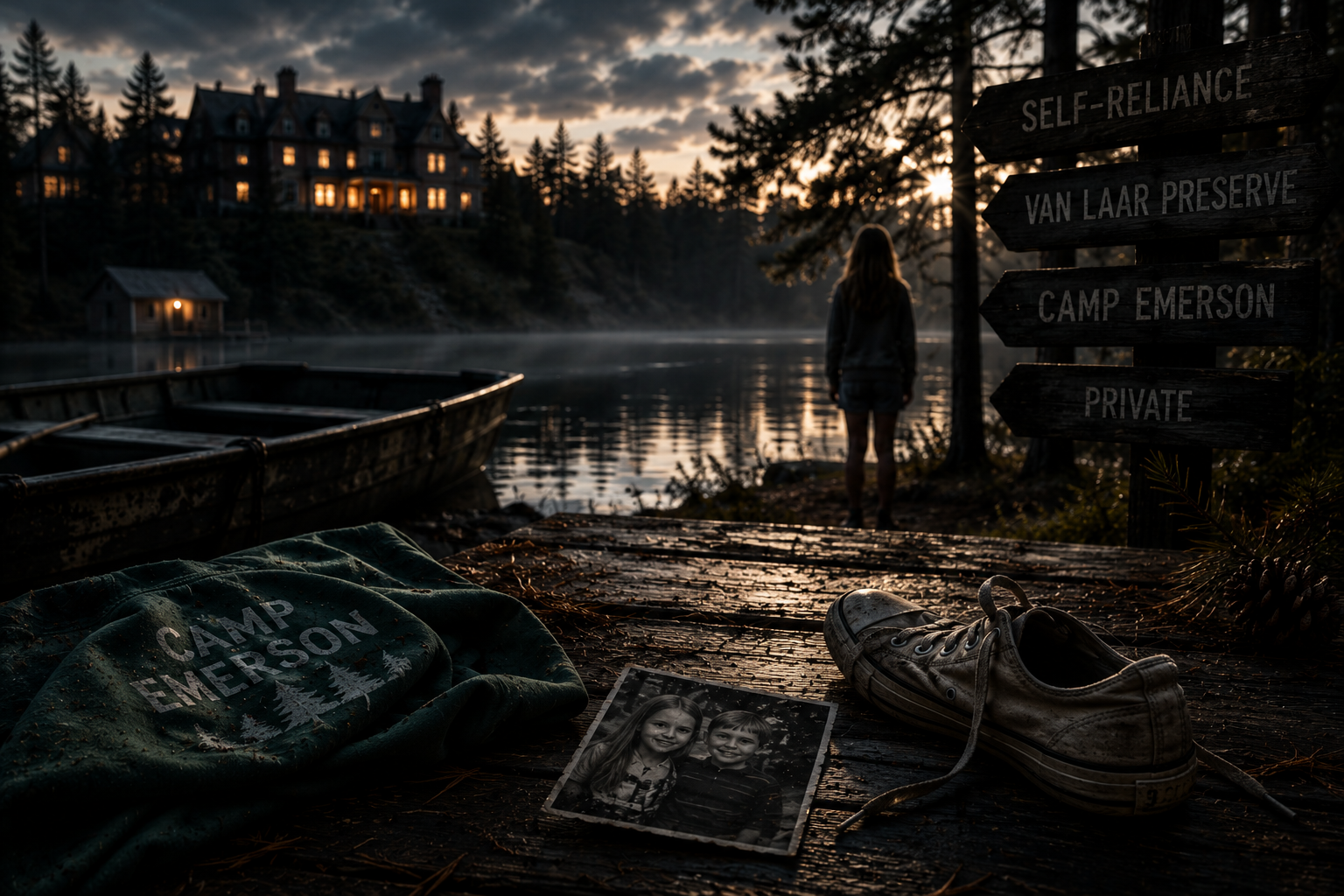
A Rich Family, Two Missing Children And One Rotten Secret
What Really Happened To Barbara And Bear Van Laar?
Liz Moore’s The God of the Woods begins with the kind of disappearance that should tear a community apart. A thirteen-year-old girl is missing from summer camp. Her bed is empty. Her counsellor is frightened. The woods are enormous.
But the real horror is not that Barbara Van Laar has disappeared. It is that her family has been here before.
Fourteen years earlier, Barbara’s older brother, Bear, vanished from the same privileged world of cabins, lake water, servants, workers and old money. His body was never found. His disappearance became family mythology, local scandal and private rot. When Barbara disappears in 1975, the question is not simply where she has gone. The question is whether the Van Laars are unlucky, cursed, guilty, or all three.
The God of the Woods was published by Riverhead in 2024, became a New York Times bestseller, was selected as a Kirkus Best Book of 2024, and has since moved toward a Netflix adaptation, which gives it exactly the kind of long-tail cultural life Taylor Tailored readers should watch closely.
The Big Idea Of The Book
At the surface level, this is a missing-girl thriller.
Underneath, it is about what powerful families do when truth threatens inheritance, reputation and control. The Van Laars own the land, the camp, the social hierarchy and much of the local economy around them. Their wealth does not protect their children. It isolates them.
The central question is brutal: what happens when a child from a powerful family is not kidnapped by a monster, but destroyed by the family’s own need to keep appearing untouchable?
The Plot In One Flow
The novel opens in August 1975 at Camp Emerson, a summer camp in the Adirondacks. Louise Donnadieu, a camp counsellor, wakes to discover that one of the girls in her care is missing. The girl is Barbara Van Laar, thirteen years old, difficult, strange, privileged and emotionally abandoned.
Barbara is not an ordinary camper. Her family owns Camp Emerson. They also own Self-Reliance, the nearby estate on the Van Laar Preserve. Her grandfather, Peter Van Laar II, is the old patriarchal centre of the family empire. Her father, Peter Van Laar III, inherits the entitlement, cruelty and emotional deadness of that world. Her mother, Alice, is damaged by years of marriage, grief, pills, alcohol and silence.
Barbara’s disappearance instantly echoes an older wound. Fourteen years before, her brother Bear disappeared from the same family sphere and was never found. Bear was eight years old. His loss became the defining tragedy of the Van Laars, but also a source of suspicion. A working man, Carl Stoddard, was blamed and died in custody, but the case never truly settled. The community has lived for years with the suspicion that the official story was incomplete.
Barbara has spent the summer as an outsider. She is not warm, obedient or socially polished in the way her family wants. She is edgy, resistant and watchful. At camp she attracts the attention of Tracy, a lonely girl who is desperate for friendship and drawn toward Barbara’s confidence. Barbara tells Tracy she has been sneaking out at night. That detail becomes important because, when Barbara vanishes, the first obvious question is whether she was taken or whether she walked into the woods herself.
Louise is immediately vulnerable. She is responsible for the girls, but she has secrets of her own. On the night Barbara disappears, Louise has sneaked out to meet Lee Towson, the camp’s prep cook. Her fiancé, John Paul McLellan Jr., catches her flirting with Lee, and the confrontation turns physical between the men. Louise’s own compromised position makes her easy to blame, easy to pressure and easy to dismiss.
The investigation begins with panic, confusion and class pressure. The Van Laars expect control. They are used to being obeyed. They are not used to being questioned by people beneath them. The authorities arrive, including Judyta “Judy” Luptack and Denny Hayes. Judy is young, female and underestimated. Her male colleagues and superiors do not treat her as an equal. That matters because this is a novel full of people who are not believed because the wrong person is speaking.
A second threat hovers over the search: Jacob Sluiter, a convicted murderer and survivalist, has escaped from prison and may be in the area. The possibility that Barbara has been taken by a known predator gives the community a simple monster to imagine. It also conveniently distracts from the uglier possibility that the danger is not outside the Van Laar world, but inside it.
As the search expands, Tracy becomes overwhelmed by fear and loyalty. She goes into the woods herself, trying to find Barbara. For a while, another girl is missing too. This adds pressure to the investigation and gives the novel one of its strongest emotional lines: Tracy is not heroic in a polished way. She is frightened, lonely and desperate to matter to someone. Barbara gave her the feeling of being chosen. That is enough to make her reckless.
The story moves back and forth through time, revealing that Barbara’s disappearance cannot be understood without Alice. Alice once entered the Van Laar family as a young woman who married Peter Van Laar III and slowly lost herself inside the performance of wealth. Peter is controlling, cruel and dismissive. He wants a wife who reflects status back to him. Alice becomes increasingly dependent on alcohol and pills, not because she is weak in some simple sense, but because she has been trained to survive inside a life where her own judgement is constantly undermined.
Bear’s disappearance sits at the centre of her collapse. In the official family story, Bear vanished during a hike after briefly separating from his grandfather. An enormous search followed. Carl Stoddard, a firefighter and estate worker, became the scapegoat. He was treated as a disposable man from a lower class, someone whose life could be destroyed to give the wealthy a clean narrative.
But Judy begins to suspect the old case is not what it seemed. The family’s reactions are too managed. The old men are too careful. The estate holds too many silences. Peter Van Laar III insists on controlling communication and prefers Captain LaRochelle, the investigator connected to Bear’s case, to handle matters. That insistence only makes the past feel more corrupt.
Meanwhile, suspicion gathers around John Paul McLellan Jr. He is entitled, predatory and protected. His lawyer father has shielded him from consequences before. Barbara may have been sneaking out at night to meet someone, and John Paul’s presence around the camp and its young women gives the investigation a credible suspect.
Louise’s history with John Paul makes this darker. In a winter flashback, he abuses her. She flees to T.J. Hewitt’s cabin, where she learns about a remote cabin belonging to the Hewitts farther north. This is not just background information. It becomes one of the hidden routes through the plot. Louise knows something about geography, escape and refuge that the Van Laars do not fully control.
The more Judy investigates, the more the story becomes less about a missing girl and more about a system. The Van Laars have money. The McLellans have legal influence. The camp workers have knowledge. The local investigators have bias. The women and girls have truth, but truth is not enough if the structure around them is built to discredit them.
Then the novel finally reveals what happened to Bear.
In 1961, on the night of the Blackfly Good-By summer party, Alice is emotionally shattered after discovering Peter’s affair with her sister, Delphine. She is intoxicated, unstable and desperate. Despite bad weather approaching, she takes Bear out onto the lake. The boat capsizes. Bear drowns.
This is the deepest family secret. Bear was not abducted by an outside predator. He died in an accident connected to Alice’s despair, Peter’s betrayal and the wider sickness of the Van Laar household. His grandfather, Peter Van Laar II, does not respond by telling the truth. He responds as a patriarch protecting an institution. He arranges a cover-up and has Vic Hewitt, the camp director, bury Bear’s body in the woods. Alice is sedated and left without the truth of what happened to her son.
That revelation changes the entire novel. Bear was not simply a lost child. He was turned into a family myth because the truth would have damaged the Van Laar name. Carl Stoddard’s destruction was collateral damage. The family’s power required a substitute villain.
Back in 1975, Judy’s investigation pushes toward Vic Hewitt. She finds him hidden above the slaughterhouse, ill and losing his memory. Vic and T.J. eventually reveal what they know: Bear drowned, and the Van Laars covered it up. The woods did not just conceal a child. They concealed class violence, family rot and the machinery of reputation.
But Barbara’s case is different.
The assumption throughout the novel is that the two disappearances must be the same kind of event. That is the trap. Bear was dead, hidden by adults. Barbara is alive, hidden by choice.
Barbara has long understood that her family does not love her in the way she needs to be loved. Her mother is too ruined by grief and addiction to care for her properly. Her father sees her as another inconvenience. Her family intends to send her away to a strict reform school. Camp Emerson is not freedom; it is a waiting room before further control.
T.J. Hewitt becomes crucial. T.J. has acted almost as Barbara’s true caretaker. Unlike the Van Laars, she sees the girl as a person rather than a family problem. She helps Barbara plan her escape, gives her supplies and survival training, and supports the possibility that Barbara might be safer lost than found.
Judy also discovers that T.J. planted Barbara’s bloody clothing in John Paul’s car. This is morally complicated. John Paul is dangerous, and the reader has every reason to despise him. But the evidence is planted to direct suspicion away from Barbara’s actual escape. T.J. is not purely innocent; she manipulates the investigation. But her manipulation serves a radically different purpose from the Van Laar cover-up. The Van Laars buried truth to preserve themselves. T.J. bends truth to preserve Barbara.
Annabel’s connection to John Paul adds another layer. Judy learns that Annabel has been seeing him during the summer, complicating the initial assumptions about who Barbara may have been meeting. The investigation keeps punishing the easy answer. Every time someone wants a clean villain, the book reveals a messier structure underneath.
Louise, after being falsely accused of drug possession and arrested, becomes part of the truth chain. Once released, she tells Judy what she knows about the Hewitts’ remote cabin. That information helps Judy move beyond the official search and toward the hidden geography of escape.
The final movement of the plot belongs to Judy and Barbara.
Judy follows a hunch and swims to an island, where she finds Barbara alive. Barbara is living in isolation. She is self-sufficient. She has not been murdered. She has not been abducted. She has not been waiting to be rescued.
This is the most important reversal in the book. The missing girl does not want to be returned.
Judy sees enough to understand that forcing Barbara back would not be justice. Legally, Barbara is a missing child. Socially, she is the daughter of a wealthy family. Morally, she is a person who has escaped a life that was consuming her. Judy chooses not to drag her back into the machine.
That decision gives the ending its strange power. The investigator solves the case, but she does not perform the expected institutional action. She finds the missing girl and protects her disappearance.
The two Van Laar children therefore become opposite versions of the same family tragedy. Bear was lost because adults lied after a death. Barbara is lost because adults failed her while she was alive. Bear needed the truth to be uncovered. Barbara needs the truth to remain partially hidden.
The Main Characters Inside The Plot
Barbara Van Laar is not a simple victim. She is neglected, angry and intelligent enough to understand the prison she has been born into. Her disappearance is frightening because she is young, but it is also an act of agency. She becomes the one Van Laar child who refuses to be turned into a symbol by the family.
Bear Van Laar is the ghost of the story. He is dead long before the main investigation begins, but his disappearance shapes everyone. His death exposes the family’s defining instinct: when faced with grief, guilt and reputational danger, they choose concealment.
Alice Van Laar is one of the novel’s most tragic figures. She is both victim and source of harm. She suffers inside a cruel marriage, loses her son, is denied the truth and becomes emotionally unavailable to her daughter. The book does not excuse her, but it shows how a controlled woman can become part of the damage that later consumes her child.
Peter Van Laar III represents inherited entitlement. He is not the loudest monster in the book, but he is central to its moral decay. His affair, cruelty and indifference help create the conditions for disaster.
Peter Van Laar II represents old power in its purest form. His response to Bear’s death is not confession, grief or accountability. It is management. He treats truth as a threat to be contained.
Judyta Luptack is the moral counterweight. She is underestimated because of her age and gender, but she keeps looking where others prefer not to look. Her final act matters because she chooses human judgement over institutional obedience.
T.J. Hewitt is one of the novel’s most complicated protectors. She lies, plants evidence and helps a child vanish. Yet her actions come from a clearer understanding of Barbara’s reality than the formal authorities possess.
Louise Donnadieu shows how vulnerable women are blamed when powerful men and families need distraction. Her history with John Paul and her knowledge of the Hewitt cabin make her more important than the authorities initially realise.
John Paul McLellan Jr. is not the central culprit, but he is essential to the moral atmosphere. He represents protected male entitlement: the kind of man whose bad behaviour is absorbed, explained away or legally shielded until someone finally uses his reputation against him.
The Central Conflict Inside The Plot
The central conflict is not simply Barbara versus the woods.
It is Barbara versus return.
Everyone assumes the desired outcome is to find Barbara and bring her home. But home is the problem. Family is the danger. Wealth is not safety. The investigation gradually reveals that the respectable world around Barbara is more threatening than the wilderness she escapes into.
The woods become ambiguous. They are dangerous, but they are also honest. They do not pretend to love her. They do not sedate her, send her away, scapegoat innocent men or bury children to preserve a family name.
The Turning Points Inside The Plot
The first major turning point is Barbara’s disappearance itself, because it reopens Bear’s unsolved case and forces the Van Laar family back under scrutiny.
The second is the focus on Jacob Sluiter. His escaped-prisoner presence gives everyone an external monster, but the novel uses him as misdirection. The real danger is not only the obvious predator in the woods. It is the social order around the woods.
The third is Judy’s suspicion that Bear’s case was covered up. Once the old disappearance becomes corrupt rather than mysterious, the novel shifts from thriller to family autopsy.
The fourth is the revelation that Bear drowned and was buried. This transforms the Van Laars from grieving aristocrats into architects of a moral crime.
The fifth is the discovery that Barbara is alive by choice. This changes the emotional genre of the ending. The book stops being about rescue and becomes about whether escape can ever be morally clean.
The Emotional Journey Inside The Plot
The emotional movement of the novel begins with dread. A child is missing. The woods are vast. A killer may be loose.
Then it becomes suspicion. The Van Laars are too polished, too controlling, too rehearsed. Their grief does not feel like truth; it feels like property.
Then it becomes anger. The destruction of Carl Stoddard, the protection of John Paul, the neglect of Barbara and the concealment of Bear all point to the same system. Some people are disposable so that other people can remain respectable.
Finally, the novel lands in something stranger than justice. Barbara is found, but not restored. Bear’s truth is uncovered, but not repaired. Judy makes the least institutional and most humane decision available: she lets Barbara remain missing.
The Ending Explained
At the end of The God of the Woods, Judy finds Barbara alive and living independently. Barbara has escaped her family with T.J.’s help. She is not waiting to be saved. She is building a life outside the reach of the Van Laars.
Judy chooses not to force her back.
That decision is the moral centre of the ending. In a conventional thriller, solving the mystery would mean restoring the missing child to the family. In this novel, restoration would be another form of violence. Barbara’s disappearance is traumatic for others, but it is also her only route to self-ownership.
Bear’s ending is the opposite. He cannot choose. He died as a child, and the adults around him stole even the truth of his death. Barbara survives because another adult finally refuses to treat a Van Laar child as property.
The Story Anchor
The strongest image in the novel is not the empty bed or the search party.
It is Judy finding Barbara and recognising that the girl’s survival depends on not turning the discovery into a public victory. The solved case becomes an unsent report. The heroic rescue becomes restraint. The investigator’s finest moment is not dragging someone into the open, but understanding why she needed the dark.
If You Only Remember Three Ideas
First, powerful families do not only hide crimes. They create realities around them. The Van Laars can influence investigations, shape suspicion and ruin working-class lives because their money gives their version of events more weight.
Second, disappearance can mean different things depending on who controls the story. Bear’s disappearance is a cover-up. Barbara’s is an escape. The same word hides two opposite truths.
Third, being found is not always salvation. Sometimes the person searching must ask whether returning someone to their old life is justice, obedience or cowardice disguised as order.
The Sentence That Explains The Entire Book
The God of the Woods is about a girl who survives by becoming the one family secret her powerful relatives cannot control.
Why This Book Matters
The novel matters because it understands something modern audiences recognise instantly: institutions often protect the people who already have protection.
Its setting is 1975, but its concerns are current. Wealth, reputation, male entitlement, class bias, family secrecy, institutional sexism and public narratives still shape which victims are believed and which suspects are convenient. The book has remained culturally visible through bestseller momentum, major review attention, book-club selection and screen-adaptation interest.
Misconceptions
The shallow reading is that this is a mystery about whether Barbara was kidnapped or murdered.
The deeper reading is that the book is about ownership. Who owns land? Who owns truth? Who owns children? Who owns a woman’s story? Who owns the official version of the past?
Barbara’s escape is shocking because she rejects the answer her world has prepared for her. She does not belong to the Van Laars simply because they produced her.
Online summaries can flatten the novel into two twists: Bear drowned, Barbara survived.
That misses the machinery. The power of the book is not only what happened. It is how many people had to be ignored, controlled, threatened, sedated, blamed or underestimated for those things to remain hidden.
The novel is not just a puzzle box. It is a social map.
The Taylor Tailored Interpretation
The Taylor Tailored reading is this: The God of the Woods is a thriller about what happens when reputation becomes more valuable than a child.
Bear dies because the family cannot survive shame. Barbara disappears because she cannot survive the family. In both cases, the Van Laar system treats children as extensions of legacy rather than separate human beings.
The woods are not the villain. The woods are the place where the family’s lies finally stop working.
The Real-Life Test
The real-life test is simple: when something goes wrong, do people around you seek truth or narrative control?
Families do it. Companies do it. Institutions do it. Leaders do it. The person with the most power often tries to define the story before anyone else can describe what happened.
This book is a warning to watch behaviour after crisis. Crisis reveals whether people value repair, reputation, obedience or control.
How To Apply The Lessons Without Turning Them Into A Fantasy
Do not romanticise disappearance. Barbara’s escape works as fiction because the novel builds an extreme moral situation around her.
The practical lesson is not “run away.” It is: identify systems that require your silence to keep functioning. Notice when someone demands loyalty before honesty. Notice when a family, workplace or institution punishes the person who names the problem rather than the person who caused it.
The adult version of escape is not vanishing into the woods. It is building enough independence that corrupt systems lose the power to define you.
Five Questions To Test Whether You Actually Understood This Book
Why does the novel need both Bear’s disappearance and Barbara’s disappearance?
What does Judy understand at the end that the official system cannot?
How does the Van Laar family use wealth to control truth?
Why is T.J.’s deception morally different from Peter Van Laar II’s deception?
Is Barbara’s ending freedom, danger, tragedy, or all three?
The Final Lesson
The God of the Woods ends with a girl still missing because being found would mean being claimed.
That is the darkness of the novel. The family estate, the camp, the lake and the search parties all promise civilisation, but the woods become the only place where Barbara can exist without being managed. Liz Moore’s final cruelty is also her final mercy: sometimes the truth saves the dead, but secrecy saves the living.
