The Nazi Doctors Summary: How Healers Became Killers
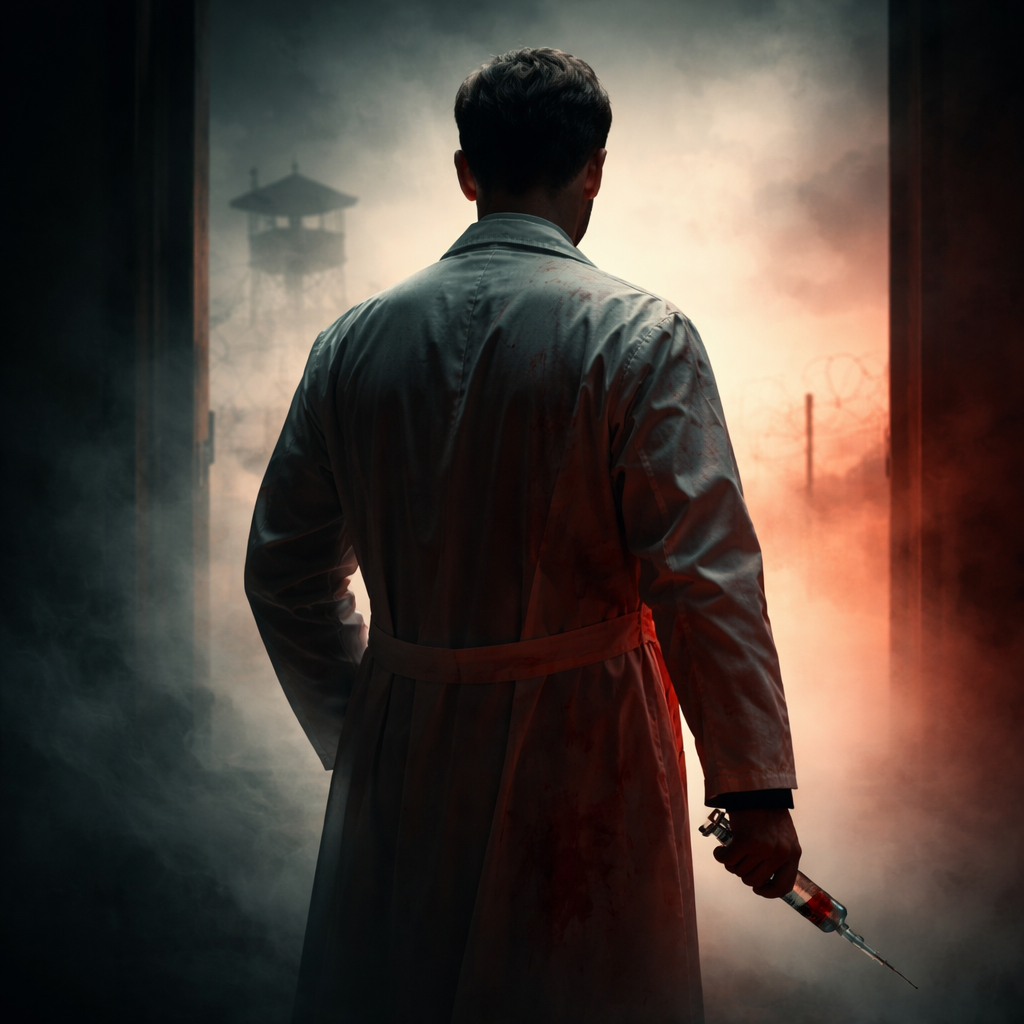
The Nazi Doctors Summary: Medicine Turned Into Murder
Robert Jay Lifton’s The Nazi Doctors: Medical Killing and the Psychology of Genocide (1986) is a history-and-psychology investigation into one of the most unsettling questions of the twentieth century: how did physicians, trained to preserve life, become central actors in a system built to destroy it?
This The Nazi Doctors summary breaks down Lifton’s core argument, the book’s progression from Nazi “racial hygiene” to Auschwitz, and the mental mechanisms that let educated professionals do the unthinkable while still thinking of themselves as decent people.
The book matters because it does not let the reader hide behind the word “monster.” Lifton studies systems, careers, language, and professional incentives. He shows how mass murder can be made to look like duty, even virtue, when the state rewrites the moral map and a profession supplies the tools.
The tension is not only historical. It is about what happens whenever institutions reward obedience, when expertise becomes a mask, and when human beings are reduced to categories that can be managed, optimized, or removed.
“The story turns on whether a healer can learn to kill while still feeling like a healer.”
Introduction
The Nazi Doctors is not a conventional Holocaust narrative focused on battles, leaders, or a single victim’s journey. It is a close study of a profession inside a genocidal state. Lifton follows the path from early Nazi policies that medicalized “social problems” to the death-world of Auschwitz, where doctors were embedded in selection, killing, documentation, and experimentation.
The book’s promise is clarity. Lifton explains what Nazi physicians did, why the regime wanted doctors involved, and how medical language and institutional routines made cruelty feel normal. The analysis is chilling precisely because it is specific: job roles, professional pride, “scientific” framing, and the daily repetition of acts that should have been impossible to repeat.
Underneath the history sits a psychological claim. Lifton argues that many perpetrator-doctors survived morally and emotionally by splitting themselves into selves that could coexist without collapsing. The question is not only how killing happened, but how it could be lived with.
“The story turns on whether a healer can learn to kill while still feeling like a healer.”
Key Points
Lifton explains how Nazi ideology turned medicine into a tool for “purifying” the nation, shifting the doctor’s duty from the patient to the state.
The book traces a progression from forced sterilization to the murder of disabled and psychiatric patients, showing how medical killing became organized and routinized.
Auschwitz becomes the central laboratory of complicity, where doctors performed selections, oversaw deaths, and sustained the camp’s “medical” façade.
Lifton argues that euphemism and bureaucratic procedure helped transform murder into professional routine.
The core psychological mechanism is “doubling,” a split between a “normal” self and an Auschwitz self that could operate inside atrocity without moral collapse.
Lifton includes the moral agony of prisoner doctors forced into impossible choices, showing how coercion and survival entangle victims and perpetrators.
The book ends as a warning about modern professional life: expertise can enable harm when institutions reward dehumanization and punish dissent.
Full Plot
Here is the full plot summary with spoilers. The Nazi Doctors is nonfiction, but it moves with the logic of a story: a profession is recruited, a boundary is crossed, a new normal is built, and then the perpetrators return to ordinary life carrying what they have done inside them. Lifton’s “plot” is the cause-and-effect chain that turns medical authority into a delivery system for mass murder.
Act I: Setup and Inciting Incident
Lifton begins by establishing the “normal world” that makes the later horror possible. German medicine is not portrayed as uniformly sadistic. It is portrayed as a respected modern profession operating in a culture increasingly obsessed with biology, heredity, and national health. Lifton’s key move is to show how a political movement can hijack existing professional currents: eugenics, public health rhetoric, and the prestige of scientific authority.
The protagonist in this first act is not one heroic individual. It is the professional identity of the doctor inside Nazi society: a person trained to heal individuals, increasingly asked to “heal” the collective. The pressure building under the surface is ideological and institutional. Nazi power offers doctors status, state backing, and an enlarged mission. The cost is that medicine stops being primarily about a patient’s welfare and becomes primarily about the state’s definition of value.
The inciting incident arrives as policy becomes practice. Early measures such as coercive sterilization and “racial hygiene” move medicine from persuasion to compulsion. Lifton frames this as a training ground. Once the profession accepts that the state can override bodily autonomy for a “higher” biological good, the moral line has already shifted. Doctors are no longer simply treating disease. Doctors are managing populations.
From there, Lifton traces the movement into direct killing under the euphemism of mercy. Programs targeting disabled children and then disabled adults expand the idea that some lives are “unworthy,” not in the private mind of one fanatic but in institutional routines: forms, diagnoses, evaluations, transfers, and official language that turns murder into procedure. The goal becomes “relief” and “cleansing,” and the pressure is to make this goal look legitimate.
Key figures appear as roles in a machine. Adolf Hitler (dictator, demanding a biologically pure nation) supplies ideological authority. Karl Brandt (Hitler’s physician, tasked with turning ideology into medical policy) and Philipp Bouhler (senior Nazi official, enabling administrative control) appear as pivotal enablers of the euthanasia apparatus. Viktor Brack (administrator, focused on logistics and efficiency) represents the bureaucratic mind that can make mass killing feel like organizational success.
The action in this act is the construction of a medicalized killing system: selection by doctors, transport disguised as care, killing by methods framed as clinical. The consequence is a professional shift. Physicians and staff learn to treat death as an output. They learn to coordinate with paperwork. They learn to protect themselves with euphemism and routine.
Lifton also highlights resistance and friction, but he does not romanticize it. Some doctors object. Some church voices protest. Some people hesitate. Yet the machine adapts. The program becomes less public, more hidden, more normalized within the circles that run it. This matters because it foreshadows the next move: the transfer of methods, personnel, and attitudes into the concentration camp world.
The first turning point that commits the story to an irreversible path is the point at which medical killing becomes not an exceptional crime but a functioning institutional role. Once doctors have practiced selecting people for death under a medical banner, the profession has acquired a new skill set and a new moral vocabulary. The state now knows it can enlist healers as killers and still call it medicine.
What changes here is that the doctor’s duty shifts from the patient to a fantasy of national “health.”
Act II: Escalation and Midpoint Shift
Act II expands the conflict by showing how earlier choices create new consequences. Having built a domestic apparatus of medical killing, the Nazi state does not leave it contained. Lifton follows the extension of euthanasia techniques and personnel into the camp system, where the definition of “unworthy” widens and the scale grows.
This expansion is not presented as a sudden leap from policy to Auschwitz. Lifton’s emphasis is on continuity. The methods of selection, the medical framing, the use of clinical language, and the experience of killing without feeling like a murderer all migrate. The goal becomes broader: managing a vast captive population where labor, disease, and extermination are interlocked.
Auschwitz enters as the central institution where medicine becomes part of the camp’s operating logic. In Lifton’s telling, Auschwitz is not only a place of death, but a place where death is administered through roles that look, on paper, like health administration. SS doctors arrive as officers with authority, status, and a professional identity. The pressure is immediate: overcrowding, epidemics, brutal command structures, and the Nazi demand to separate the “fit” from the “unfit.”
Selections become the signature action. At arrival ramps, doctors perform rapid judgments that decide who is worked and who is sent toward death. Inside the camp, selections recur in hospitals and barracks, where illness becomes a liability and medical space becomes an extension of extermination logic. Lifton’s point is not only that doctors are present. It is that the selection act itself is medical theater: the gesture of diagnosis used to rationalize disposal.
The narrative widens to include prisoner doctors (incarcerated physicians, trying to survive and to treat others) whose presence sharpens the moral stakes. These doctors are coerced into impossible collaboration: assisting in medical routines that are inseparable from killing, sometimes forced to participate in selections, and constantly pressured by the threat of their own death. Lifton uses these accounts to show how the camp destroys clean moral categories. Victims are trapped inside roles designed to compromise them, while perpetrators use those compromises as proof that “everyone is involved.”
Lifton then traces specific killing methods that further medicalize murder. Lethal injections, especially when delivered in a clinical setting, create the illusion of treatment. The act resembles a procedure. The environment resembles a ward. The consequence is psychological distance. A person can kill with a syringe and still feel like a professional doing a task.
Experimentation emerges as both ideology and impulse. Josef Mengele (Auschwitz physician, seeking status and meaning through racial science fantasies) appears as the emblematic “research” doctor, turning human beings into material for data, specimens, and career-building. Lifton does not treat Mengele as a lone aberration. Mengele is presented as an extreme case that reveals a broader professional temptation: when a system offers permission and rewards, “research” can become a moral solvent.
The midpoint shift in the book’s argument is the move from external description to internal mechanism. After showing what Nazi doctors did and how institutions used them, Lifton makes the psychological turn: how did they live with it? This is where the concept of doubling becomes unmistakable. Lifton argues that many doctors formed an Auschwitz self (a self organized around the camp’s demands) while preserving an older humane self for family life, career identity, and ordinary social interaction.
The stakes now change. The story is no longer only about Nazi history. It becomes a warning about the human mind’s capacity to adapt to atrocity when adaptation is rewarded. Once doubling takes hold, the doctor can function efficiently, even proudly, inside the camp while still experiencing the self-image of a decent professional. The question becomes less “How could they do it once?” and more “How could they do it repeatedly, routinely, and then go home?”
After the midpoint, Lifton adds pressure escalations that narrow options and force sharper moral trade-offs. One escalation is administrative: the camp’s need to balance labor supply with extermination goals turns selection into an optimization problem, with medical authority used to manage that balance. Another escalation is epidemiological: disease outbreaks create a pretext for larger killing actions framed as “public health,” where extermination can be justified as prevention.
Supporting characters, in Lifton’s structure, push and shape the perpetrator belief system. SS hierarchy pushes obedience and cruelty as discipline. Fellow doctors model the new normal. Career incentives tempt participation with professional status and belonging. The prisoner doctor’s presence challenges the Nazi doctor by reflecting a distorted mirror of medicine, a reminder that the Hippocratic role has been inverted.
As the system tightens, the moral trade-off becomes stark: to refuse is to risk career, punishment, or death. To comply is to remain inside a community that calls itself scientific and necessary. Doubling resolves the tension by splitting it. The Auschwitz self takes the actions. The prior self keeps the self-image.
What changes here is that killing becomes routine, protected by procedure, and sustained by a split self.
Act III: Climax and Resolution
Act III begins with Lifton’s endgame: he tests his framework against individual cases and then expands it into a broader model of atrocity. The most dangerous constraint is the seduction of normality. If the reader can dismiss the perpetrators as uniquely evil, the warning stays contained. Lifton’s method aims to prevent that containment by showing the psychological and institutional pathways that could exist elsewhere.
Lifton brings forward representative figures to make the internal conflict concrete. Ernst B. (an SS doctor, trying to present himself as ordinary while carrying an Auschwitz past) functions as a case study in how doubling can persist after the camp ends. The goal becomes self-exoneration or self-protection. The pressure is exposure, judgment, and the threat that the Auschwitz self will contaminate the whole identity. The action is rationalization, selective memory, and moral reframing. The consequence is a life that can appear normal while still containing a concealed moral catastrophe.
Josef Mengele’s arc functions differently. Mengele is presented as a doctor who merges ideology, ambition, and cruelty into a coherent mission. In Lifton’s framing, Mengele does not only “compartmentalize.” Mengele embodies a version of the biomedical vision that feels like purpose. The goal is scientific and ideological self-importance. The pressure is the need for recognition and belonging within the SS worldview. The action is selection and experimentation presented as research. The consequence is an extreme form of professional complicity where the language of science becomes a permission slip for sadism.
Eduard Wirths (chief Auschwitz physician, seeking to maintain professional legitimacy while running medicine inside a death camp) becomes a crucial counterpoint. Lifton treats Wirths as a figure of “healing-killing conflict,” someone who can display moments of medical concern while presiding over a structure that kills. This is not rehabilitation. It is analysis. Lifton uses Wirths to show how a person can perform gestures of care while remaining deeply embedded in murder, and how those gestures can become part of self-deception.
The climax of the book is Lifton’s answer to the core question: how can healing become killing? The confrontation is not a dramatic showdown, but a conceptual reckoning. Lifton argues that genocide can be made psychologically possible when a society is framed as a body, when a targeted group is framed as disease, and when professionals provide the techniques and moral vocabulary of “cure.” In this frame, killing is not presented as a violation of the medical role, but as its fulfillment.
Lifton’s resolution is two-layered. Externally, the book closes by mapping the aftermath: the postwar return of many perpetrators to ordinary professional life, the partial exposure through trials and testimony, and the uneasy cultural desire to treat medical murder as an exception rather than a warning. Internally, Lifton closes by insisting that doubling is not an exotic Nazi pathology. It is a human capacity that becomes lethal under certain institutional conditions.
The fallout, in Lifton’s final movement, is a demand placed on modern professional life. The book argues that medicine, science, and bureaucratic systems must build ethical resistance into their structures, because competence without moral anchoring can become an engine of harm. Lifton’s ending note is not comfort. It is vigilance: the most frightening part of the Nazi doctors is not their alienness, but their recognizability as professionals shaped by incentives, ideology, and belonging.
Analysis and Themes
Theme 1: Medicine as National “Cure”
Claim: The book argues that genocide can be reframed as healing when the state defines society as a biological organism.
Evidence: Lifton traces a progression from sterilization to euthanasia to Auschwitz, where medical authority is used to “diagnose” who should live and who should die. Nazi programs present killing as protection of the national body, with doctors acting as the agents of that protection. The selection process in Auschwitz becomes a grotesque form of triage that treats people as biological inventory.
So what: When a profession shifts its loyalty from the individual to an abstract collective, moral language can be inverted. This is the danger of any ideology that treats human beings as contaminants or costs. The theme warns that the rhetoric of health can become a weapon when “health” is defined as purity.
Theme 2: Doubling and Compartmentalization
Claim: Lifton’s central psychological claim is that many perpetrator-doctors survived by splitting into separate selves.
Evidence: The Auschwitz self performs selections, supervises killings, and participates in experimentation, while the prior self preserves the identity of a humane physician. Lifton shows how everyday camp routines, repeated actions, and social reinforcement stabilize this split. Postwar self-presentation often relies on the same mechanism, isolating the Auschwitz past as an “other life.”
So what: Doubling is a warning about the mind’s adaptive power. Compartmentalization can help people survive stress, but under atrocity it can sustain evil without internal collapse. The ethical implication is blunt: if identity can be split, then personal “goodness” is not a sufficient safeguard without institutional checks.
Theme 3: Bureaucracy as Moral Anesthetic
Claim: The book shows how procedure, paperwork, and organizational routine can numb conscience.
Evidence: Lifton emphasizes selections as standardized acts, deaths processed through medical documentation, and clinical settings used to mask killing as care. The camp hospital becomes both a site of treatment and a funnel for extermination. Even the maintenance of medical “order” inside Auschwitz contributes to the camp’s functioning and concealment.
So what: Bureaucracy does not only coordinate action. It can also dilute responsibility until no one feels fully accountable. This theme reaches far beyond Nazi history into any system where harmful outcomes are distributed across roles, forms, and chains of command.
Theme 4: Euphemism and Professional Language
Claim: The Nazis used medical language to launder violence into legitimacy.
Evidence: “Euthanasia” becomes a term that hides murder behind mercy. “Selection” becomes a neutral-sounding act that is, in reality, a life-or-death verdict. “Research” becomes a career-shaped story that turns victims into material. Lifton shows that language is not decoration; it is a tool that shapes what actors feel permitted to do.
So what: Words can reclassify cruelty as necessity. Once a harmful act is renamed as care, duty, or optimization, resistance becomes harder because dissent sounds irrational. This is why ethical language matters in institutions: terms set the boundaries of what feels thinkable.
Theme 5: The Seduction of Belonging and Status
Claim: Professional complicity grows when institutions reward loyalty and punish doubt.
Evidence: Lifton depicts doctors gaining authority, purpose, and community inside a regime that frames them as biological guardians. Participation becomes a pathway to status within the SS system. Even when individuals experience conflict, the social and career structure pulls them back toward compliance and rationalization.
So what: Most people do not commit evil to feel evil. They do it to feel included, competent, and secure. The theme suggests that preventing atrocity requires cultures that protect dissent and treat ethical refusal as professional strength, not weakness.
Theme 6: Coerced Collaboration and Moral Injury
Claim: Lifton shows that victims can be forced into roles that damage identity and complicate judgment.
Evidence: Prisoner doctors are trapped between survival and care, sometimes pressured to assist in selections or to work under Nazi supervision. The camp’s structure makes even healing work part of a killing ecosystem, creating unbearable moral stress. Lifton uses these accounts to show how atrocity systems aim to contaminate everyone they touch.
So what: This theme matters because it resists simplistic moral sorting. Atrocity produces moral injury, not just physical harm, and systems often weaponize coercion to fracture solidarity. Understanding this does not erase responsibility, but it clarifies how power manufactures complicity.
Character Arcs
Protagonist: The Nazi doctor as a professional identity begins with a belief that medicine can serve a higher social good and ends with medicine functioning as a tool of extermination, protected by euphemism and self-splitting. The shift is forced by a series of boundary crossings: accepting coercive state control, participating in selection, practicing direct killing, and then stabilizing the role through doubling. The end-state is not always triumph or remorse. Often it is a return to normal life with the Auschwitz self sealed away.
Secondary arc 1: Josef Mengele’s trajectory shows what happens when ideology and ambition fuse into a stable mission. Mengele does not need to “hesitate” to become dangerous; professional drive becomes an accelerant.
Secondary arc 2: Eduard Wirths represents the conflict-driven perpetrator who can perform gestures of care while remaining embedded in murder. Lifton uses this arc to show that partial conscience does not stop participation; it can, in some cases, become part of self-justification.
Structure
Lifton builds the book as a progression: early Nazi “racial hygiene,” then euthanasia killing, then Auschwitz as the culminating institution, and finally the psychological interpretation that ties these stages together. This structure matters because it prevents the reader from treating Auschwitz as a sudden rupture. It becomes the end of a pipeline.
The pacing alternates between institutional history and human-level case material. By moving from policies to lived routines, Lifton shows how ideology becomes habit. The book’s psychological language is not used to excuse. It is used to explain how atrocity can be lived as ordinary work.
What Most Summaries Miss
Most summaries fixate on Mengele, as if the story is mainly about grotesque experiments. Lifton’s larger point is that the “everyday” medical role in Auschwitz was itself a form of killing work: selections, paperwork, hospital control, and the management of bodies and disease in ways that served extermination.
Another missed element is the book’s insistence on continuity. The euthanasia programs are not a side chapter. They are a rehearsal space where medical murder becomes procedural, and where people learn to kill under a clinical banner. That continuity is part of why the book feels so modern: it shows how step-by-step normalization is more dangerous than sudden fanaticism.
Relevance Today
The book’s warning lands hardest in environments where people act through systems rather than face-to-face harm. In modern workplaces, many decisions are made through forms, dashboards, policies, and automated classifications. When outcomes are harmful, people can tell themselves the harm is “just process.” Lifton’s analysis highlights how that story becomes a moral anesthetic.
Technology intensifies this risk. Algorithmic risk scores, triage systems, and eligibility rules can be helpful, but they also encourage category-thinking. If institutions treat people as cost units, fraud risks, or “low value,” the language of optimization can start to resemble the language of purification. The moral hazard is not that every system becomes Auschwitz, but that dehumanization can feel professional.
Politics still uses contamination metaphors. Public debate about crime, immigration, poverty, addiction, and disability can slide into biological language: infestation, disease, rot, cleansing. Lifton’s “biomedical vision” explains why that rhetoric is so dangerous. It turns social problems into bodies to cut.
War and violence have become more remote. Drone warfare, cyber operations, and long-distance targeting make killing feel abstract, managed by professionals following procedure. Lifton’s concept of doubling maps onto any role where a person can be “normal” at home and lethal at work, sustained by compartmentalization.
Medicine itself remains vulnerable because it sits near life-and-death power. Debates about triage, resource scarcity, disability rights, and end-of-life care demand moral clarity. The Nazi doctors weaponized medicine by redefining care as elimination. The lesson is that ethics cannot be a decorative layer. Ethics has to be embedded in incentives, training, and accountability.
Finally, media ecosystems can accelerate moral flattening. When people become avatars, stereotypes, or “types,” empathy shrinks. Lifton’s book explains how that shrinkage can be made to feel rational, even humane, if the target is framed as a threat to the whole.
Ending Explained
Lifton ends by widening the lens. The book does not close with a single courtroom verdict or a neat moral bow. It closes with an argument about how genocide becomes psychologically possible when ideology, institutions, and professional identity align.
The ending means the book is less a verdict on monsters than a warning about institutions that teach ordinary people to stop seeing.
What the ending resolves is Lifton’s central explanation: the Nazi doctors were enabled by a biomedical ideology that framed killing as cure, and many perpetrator-doctors sustained participation through doubling that protected their self-image. What the ending refuses to resolve is the comforting idea that this could only happen to uniquely evil people in a uniquely evil time. The book leaves behind a harder claim: the capacity for moral splitting is human, and the safeguard is structural, cultural, and ethical vigilance, not mere personal intention.
Why It Endures
The Nazi Doctors endures because it studies complicity at the level where modern life actually happens: inside institutions, careers, language, and professional identity. Lifton makes the reader confront the ways expertise can become a shield for cruelty, and how evil can wear the face of competence.
This is a book for readers who want more than a history of events. It is for anyone trying to understand how social systems pull people into harm while letting them feel normal. It is not for readers looking for a quick overview, or for those who prefer the Holocaust to remain morally distant and emotionally contained.
Lifton’s final message is brutally simple: when a profession forgets the human being in front of it, healing can be rewritten as harm without anyone feeling the moment it happens.
