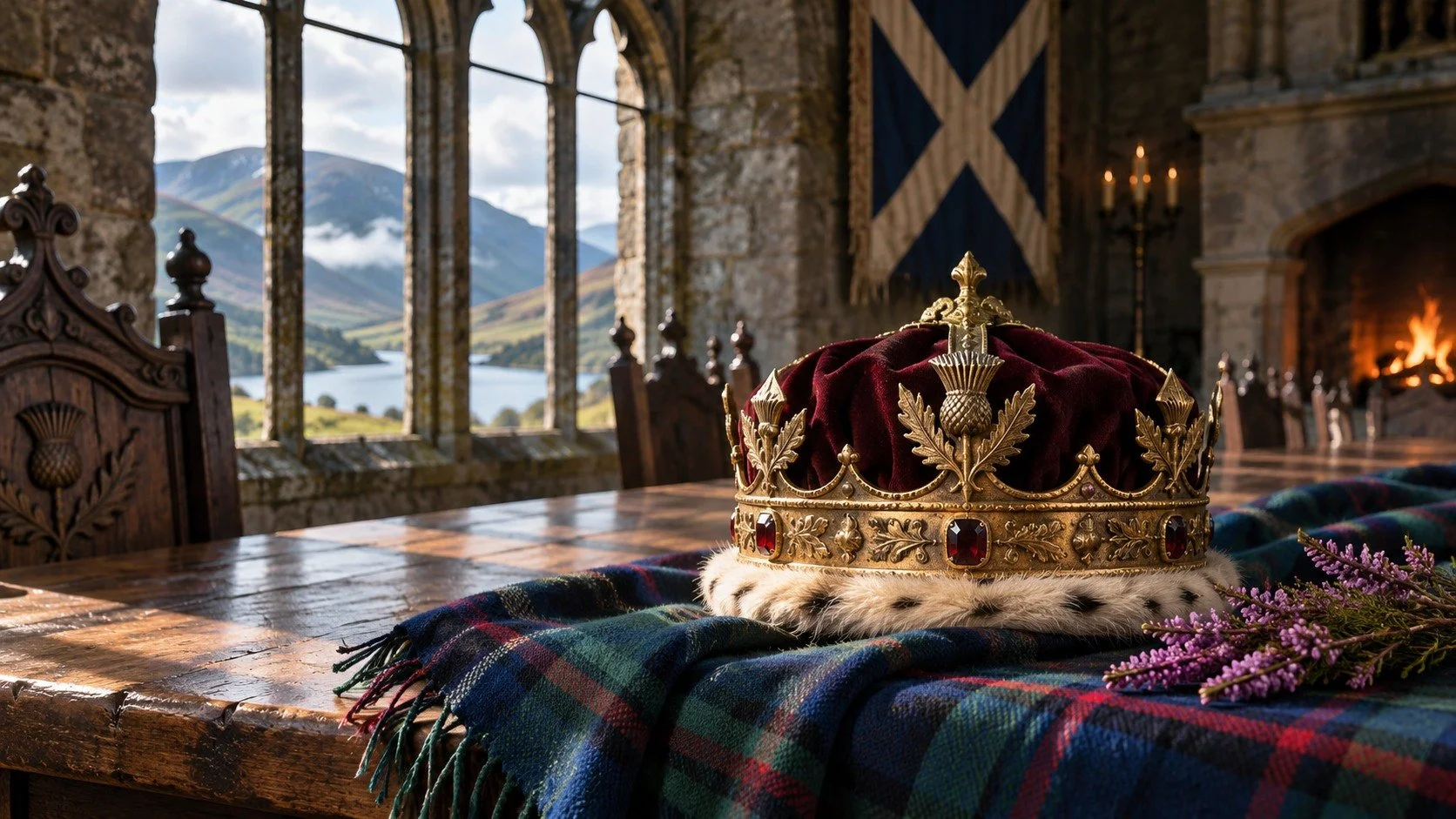
The witches tell Macbeth that he will be king.
What Good Is A Crown If Banquo’s Children Will Inherit It?
The witches tell Macbeth that he will be king. They tell Banquo that his descendants will be kings. Before Duncan dies, Macbeth hears the first promise as an invitation. Once he possesses the crown, he remembers the second as a threat. Nothing new needs to happen to frighten him. The prophecy that made him feel chosen has contained a limit on his achievement from the start.
What Banquo Knows
Banquo heard the original predictions. He also knows the circumstances in which Duncan was Macbeth's guest. His significance reaches beyond the possibility that he could denounce the new king. When Macbeth looks at him, he sees someone who received an extraordinary promise without immediately deciding to murder for it. Banquo's existence makes Macbeth's choice look like a choice again.
In Act Three, Macbeth imagines holding a barren sceptre. The image carries the argument. A sceptre advertises the power to rule; barrenness denies the power to pass the achievement down. If the witches are right about Banquo's heirs, Macbeth has injured his conscience and endangered his soul to clear a path for another man's family. Kingship makes that possibility more painful because he now knows the price he paid.
Why The Banquet Fails
Banquo is murdered, but Fleance escapes. Macbeth has incurred the cost of a second killing while failing to close the future he feared. At the banquet he has to perform composure before nobles whose support matters to him. The appearance of Banquo's ghost makes it impossible to govern the meaning of his own gestures. His guests can see a shaken king. They cannot see the figure to whom he speaks.
Lady Macbeth can offer explanations and send the guests away. She cannot make the nobles forget what they have witnessed. The scene converts a private fear into a public political weakness. Macbeth sought a means of protecting his position and has given the people around him a reason to question his fitness to hold it.
Why He Goes Back To The Witches
Macbeth wants the future to give him a guarantee. The assurances he receives encourage him to read ambiguous language in the most favourable possible way. A moving forest sounds impossible. An enemy outside an apparently universal condition sounds impossible too. Neither assurance gives him reliable knowledge of what his opponents are doing.
The tragedy turns on that difference. Duncan could sleep under Macbeth's roof because he trusted someone. Macbeth has acquired Duncan's title by proving how dangerous trust can be. Each time he acts on that lesson he produces another enemy or drives another ally away. The crown fulfils the smallest promise the witches made. They never promised that a man who won it this way would be able to sleep.
