

Mike Ehrmantraut: The Tragedy of a Good Man Who Became Useful to Evil
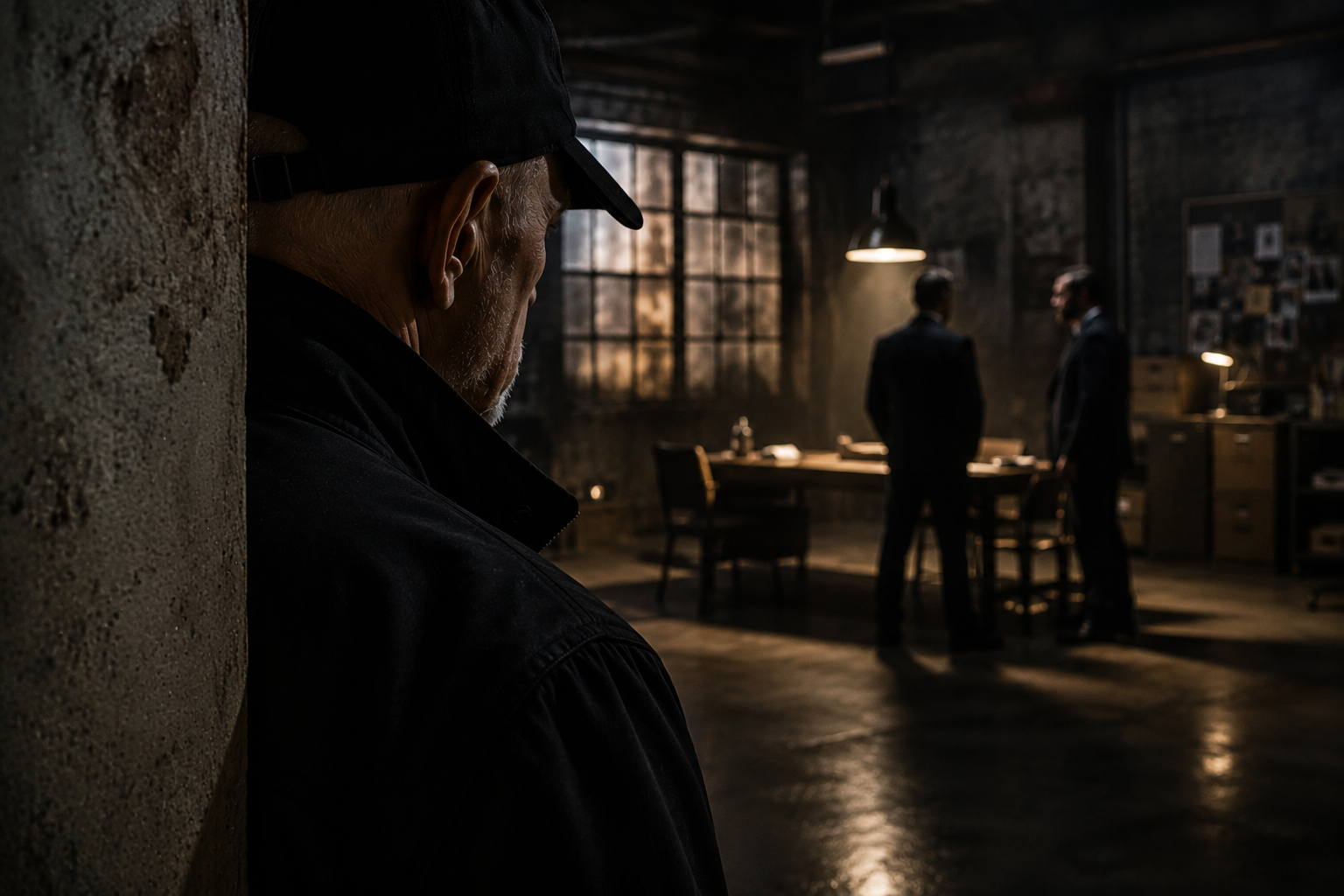
The Man Who Took No Half Measures Until There Was Nothing Left
The Quiet Devastation of Mike Ehrmantraut
Mike Ehrmantraut looks like the man who has already made peace with himself.
That is the trick.
He moves through Breaking Bad and Better Call Saul with the stillness of someone who has seen every possible disaster and no longer wastes emotion on surprise. He speaks rarely. He watches carefully. He fixes problems other people are too frightened, stupid or emotional to handle. AMC’s own description places him as a go-to figure for Jimmy McGill, Gus Fring, Walter White, Jesse Pinkman and Saul Goodman — the man called when the situation is already contaminated.
But Mike is not peaceful. He is controlled.
The difference matters. Peace is what a person finds when they have accepted the truth. Control is what a person builds when the truth is too painful to touch. Mike’s entire character is built around that difference. He has discipline, intelligence, patience and a brutally practical sense of consequence. He also has a wound so deep that his competence becomes a form of self-punishment.
Mike’s tragedy is not that he becomes a criminal. It is that he becomes exactly the kind of man he understands too well.
Who Is Mike Ehrmantraut?
Mike Ehrmantraut is a former Philadelphia police officer, ex-Marine, private investigator, fixer, security operator and killer. He is played by Jonathan Banks across Breaking Bad, Better Call Saul and El Camino, with Better Call Saul expanding the emotional history behind the man Breaking Bad first presents as Saul Goodman’s brutally efficient cleaner.
On the surface, Mike’s dramatic function is simple. He is the professional in a world full of amateurs.
Where Walter White is ego, Jesse Pinkman is impulse, Jimmy McGill is improvisation and the Salamancas are appetite, Mike is procedure. He checks exits. He studies habits. He reads rooms. He speaks only when speech improves the situation. He does not posture because he does not need to.
That is why audiences often admire him. Mike seems like the adult in the room.
But the story is sharper than that. Mike’s competence makes him useful to terrible people. His restraint gives evil a cleaner operating system. He does not create chaos like Walter, but he makes chaos manageable. He does not enjoy violence like the Salamancas, but he makes violence efficient. He does not lie with Jimmy’s theatrical flair, but he lies to himself with far more discipline.
Mike is the man who can solve almost any external problem except the internal one that actually defines him.
Surface Identity vs Real Identity
Mike’s surface identity is built from control.
He is calm, blunt, dry, practical and almost allergic to wasted language. He looks like a man without illusions. He sees through Walter almost immediately. He understands Jimmy’s reckless charm. He recognises Gus Fring’s machine-like intelligence. He knows the criminal world is not romantic, glamorous or clever. It is work, risk, leverage and damage.
That makes him feel morally superior to the people around him.
Yet Mike’s real identity is not so clean. Beneath the professional exterior is a man drowning in guilt. His silence is not just strength. It is containment. His competence is not just skill. It is compensation. His code is not just morality. It is an argument he keeps making against himself.
Mike wants to believe there is a right way to do wrong things.
That belief is the foundation of his tragedy. He divides the world into professionals and fools, clean operators and reckless men, necessary violence and stupid violence. He judges Walter because Walter lets pride infect the work. He judges the Salamancas because they enjoy cruelty. He judges Jimmy because Jimmy cannot stop turning damage into performance.
But Mike’s own line is already crossed. He may be more disciplined than the monsters around him, but discipline does not purify the work. It only makes the work quieter.
The Core Wound That Made Mike
Mike’s wound is Matt.
Better Call Saul reveals that Mike’s son, Matt Ehrmantraut, became a police officer in Philadelphia and was pulled into corruption. Mike, already compromised himself, told Matt that taking dirty money was safer than refusing it. Matt took the money but hesitated enough that corrupt officers feared he might expose them. They killed him anyway.
That is the emotional centre of Mike Ehrmantraut.
He did not merely fail to protect his son. He helped teach him the logic that destroyed him. Mike’s advice came from experience, fear and realism, but it led Matt into a world where innocence could not survive. That is why Mike’s grief is so specific. It is not only mourning. It is self-accusation.
The “Five-O” confession is devastating because Mike finally says the thing his whole body has been hiding: he broke his boy.
That line explains almost everything after it.
Mike cannot undo Matt’s death, so he tries to build a life where his guilt produces something useful. He supports Stacey and Kaylee. He watches over them. He takes jobs. He makes money. He convinces himself the damage can be converted into provision.
But grief cannot be laundered into duty. The money does not cleanse the source. Every envelope, every job, every favour done for dangerous men carries the same contradiction: Mike is trying to protect Matt’s family by using the moral logic that helped destroy Matt.
The Mask Mike Wears to Survive
Mike’s mask is professionalism.
He does not present himself as a grieving father or a broken man. He presents himself as a worker. A specialist. A man who knows the job and does it properly. That mask allows him to avoid emotional exposure while still feeling useful.
His most important phrase is not only “no half measures.” It is the entire philosophy behind it.
Mike tells Walter about a domestic abuse case from his police days, where he once showed mercy to a violent man who later murdered his wife. The lesson Mike draws is that hesitation can be fatal. He uses the story to justify decisiveness: if a dangerous problem cannot be contained, it must be ended.
That story becomes Mike’s moral armour.
But the deeper issue is that Mike turns pain into procedure. He cannot bear uncertainty because uncertainty is where Matt died. He cannot bear sloppy decisions because sloppy decisions create widows, orphans and bodies. He cannot bear people who do not understand consequence because he understands consequence too intimately.
The mask works because it makes him formidable. It fails because it also makes him emotionally unreachable.
Mike can clean a crime scene. He can dismantle an ambush. He can read a target. He can intimidate a room without raising his voice. What he cannot do is let anyone fully see the ruined father underneath the fixer.
The Lie That Keeps Mike Alive
The lie Mike believes is that damage becomes acceptable if it is disciplined, purposeful and done for family.
That is not the same lie Walter White tells. Walter claims he does everything for his family, but gradually reveals that pride, recognition and power matter more. Mike’s lie is quieter and more believable. He really does care about Stacey and Kaylee. He really is motivated by provision. He really does feel loyalty.
That is what makes the lie dangerous.
Mike’s family motive gives his choices emotional credibility. He is not chasing applause. He is not building an empire for vanity. He does not want to be feared as a legend. He wants his granddaughter safe, his daughter-in-law supported and his son’s absence somehow answered.
But a noble motive cannot make every method noble.
Mike keeps trying to separate his private love from his public violence. He wants Kaylee’s innocence untouched by the source of the money. He wants Stacey protected from the moral dirt underneath the security. He wants his criminal work to remain compartmentalised, as though precision can keep corruption from spreading.
The story refuses that comfort. In the Breaking Bad universe, choices echo. Money carries history. Silence has consequences. No one who serves evil remains outside it.
What Mike Wants vs What Mike Actually Needs
Mike wants to provide.
That is the obvious answer, and it is true. He wants Kaylee to have security. He wants Stacey to stop living in fear. He wants Matt’s family to be materially safe because he cannot make them emotionally whole.
But what Mike actually needs is forgiveness.
Not from the legal system. Not from Gus. Not from Jimmy. Not even fully from Stacey. Mike needs to face the possibility that no amount of competence can reverse what happened. He needs to stop using work as punishment. He needs to admit that his code is partly a coping mechanism, not a moral truth.
He cannot do that.
Forgiveness would require surrender, and surrender is the one thing Mike’s personality cannot tolerate. If he forgives himself too easily, Matt’s death becomes unbearable in a different way. If he admits he cannot fix it, then all the money, planning and violence lose their emotional purpose.
So Mike chooses utility over healing.
He becomes necessary. He becomes reliable. He becomes the man people call when things must be handled. But being needed is not the same as being saved. Mike’s usefulness keeps him moving, but it also keeps him trapped.
The Psychology Behind Mike’s Choices
Mike’s choices are driven by guilt, control and an almost religious belief in consequence.
He does not believe the world is fair. He believes it is readable. That distinction explains him. Mike’s intelligence is observational, not idealistic. He studies patterns. People reveal themselves through habits, pressure points and mistakes. He survives because he accepts what people are likely to do, not what he wishes they would do.
This makes him brilliant in the criminal world.
It also makes him emotionally fatalistic. Mike rarely acts as though real redemption is available. He believes in mitigation, not transformation. He can reduce risk, protect selected people, punish the worst offenders and maintain rules within an immoral system. But he does not truly believe he can leave the system cleanly.
That is why Gus Fring is such a dangerous employer for him.
Gus offers Mike the fantasy of controlled evil. Unlike the Salamancas, Gus is calm, strategic and disciplined. He gives violence a corporate structure. He makes the criminal world look like logistics. For Mike, that is seductive because it resembles order. Gus does not ask Mike to become reckless. He asks him to become more professional.
That is worse.
Mike’s downfall is not caused by chaos. It is caused by finding a form of evil that looks enough like his own values to feel tolerable.
Mike’s Chronological Collapse
Mike begins as a man who has already been morally damaged before the main story truly reaches him.
In Philadelphia, corruption becomes normal. Then Matt dies. Mike kills the officers responsible and relocates to Albuquerque, where he takes low-status work as a parking attendant while quietly watching over Stacey and Kaylee. Better Call Saul uses that contrast beautifully: the man in the booth looks almost ordinary, but the audience gradually learns he carries a private graveyard inside him.
His first major movement is from withdrawal to controlled involvement.
He takes side jobs. He handles security work. He helps Jimmy. He enters Nacho’s orbit. He tries to operate by rules: no unnecessary killing, no sloppy violence, no emotional stupidity. But each job makes the next one easier. The first compromise does not feel like transformation. It feels like survival.
Then Gus appears as structure.
Mike does not become Gus’s man because he is fooled. He becomes Gus’s man because Gus gives him a system where his skills appear to have purpose. He can tell himself he is choosing the lesser evil. He can tell himself he is protecting civilians from the Salamancas. He can tell himself professionalism matters.
By Breaking Bad, that internal argument has hardened. Mike is no longer sliding into the life. He is inside it. His death at Walter’s hands completes the irony: the careful man is destroyed by the exact kind of ego-driven amateur he always despised.
The Relationships That Reveal Mike
Mike’s relationship with Kaylee reveals his tenderness.
With her, his voice softens. His patience becomes loving rather than tactical. Kaylee is not just his granddaughter. She is the future Matt never gets to protect. She gives Mike a reason to keep moving, but also becomes the emotional justification for choices that will eventually leave her with nothing but absence.
Stacey reveals Mike’s guilt.
He wants to help her, but he cannot fully confess the scale of his responsibility. Their relationship is full of care and distance. Mike protects, provides and watches, yet he remains emotionally sealed. He can stand near the family he broke, but he cannot truly re-enter it.
Jimmy reveals Mike’s contempt for improvisational morality.
Mike often treats Jimmy as a nuisance, but there is also recognition there. Both men are damaged. Both are capable of tenderness. Both build masks. The difference is style. Jimmy performs his way around pain. Mike buries his beneath function.
Gus reveals Mike’s susceptibility to disciplined power.
Mike respects competence, and Gus weaponises that respect. Their relationship is not friendship. It is alignment. Gus understands that Mike does not need flattery. He needs structure, purpose and the feeling that the work is being done correctly.
Walter reveals Mike’s limit.
Mike sees Walter clearly because Walter is everything Mike distrusts: prideful, volatile, self-deceiving and reckless. Yet Mike still underestimates the danger of wounded ego. His final confrontation with Walter is not just a plot turn. It is the moment Mike’s entire worldview fails to protect him.
The Scene That Explains Mike Ehrmantraut Best
The scene that explains Mike best is his confession in “Five-O.”
Mike sits with Stacey and finally speaks about Matt. The power of the scene comes from its refusal to make grief theatrical. Mike does not collapse into melodrama. He does something worse: he tells the truth with the exhausted bluntness of a man who has repeated it privately for years.
He admits he was dirty. He admits Matt was not. He admits he advised his son to take the money because refusing would put him in danger. He admits Matt did it, not because he wanted to, but because he trusted his father. And then Matt was killed anyway.
The scene exposes Mike’s central contradiction more clearly than any shootout or criminal job.
On the surface, Mike is confessing a past event. Underneath, he is admitting that his entire identity as protector has been permanently contaminated. The man who knows how to read danger misread the danger closest to home. The man who lives by practical realism gave the practical advice that helped destroy his son. The man who later lectures others about half measures once took the wrong measure with the person he loved most.
That is why Mike’s later competence feels haunted.
Every time he handles a problem cleanly, the audience can feel the earlier failure behind it. Every time he protects Kaylee, the audience knows he could not protect Matt. Every time he insists on rules, the audience knows rules did not save his son.
“Five-O” does not simply give Mike a backstory. It gives his silence a source.
What Most People Misunderstand
The common mistake is treating Mike as the honourable criminal.
He is more honourable than many people around him. That part is true. He has standards. He dislikes unnecessary cruelty. He protects children. He respects competence. He keeps his word more often than most criminals in this universe.
But “more honourable than Walter White” is not the same as honourable.
Mike’s code is real, but it is also selective. He can be tender at home and ruthless at work. He can condemn reckless violence while enabling organised violence. He can judge Walter’s ego while ignoring the fact that his own guilt has become a different kind of self-justification.
The show does not ask the audience to hate Mike. It asks something more uncomfortable: to admire him accurately.
Mike is not a fantasy of clean masculinity. He is a portrait of controlled damage. His calm is impressive, but it is also defensive. His loyalty is moving, but it is also morally narrowing. His practicality saves lives in one scene and helps destroy them in another.
The misunderstanding is thinking Mike’s code saves him.
It does not. It only makes his fall quieter.
What Most Analyses Miss
What most analyses miss is that Mike is not simply a contrast to Walter White.
He is a warning that Walter is not the only kind of self-deception.
Walter lies loudly. He builds a mythology around himself. He needs recognition. He wants to be seen as exceptional. His self-deception becomes theatrical, almost operatic.
Mike lies silently. He does not need applause. He does not inflate himself. He does not pretend to be a genius saviour. Because of that, his lie looks more mature. It feels less grotesque. But it is still a lie.
Mike’s self-deception is the belief that emotional restraint equals moral clarity.
That is the overlooked layer. Mike is so unsentimental that audiences can mistake him for honest. Yet he is often least honest with himself. He knows the facts of his life, but facts are not the same as truth. The truth would require admitting that his work for Gus is not simply provision, not simply strategy and not simply lesser-evil management.
It is also self-punishment.
Mike keeps entering dangerous systems because danger feels like the proper climate for a man who cannot forgive himself.
Why Audiences Relate to Mike
People relate to Mike because he represents the fantasy of competence under pressure.
He does not panic. He does not beg. He does not explain himself to fools. He enters chaos and reduces it. For anyone who has ever felt surrounded by incompetence, Mike is deeply satisfying to watch.
But the deeper identification is emotional.
Mike embodies the person who has been hurt so badly that they stop asking to be understood. They become useful instead. They learn to solve problems, carry weight, absorb pressure and avoid complaint. Their silence becomes dignity. Their exhaustion becomes authority.
That is why Mike resonates beyond the crime genre.
Many viewers recognise the impulse to turn pain into function. Work harder. Speak less. Provide. Protect. Do not collapse. Do not make the wound everyone else’s problem. Keep moving.
The danger is that the show also shows the cost of that identity. Mike’s strength is real, but it is incomplete. He can endure almost anything except emotional openness. He can survive danger, but not forgiveness. He can protect others, but not without eventually becoming part of the machinery that threatens them.
The Warning Hidden Inside Mike Ehrmantraut
The warning inside Mike is that having a code is not enough.
A code can restrain evil, but it can also organise it. It can prevent certain lines from being crossed while normalising every line already crossed. It can give a damaged person the feeling of moral structure without forcing them to leave the immoral world.
Mike’s code makes him better than many criminals.
It does not make him free.
That is the hard lesson. Rules are only as good as the life they serve. Mike’s rules serve guilt, provision and control. They help him function, but they do not heal him. They allow him to stay close to violence while feeling separate from men who enjoy it.
The story’s warning is especially sharp because Mike is admirable in so many ways. His restraint is real. His loyalty is real. His intelligence is real. His love for Kaylee is real.
That is precisely why the moral danger works.
Better Call Saul and Breaking Bad understand that people are most tempted by evil when it resembles their virtues. Mike is not seduced by glamour. He is seduced by usefulness.
The Legacy of Mike Ehrmantraut
Mike lasts because he is one of television’s great studies in controlled grief.
He could have remained a memorable supporting character: the deadpan fixer who cleans up Jesse’s apartment and handles problems Saul cannot touch. Instead, Better Call Saul turns him into something richer. It shows the sorrow behind the skill, the guilt behind the silence and the broken father behind the professional killer.
That expansion changes how his Breaking Bad scenes feel.
When Mike cleans up after Jane’s death, he is not just a criminal technician. He is a man who has seen what young people look like when adults fail them. When he tells Walter not to take half measures, he is not merely giving tactical advice. He is repeating a philosophy born from regret. When he dies beside the river, telling Walter to let him die in peace, it feels like the only peace he ever allows himself.
Jonathan Banks’ performance is essential to that legacy. The character could easily become a cliché: gruff old fixer, hard man with a soft spot, criminal grandfather. Banks makes him heavy instead. Every pause feels lived in. Every stare suggests an old calculation interrupted by an older grief.
Mike matters because he proves that stillness can be devastating.
The Final Meaning of Mike Ehrmantraut
Mike Ehrmantraut is the tragedy of a man who understands consequences but not escape.
He knows what violence does. He knows what corruption costs. He knows what pride looks like before it detonates. He knows what amateurs get wrong, what criminals pretend not to see and what grief leaves behind when everyone else has stopped asking about it.
And still, he stays.
That is the final sadness of Mike. He is not ignorant. He is not deluded in the obvious ways. He sees too much. He sees so much that he mistakes clarity for absolution. Because he can name the danger, he thinks he can manage it. Because he can control the work, he thinks he can contain the moral damage.
He cannot.
Mike’s life becomes an attempt to pay an impossible debt with dirty money, clean methods and silent endurance. He loves his family. He keeps his word. He does terrible things. None of those facts cancels the others.
That is why Mike remains unforgettable.
He is not the monster who thinks he is a hero. He is the broken man who knows he is broken, but keeps choosing the road that breaks him further.
Summary
Mike Ehrmantraut is one of the most powerful characters in Breaking Bad and Better Call Saul because his strength is inseparable from his wound.
He is calm, competent and disciplined, but those qualities are not simple virtues. They are survival tools built around guilt. After his corrupt advice indirectly contributes to his son Matt’s death, Mike turns grief into labour. He provides for Stacey and Kaylee, but he does so through the same criminal logic that destroyed his family in the first place.
His mask is professionalism. His lie is that disciplined wrongdoing can become clean if it serves family. His need is forgiveness, but he cannot accept it because guilt has become the engine of his identity.
Mike is admired because he is capable, loyal and controlled. But the danger of admiring him too simply is missing the tragedy. His code does not save him. It only gives structure to his collapse.
The final meaning of Mike Ehrmantraut is brutally simple: a man can understand evil, despise recklessness and still become useful to the very world that ruined him.
MAX SEO / SEO MAX
