Shutter Island Explained: The Dark Truth Behind The Final Question
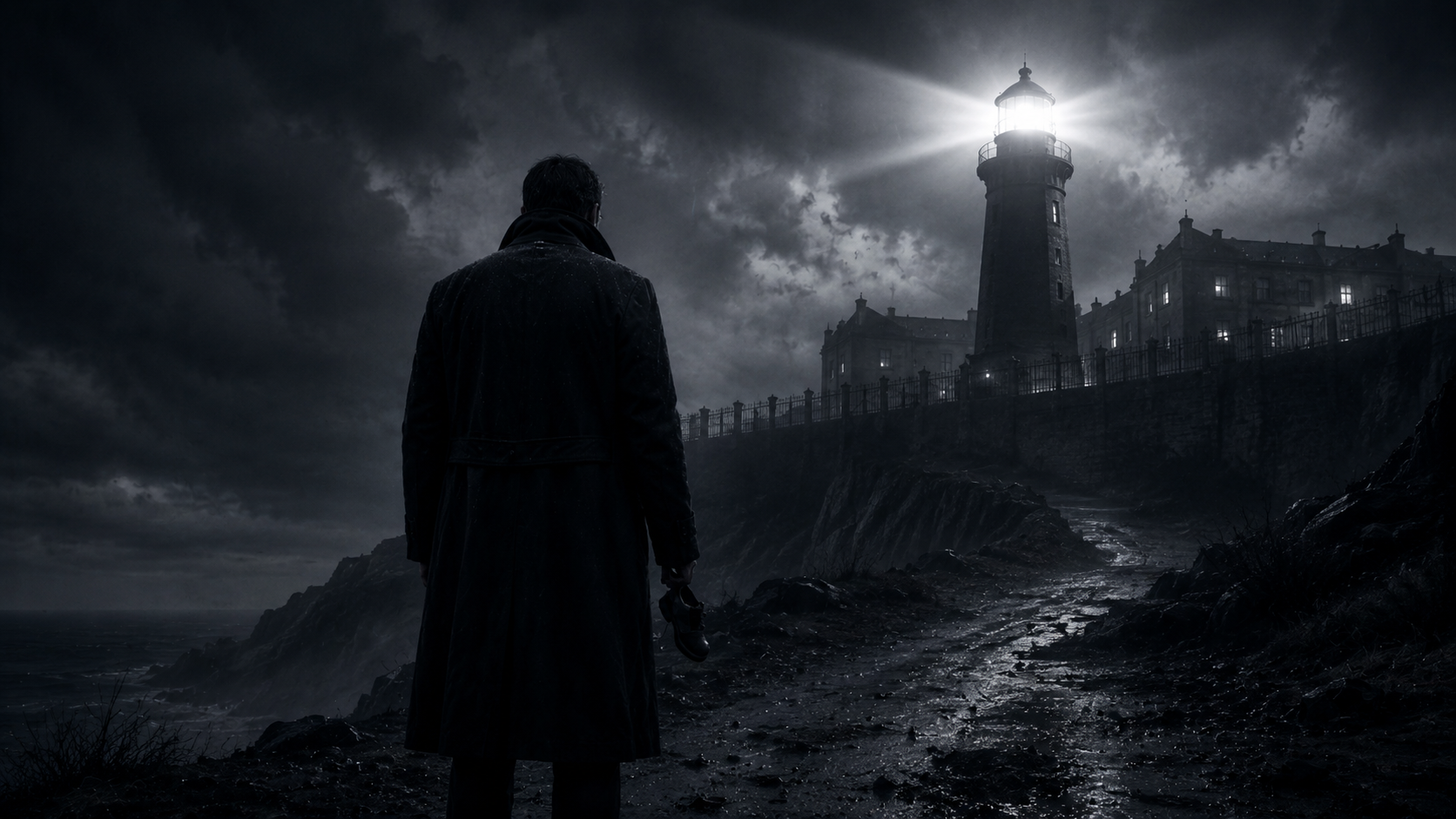
The Investigation That Was Really A Confession
The Truth Teddy Daniels Could Not Survive
Few films have sparked as much debate as Shutter Island, but the biggest mystery is not the famous ending.
Beneath the investigation, the missing patient, and the storm-battered asylum lies a far darker story about memory, guilt, trauma, and the lengths the human mind will go to in order to protect itself from unbearable truth.
Martin Scorsese’s psychological thriller without focusing on surface-level twists. Instead, it examines the deeper questions hiding underneath the film: how identity is constructed, why people cling to comforting narratives, and what happens when reality becomes too painful to accept.
Whether you are revisiting the film years later or encountering its themes for the first time, this breakdown uncovers the psychology, symbolism, emotional tension, and philosophical questions that continue to make Shutter Island one of the most discussed films of the modern era.
The Plot In One Flow
The film opens in 1954, with Teddy Daniels violently seasick on a ferry heading toward Shutter Island. He is a U.S. Marshal, travelling with his new partner, Chuck Aule. Their destination is Ashecliffe Hospital, a psychiatric institution for dangerous patients.
The island immediately feels wrong. The guards are too tense. The patients stare too knowingly. The staff are polite but guarded. The hospital looks less like a place of treatment and more like a fortress surrounded by water, cliffs, iron gates, and secrets.
Teddy and Chuck have been sent to investigate the disappearance of Rachel Solando, a patient who appears to have escaped from a locked room. She was imprisoned after drowning her three children, then arranging them at the kitchen table as if they were still alive. Her disappearance seems impossible. There are bars, locked doors, searched grounds, and no clear route off the island.
Dr. John Cawley, the hospital’s lead psychiatrist, explains the case with calm authority. Teddy distrusts him almost immediately. Cawley is too smooth, too controlled, too ready with partial explanations. Another psychiatrist, Dr. Naehring, is even colder. His European accent, intellectual confidence, and invasive questions trigger Teddy’s suspicion and wartime trauma.
Teddy is not just here for Rachel. He has a private motive. He believes a patient named Andrew Laeddis is on the island. Laeddis, according to Teddy, was the arsonist who caused the fire that killed Teddy’s wife, Dolores. Teddy wants to find him.
That hidden mission turns the investigation into something more personal. Teddy is not merely solving a disappearance. He is walking into a place where his grief, rage, and paranoia are already waiting for him.
The island’s atmosphere intensifies. Teddy interviews staff and patients. The official story feels rehearsed. Rachel’s doctor has supposedly gone on holiday. The nurses contradict themselves. Patients seem frightened. One woman secretly writes “run” in Teddy’s notebook, confirming his belief that the hospital is hiding something.
A storm hits the island, cutting off escape and communication. The weather becomes part of the trap. Roads flood. Buildings shake. The institution’s normal order breaks down. Teddy’s migraines worsen. He begins having visions and dreams of Dolores, ashes, water, dead children, and the Dachau liberation, where he witnessed the aftermath of Nazi brutality and participated in the killing of German guards.
These visions matter because they show Teddy’s mind before the twist reveals why. He is haunted by fire and water. Fire belongs to his invented story about Dolores dying in an arson attack. Water belongs to the truth he is trying to suppress: his children were drowned.
The case keeps mutating. Teddy finds a note in Rachel’s room asking about the “law of four” and “who is 67.” He begins to believe there is a hidden patient beyond the official sixty-six. The number 67 becomes a key to the island’s secret. He suspects Ashecliffe is conducting experiments on patients, perhaps linked to Cold War mind control, lobotomy, and government abuse.
Chuck appears loyal, practical, and slightly less intense. He steadies Teddy, asks questions, and follows him through the investigation. But even Chuck has small inconsistencies. He fumbles with his gun. He seems oddly comfortable in the hospital. He does not always behave like a seasoned marshal.
Teddy’s suspicion expands until almost everyone becomes part of the plot. Cawley is not a doctor but a controller. Naehring is not a psychiatrist but an old-world interrogator. The guards are not staff but enforcers. The island is not a hospital but a secret laboratory.
The more Teddy investigates, the more his theory becomes emotionally necessary. If Ashecliffe is evil, then he is righteous. If Laeddis is hidden there, then Teddy’s grief has a target. If the doctors are lying, then Teddy is not broken. He is the only sane man in the asylum.
The investigation leads him toward Ward C, the most dangerous part of the hospital. The storm has damaged the facility, allowing Teddy to enter the forbidden space. Ward C is dark, wet, chaotic, and filled with patients who seem like living fragments of Teddy’s mind.
There he meets George Noyce, a disturbed patient who recognises him. Noyce tells Teddy that the entire investigation is a game designed for him. He warns him that Chuck is not who he says he is. He suggests Teddy has been here before and that the hospital wants to trap him.
This should clarify the truth, but it only deepens Teddy’s paranoia. Noyce’s words are accurate in one sense and distorted in another. There is a performance happening. Chuck is not really Chuck. The investigation has been staged. But not because Teddy is an outside marshal uncovering a conspiracy. It is because Teddy is the centre of an experimental role-play designed to break through his delusion.
Teddy eventually reaches a cave by the cliffs, where he meets a woman claiming to be the real Rachel Solando. She says she was once a doctor at Ashecliffe and was imprisoned after discovering the hospital’s experiments. She feeds Teddy’s belief that the institution uses drugs, surgery, and psychological manipulation to create obedient patients.
This scene is one of the film’s most ambiguous. Whether the cave woman is real, imagined, or part of Teddy’s delusion, she gives shape to the conspiracy Teddy already wants to believe. She tells him exactly what his paranoia needs: that he is being drugged, that the hospital is dangerous, and that the lighthouse contains the truth.
The lighthouse becomes Teddy’s final destination. He believes Chuck has been taken there. He believes the doctors use it for experiments. He believes that if he reaches it, the whole lie will collapse.
But by this point, the film has quietly turned the investigation inside out. Teddy is not moving toward external truth. He is moving toward internal exposure.
When Teddy finally enters the lighthouse, he does not find surgical torture, government laboratories, or Chuck strapped to a table. He finds Dr. Cawley waiting for him in a clean room.
Then the film reveals its real design.
Teddy Daniels is Andrew Laeddis, a patient at Ashecliffe. Chuck Aule is actually Dr. Lester Sheehan, Andrew’s psychiatrist. The entire investigation has been an elaborate therapeutic role-play approved by Cawley. The goal was to allow Andrew to act out his delusion to its conclusion so that he might finally confront reality.
Andrew’s real wife was Dolores Chanal. She was mentally unwell, dangerous, and deteriorating. Andrew ignored the warning signs because he loved her, because he was damaged himself, and because accepting the truth would have required him to act before catastrophe.
Dolores drowned their three children.
Andrew came home and found the children dead in the lake. Dolores, detached from reality, told him they could wake them. Andrew, destroyed by grief and rage, shot her.
That is the crime he cannot remember.
To survive it, Andrew created Teddy Daniels, an anagrammatic alter ego. He turned Dolores Chanal into Rachel Solando. He turned Andrew Laeddis into a separate monster, an arsonist who killed his wife. He transformed water into fire, guilt into revenge, and responsibility into investigation.
The “law of four” refers to the names he rearranged. Edward Daniels and Rachel Solando are fictional identities built from Andrew Laeddis and Dolores Chanal. “Who is 67?” points to Andrew himself: the hidden sixty-seventh patient.
Cawley explains that Andrew has repeatedly regressed into this fantasy. The hospital is divided over what to do with him. Cawley and Sheehan believe in experimental psychiatric treatment. The institution’s more severe authorities favour lobotomy if Andrew cannot be brought back.
The role-play is Andrew’s last chance.
For a moment, the treatment seems to work. Andrew remembers. He breaks down. He understands that he killed Dolores after she killed their children. He sees that Teddy Daniels was a fantasy, not a heroic identity. The entire detective story collapses into a confession.
The following morning, Andrew sits outside with Sheehan. At first, it appears that he has recovered. Then he refers to Sheehan as Chuck and speaks as Teddy again. Sheehan looks devastated. Cawley and Naehring watch from a distance. The experiment appears to have failed.
Orderlies approach to take Andrew away for lobotomy.
Then comes the final ambiguity. Andrew asks whether it is worse to live as a monster or die as a good man.
Sheehan reacts as if he suddenly understands. Andrew may not have regressed after all. He may remember everything and be choosing lobotomy because living with the truth is unbearable. He would rather disappear into mental death as Teddy than remain Andrew Laeddis, the man who failed his children and killed his wife.
The ending does not merely ask whether Andrew is sane. It asks whether sanity is always survivable.
The Main Characters Inside The Plot
Teddy Daniels is the heroic identity Andrew creates because he cannot live as himself. Teddy is brave, suspicious, wounded, and righteous. He gives Andrew a mission, an enemy, and a reason to keep moving.
Andrew Laeddis is the buried self. He is not a cartoon villain. He is a traumatised man who ignored his wife’s collapse, lost his children, killed Dolores, and then shattered under the weight of that reality.
Chuck Aule, revealed as Dr. Lester Sheehan, is Andrew’s psychiatrist. His role is delicate: he must support Teddy’s fantasy long enough for it to expose itself. His sadness at the end suggests deep investment in Andrew’s recovery.
Dr. Cawley is not the obvious villain Teddy imagines. He is controlling and manipulative, but his manipulation serves a therapeutic purpose. He believes Andrew may still be saved without destroying his mind surgically.
Dolores is the emotional centre of the film. In Teddy’s fantasy, she is a murdered wife. In reality, she is the woman who killed their children during a catastrophic psychological collapse. She is both victim and perpetrator, memory and wound.
The Central Conflict Inside The Plot
The external conflict is Teddy versus Ashecliffe.
The internal conflict is Andrew versus the truth.
Every clue serves both stories. The missing patient pushes Teddy deeper into the island, but it also pushes Andrew deeper into his own buried memory. The doctors appear to be hiding evidence, but they are actually managing a dangerous therapeutic experiment. The storm appears to trap Teddy, but the real prison is Andrew’s mind.
The conflict matters because Andrew’s delusion is not random. It is morally engineered. It protects him from guilt by turning him into the hero of a story where someone else is the monster.
The Turning Points Inside The Plot
The first turning point is the arrival at Ashecliffe. Teddy enters the island believing he is in control, but the hospital controls the conditions from the beginning.
The second is the note in Rachel’s room. “The law of four” and “who is 67” transform the missing-person case into a larger mystery.
The third is George Noyce in Ward C. Noyce punctures the detective story and suggests Teddy is part of the institution’s game.
The fourth is the cave woman. She gives Teddy’s conspiracy a full ideological structure: drugs, experiments, control, and the lighthouse.
The fifth is the lighthouse reveal. The detective story dies, and the psychiatric tragedy emerges.
The final turning point is Andrew’s last line. It reframes the ending as either relapse or deliberate self-erasure.
The Emotional Journey Inside The Plot
The film begins with unease, then becomes suspicion, then paranoia, then horror, then grief.
At first, the viewer shares Teddy’s distrust. Ashecliffe feels corrupt. The doctors seem evasive. The island feels designed to bury people. That alignment is essential: the audience is trapped inside Teddy’s interpretation before it is allowed to judge him.
By the end, the emotional centre shifts. The horror is no longer that Teddy was lied to. It is that the lie was the only thing holding Andrew together.
The Ending Explained
At the end, Andrew appears to relapse into Teddy’s identity, causing the doctors to proceed with lobotomy. But his final question strongly suggests another possibility: he remembers the truth and chooses oblivion.
That is why the ending is so devastating. If he has relapsed, the treatment failed. If he has not relapsed, recovery succeeded just enough for him to choose psychological death.
Either reading is bleak. The mind can build a fantasy to escape guilt, but once the fantasy collapses, the truth may be too heavy to carry.
The Story Anchor
The strongest image is not the lighthouse. It is the lake.
Andrew finding his drowned children is the emotional centre of the entire film. Everything else grows out of that scene: the missing patient, Rachel Solando, the fear of water, the invented arsonist, the hunt for Laeddis, and the desire to become Teddy instead of Andrew.
The detective story is a maze built around one unbearable image.
If You Only Remember Three Ideas
First, the mind can turn guilt into a mission. Andrew cannot face what happened, so Teddy hunts a villain instead.
Second, conspiracy can be emotionally comforting. Teddy’s paranoia is terrifying, but it gives him structure. It tells him he is not broken; the world is corrupt.
Third, truth is not always liberation. The film’s darkest idea is that seeing reality clearly may not make someone free. It may destroy the last defence keeping them alive.
The Sentence That Explains The Entire Film
Shutter Island is about a man who invents a mystery because confession would mean becoming the monster he has spent the whole story hunting.
Why This Film Still Matters
Shutter Island still matters because it understands self-deception as an active force. People do not only lie to others. They build entire identities to avoid facts that would collapse them.
The film also feels more modern now because paranoia has become one of the dominant emotional languages of public life. Teddy’s mind behaves like a conspiracy engine: every contradiction becomes proof, every authority becomes suspect, and every fear becomes evidence.
Where The Film Is Weakest
The film’s weakness is that its final reveal can make some earlier scenes feel engineered rather than organic. Once the twist is known, certain moments exist more clearly as clues than as natural behaviour.
The cave sequence is also deliberately unstable, but that instability can frustrate viewers who want clean answers. The ambiguity is useful, but it also leaves room for over-reading.
What Most People Misunderstand About This Film
Most people reduce Shutter Island to the twist: Teddy was Andrew all along.
That is the surface answer. The deeper question is whether Andrew knows at the end. The film is not only about hidden identity. It is about whether a person can choose illusion after finally seeing the truth.
Online explanations often treat the ending like a puzzle box with one correct mechanical solution.
That misses the emotional horror. The final line matters because it changes the question from “was he insane?” to “would he rather be destroyed than live with himself?”
The Philosophy Of The Film
The film’s philosophy is pessimistic but not shallow. It suggests identity is partly narrative, and when reality becomes intolerable, the mind may choose a false story over a true one.
It also asks whether mercy can be coercive. Cawley’s role-play is manipulative, but it may be Andrew’s only humane alternative to lobotomy. The film refuses a clean moral answer.
The Psychology Of The Film
Psychologically, the film is about trauma, denial, guilt, and dissociation without turning those ideas into simple labels.
Andrew’s mind does not invent nonsense. It invents a story with purpose. It protects him from guilt, gives his grief an enemy, and transforms helplessness into investigation.
That is why Teddy is so convincing. He is not random madness. He is Andrew’s survival system.
The Taylor Tailored Interpretation
The Taylor Tailored reading is this: Shutter Island is a film about the seductive power of being wrong.
Teddy’s false reality is painful, frightening, and paranoid, but it is still easier than the truth. It lets him be the investigator rather than the father who came home too late. It lets him hunt Andrew Laeddis rather than be Andrew Laeddis.
That is the warning. Sometimes the lie does not feel comfortable. Sometimes it feels heroic.
The Real-Life Test
The real-life test is simple: notice the stories that make you feel righteous while protecting you from responsibility.
In relationships, work, politics, money, and family conflict, people often build narratives where every uncomfortable fact becomes someone else’s corruption. The question is not only “am I right?” It is “what truth would become unavoidable if this story collapsed?”
How To Apply The Lessons Without Turning Them Into A Fantasy
Do not romanticise Teddy’s refusal to face reality. The film is not saying delusion is strength.
The practical lesson is harder: track facts before emotion edits them. Notice when an explanation makes you feel powerful but prevents change. Pay attention to repeated patterns, not just dramatic enemies.
Five Questions To Test Whether You Actually Understood This Film
Why does Teddy need Andrew Laeddis to exist as a separate villain?
Why does water threaten the fantasy more than fire?
Is Dr. Cawley cruel, merciful, or both?
Does Andrew relapse at the end, or does he choose lobotomy knowingly?
What truth in your own life would be hardest to face if your favourite explanation disappeared?
The Final Lesson
Shutter Island ends with a man walking toward the destruction of his own mind because the truth has become heavier than the lie.
That is why the film lasts. Not because it tricks the viewer, but because it understands something brutal about human beings: sometimes people do not create fantasies to feel happy. They create them because the alternative is remembering.
