How a 1989 Amnesty Shaped the Case Behind The Law of Beasts
Poland Gave Mariusz Trynkiewicz a Release Date. Decades Later, It Had to Decide What to Do When That Day Came.
Anna Bersz and Agnieszka Grabska, the investigator and psychiatrist at the centre of Netflix’s The Law of Beasts, are fictional. Director and co-writer Kasper Bajon has explained exactly where they came from. He and fellow writer Anna Kasińska met women who had carried considerable responsibility in the real case. They drew on traits from several people to create the two friends. Neither character has a single real-life counterpart.
The man whose case divides them did exist. Mariusz Trynkiewicz murdered four boys in Poland in 1988. A court sentenced him to death in 1989, but an amnesty reduced his sentence to 25 years in prison. By 2014, he had served that term. The question Poland faced was one the original trial could never settle. On what grounds could the state continue to hold someone after his sentence had ended?
That is the history behind the four-part drama, released on Netflix on 18 November 2026. Knowing where the writers introduced fiction makes one aspect of the series especially interesting. The same two women encounter the case twice, and what counts as evidence changes between their first encounter and their last.
Where Anna Bersz and Agnieszka Grabska Came From
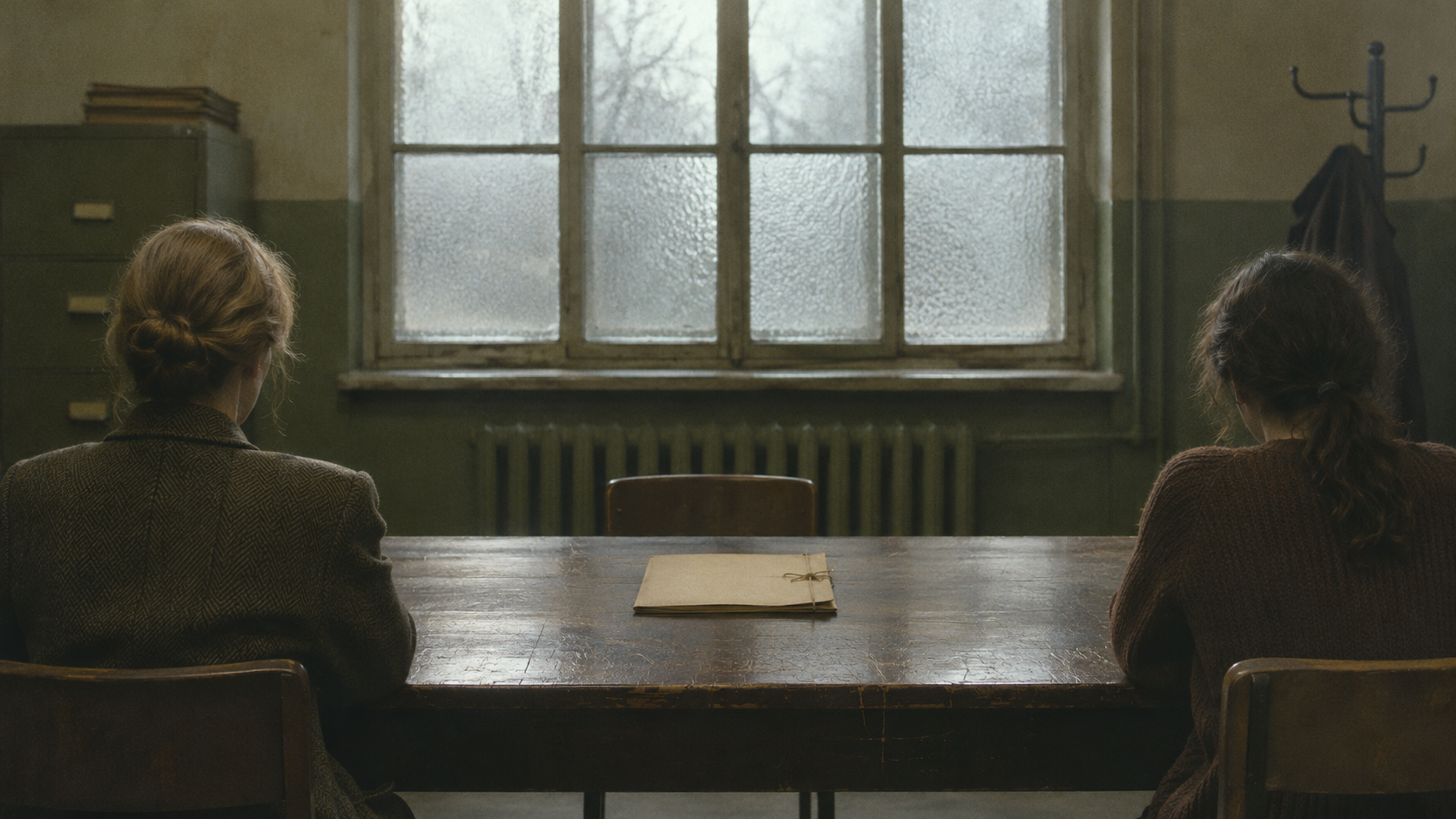
In the 1988 storyline, Anna, played by Agnieszka Grochowska, is a major in Poland’s Citizens’ Militia who leads the investigation. Her friend Agnieszka, played by Agnieszka Żulewska, is the psychiatrist asked to assess Trynkiewicz’s mental capacity. A decision over the case costs the women their friendship. When the drama returns to them in 2014, Anna holds government office and Agnieszka has become an established authority in psychiatry.
Bajon’s account of the research explains why he chose those particular leads. He recalled a difference between who spoke at length about solving the problem and who ultimately had to take responsibility for a decision. Women repeatedly found themselves in the latter position. Giving the story to Anna and Agnieszka allowed the writers to follow what happened to the people who had to put their professional judgement on the record.
“Composite” has a precise meaning here. Bajon described borrowing traits from people the writers met. He did not identify an investigator who followed Anna’s career path or a psychiatrist whose friendship broke down as Agnieszka’s does. Viewers can take the women’s professional pressures seriously while treating their private conversations, loyalties and estrangement as part of the screenplay. Looking for the identity of a real friend who betrayed the other would mean attributing the writers’ choices to an actual person.
Why a Man Sentenced to Death Was Due for Release
The four boys Trynkiewicz killed in 1988 were the victims of the real case. In September 1989, a court sentenced him to death for their murders. An amnesty later that year commuted the penalty to 25 years’ imprisonment. Polish law at the time had no life sentence available to take its place.
That last detail explains the apparent contradiction at the heart of the series. Someone coming to the case fresh might reasonably assume that Trynkiewicz had won an appeal, persuaded a parole board he was safe, or secured a reduction because of a psychiatric opinion. The decisive change was the amnesty. It gave his prison term an end date. Reaching that date in 2014 said nothing, by itself, about the risk he posed.
The timing also matters to how we read the fictional friendship. The drama can return to the decision that drove Anna and Agnieszka apart and ask what it cost each of them. The historical explanation for why Poland faced a release decision a quarter of a century later lies in the sentence and the change in law. No private exchange between an investigator and a psychiatrist is needed to account for it.
What Poland’s ‘Beast Law’ Actually Allowed
On 22 November 2013, Poland adopted the legislation that became known as the “Beast Law”. It came into force on 22 January 2014, shortly before Trynkiewicz’s prison term ended. The nickname suggests a law aimed squarely at one notorious man. Its actual wording set out criteria that a court could apply to other people who came within its scope.
Article 14 shows why the psychiatrist’s role matters so much to the drama. Under the law, a court considering a qualifying case had to weigh expert opinions alongside the person’s treatment history and the prospects for effective treatment outside an institution. The threshold for preventive supervision was a high probability of a specified serious violent offence. Placement in the secure centre required a very high probability, with placement necessary in light of that risk. The court made the decision.
The difference between “high” and “very high” looks small on the page. For the person being assessed, it could determine whether they lived in the community under supervision or were confined in a centre. And for an expert asked to give an opinion, it meant having to explain how much confidence the evidence could bear. The horror of a past crime was already established. Estimating the likelihood of a future offence required a different judgement.
Trynkiewicz became the first person placed in the national centre at Gostynin under the law. He later returned to prison following a separate conviction for possessing child sexual abuse material. He died in January 2025, aged 62.
Why the Story Returns to the Same Two Women
The most revealing choice Bajon and Kasińska made was to give Agnieszka two questions separated by a quarter of a century. In the first timeline, her work concerns a suspect’s mental capacity at the time of a crime. In the second, the public wants to know how dangerous a convicted man might be on release. Expertise can inform both questions. An answer to the first cannot simply be carried forward as the answer to the second.
Anna has changed jobs in the meantime. As an investigator, she was responsible for finding out what happened to four boys. As a government official, she must consider what could happen to someone else. Agnieszka has a reason to resist any pressure to sound more certain than her evidence allows. Anna has a reason to ask what happens if the expert underestimates the danger. Neither woman needs to doubt the seriousness of the murders for their disagreement to run deep.
Making them former friends gives that disagreement a history the court papers could never supply. A stranger can ask a psychiatrist how sure she is and hear a professional answer. Anna can ask the same question and hear the friend whose judgement divided them years before. That second meaning belongs to the drama. The words that could determine whether a person went home or remained confined are there for anyone to read in Article 14.
Sources
Netflix — The Official Trailer for The Law of Beasts Is Here — Kasper Bajon’s direct account of how he and Anna Kasińska created the two leads, alongside the series premise and release details.
Michał Wiśniewski, Portal Gostynin — Nie żyje Mariusz Trynkiewicz, pierwszy pacjent ośrodka w Gostyninie — The original sentence, the amnesty, Trynkiewicz’s placement at Gostynin and his later return to prison.
Polish Sejm — Act of 22 November 2013, official text — Article 14 sets out the evidence a court must consider and the different thresholds for supervision and secure placement.
Next Reads
Murder in Galicia True Story: What Netflix Changed About the Isabel Fuentes Case — How the dramatisation of a Spanish murder case compares with the account in its companion documentary.
The Murder of JonBenét Ramsey: What's True in Netflix's Drama, 30 Years On — The challenge of portraying named investigators and a bereaved family in a case that remains unsolved.
The Altruists True Story: What Really Happened With Sam Bankman-Fried and Caroline Ellison — What trial testimony can establish about a private relationship at the centre of a public scandal.
