

Tokyo Story Summary: The Film That Shows How Families Drift Apart Without Anyone Being Cruel
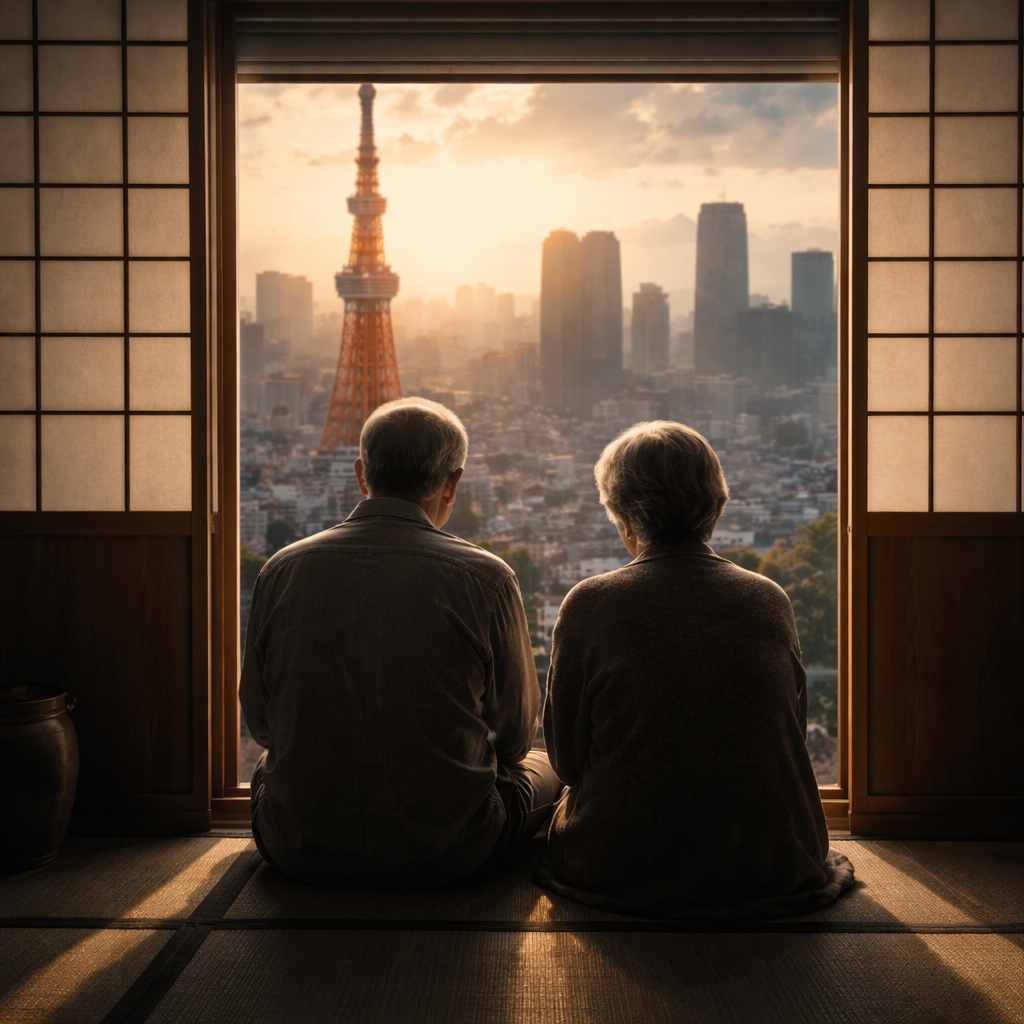
Tokyo Story: a summary of Ozu’s 1953 classic, themes, relevance today, and a clear ending explained.
The Quiet Film That Breaks Your Heart on Purpose
Tokyo Story (directed by Yasujirō Ozu, 1953) is a Japanese drama that looks simple on the surface and then keeps getting truer the longer you sit with it. This Tokyo Story summary is built to be both readable and listenable: it tells you what happens in clean cause-and-effect and then explains why the film lands with such force. Ozu’s excellent subject is not a scandal or a mystery. It is time, and that is what time does to love when life gets busy.
The central tension is easy to recognize. An elderly couple travels from a small seaside town to Tokyo to see their adult children. The children are not cruel. They are working, distracted, and managing their responsibilities. The parents are not saints. They are polite, hopeful, and quietly unwilling to demand much. The visit becomes a test of whether affection can survive on leftovers.
Ozu frames it as a family story, but it plays like a blueprint for modern life: attention is scarce, duty is negotiated, and regret arrives after the moment when action was still possible.
“The story turns on whether a family can show real care before time makes care impossible.”
Full Plot
Spoilers start here.
Act I: Setup and Inciting Incident
Shukichi (retired, wants to feel close to his children again) and Tomi (his wife, wants a warm, unhurried visit) live in the coastal town of Onomichi with their youngest daughter, Kyoko (teacher, wants the family to stay decent to one another). Their older children have built adult lives in cities. The parents decide to travel to Tokyo to see them, treating the trip as a simple family reunion.
In Tokyo, they visit Koichi (a doctor who wants to keep his clinic running and his household stable) and Koichi’s wife and children. Koichi receives them politely, but the rhythm of the home is dictated by work. Patients, errands, and practical demands persistently disrupt the visit. Shukichi and Tomi respond with courtesy and restraint, trying to fit themselves into the cracks of Koichi’s schedule.
They also visit Shige, a hairdresser who wants to maintain her business and social standing. Shige is brisk and managing. She hosts them, but the hospitality feels transactional, shaped by convenience. The parents do not confront anyone. They accept what they are offered, even when it is thin.
Noriko, a widowed daughter-in-law who wants to keep honoring her late husband while also surviving her own life in the city, makes the most sustained effort to be present. Although she is not a blood relative, she treats Shukichi and Tomi with warmth that does not feel obligatory. She takes time away from her job to show them the city, not as a tourist performance but as an attempt to give them a real day together.
The mismatch becomes clear. Shukichi and Tomi expected to be folded into their children’s lives. Instead, they are moved around those lives like fragile luggage. Koichi and Shige feel the discomfort of failing at what they believe they should provide, but their solution is logistical rather than emotional: they arrange a trip for the parents to stay at a hot spring resort.
At the resort, Shukichi and Tomi find that the environment is not restful. The noise and nightlife around them make sleep difficult, and the trip exposes how little the children understood what the parents actually needed. Rather than forcing themselves to endure the discomfort, the parents leave early and return.
Back in Tokyo, the visit now feels like a quiet bruise. The parents do not accuse anyone. The children do not confess anything. The air is strained because everyone can sense the truth, and everyone is trained to avoid saying it out loud.
What changes in this situation is that the parents stop expecting the visit to repair anything.
Act II: Escalation and Midpoint Shift
After the failed resort stay, the family’s polite distance becomes harder to ignore. Shukichi and Tomi begin to see the city not as a shared space of reunion but as the territory of their children’s priorities. The children’s homes are not built for the parents to belong in, and the days are not structured to include them.
Shukichi, with more freedom than the working adults, drifts toward old connections, meeting an old friend who understands the particular disappointment of aging. The conversation does not erupt into drama. It adds weight by naming a feeling that everyone has been avoiding: time changes families, and the change is not reversible.
The parents decide to go home. The decision is not framed as a confrontation, but it has the force of one. Leaving is the only way Shukichi and Tomi can protect themselves from further small humiliations and from the temptation to beg for a kind of attention their children cannot or will not provide.
On the journey back, Tomi’s health begins to fail. The shift is abrupt in consequence but quiet in presentation, as if the story is showing how quickly an ordinary day can become the last day. The parents return to Onomichi, and Tomi’s condition worsens. The family must respond, not to an abstract duty, but to a concrete emergency.
News reaches the children. Koichi and Shige, now forced by the gravity of illness, travel to Onomichi. Noriko also comes. Another son, Keizo (works away from home, wants to keep up with his obligations), is delayed by his work and arrives too late to see his mother alive.
The family gathers around the sickbed in Onomichi. Old resentments do not explode. They simmer. Each person’s choices are shaped by life patterns that have been forming for years: Koichi’s sense of responsibility mixed with impatience, Shige’s practicality that can harden into self-justification, Kyoko’s anger at the way politeness has covered neglect, and Noriko’s unusual capacity to show up without making the moment about herself.
Tomi dies. The event forces a reckoning that no one asked for, and it removes the possibility of doing better “next time.”
What changes here is that the family’s failures stop being hypothetical and become permanent.
Act III: Climax and Resolution
After the death, the family moves through funeral rituals and practical arrangements. Grief in the film does not look like extended speeches. It looks like fatigue, logistics, and the awkwardness of people who do not know how to speak honestly to one another. The children’s behavior in this period reveals what their earlier busyness concealed: when the crisis arrives, their instinct is still to return to their own lives as quickly as possible.
Koichi and Shige make plans to leave soon after the funeral. Keizo, who missed the last chance to see his mother, also returns to his obligations. Their departures are not staged as villainy. They are staged as momentum. Life pulls them back. That pull is the point.
Kyoko cannot accept it. She sees the children’s quick exits and their practical talk about keepsakes as proof that they did not truly value their parents. Kyoko’s anger is not abstract. It is a fear about what will happen to Shukichi now that Tomi is gone, and it is a protest against how easily everyone normalizes abandonment.
Noriko responds differently. She does not deny Kyoko’s disappointment, but she reframes it. Noriko points to the reality Kyoko has not yet lived: adults build lives that consume them, and the older generation eventually becomes something those lives struggle to accommodate. Noriko’s stance is not sentimental. It is an acceptance that does not excuse but does not pretend outrage can reverse time.
When Kyoko goes back to her responsibilities, Noriko remains for a final conversation with Shukichi. Shukichi acknowledges, plainly and without bitterness, that Noriko treated Tomi and him with more care than their own children did. Noriko resists the praise, insisting that her kindness is impure and that she is disloyal. Her honesty matters because it refuses the easy moral framing of the story. The film does not want a saint. It wants a person.
Shukichi presents Noriko a keepsake that belonged to Tomi, a gesture that functions as gratitude and also as a kind of release. Shukichi encourages Noriko to remarry and to seek happiness, even if doing so means loosening her tie to the family. Noriko breaks down, admitting a loneliness she has been managing behind polite smiles. The moment lands because it shows how grief and isolation run through multiple generations, not only the elderly.
Noriko returns to Tokyo. Shukichi stays in Onomichi, now alone, facing the daily quiet that follows loss. The film ends without a sweeping lesson. It ends with the feeling that life keeps moving, and the cost of neglect is paid in silence.
Analysis and Themes
Theme 1: Time as the Main Antagonist
Claim: The film treats time, not malice, as the force that breaks families apart.
Evidence: Shukichi and Tomi arrive with hope, but each day is shaped by Koichi’s clinic schedule and Shige’s shop demands rather than by shared time together. The resort trip is meant as care but becomes another reminder that the children are solving a problem, not meeting a need. Tomi’s sudden decline turns “We’ll do better later” into a lie the calendar cannot keep.
So what? Many people imagine love as a feeling that will survive neglect, but the film argues that love requires time as its material. When time is consistently withheld, relationships shrink into ritual. Modern life often treats attention as optional and then acts shocked when bonds thin out.
Theme 2: Duty Without Intimacy
Claim: The story shows how duty can become a substitute for presence and how thin that substitute feels to the person receiving it.
Evidence: Koichi and Shige behave correctly, but their hospitality is scheduled and managed. They pay for the resort as a way to discharge obligation without changing their routines. After Tomi’s death, the children handle arrangements and then leave quickly, as if completing tasks is the same as staying with pain.
So what? Duty matters, but duty alone cannot satisfy the human need to be seen. The film captures a common failure mode: people equate financial help or formal respect with love, then miss that love is also listening, lingering, and allowing someone to take up space.
Theme 3: Kindness as Choice, Not Role
Claim: The film’s most meaningful care comes from someone who has the least formal obligation.
Evidence: Noriko rearranges her work to spend time with Shukichi and Tomi, and she does it with warmth rather than resentment. She shows them Tokyo as an experience, not as an errand. After the funeral, she stays behind when others leave, and her final conversation with Shukichi becomes the emotional center of the ending.
So what: many families rely on roles to assign care, but roles can become excuses. The film suggests that real kindness is a decision made in the moment, often by people who could have walked away without consequence. It is not a personality trait. It is a practice.
Theme 4: Politeness as a Mask for Pain
Claim: The characters use manners to avoid conflict, but the avoidance quietly deepens the harm.
Evidence: Shukichi and Tomi rarely state what they want, even when they are hurt, and their silence teaches the children that minimal effort is enough. The children avoid admitting guilt, preferring solutions that preserve their self-image as good sons and daughters. Kyoko’s anger erupts because she cannot tolerate the gap between what everyone says and what everyone does.
So what? Politeness can be compassion, but it can also be denial. The film illustrates how families drift not only because people are selfish, but because they are afraid to speak plainly. Unspoken disappointment does not disappear. It accumulates.
Character Arcs
Protagonist: Shukichi starts the film with the belief that a visit will restore family connection and that courtesy will sustain it. By the end, Shukichi accepts that affection does not guarantee attention and that loneliness is part of aging. The shift happens through the experience of being managed rather than welcomed and the final clarity that arrives after Tomi’s death.
A key secondary arc belongs to Noriko. Noriko begins as the most attentive figure, but the story complicates her kindness by letting her admit selfishness and loneliness. Noriko’s honesty turns care into something human rather than heroic, and it underscores that even the “good” person is still struggling to live with loss.
Structure
Ozu builds impact through restraint. Instead of big confrontations, he uses small frictions and quiet transitions, letting the audience feel the weight of what is left unsaid. The camera often stays steady and observant, which makes the emotional shifts feel like changes in weather rather than arguments you can win.
The film also uses pauses and ordinary spaces to measure time. Moments that other films would rush through are given room, and that room becomes the point: this is a story about how little time people give each other, and the form embodies that scarcity.
The ending avoids catharsis in the usual sense. It resolves events but leaves the emotional problem intact. That choice makes the film linger because the viewer is not released by a clean moral victory.
What Most Summaries Miss
Many summaries treat the film as a straightforward indictment of ungrateful children. That reading is tempting, but it is smaller than what the story is doing. The children are not monsters. They are representative. The film is describing a system where work, distance, and habit erode intimacy, even when everyone believes they are “good” people.
Another overlooked element is the parents’ own strategy. Shukichi and Tomi do not ask for what they want. Their politeness is dignified, but it also becomes a way of avoiding vulnerability. The film suggests that drift is co-created: children fail to notice, parents fail to speak, and the family becomes a place where love exists without enough contact to stay alive.
Finally, Noriko is often reduced to a symbol of goodness. The story refutes that simplification by giving her a moment of confession. Her loneliness is not a decorative note. It expands the film’s argument: modern life isolates the young as well as the old, just in different ways.
Relevance Today
Aging societies are asking how elder care should work when adult children live far away and work long hours, and the film shows the emotional side of that policy problem.
The story maps neatly onto modern “productivity culture”, where being busy becomes a moral shield and relationships become something you fit in later.
Technology makes contact easier, but it can also turn care into messages and check-ins rather than shared time, which mirrors the film’s difference between obligation and presence.
Urban migration continues to tear families apart, and the pressure to establish a life in expensive cities often pushes parents to the periphery without any malice intended.
Workplaces reward availability and speed, which can make family time feel like a disruption instead of a priority, echoing Koichi and Shige’s constant scheduling.
Relationships today often run on emotional outsourcing, where one “reliable” person does the listening and showing up, which resembles the way Noriko becomes the family’s emotional anchor.
Inequality in caregiving persists, with practical burdens and emotional labor falling unevenly, and the film’s post-funeral departures capture how quickly responsibility can be redistributed and denied.
Ending Explained
The ending is built around two truths that clash: the family cannot undo what has already happened, and life will not pause to let anyone catch up emotionally. Shukichi’s final state is not presented as punishment for the children, but as the realistic outcome of a world where closeness requires time that people do not give.
The ending means the film is less about blaming individuals and more about mourning what modern life slowly steals from families. Shukichi’s gift to Noriko functions as gratitude and release, and it also shows a hard-earned generosity: he wants her to choose a future rather than remain trapped by loyalty to the past.
What the ending refuses to resolve is the fantasy that one honest conversation can fix a lifetime of drift. It leaves behind an argument that love is real, but love is not enough without attention, and attention is the one resource everyone keeps spending elsewhere.
Why It Endures
Tokyo Story endures because it does not need spectacle to feel devastating. It takes the smallest social failures and shows how they scale into permanent consequences. The film respects the audience enough to let discomfort arrive without explanation, the way it does in real families.
This is for viewers who want human truth over plot mechanics and for anyone who has felt the ache of seeing a loved one only in fragments. It may frustrate viewers who need big turning points, overt conflict, or fast pacing, because Ozu’s power comes from accumulation rather than surprise.
It ends with a question that does not age: will you treat the people you love as urgent, or will you only understand them fully when it is too late?
