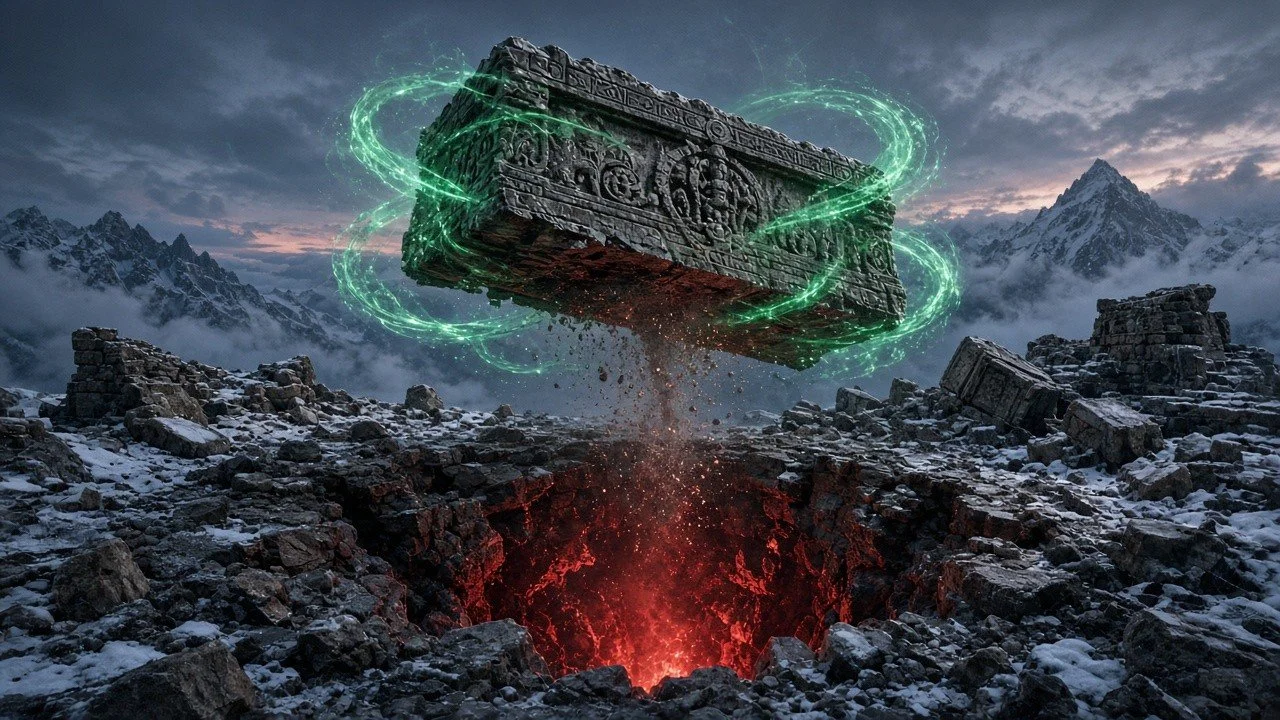
VisionQuest's final post-credits scene returns to Mount Wundagore.
One Last Sitcom, Two Post-Credits Scenes and a Door Left Open for Wanda
The last episode of VisionQuest asks Vision to stop the being that made him without throwing a punch. The eight-part Disney+ series, run by Terry Matalas and starring Paul Bettany, closes the trilogy that began with WandaVision and continued in Agatha All Along. Its finale, "Forever", was released in the US on Tuesday 10 November 2026 and arrived on Disney+ in the UK in the early hours of Wednesday 11 November.
The episode settles Vision's war with Ultron and his search for his son, Tommy. Then the credits roll, and Marvel uses the last few minutes to point straight at Avengers: Doomsday, which opens in UK cinemas on Wednesday 16 December, two days before its US release on 18 December.
Spoiler warning: the following summary discusses the plot, major twists and ending.
What Happens in the VisionQuest Finale?
"Forever" opens with the series' hidden villain finally in the room. "The Client", the figure who hired the bounty hunter Paladin to find Vision, is Virgil Horton, played by James Spader, who also plays Ultron. Virgil is the grandson of Phineas Horton, the scientist behind the original Human Torch, and he has used his grandfather's code to build artificial intelligence of his own.
Virgil had transferred the consciousness of his wife, Josephine Carrington, into a synthetic body, the being now called Jocasta (T'Nia Miller). With Jocasta restored and Vision captured, his plan is to upload himself into Vision's body and rule over a humanity kept docile by nanobots. He has trapped Ultron in a small device.
Tommy (Ruaridh Mollica) uses his super-speed to free Vision and Jocasta. In the struggle, Virgil shoots Jocasta, but Ultron gets loose, takes control of the nanobots to rebuild his robot form and crushes Virgil to death. Jocasta dies in Ultron's arms.
Her death undoes everything Ultron seemed to have learned. Convinced that humanity wants its own extinction, he sends the nanobot swarm towards London with orders to kill, and there is no override. Only Ultron can call it off.
Why Vision Fights Ultron With a Sitcom
Vision's answer is not a battle but a conversation. He pulls himself and Ultron into his own mind, where he has built a mid-century sitcom called UltraVision, and speeds up time so that hundreds of episodes can play out in the minutes before the swarm hits London.
The device returns the trilogy to the form WandaVision began with, but with a different purpose. Wanda used a sitcom to hide from her grief. Vision uses one to force Ultron to face his. Across some 500 episodes, Ultron refuses to relent, until he realises that keeping the simulation running is burning out Vision's power core and that his own core is going down with it. Vision is willing to destroy them both to stop him.
That is the turn. Vision tells him they "couldn't process this alone", a line that covers Vision's grief for Wanda, Ultron's grief for Jocasta and what the two feel for each other. Ultron stops the swarm and disappears.
Matalas has said the message he hoped viewers would take away is that "you can't really just bury it in your code" and that grief has to be faced, which is harder to do alone. It is a sharper ending than most Marvel finales because the climax is decided by an emotional choice rather than who hits hardest.
Tommy, Billy and the Reunion
The cost of the simulation is Vision himself. He is left unconscious, and Tommy cannot revive him alone. His twin brother, Billy (Joe Locke), whose own return was explained in Agatha All Along, arrives at the last moment, and the two boys combine their powers to bring their father back.
The finale then settles into a reunion. Vision and Tommy plan to have dinner with Billy, and Paladin heads off on a more heroic mission. Ultron, still at large, talks to Vision about his future and puts the odds of him using his power for good or ill at "50-50".
In their last scene together, Tommy asks whether, with all three of them back, they might see Wanda again. Vision answers with the line his earlier self said to Wanda at the end of WandaVision: "We have said goodbye before, so it stands to reason… we'll say hello again." Matalas has said he and Bettany experimented with Wanda appearing as Vision was dying, but felt it pulled attention from the father-and-sons story.
The First Post-Credits Scene: Ultron's Next Move
There are two scenes after the credits. In the first, a clean-shaven Ultron in a suit stands at a window of the Horton estate, tapping a drive labelled "Jocasta".
The meaning is clear enough: he may try to bring her back. Matalas has said a deleted scene had Jocasta survive, but it took the punch out of the finale, so the drive became a promise instead. He has also framed it as a question about whether Ultron will repeat Wanda's and Vision's mistake by refusing to accept a loss. Nothing in the scene says when, or whether, that story will be picked up.
The Second Post-Credits Scene: Back to Mount Wundagore
The second scene is the one aimed at Doomsday. It returns to the climax of Doctor Strange in the Multiverse of Madness (2022), when a grief-stricken Wanda Maximoff, the Scarlet Witch (Elizabeth Olsen), brings Mount Wundagore down on herself to destroy the Darkhold.
This time the scene continues. Green magic lifts the rubble away, a hooded figure stands over Wanda and says: "Scarlet Witch, awaken. Your power will be mine." Wanda's eyes snap open and the screen cuts to black. The figure is Doctor Doom, played by Robert Downey Jr., the villain of Avengers: Doomsday.
The scene was left out of the episodes sent to critics in advance, so many viewers first saw it on release night.
Is Wanda Alive?
Yes. The scene shows Wanda alive and conscious at the end of it, which settles the question left open since 2022.
What it does not settle is how. The scene does not say whether Doom raises her from the dead or finds her unconscious and wakes her, and accounts of the scene describe it both ways. It also appears to take place at the moment of the mountain's collapse, not in the present day of VisionQuest. If so, Wanda could have been with Doom for years while her family believed she was dead. The series does not say where she has been since.
What Does Doom Want?
The only answer on screen is Doom's own: Wanda's power. He wants the Scarlet Witch's abilities for himself, or at least under his control.
This is the second time Marvel has shown Doom gathering heroes. A post-credits tag attached to the Avengers: Endgame rerelease showed Bruce Banner being "collected" from an underground bunker. Our guide to what Endgame Encore added and how it changes the ending covers that scene. Taken together, the two tags suggest Doom is assembling powerful allies, by force if needed. What he plans to do with them is the business of Doomsday, and Marvel has not explained it.
Who Are the Latverian Witches?
The Latverian witches are three masked, hooded figures who serve Doom in Avengers: Doomsday. Marvel first displayed their costumes at San Diego Comic-Con in July 2026, in green, purple and gold. A poster released in October showed Doom in his castle with three witches in green, purple and red. Their faces are hidden.
The VisionQuest tag has strengthened the long-running theory that Wanda is the witch in red. Marvel has not confirmed it, and it has not said who the other two are. Names circulating among fans, including Sylvie, Agatha Harkness and Clea, are speculation.
The Comics Background: The Children's Crusade
The comics offer a precedent, though it is not film canon. In Avengers: The Children's Crusade (2010–2012), written by Allan Heinberg and drawn by Jim Cheung, Wiccan and Speed, the comic-book versions of Billy and Tommy, set out with the Young Avengers to find their missing mother.
They eventually find Wanda in Latveria, without her memory and engaged to Doctor Doom. Later in the story, an attempt to use the power inside Wanda passes it to Doom, giving him her abilities, at least for a time.
VisionQuest's tag echoes that story: Billy and Tommy want their mother back, and Doom has her. But the MCU has borrowed comics ideas loosely before. Treat The Children's Crusade as a guide to the ideas Marvel might draw on, not a prediction of what Doomsday will do.
Should You Watch VisionQuest Before Avengers: Doomsday?
If you only want to be ready for Doomsday, the second post-credits scene is the essential part, and it is short. It establishes that Wanda is alive and that Doom has her.
If you want the context, the whole series is worth it. It explains where Vision, Tommy and Billy now stand, and it gives the Doomsday tag its emotional weight: a family that has just found each other, still missing its mother. The finale does not confirm whether Vision, Tommy or Billy will appear in the film.
For UK viewers, all eight episodes are on Disney+ now. Avengers: Doomsday is exclusive to cinemas from Wednesday 16 December, with no Disney+ date announced, so there are around five weeks to catch up.
VisionQuest ends by giving Vision the thing Wanda never managed: a family he can keep without inventing it. Then, in its last minute, it hands Wanda to the one villain who wants exactly what she has. Whether Doomsday is a rescue story, a family reunion or a fight between them, the finale has set it up as a test of what Vision has just learned: that grief has to be faced, not hidden.
Next Reads
Avengers: Endgame Encore Explained: New Scenes, Full Spoilers, Cast and Release Dates
Inception Explained: Full Plot Summary, Ending, Philosophy and Psychology
Sources
VisionQuest Episode 8 Finale Review: Worthwhile Revival Television, Den of Geek (10 Nov 2026)
What VisionQuest's Wanda Credits Scene Means for 'Doomsday', Vulture (11 Nov 2026)
'VisionQuest' Episode 8 Recap: An Atypical Marvel Show Shines, Gizmodo
'VisionQuest' Ending: What It Means for 'Avengers: Doomsday', Gizmodo
VisionQuest Post-Credits Scene Officially Confirms Another Avenger Returning in Doomsday, Polygon
VisionQuest Ending and Post-Credits Scenes Explained, ComicBook.com
Marvel Television's VisionQuest Is Now Streaming, Disney+ UK
Avengers: Doomsday release date, trailer and cast, Disney+ UK
Avengers fans in the UK will be able to watch Doomsday early, NME
New Avengers: Doomsday Poster Includes Latverian Witches, Men's Journal
Scarlet Witch's Most Powerful Love Story Wasn't With Vision, Screen Rant
