What Makes A Great Film Ending? Five Ways A Final Scene Changes The Story
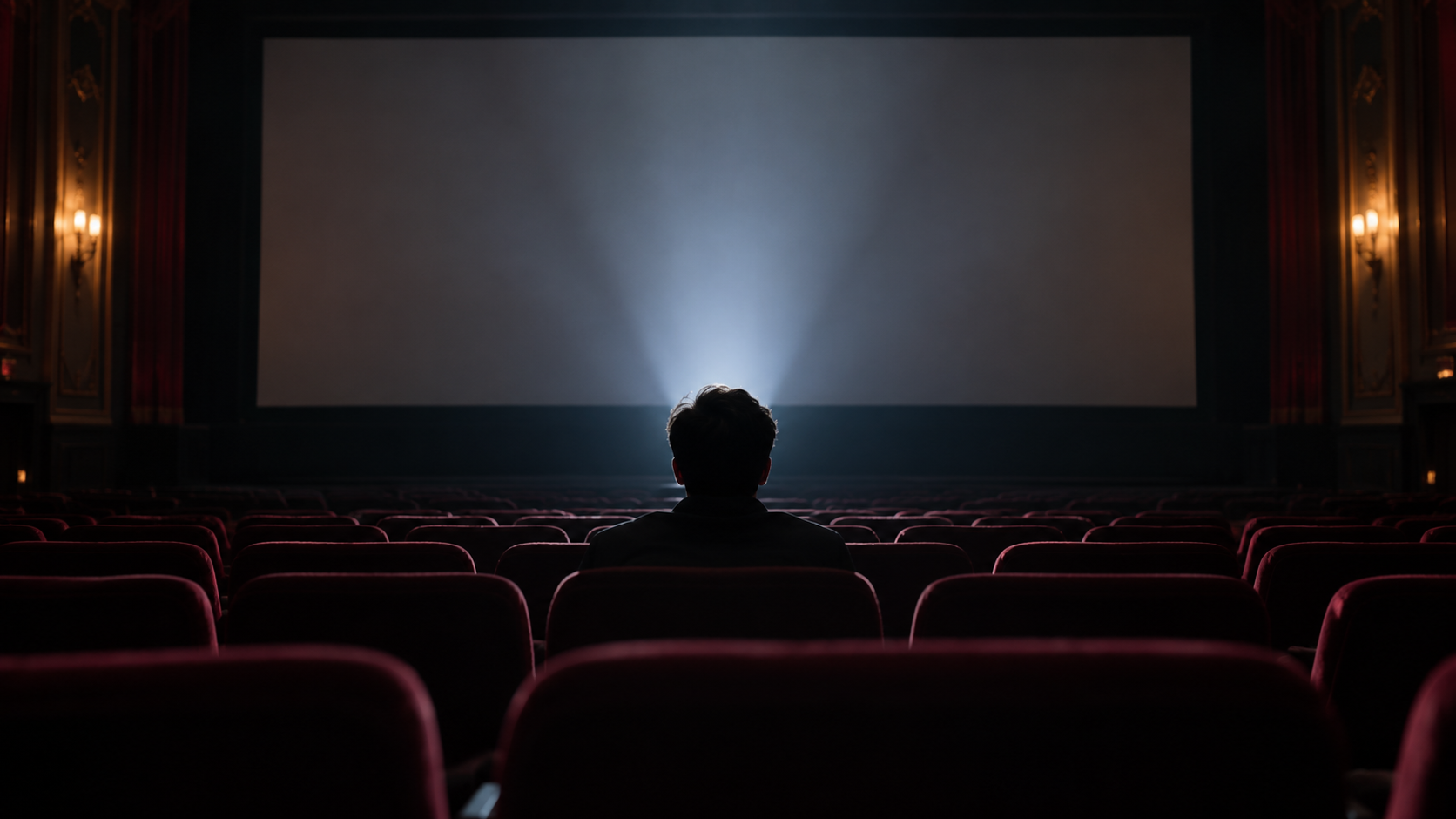
The Final Scene That Changes Everything You Just Watched
A Great Film Ending Changes How We Understand The Journey That Came Before It.
The final scene has several jobs. It can resolve a conflict, reveal that the audience misunderstood it, or leave a question open in a way that clarifies the film's central idea. A surprise alone is not enough. The ending feels earned when earlier images, choices and consequences support it, even if we did not predict it.
This guide explains five ways endings work. It refers to broad narrative patterns rather than revealing the decisive twist of a particular film. If you want to analyse a film after watching it, the key questions are what changed, what remained unresolved and whether the final image adds meaning to something seen earlier.
1. The Ending Pays Off A Choice
Many films build towards a decision the protagonist has avoided. The climax matters because the character finally acts under pressure, revealing what they value more than what they have claimed to value. The consequences may be joyful, costly or ambiguous. The dramatic satisfaction comes from the connection between earlier conflict and the final action.
When judging such an ending, ask whether the choice had been prepared. Was the alternative genuinely tempting? Did the character have enough information to understand the cost? If the script produces a new value in the final minutes without earlier evidence, the ending can feel imposed rather than discovered.
2. The Ending Reframes Earlier Scenes
A late revelation can ask the viewer to revisit a conversation, a camera angle or a piece of behaviour. Effective reframing does more than prove that the writer concealed a fact. It changes the meaning of relationships or the reliability of the story's perspective, while leaving enough clues for a second viewing to be rewarding.
The test is fairness. Were viewers shown events from a limited point of view, or did the film quietly contradict facts it had clearly established? A reveal may remain emotionally powerful even when its mechanics are debatable, but the best examples deepen the film rather than turning it into a puzzle with only one trick.
3. The Ending Withholds A Final Answer
An open ending can be precise. It may resolve the character's emotional decision while leaving an external fact uncertain. Or it may expose two interpretations of the evidence and decline to select one. Ambiguity works when the audience can articulate exactly what is unresolved and why that uncertainty belongs to the film's subject.
Compare this with a film that merely stops before explaining its plot. An incomplete account asks the viewer to supply missing mechanics; a deliberate open ending supplies enough structure to make competing interpretations meaningful. The distinction often becomes clearer when you describe the last scene without trying to 'solve' it immediately.
4. The Ending Returns To The Beginning
A repeated location, object or line can reveal how far a character has travelled. The same street may feel threatening at the start and liberating at the end. The setting has not changed; the person and our knowledge have. The repetition becomes a compact way to show development without a speech explaining it.
Such circular structures can also be disturbing. If the final scene resembles the opening and the character behaves in exactly the same way, the film may suggest that no lesson was learned. Look at small changes in framing, sound and behaviour. They often determine whether the return signifies growth, entrapment or irony.
5. The Ending Changes The Scale
A film may spend most of its running time on one person's problem, then end by revealing its social or historical consequences. Conversely, a vast spectacle may close on an intimate gesture. The change of scale tells us where the film finally locates its meaning: in an institution, a community, a family or a single decision.
This can be done without an explanatory caption. A changed workplace, an empty room or a person returning to an ordinary task can make a larger consequence tangible. The final image earns its place when it alters our sense of what the central conflict was about.
Sound, Duration And The Cut To Black
An ending is made from film form as well as plot. A scene held several seconds beyond its obvious conclusion can leave us with discomfort or reflection. Music may affirm what we see, complicate it or disappear altogether. A cut to black can protect a mystery or deny the viewer the reassuring aftermath they expect.
Ask what the audience knows at the exact moment the credits begin. If the film ended one minute earlier, what would be lost? If it continued one minute longer, what would be explained too neatly? Those questions reveal the director's control over the viewer's final emotional position.
The Ending Belongs To The Whole Film
It is tempting to judge a final scene on its own, particularly when a reveal is easy to discuss online. Yet the ending inherits promises made by the opening, the middle and the film's visual language. If the central relationship has been developed carefully, a modest gesture can close it powerfully. If a conflict has received little attention, even an elaborate spectacle may fail to satisfy.
Ask which questions the film explicitly raised and which questions the audience invented. A mystery may promise to identify a culprit; a character drama may use that question chiefly to expose how people react under pressure. Criticism becomes fairer when it judges the work against its established priorities rather than requiring every story to provide the same kind of closure.
Surprise Versus Inevitability
A twist ending works when it is surprising the first time and intelligible the second. Earlier details need not announce the answer, but they should have a defensible place in the revised account. If the reveal depends on a rule introduced only at the end, the audience may feel tricked. If it explains every clue too mechanically, the film may lose the ambiguity that made it interesting.
An inevitable ending need not be predictable. We may hope a character can avoid a choice while recognising that their repeated actions make it likely. The final action then feels painful rather than arbitrary. That is a different pleasure from solving a puzzle, and it often gives the film greater emotional weight.
What A Final Shot Can Withhold
Consider a film that ends before a conversation's reply. The missing answer may be an empty tease, or the audience may already know the characters well enough that the act of asking is the real resolution. The distinction depends on what the scene has established about their relationship and how the film has used silence before.
The camera's distance matters. A close-up invites us to read a private expression; a wide shot can place the individual inside a larger space or system. A cut away from the protagonist to an ordinary location may imply that life continues beyond their story. Formal choices should be interpreted alongside the film's events, not treated as decoration.
Rewatching Without Flattening The Film
After a reveal, revisit two earlier scenes and ask whether they remain emotionally truthful even with the new information. A film that only plants clues can become less interesting once the solution is known. A film that also develops relationships, themes and conflicting perspectives can grow on a second viewing.
Resist the urge to declare one hidden answer when the screen leaves room for two. Instead, show what each interpretation explains and what it cannot. Strong ending analysis acknowledges the precise point where the film stops supplying evidence. The viewer's imagination can then continue the conversation without being mistaken for a verified fact about the story.
The Ethics Of A Character's Final Choice
Some endings ask viewers to understand a decision without approving it. The final act may resolve a character's internal conflict while exposing the damage they cause. Analysis should avoid treating emotional identification as moral endorsement. Ask whose perspective the camera privileges and which consequences the film allows us to see.
A film may deliberately give its protagonist a satisfying private moment while leaving another person's fate unsettled. That imbalance can be part of its critique, or it may reveal a weakness in the writing. Either reading requires attention to earlier treatment of those characters. The ending's ethics are built throughout the story.
What Genre Leads Us To Expect
A detective story often establishes a contract that its central mystery will be answered. A horror film may leave the threat unresolved so the audience cannot feel safe. A romantic drama may resolve a relationship while leaving career or family tensions open. These are tendencies, not laws. A filmmaker can break an expectation deliberately, but should make the breach meaningful.
When a viewer calls an ending 'unsatisfying', identify which promise seems unfulfilled. Was the missing answer the film's actual central question? Did the ambiguity develop a theme, or simply defer necessary information? That analysis is more useful than declaring that all open endings are profound or all explanations are unimaginative.
Editing Creates The Final Meaning
Imagine an ending in which a character shuts a door. If the film cuts immediately, the action can feel final. If the camera lingers on the hallway, the same action may create doubt about who remains outside. If the next shot reveals a wider community, a personal choice may acquire political or social meaning. Sequence changes interpretation.
Sound can complicate the image. Music associated with an earlier happy scene might return in a painful context, inviting us to compare the two moments. Silence can leave space for a reaction the script refuses to name. The analysis should state what is on screen and audible before inferring a single authorial message.
The Ending After The Ending
Some films add an epilogue or credits sequence. It may show practical consequences, alter a reveal or offer a lighter farewell. Consider whether it answers a question the story genuinely needed answered. A neat summary can weaken a final image that already expressed the point; a brief aftermath can also rescue an ending that stopped before showing its human cost.
The best closing analysis returns to the film's opening promise. What would a viewer now notice in the first scene? The answer should be grounded in an actual shot, action or line, not simply a claim that the ending 'changes everything'.
When An Ending Resolves The Wrong Question
A film may solve the external problem while leaving the character's inner conflict untouched. The villain is defeated, but the protagonist has made no meaningful choice. That can make a technically complete finale feel emotionally thin. The reverse is possible too: the external conflict remains, yet a character finally understands what they owe somebody else, giving the film a satisfying personal conclusion.
When judging the result, list the film's major questions and where each receives an answer. Some may be deliberately left open. The hierarchy matters: resolving a secondary puzzle cannot substitute for the relationship the film spent most of its time developing.
Foreshadowing Without Mechanical Clues
Foreshadowing can be an object, a choice, a pattern of dialogue or a visual contrast. It need not function like a detective's clue. An early act of kindness can make a later sacrifice credible. An early refusal to listen can prepare a tragic misunderstanding. These patterns give the ending emotional logic without making its exact events predictable.
On a second viewing, ask whether the early material stands as a worthwhile scene in its own right. If it exists only to plant an explanation, the film may feel like a mechanism. If it develops character and pays off later, the ending can deepen the whole work.
The Audience's Final Position
A last scene may leave viewers ahead of a character, behind them or uncertain alongside them. Each position creates a different feeling. Knowing a danger the protagonist does not can make a peaceful image ominous. Seeing a character know something we do not can preserve their privacy. Sharing uncertainty can keep us inside their difficult choice.
That distribution of knowledge is often the difference between a final scene that merely stops and one that stays with us. It shapes what the audience thinks about on the way home, and whether the film feels closed, open or quietly transformed.
Is The Twist A Resolution Or A Distraction?
A last-minute reveal can be so striking that it dominates discussion. Ask whether it resolves the film's governing conflict or merely adds a new fact. If a story has spent two hours exploring a character's responsibility, a revelation about another person's identity may deepen that responsibility, erase it or distract from it. The emotional result depends on what the reveal does to the earlier choices.
Some endings deliberately refuse a clean moral account. The protagonist might achieve the apparent goal at a cost the film makes impossible to ignore. The audience is left judging a choice rather than cheering an outcome. Such a conclusion can be satisfying if the trade-off has been built through the film; it can feel arbitrary if the cost arrives only after the decision is made.
Why A Quiet Ending Can Be Bigger Than A Spectacle
After a film has shown catastrophe or public conflict, a final ordinary action can reveal what survival means. Preparing food, walking home or sitting with another person may carry the accumulated weight of earlier scenes. The scale shrinks, but the meaning grows because the audience knows what had to happen before the act became possible.
The same quiet scene can also expose a failure. If everyone returns to normal despite unresolved harm, the film may be criticising a system that absorbs tragedy without change. Determine which reading the framing and previous events support. Volume and spectacle are poor measures of an ending's importance.
An ending can reward a second viewing when its final detail has been present all along but meant something else in its original setting. That is a reason to return to the whole film.
How To Analyse Any Ending
First state the final action plainly. Then identify the question posed near the beginning and whether it received a factual, emotional or thematic answer. Note one earlier detail that changes meaning after the ending. Finally, consider a plausible alternative interpretation and the screen evidence that supports or weakens it.
A great final scene need not be happy or surprising. It makes the film more coherent after it has finished, while giving the audience something specific to carry out of the cinema. The final frame may close the story; its effect can continue for much longer.
