

Next Major Earthquakes: Where They’re Most Likely and What the Outcomes Could Be
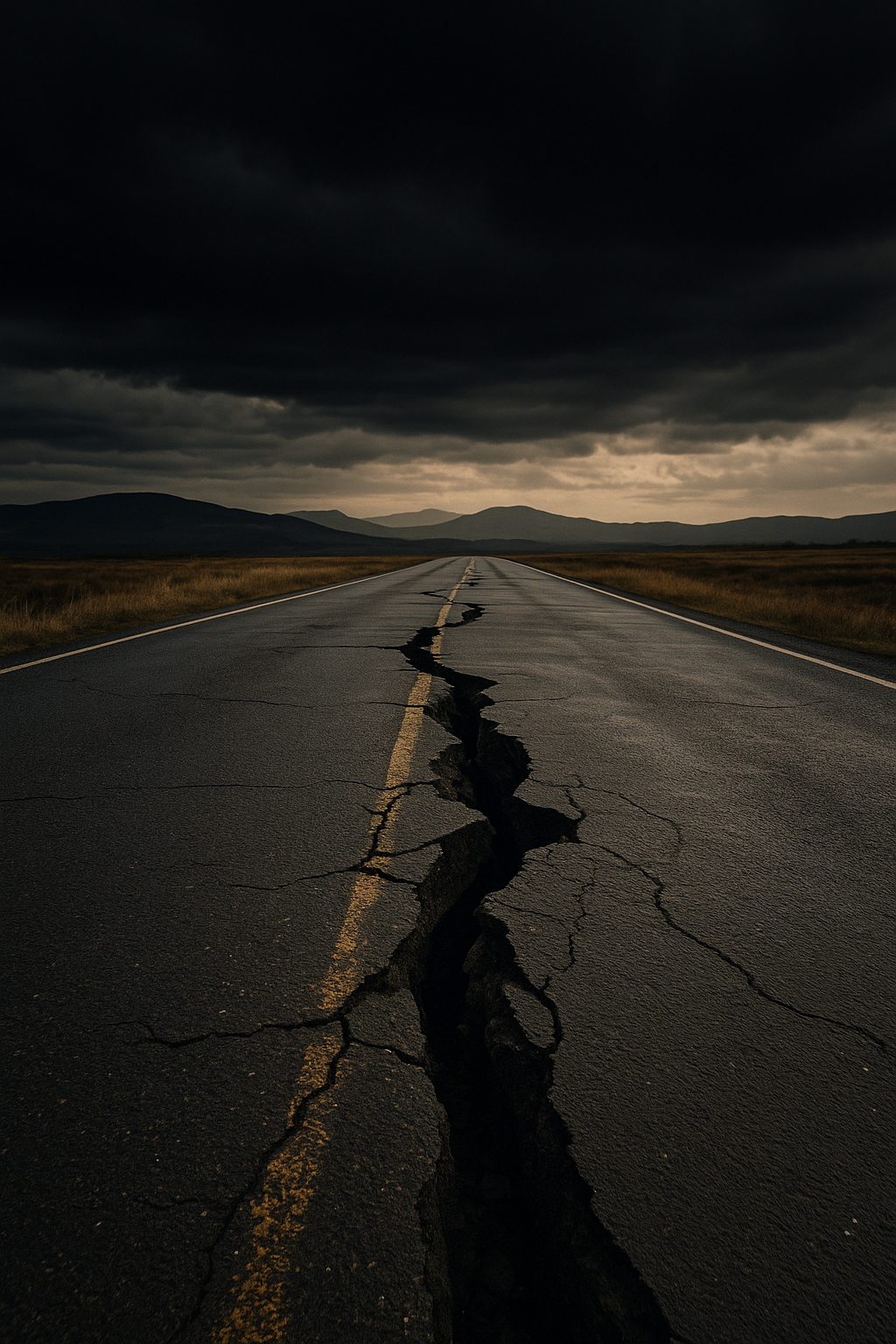
In 2025 the ground has already delivered warnings. A 7.7 quake in Myanmar tore through towns along the Sagaing Fault. A magnitude 6.2 event rattled Istanbul and reminded residents that the “big one” there has not yet arrived. Swarms of tremors have shaken Japan and California, while new research highlights hidden faults beneath megacities like Jakarta.
Scientists still cannot say where the very next major earthquake will strike. There is no reliable short-term “earthquake prediction”. But they can map where stress is building, estimate long-term probabilities and simulate what would happen if locked faults finally rupture. Those scenarios are sobering.
This article looks at the next major earthquakes not as specific calendar events, but as the most plausible large-scale shocks based on current data. It explores several high-risk zones, what experts expect in terms of shaking, tsunamis and economic loss, and how societies are preparing—or failing to prepare—for them. By the end, the reader will have a clearer sense of where the next major earthquakes are most likely to occur and what their outcomes could be for cities, economies and daily life.
Key Points
Scientists cannot predict the exact time or place of the next major earthquakes, but they can identify fault zones with high probabilities over the coming decades.
Japan’s Nankai Trough, the Istanbul region, the Cascadia Subduction Zone, the San Andreas Fault, the Himalaya, and emerging urban hotspots such as Jakarta sit at the top of many risk assessments.
Scenario studies suggest that some of these events could kill hundreds of thousands of people and cause damage measured in the trillions of dollars, especially when tsunamis and sea-level changes are included.
Dense, aging urban infrastructure and low building standards in parts of Asia, the Middle East and Latin America amplify the human cost of major earthquakes.
New global seismic hazard and risk models are improving estimates of where losses will be highest, but implementation of safer building codes and retrofits often lags behind science.
The outcomes of the next major earthquakes will depend as much on preparedness, governance and social resilience as on the magnitude of the shaking itself.
Background: Why Scientists Talk About “Next Major Earthquakes”
Modern earthquake science works with probabilities and scenarios, not precise predictions. Long historical catalogues, trench studies and GPS measurements show how quickly tectonic plates are moving and how long it has been since a fault last broke. Where stress has been accumulating for centuries, the chance of a large rupture in the next few decades rises.
Global hazard maps illustrate this clearly. The latest Global Seismic Hazard and Risk Maps show intense bands of expected shaking along subduction zones—where one plate dives beneath another—as well as large strike-slip faults such as those in Turkey and California.GEM Foundation+1 These models translate ground-shaking probabilities into potential annual losses for buildings and infrastructure.
At the same time, city-level risk studies highlight where high hazard overlaps with dense populations and high economic value. Reports ranking “GDP at risk” and environmental risk place cities like Tokyo, Taipei, Istanbul, Manila, Jakarta, Tehran, Lima, Los Angeles and Mexico City near the top of global lists, because they combine strong shaking potential with sprawling, vulnerable urban fabric. School+2sipotra.it+2
Recent events reinforce these concerns. The 2023 Turkey–Syria earthquakes killed more than 50,000 people in a region that had known its vulnerability for decades. In 2025, Myanmar’s 7.7 quake showed how a major rupture on a San Andreas–style fault can devastate a middle-income country, and a series of earthquake swarms in Japan and California reminded residents that their plate boundaries remain restless.
Against this backdrop, governments and scientists increasingly frame certain faults as “overdue” in a statistical sense. The next sections focus on these zones.
Where the Next Major Earthquakes Are Most Likely to Strike
Japan’s Nankai Trough: The Megaquake on the Government’s Radar
Off Japan’s Pacific coast, the Nankai Trough marks a long subduction boundary where the Philippine Sea plate slides beneath the Japanese archipelago. Historical records show a pattern of magnitude 8–9 earthquakes along this zone, often in pairs or clusters.
Recent government assessments estimate a roughly 70–80% chance of a magnitude 8–9 Nankai earthquake within the next 30 years.Scenario studies suggest that in a worst-case event, tsunamis and shaking could kill more than 200,000 people, collapse over two million buildings and generate direct and indirect economic losses above $1.5–2 trillion—more than ten times the cost of the 2011 Tōhoku disaster.
The government has responded by tightening building codes, revising evacuation plans and aiming to cut expected deaths by up to 80%. Yet repeated mid-sized quakes and recent tsunami advisories in southwestern Japan show that the system is already active, and preparedness remains uneven, especially in smaller coastal communities.
Istanbul and the Marmara Sea: A Megacity Living on Borrowed Time
Istanbul sits beside the western end of the North Anatolian Fault, a major strike-slip system that has broken westward in a destructive sequence over the past century. After devastating quakes in 1999, several scientific studies estimated a roughly 60% probability of strong shaking affecting the city within 30 years, and around a one-third chance within a decade.
On 23 April 2025, a magnitude 6.2 quake in the Sea of Marmara rattled Istanbul, injuring hundreds and damaging buildings but stopping short of the feared “big one”.That event likely released some stress but did not rupture the deeper, locked segments expected to generate a magnitude 7+ earthquake. Scenario modelling suggests that a full-segment Marmara quake could kill tens of thousands, leave hundreds of thousands homeless and severely damage key bridges, ports and industrial zones around the sea.
Authorities have been working to retrofit critical infrastructure and strengthen building standards, but large numbers of older, vulnerable structures remain, especially in working-class districts.
Cascadia Subduction Zone: A Quiet Coast with a Violent Past
From northern California to Vancouver Island, the Cascadia Subduction Zone is capable of producing magnitude 8–9 earthquakes and basin-wide tsunamis. Geological records show that the last great Cascadia quake, around 1700, sent a tsunami across the Pacific and dropped parts of the coastline by several feet.
Recent studies estimate at least a 15% chance of a magnitude 8+ Cascadia event in the next 50 years, with higher probabilities over longer timescales.Scenario planning exercises in the Pacific Northwest portray a magnitude 9 event that shakes for several minutes, triggers landslides and liquefaction, and sends a tsunami crashing into coastal towns within minutes. Casualty estimates range into the tens of thousands, with economic losses above $80 billion even in conservative models, and much higher when long-term disruption is included.
One recent analysis emphasises that such a quake could instantaneously drop parts of the coast by more than six feet, permanently raising local sea levels and expanding floodplains—an effect that would combine with climate-driven sea-level rise to make some low-lying areas uninhabitable.
San Andreas Fault and California: Lessons from Myanmar
California’s San Andreas Fault system shares key characteristics with Myanmar’s Sagaing Fault, which produced a deadly magnitude 7.7 earthquake in March 2025. Long-term forecasts for California estimate a 99%+ chance of at least one magnitude 6.7+ quake somewhere in the state over 30 years, with the southern San Andreas segment alone carrying about a 59% chance of such an event and around a 37% chance of a 7.5+ quake.
A landmark scenario for a magnitude 7.8 event in Southern California suggested roughly 1,800 deaths, tens of thousands of injuries and more than $200 billion in direct damage, even with modern building codes.Cascading failures of water systems, power lines, roads and ports could extend the disruption for months.
California’s advantage is strict construction standards and a culture of drills and preparedness. But aging infrastructure, densely populated valleys and pockets of unreinforced masonry mean the human and economic toll of the next major earthquake there would still be severe.
The Himalayan Arc: Crowded Valleys, Locked Megathrust
From Pakistan through India and Nepal to Bhutan, the Himalayan front marks another enormous megathrust where the Indian plate plunges beneath Eurasia. Historical and geological data show that parts of this arc have not experienced their maximum-size earthquakes for centuries, implying that strain is still building.
Studies suggest that segments of the Himalayan megathrust are capable of magnitude 8–8.5 earthquakes, similar to the great event of 1505 that affected western Nepal.The 2015 Gorkha quake (magnitude 7.8) killed nearly 9,000 people, but only partially ruptured one segment of the fault, leaving others still locked.
The potential outcomes of a future great Himalayan quake are stark. Tens of millions of people live in vulnerable housing on steep slopes or in soft river sediments. Major cities such as Kathmandu, Islamabad, Lahore and Delhi could experience intense shaking, landslides could cut off mountain communities for weeks, and aftershocks could keep rescuers at risk.
Emerging Urban Hotspots: Jakarta, Manila, Tehran, Lima and Beyond
New research in 2025 flagged a previously under-appreciated fault beneath Jakarta, Indonesia’s capital, capable of generating a damaging local earthquake.Combined with regional subduction-zone hazards, sea-level rise and rapid subsidence, this puts a fast-growing megacity at acute risk.
Other cities—Manila near the Philippine Trench, Tehran at the edge of the Alpine–Himalayan belt, and Lima on the Peruvian subduction zone—appear in multiple seismic risk rankings.In many of these places, a major quake would strike amid high informality, limited emergency capacity and dense, older districts built without modern seismic codes.
In short, while no one can say which of these areas will host the next major earthquake, they form a shortlist of where the consequences are likely to be greatest.
Analysis
Political and Geopolitical Dimensions
Major earthquakes are not just natural events; they are political stress tests. When a megacity like Istanbul, Tokyo or Los Angeles is hit, the speed and fairness of the response will shape public trust for years. Countries already facing political tension—over economic performance, regional autonomy or corruption—may see grievances flare if rescue and reconstruction are perceived as uneven.
Earthquakes can also reshape regional politics. A devastating Nankai Trough event would absorb Japanese political attention and resources for a decade, potentially altering defence priorities and economic partnerships. A Himalayan megathrust rupture affecting multiple countries at once would require cross-border coordination of aid, water management and migration. Where relations are already strained, that cooperation cannot be taken for granted.
Economic and Market Impact
The economic outcomes of the next major earthquakes will be measured not only in collapsed buildings but in long-term productivity losses. Scenario models for events like a Nankai megathrust or Cascadia rupture run into the trillions of dollars when indirect effects are included—factory shutdowns, port closures, disrupted supply chains and financial-market shocks.
Global trade is particularly exposed. Many at-risk regions host crucial ports, semiconductor plants, car factories or energy terminals. A great quake in Japan or along the US West Coast would disrupt container flows across the Pacific. A hit on Lima or Manila could impede exports of minerals, food or manufactured goods. Insurers and reinsurers, already grappling with climate-related losses, must price in the possibility of multiple, near-simultaneous catastrophes.
Social and Cultural Fallout
Earthquakes often expose deep social divides. In almost every major event, low-income communities and informal settlements suffer disproportionate damage because they occupy steep slopes, floodplains or weakly built housing. Recovery then follows the same lines, with well-connected neighbourhoods rebuilt first.
Culturally, major earthquakes can leave lasting scars—or foster new narratives of solidarity. Memorials, anniversaries and public debates over rebuilding become arenas for arguing about identity and justice. In places like Tehran, Istanbul or Jakarta, how reconstruction is managed after a major quake could either strengthen the social contract or deepen mistrust in institutions.
Technological and Security Implications
Technology cuts both ways. Advanced early-warning systems, smartphone alerts and automated shutdown protocols for trains and factories can save lives when seconds count. Japan, Mexico and parts of the US already operate such systems, and new sensor networks are spreading to other regions.
But modern infrastructure is also more complex and interdependent. Data centres, global undersea cables and critical cloud services often cluster in seismically active zones. A major earthquake could knock out key nodes in the digital economy, affecting services far from the epicentre. Cybersecurity risks also rise during disasters, when attention and resources are stretched and emergency systems may rely on hastily configured networks.
Why This Matters
The next major earthquakes will not affect everyone equally. Coastal communities facing tsunamis, residents of unreinforced masonry buildings, and people living on steep slopes or reclaimed land are at greatest physical risk. Small and medium-sized businesses, which often lack reserves and business-continuity plans, are economically vulnerable.
Short-term consequences include collapsed buildings, injuries, overwhelmed hospitals and disrupted utilities. Over the long term, repeated earthquakes can drive migration, change housing markets and alter investment flows. Some coastal zones in Cascadia or Japan, for example, could become effectively uninsurable if models that combine tectonic land subsidence and climate-driven sea-level rise prove accurate.
These risks feed into wider global trends. Urbanisation is pushing more people into seismic zones, especially in Asia and Africa. Climate change adds extra stress through flooding and heat, making rapid, safe reconstruction more difficult. In fragile states, a major earthquake could intersect with conflict or food insecurity, creating complex humanitarian emergencies.
Key developments to watch include updates to national seismic hazard maps, major retrofit programmes for schools and hospitals, and new research on hidden faults beneath megacities. Each represents a chance to reduce the toll before the ground moves.
Real-World Impact
Consider a coastal industrial city facing a subduction-zone quake and tsunami. Minutes of intense shaking snap bridges, topple port cranes and rupture fuel tanks. Within half an hour, a wall of water pushes far inland, sweeping away warehouses and homes. The immediate death toll is high, but the longer-term impact comes as factories remain closed for months, global supply chains reroute and thousands of workers leave the region permanently.
In a Himalayan valley, a great earthquake strikes at night. Traditional brick houses crumble, and landslides cut the only road out. Helicopters cannot land for days due to bad weather. Local farmers lose stored grain and livestock, pushing households already on the edge of poverty into crisis. Children miss months of school, and some villages never fully recover.
In a wealthy tech hub built near a major fault, strict building codes prevent catastrophic building collapses. Offices and homes remain largely intact, but buried water mains, fibre-optic cables and power lines fail. Data centres switch to backup power, and some services move to cloud regions overseas. Commuters face weeks of disrupted transport. The city’s reputation for reliability dips, and companies review where to place their next facilities.
In a sprawling, fast-growing megacity with weak enforcement of building standards, a magnitude 7+ quake causes the worst damage in older districts and informal settlements. Apartment blocks pancake, rescue teams struggle to reach narrow streets, and makeshift camps spring up in parks. Rumours spread quickly on social media, fuelling anger at perceived corruption in the construction sector. Reconstruction becomes as much a political challenge as a technical one.
Conclusion
The central tension around the next major earthquakes is simple but stark: the hazards are well mapped, but preparedness and resilience remain uneven. Faults beneath Japan, Turkey, the Pacific Northwest, California, the Himalaya and several megacities are statistically likely to produce large earthquakes within the coming decades. Yet many of the lives that will be lost or saved depend on decisions being made now about building codes, land-use planning and emergency systems.
The fork in the road lies between treating these events as inevitable “acts of nature” or as foreseeable risks that can be managed. Countries and cities that invest in retrofitting schools and hospitals, enforcing safer construction, strengthening social safety nets and rehearsing disaster plans are likely to suffer fewer casualties and recover faster when their turn comes.
Signals to watch include new national earthquake forecasts, major investments in coastal defences and early-warning systems, and the extent to which rebuilding after smaller quakes is used to set higher standards. The ground will move; the question is how ready the world will be when it does.
