

Could Britain Ever Become A One-Party State?
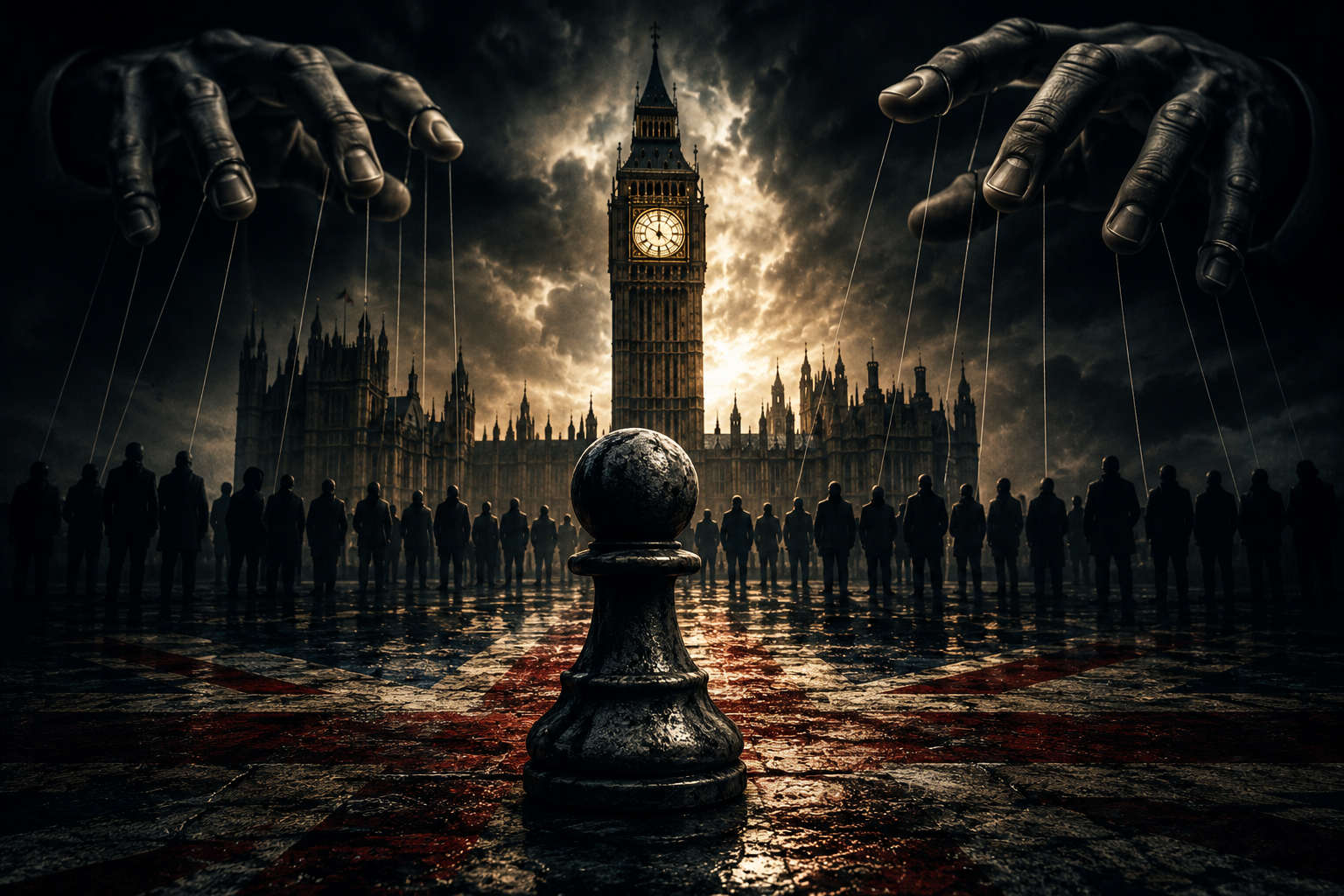
The Hidden Weakness In Britain’s Democratic Defences
The Slow Drift That Could Turn Britain Into A One-Party State
The Uncomfortable QuestionCould Britain ever become a one-party state? The instinctive answer is no. Britain has elections, opposition parties, courts, newspapers, parliamentary debate, devolved governments, independent institutions and a political culture that still broadly expects power to change hands.
But that instinctive answer is too easy. Serious constitutional analysis has to ask a darker version of the question: not whether Britain is about to become North Korea, but whether a democracy can keep the outer shape of pluralism while gradually reducing real political competition. The more plausible danger is not a single party banning every rival. It is one governing machine becoming so structurally advantaged, so technologically armed, so legally protected and so culturally embedded that alternation becomes possible in theory but increasingly unlikely in practice.
A one-party state, in its strictest form, is a political system where one party monopolises power and meaningful opposition is illegal, symbolic or structurally unable to compete. Elections may exist, but they are not real contests. Courts may exist, but they do not seriously constrain the ruling party. Media may exist, but it operates inside boundaries set by the regime. The public may vote, speak and assemble, but only within a permitted political theatre.
Britain is not that. It is a parliamentary democracy with competitive elections and a long record of peaceful transfers of power. Yet the British constitution also has a particular vulnerability: it relies heavily on political norms, restraint, convention and parliamentary sovereignty. Parliament is legally supreme and can make or unmake any law; unlike countries with deeply entrenched written constitutions, Britain’s constitutional architecture is unusually flexible.
That flexibility is both a strength and a risk. It allows the country to adapt quickly. It also means that if a future government won a large majority, controlled the legislative timetable, dominated its own MPs, weakened scrutiny and framed dissent as obstruction during a crisis, many restraints would be political rather than legally impossible.
The uncomfortable question is therefore not whether Britain could suddenly abolish democracy. The serious question is whether Britain could gradually normalise a system where one party, one executive network or one ideological bloc becomes overwhelmingly difficult to remove.
Historical Examples
History offers two broad models of one-party rule. The first is open authoritarianism: the ruling party declares itself the state, crushes rivals, controls the courts, restricts media and turns elections into ceremonies. The second is more subtle: competitive politics remains visible, but the playing field becomes so distorted that opposition survives as performance rather than power.
Classic one-party states are easy to identify. The party is not merely a participant in politics; it is the gatekeeper of national life. Access to careers, institutions, information and safety can become linked to loyalty. Political opposition becomes framed as treason, foreign influence, extremism or social disorder. In those systems, the law does not simply govern the state; the ruling party decides what the law is allowed to mean.
But democracies more often erode through softer mechanisms. A government captures regulators, politicises public appointments, intimidates independent media, tilts electoral rules, expands emergency powers, controls public information, blurs party and state communication, and turns administrative machinery into a political weapon. None of these steps alone has to look like dictatorship. Together, they can drain democracy of meaningful uncertainty.
Britain has not historically operated as a one-party state, but it has experienced periods of dominant-party rule. Long stretches of Conservative rule in the twentieth century, New Labour’s large majorities after 1997, and later landslide governments all show that Britain’s first-past-the-post system can convert plural voting behaviour into overwhelming parliamentary control. That does not make Britain authoritarian. It does mean a party can exercise near-total legislative dominance with far less than unanimous public support.
The point is not that large majorities are illegitimate. They are part of the system. The deeper issue is what happens when a huge majority combines with weak internal party rebellion, heavy use of delegated powers, aggressive whipping, centralised candidate selection, a compliant media ecosystem and a national emergency. In those conditions, the difference between parliamentary democracy and elective dominance can become dangerously thin.
The British story is therefore not one of obvious dictatorship. It is a story of concentration. The danger, if it ever comes, would likely arrive wrapped in efficiency, stability, security, public protection and the claim that only one responsible political force can keep the country together.
Britain’s Safeguards
Britain has serious democratic safeguards. General elections must happen, Parliament remains central, ministers can be questioned, courts can review executive action, the Human Rights Act allows people to bring rights claims in UK courts, public bodies must respect Convention rights, and civil society still has space to challenge government power.
There are also institutional frictions built into the system. The House of Lords can delay and scrutinise legislation. Select committees can investigate government performance. The Electoral Commission oversees important parts of the electoral framework. Devolution means Scotland, Wales and Northern Ireland have their own political institutions and mandates. Local government, although financially and legally constrained, still creates alternative centres of democratic legitimacy.
The courts are not supreme over Parliament in the American sense, but they matter. Judicial review can test whether ministers and public bodies have acted lawfully. Declarations of incompatibility under the Human Rights Act do not strike down Acts of Parliament by themselves, but they create political and legal pressure. In a constitutional culture that still cares about legality, such pressure is not meaningless.
The press and public debate are another safeguard, although an imperfect one. Britain’s media environment is noisy, partisan and often chaotic, but that pluralism itself can be a defence. A one-party state requires control over the public narrative. A culture of aggressive political argument, public ridicule, investigative scrutiny and institutional suspicion makes that harder.
The most important safeguard, however, is still political competition. Governments in Britain do lose. Prime ministers fall. Parties fracture. Voters punish arrogance. Internal rebellions can matter. Scandals can escalate. By-elections can terrify governing parties. The British public may be cynical, but it has not lost the habit of throwing out governments when they appear exhausted, incompetent or contemptuous.
That habit is powerful. It is not guaranteed forever.
The Hidden Weakness In The System
Britain’s constitution relies on a political class willing to respect unwritten boundaries. That is elegant when leaders are restrained. It is fragile when leaders decide restraint is weakness. The constitution contains law, but it also contains manners, assumptions and inherited caution.
Parliamentary sovereignty means Parliament can legislate on almost anything. This gives democratic authority to elected representatives, but it also means a government with a disciplined Commons majority can move quickly. If ministers can pass broad laws, expand delegated powers and use secondary legislation for major policy changes, scrutiny becomes compressed. Parliament remains present, but its practical ability to slow power can shrink.
This is why Henry VIII powers matter. These clauses allow ministers to amend or repeal parts of Acts of Parliament using secondary legislation, subject to varying levels of scrutiny. Parliament itself recognises that these powers shift authority toward the executive, and committees have repeatedly warned about excessive reliance on delegated powers and skeleton legislation.
That is not one-party rule. But it is one of the routes by which democratic control can thin out. A modern state is too complex for Parliament to debate every operational detail. Yet when more decisions are moved into regulations, guidance, statutory instruments, administrative discretion and algorithmic systems, the visible theatre of democracy can become less important than the machinery operating beneath it.
Britain’s electoral system adds another pressure point. First past the post is used to elect MPs to Westminster. It can produce strong governments, but it can also exaggerate parliamentary majorities and punish dispersed support.
A party does not need majority public support to gain majority parliamentary power. That has always been true. The risk grows if the party then uses that majority to reshape boundaries, voting rules, protest law, public appointments, media regulation, judicial review or civil service conventions in ways that make future competition harder.
A democracy does not need to cancel elections to weaken choice. It can preserve elections while making the opposition permanently less viable.
How Democracies Erode
Democracies usually erode through justification. Each step is presented as reasonable in isolation. A protest law is about public order. A surveillance power is about national security. A speech restriction is about harm. A media pressure campaign is about bias. A judicial reform is about accountability. An emergency power is about speed. A data-sharing scheme is about efficiency.
The pattern becomes dangerous when every constraint on government is reframed as sabotage. Courts become enemies of the people. Journalists become traitors. Civil servants become obstructive. Human rights become foreign interference. Devolved leaders become disloyal. Protesters become extremists. Opposition parties become threats to national survival rather than rivals in a democratic contest.
This is the emotional pathway into one-party thinking. The public is encouraged to see political opposition not as necessary competition, but as a danger to order. Once that idea takes root, centralisation becomes easier to sell. The ruling party no longer asks for permission to govern; it claims a moral right to neutralise obstruction.
The most dangerous democracies are not always the ones where people stop voting. Sometimes they are the ones where voting continues, but the public is trained to believe only one side is legitimate. Opposition remains legal, but socially, institutionally and digitally delegitimised.
Britain has cultural antibodies against this. It has satire, cynicism, local identities, internal party warfare, legal activism, regional political diversity and a public instinct to dislike being told what to think. But those antibodies are not invincible. A frightened public can trade scrutiny for protection. A tired public can trade liberty for order. A polarised public can accept rules it would have rejected if applied by the other side.
The road to democratic erosion is paved with plausible excuses.
Emergency Powers And The Permanent Crisis
Emergency powers are one of the oldest routes to concentrated authority. War, terrorism, pandemics, financial collapse, cyberattack, energy crisis, civil unrest or migration pressure can all justify temporary expansion of state power. The difficult question is what happens when emergency logic becomes normal government logic.
Britain’s Civil Contingencies Act 2004 contains safeguards. Emergency regulations made under it can lapse after 30 days, and government guidance recognises that parliamentary approval and renewal are part of the framework.
That matters. It means Britain’s emergency architecture is not designed as a blank cheque. Yet the lesson from modern government is that emergency politics can also operate through ordinary legislation, public health regulations, security laws, administrative guidance and executive discretion. The danger is not only the formal declaration of emergency. It is the steady migration of emergency habits into everyday rule.
The Covid era showed how quickly democratic societies can accept extraordinary restrictions when the threat feels immediate. Some restrictions were defensible in context. Some were contested. What matters for the one-party-state question is the precedent: when the public believes the situation is existential, the normal demand for scrutiny weakens.
A future crisis could be different. Imagine a major cyberattack on banking systems, AI-generated riots, a biological scare, a military confrontation, a wave of coordinated disinformation, or a collapse in public trust after a disputed election. In that environment, a government might argue that information controls, movement restrictions, emergency surveillance, platform intervention and rapid delegated lawmaking are necessary to preserve democracy itself.
That is the paradox. Emergency powers can be used to defend a democratic state. They can also train citizens to accept a more permanent security state.
The warning sign is not emergency action. Democracies sometimes need emergency action. The warning sign is emergency action without expiry, scrutiny, evidence, accountability or political humility.
Technology And Power
The next version of political centralisation may not look like a party headquarters ordering newspapers what to print. It may look like data infrastructure, platform rules, identity systems, AI moderation, predictive policing, behavioural targeting and automated access to public services.
Technology changes the scale of state power. Previous governments could monitor suspects, pressure institutions and shape public messaging. Future governments may be able to map social networks, detect sentiment shifts, predict protest formation, personalise political communication, automate benefit sanctions, rank risk profiles, flag “misinformation,” and coordinate public messaging across platforms at a speed no human bureaucracy could previously manage.
Britain already has a legal framework for investigatory powers. The Investigatory Powers Act 2016 governs lawful access by public bodies to communications and data, and official explanations describe it as a framework with authorisation and oversight controls.
The existence of oversight matters. The Investigatory Powers Commissioner reports on the use and oversight of investigatory powers, including findings, recommendations, errors and breaches.
But the democratic question is bigger than legality. A surveillance system can be lawful and still politically transformative. If the state’s capacity to see citizens grows faster than citizens’ capacity to see the state, the balance of power changes.
AI intensifies that problem. It can make propaganda cheaper, censorship more scalable, surveillance more automated and political persuasion more personalised. A ruling party with access to state data, friendly platforms, behavioural analytics and a disciplined communications machine would not need to ban opposition. It could drown, demote, discredit and micro-target around it.
The most dangerous future is not a censor in a dark room deleting every forbidden sentence. It is an opaque system where lawful speech technically remains online but is quietly buried, demonetised, downranked, mislabelled, algorithmically contained or made socially toxic. In that world, political freedom survives formally while losing reach.
A one-party state of the future may not need a single-party flag. It may need a dashboard.
Could Social Media Centralise Power?
Social media was once sold as a force that would decentralise politics. In some ways, it did. It gave outsiders reach, weakened old gatekeepers, exposed scandals and allowed citizens to challenge narratives in real time. But it also created a new battlefield where attention itself became governable.
Modern politics is no longer only about laws and speeches. It is about visibility. Who trends? Who is suppressed? Who is labelled? Who is amplified? Who is allowed to monetise? Who is treated as credible by search, recommendation engines and AI summaries? Who becomes invisible without ever being formally banned?
This matters because democratic competition depends on discoverability. Opposition parties, independent media, campaigners and ordinary citizens need the ability to reach people. If a future government could directly or indirectly influence the information architecture through regulation, partnerships, pressure, funding, safety rules or emergency requests, it could shape the public square without openly abolishing it.
The risk is not simple. Platforms themselves are private power centres, not neutral town halls. They already moderate, rank and recommend. Governments also have legitimate interests in countering fraud, foreign interference, incitement and genuine threats. The hard problem is how to prevent safety infrastructure from becoming political infrastructure.
AI search adds another layer. If more citizens receive political information through AI-generated summaries rather than direct reading, whoever influences those summaries gains extraordinary soft power. The most important political question may become less “Who owns the newspaper?” and more “Who trains the model, sets the safety rules, controls the data access, defines authoritative sources and audits the output?”
Britain could remain a democracy and still face a future where political reality is increasingly mediated by systems most citizens cannot inspect.
That is not a one-party state in the old sense. It could be something stranger: a managed democracy of information flows.
Has Britain Ever Moved In That Direction?
Britain has not seriously moved toward a formal one-party state. There has been no abolition of opposition parties, no permanent suspension of general elections, no single ruling party doctrine and no legal merger of party and state.
But Britain has repeatedly experienced pressures that point in the direction of executive concentration. Large Commons majorities can dominate legislation. Party discipline can reduce independent parliamentary resistance. Delegated powers can move policy detail away from full debate. Emergencies can normalise exceptional action. Media hostility can delegitimise courts, civil servants, lawyers, protesters or minority political voices.
The British system often works because people inside it choose not to push every advantage to the limit. That is a cultural safeguard, not an absolute barrier. The monarchy, for example, is a formal constitutional presence but does not act as a routine political check. The courts can review legality but cannot simply replace Parliament’s political judgment. The Lords can delay but not permanently block most elected-government legislation.
The 2022 restoration of prime ministerial control over election timing is another example of Britain’s executive-heavy model. The Dissolution and Calling of Parliament Act 2022 repealed the Fixed-term Parliaments Act and made the maximum term of a Parliament five years, while the timing of elections within that limit is largely determined by the prime minister.
That does not make Britain authoritarian. But it shows how much power still sits in the executive when the political conditions align. A prime minister with polling advantage, party discipline and a favourable media climate can time the democratic contest in a way that helps the governing side.
The deeper British risk is therefore not ideological dictatorship. It is constitutional opportunism. Each government discovers the powers it once criticised in opposition and finds reasons to keep them.
Future Scenarios
The first scenario is democratic resilience. Britain continues to experience political volatility, party turnover, noisy opposition and public distrust of overreach. Technology creates new risks, but courts, journalists, Parliament, civil society, regulators and voters keep forcing correction. This is the most reassuring scenario, and still the most likely.
The second scenario is elective dominance. One party, or one broad political bloc, benefits from first past the post, opposition fragmentation, tactical control of election timing and a favourable information environment. Elections remain real, but alternation becomes rare. The governing side claims repeated mandates while a large share of the public feels permanently unrepresented.
The third scenario is emergency centralisation. A major crisis creates a political demand for decisive control. Surveillance expands, protest rules tighten, speech regulation grows, platform cooperation deepens and emergency-style governance becomes normalised. The state does not call itself one-party, but opposition activity is increasingly treated as destabilising.
The fourth scenario is algorithmic managed democracy. This is the most futuristic and perhaps the most underestimated. Political power becomes less about banning parties and more about controlling information environments. AI systems, digital ID, platform rules, automated risk scoring and state-data integration create a political order where dissent remains legal but increasingly trackable, containable and reputationally expensive.
The fifth scenario is constitutional backlash. Public concern about centralisation produces reforms: stronger parliamentary scrutiny of delegated powers, clearer emergency sunset clauses, electoral reform, stronger protection for judicial review, transparency over AI use in government, tighter rules on political data, and more independent oversight of surveillance and platform-state cooperation.
That backlash scenario is possible because Britain’s constitution evolves. Its flexibility is a danger when power concentrates, but a strength when reform pressure builds. The same system that can bend toward executive dominance can also be bent back toward accountability.
Most Likely Outcomes
The most likely outcome is not Britain becoming a formal one-party state. That remains a low-probability scenario. Britain’s political culture, regional diversity, media pluralism, devolved institutions, opposition parties, courts and electoral habits make outright one-party rule unlikely.
The more realistic risk is a softer form of democratic narrowing. Britain could become a country where elections continue, but the range of viable choices feels smaller. Where governments change, but executive power keeps growing. Where opposition exists, but struggles to penetrate algorithmic attention systems. Where rights exist, but are increasingly balanced away in the name of security, safety, efficiency or crisis response.
This would not look dramatic at first. It would look administrative. A new power here. A broader regulation there. A faster process. A weaker scrutiny stage. A tougher protest rule. A more politicised appointment. A more aggressive media campaign against judges. A new digital system that citizens are told is convenient, safe and modern.
The danger is cumulative. Democracies are rarely destroyed by one law. They are weakened by the interaction of many individually defensible decisions that, together, alter the relationship between citizen and state.
Britain’s strongest defence is still alternation: the credible possibility that the government can lose and the opposition can govern. Anything that weakens that possibility deserves scrutiny, even when it is legally valid, electorally popular or justified by crisis.
The key warning signs are clear. Watch for attacks on judicial independence. Watch for permanent emergency powers. Watch for broad delegated legislation that avoids real debate. Watch for electoral rule changes designed to entrench incumbents. Watch for state pressure on media and platforms. Watch for protest being redefined as extremism. Watch for surveillance expanding faster than oversight. Watch for AI systems used in public life without transparency, appeal or audit.
Most of all, watch for the moment when citizens begin to believe that political competition itself is the problem.
Final Verdict
Britain could become a one-party state in theory, because no constitution is immune from political decay. But in the classic sense, it is unlikely. The country still has too many competing institutions, too much political volatility and too strong a habit of throwing governments out.
The more serious danger is subtler. Britain could drift toward a system where one governing force becomes structurally advantaged through electoral distortion, executive power, emergency habits, surveillance capacity, information control and public exhaustion. It would not need to abolish opposition if it could make opposition ineffective.
That is why the question matters. Not because Britain is on the edge of dictatorship, but because mature democracies are most vulnerable when they assume their maturity is permanent. The rituals of democracy can survive longer than the substance. Parliaments can sit. Courts can rule. Newspapers can publish. Elections can happen. And still, the real space for political change can narrow.
The task for citizens is not paranoia. It is vigilance. The task for Parliament is not theatrical outrage. It is scrutiny. The task for courts, journalists, civil society and opposition parties is not to win every argument, but to keep the arena open enough for arguments to matter.
Britain is not a one-party state. But the future threat would not announce itself with a flag, a uniform or a formal decree. It would arrive through convenience, crisis, technology and the repeated claim that exceptional powers are necessary just this once.
Most democracies do not collapse overnight. They drift.
