

Countries Most at Risk of Collapse by 2040: Fault Lines in a Fractured World
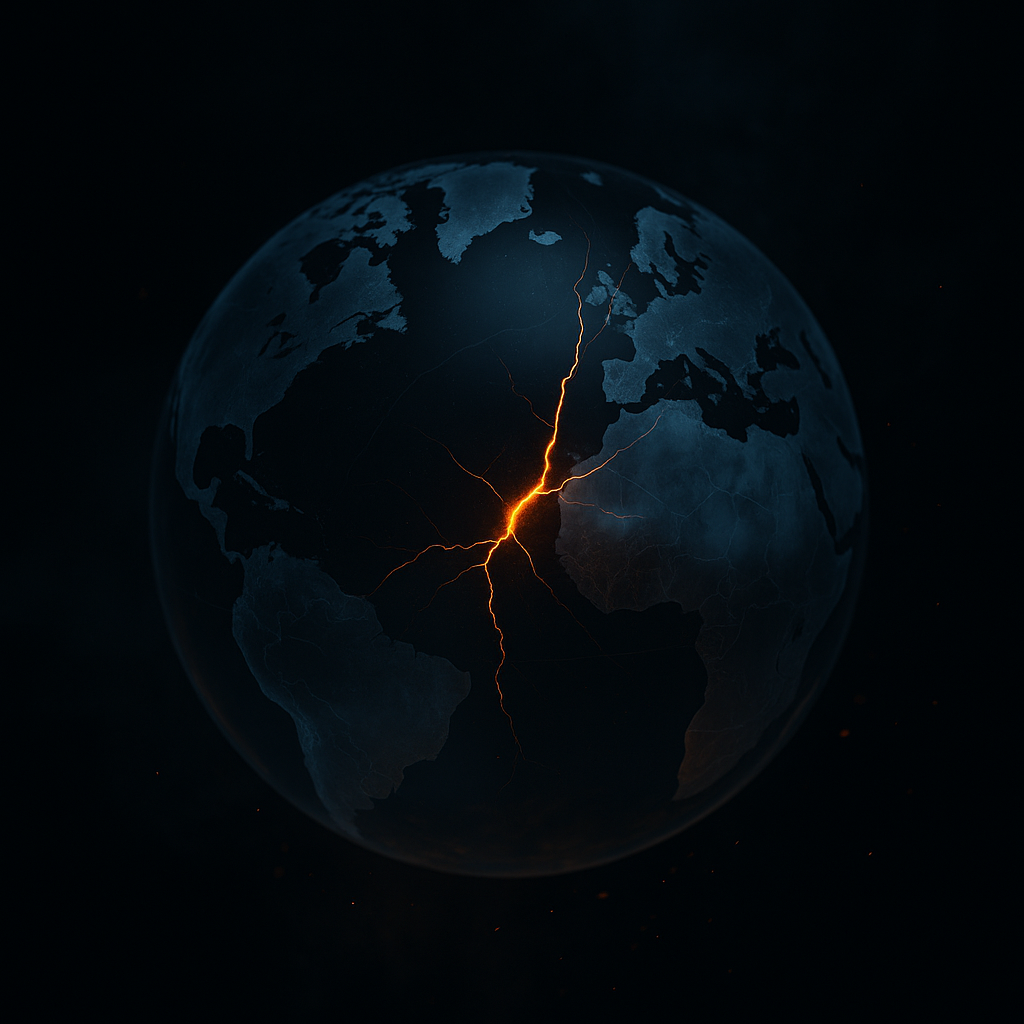
Over the next 15 years, a small group of states faces a real risk of severe breakdown: governments losing control of territory, basic services collapsing, or even land itself disappearing under rising seas. From Somalia and Sudan to Haiti and Tuvalu, overlapping crises are pushing already-fragile countries toward a dangerous threshold.
The tension is stark: global systems assume most countries will remain intact, yet conflict, climate change, debt, and demographic pressure are all hitting the weakest states at once. When institutions are already brittle, those shocks do not just cause hardship; they can push a state into partial or outright collapse.
This article looks at countries most at risk of serious failure by 2040, drawing on fragility indices, conflict trends, climate risk assessments, and forward-looking scenarios. It explains what “collapse” actually means in practice, why predictions are always uncertain, and how different pathways—from civil war to rising seas—can bring a state to the brink.
By the end, the reader will have a clearer picture of:
The conflict-riven states already close to failure.
The Sahel’s military-led regimes struggling against jihadist insurgencies.
Climate-threatened island nations facing physical, not just political, collapse.
Middle-income states where debt, climate and politics intersect in dangerous ways.
The story turns on whether fragile states can build enough resilience before cascading shocks arrive.
Key Points
Composite fragility indices consistently rank Somalia, Sudan, South Sudan, the Democratic Republic of Congo, Yemen, Afghanistan, the Central African Republic, Haiti, Chad, and Ethiopia among the world’s most vulnerable states.
Military-led states in the central Sahel—Mali, Burkina Faso, and Niger—face converging risks from coups, jihadist insurgencies, and regional isolation that could erode state authority further by 2040.
Small island countries such as Tuvalu and Kiribati confront existential climate threats, including possible loss of habitable land, even as legal debates evolve over whether a state can “disappear” if its territory sinks.
Lebanon and Pakistan illustrate a different kind of fragility: deep economic crises, climate exposure, and political gridlock that weaken institutions without full collapse—at least so far.
“Collapse” is rarely total; more often it means patchwork control by militias, gangs, juntas, or foreign forces while citizens lose reliable access to security, justice, electricity, and healthcare.
The next 15 years will likely decide whether outside support, debt relief, climate finance, and local reforms can stabilise these states—or whether crisis becomes the default condition.
Background
Most discussions of “countries at risk of collapse” draw, implicitly or explicitly, on composite measures of fragility. These indices combine indicators such as conflict deaths, forced displacement, economic performance, corruption, public service provision, and demographic pressures into a single score. In recent editions, Somalia, Sudan, South Sudan, the Democratic Republic of Congo, Yemen, Afghanistan, the Central African Republic, Haiti, Chad, and Ethiopia cluster at the top of global fragility rankings, reflecting persistent violence and weak institutions.
At the same time, climate-focused assessments flag a different but overlapping set of risks. Fragile and conflict-affected states are already hotter and more exposed to extreme weather than the global average, yet they have the fewest resources to adapt. Many of the countries facing the most dramatic temperature increases, water stress and flood risk are also those with high fragility scores, creating a dangerous feedback loop between environmental stress and political instability.
The past five years have also seen a wave of coups and attempted coups, particularly across Africa’s “coup belt” from the Sahel to the Atlantic. Mali, Burkina Faso, Niger, Chad, Guinea, Sudan and others have all seen military takeovers or attempted seizures of power since 2020, often amid jihadist insurgencies and deep public distrust of civilian elites.
On another front, low-lying island states have entered a new phase of climate risk. Sea-level rise, saltwater intrusion, and stronger storms are already eroding coastlines and farmland, driving early waves of climate migration from places like Tuvalu and threatening the long-term viability of entire territories. Recent legal opinions suggest that states may retain their legal personality and maritime rights even if their land becomes largely uninhabitable, but the practical questions of where people live and how economies function remain unresolved.
Looking toward 2040, long-range scenario exercises highlight a world with more frequent shocks—pandemics, cyber incidents, commodity price spikes, severe storms—hitting interdependent systems. States that are already close to their limits will find it hardest to cope.
Analysis
Political and Geopolitical Dimensions
Politically, the states most at risk of collapse by 2040 tend to share a similar pattern: divided elites, contested or absent legitimacy, and security forces that are either predatory, fragmented, or outgunned. In Somalia, South Sudan, Sudan, the Democratic Republic of Congo, Yemen, Afghanistan, the Central African Republic, Haiti, Chad, and Ethiopia, central governments have long struggled to project authority across their full territory. Armed groups, warlords, or gangs often control key roads, border crossings, or urban districts, taxing trade and providing their own rough justice.
In the Sahel, coups in Mali, Burkina Faso, and Niger have produced a confederation of military-led states that have broken with regional bodies and outside security partners. Their leaders seek greater autonomy and domestic legitimacy by promising to defeat jihadist groups and reclaim sovereignty. The risk is that, if insurgents keep expanding and sanctions bite, regimes may respond with harsher repression and tighter information control instead of reforms, gradually hollowing out institutions.
Geopolitically, fragile states are increasingly arenas for great-power and regional competition. External actors provide arms, training, or financial support in pursuit of strategic minerals, military bases, migration deals, or diplomatic leverage. That backing can stabilise a regime in the short term while entrenching corruption or sidelining political settlements that might offer more durable stability. When foreign patrons shift priorities, the resulting vacuum can accelerate collapse.
Economic and Market Impact
Economically, states at risk of collapse by 2040 confront overlapping challenges: high debt burdens, reliance on a narrow set of exports, exposure to global commodity swings, and weak tax bases. Sudan, South Sudan, and the Democratic Republic of Congo depend heavily on oil or mineral rents; shocks to prices or disruptions to production can quickly translate into fiscal crises and unpaid security forces.
Lebanon and Pakistan illustrate a different profile: middle-income countries hit by currency collapse, soaring inflation, and repeated bailouts. Lebanon’s financial crisis has been described as among the most severe globally in modern times, destroying savings, eroding confidence in banks, and undermining state capacity to deliver basic services. Pakistan faces mounting climate-related damage alongside high debt and limited fiscal space, forcing trade-offs between debt service, social spending, and climate adaptation.
For Haiti, chronic instability and escalating gang control over ports and roads have choked commerce and pushed businesses to close or relocate. The state’s revenue base shrinks as the informal and criminal economy grows, creating a self-reinforcing cycle where the government cannot fund security or social services, which in turn pushes more people into informal or illicit livelihoods.
Climate shocks will increasingly act as economic shock multipliers. Floods, droughts, and heatwaves can wipe out harvests, damage infrastructure, and trigger spikes in food and energy prices. In countries with limited insurance, weak safety nets, and restricted access to global capital markets, those shocks can tip a manageable crisis into systemic failure.
Social and Cultural Fallout
Socially, the path to collapse runs through erosion of trust. When citizens no longer believe the state can or will protect them, they turn to alternative providers: clans, militias, religious networks, gangs, or foreign peacekeepers. Over time, this reshapes identity and loyalty in ways that make national reconstruction harder.
In Haiti, the dominance of armed groups in Port-au-Prince and other regions has normalised everyday violence and displacement. Residents adapt by moving, joining gangs, or relying on community leaders rather than police. In parts of the Sahel and Afghanistan, some communities make pragmatic arrangements with insurgents who can offer predictable rules, however harsh, in contrast to sporadic state presence.
At the same time, large diasporas from fragile states play an ambivalent role. Remittances can be a lifeline, funding school fees, healthcare, and small businesses, and sometimes stabilising economies more than official aid. Yet the existence of an exit option—whether through migration to richer states or climate visa schemes—can also hollow out domestic reform coalitions as young, skilled citizens leave. For small island states like Tuvalu, where a significant share of the population has applied for climate-linked visas, the risk is not just economic but cultural: can a nation’s identity survive if most of its people live abroad?
Technological and Security Implications
Technology shapes both the risks and potential resilience of fragile states. Cheap drones, encrypted messaging apps, and improvised explosive devices have lowered the cost of organising insurgency or gang activity. Armed groups in the Sahel, the Middle East, and urban environments like Port-au-Prince have adapted quickly, using digital tools to coordinate attacks, spread propaganda, and intimidate opponents.
On the other hand, technology also offers tools for early warning, remote education, telemedicine, and digital cash transfers that can bypass failing physical infrastructures. Where governments and partners invest in basic connectivity and digital ID systems, they can keep critical services running even amid crises—paying teachers by mobile money, delivering weather alerts, or tracking disease outbreaks. The challenge is governance: without safeguards, digital systems can entrench surveillance, discrimination, or corruption instead of reducing fragility.
Cybersecurity is an emerging vulnerability. As even fragile states digitise key systems—electricity grids, payments, border management—they become exposed to cyberattacks by criminal or state-linked actors. Weak institutions may struggle to prevent or respond to such incidents, making cyber disruption an underappreciated pathway to state paralysis by 2040.
What Most Coverage Misses
Much discussion of “countries at risk of collapse” treats failure as a single, dramatic event: the flag comes down, the government flees, the state disappears. In practice, collapse is more often fragmented and uneven. Capital cities may retain a façade of functioning ministries and embassies while rural areas or informal settlements are effectively ruled by armed groups. International actors sometimes reinforce this “dual reality” by dealing only with central governments, even when they have little control beyond a few neighbourhoods.
Coverage also tends to underplay the importance of local resilience. Municipal authorities, women’s groups, religious organisations, and informal neighbourhood committees often keep schools open, repair water points, or broker ceasefires long after national institutions falter. These actors rarely appear on international risk maps, yet they can slow or even reverse elements of collapse if they receive support rather than being sidelined.
Finally, climate-threatened island states highlight a legal and philosophical blind spot. International law is beginning to recognise that a state might remain a state even if its land is largely submerged, retaining maritime rights and a legal identity. That means “collapse” for countries like Tuvalu or Kiribati may look less like disappearance and more like transformation into dispersed, digitally connected communities with a legally anchored but physically altered homeland. The material and emotional consequences of that shift—for citizenship, culture, and belonging—are only beginning to be discussed.
Why This Matters
The prospect of state collapse by 2040 is not just a concern for diplomats or aid agencies. It has direct implications for regional security, as conflicts and criminal networks spill across borders; for global markets, as disruptions hit supply chains for food, energy, and critical minerals; for migration systems, as more people are pushed to move by violence, economic failure, or climate impacts; and for multilateral institutions, which must decide how to treat states that still exist legally but no longer function in practice.
In the short term, the next five years will be shaped by whether coups or attempted coups spread further in already-fragile regions, especially the Sahel and parts of Central Africa; whether gang control escalates in Haiti and similar contexts, measured by territorial control and attacks on state infrastructure; and how quickly climate-related migration pathways from small island states develop alongside legal opinions on statehood and sea-level rise.
Over the medium term, out to 2035–2040, key markers will include whether fragile states secure substantial debt relief and climate finance, or remain stuck in cycles of austerity and underinvestment; the success or failure of peace processes and power-sharing deals in countries like Sudan, South Sudan, Yemen, and the Democratic Republic of Congo; and the resilience of key urban centers—whether they manage to maintain electricity, water, policing, and basic healthcare amid repeated shocks.
Real-World Impact
Consider a young farmer in Niger, in the heart of the Sahel. Rainy seasons are shorter and less predictable than a decade ago. Armed groups operate near his village, taxing markets and occasionally clashing with the army. If insecurity worsens and cross-border trade is disrupted, his options narrow: migrate to the city, attempt the risky journey north toward the Mediterranean, or accept local deals with armed actors who can guarantee some measure of stability. Each choice reshapes both his life and the authority of the state.
In Port-au-Prince, a nurse at a small clinic sees patients arriving with gunshot wounds and trauma from forced displacement. Supply chains are unreliable; electricity cuts are frequent; some staff have already left the country. If gangs seize nearby roads or the clinic itself, healthcare provision in that neighbourhood could simply stop, turning a fragile health system into a void.
In Karachi, a young software engineer navigates flash floods that regularly inundate streets and office buildings. Currency instability makes imported hardware expensive and erodes the value of her salary. Government plans for climate adaptation exist on paper, but implementation is slow due to debt constraints and political turnover. By 2040, her decision to stay, move inland, or emigrate will be shaped not only by climate risks but by whether institutions feel capable of managing them.
On a low-lying atoll in Tuvalu, a teacher weighs whether to apply for a climate visa to Australia. Her school already floods during king tides, and fresh water is harder to secure. The offer of relocation promises safety and opportunity but also raises questions about language, culture, and whether her children will ever live on the land she calls home. If large numbers leave, the state may endure on paper, but the lived reality of Tuvalu will shift toward diaspora communities abroad.
What to Watch
The phrase “countries most at risk of collapse by 2040” suggests a fixed list and an inevitable outcome. In reality, collapse is a moving target shaped by choices made in parliaments, peace talks, multilateral negotiations, and local communities. Today’s most fragile states—Somalia, Sudan, South Sudan, the Democratic Republic of Congo, Yemen, Afghanistan, the Central African Republic, Haiti, Chad, Ethiopia, parts of the Sahel, Lebanon, Pakistan, and low-lying island nations—are on the front line of converging risks, not condemned by destiny.
The fork in the road is clear. One path involves early investment in climate resilience, inclusive politics, debt restructuring, strengthened local institutions, and carefully targeted security support that prioritises civilian protection. The other path relies on crisis response after the fact: emergency peacekeeping, ad hoc bailouts, and increasingly difficult debates over asylum and climate migration once systems are already failing.
What will signal which path the world is taking? Watch whether fragile states see sustained, predictable support rather than short-term fixes; whether domestic elites compromise to share power; whether climate finance reaches those most at risk; and whether citizens in the most vulnerable places begin to trust that their states can protect them again. If those signals remain weak, the map of functioning states in 2040 may look more fragile than most still assume.
