

Half Of Russia’s Biggest Diesel Refineries Cut Output After Drone Strikes
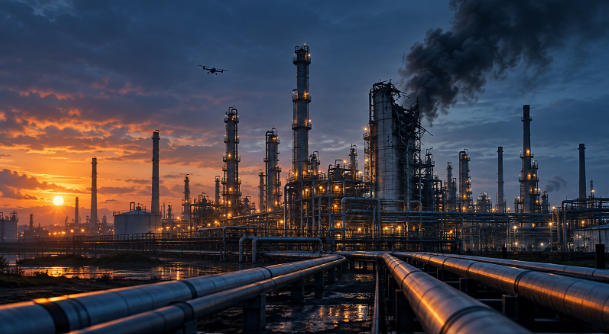
Russian Diesel Refineries Cut Output After Drone Strikes
Drone strikes have forced three of Russia’s six largest diesel-producing refineries to halt or sharply reduce output, turning battlefield damage into a threat to fuel markets far beyond Russia.
The disruption reported on 15 September 2026 is not simply another entry in the war’s long list of attacks on energy infrastructure. The six plants concerned account for roughly half of Russian diesel production, and market data examined by Reuters indicate that three of them have been pushed far below normal operating levels during September.
Kirishi has been shut, while the Volgograd refinery and NORSI at Kstovo have been operating at about a quarter of their nameplate capacity, according to people familiar with the market data. TANECO was also struck, although the consequences were not yet clear at the time of reporting. Russia has responded to the wider fuel squeeze by restricting exports of petrol, diesel and aviation fuel.
Why Diesel Matters More Than The Headline Suggests
Crude oil attracts most attention, but refineries convert crude into the fuels an economy can actually use. Diesel powers lorries, agricultural machinery, trains, ships and industrial equipment. A country may continue producing crude while losing the ability to turn enough of it into the correct grades of fuel.
That distinction matters internationally. Russia has historically been a major exporter of diesel and lower-grade gasoil. Before the latest restrictions, Turkey and Brazil were among the largest buyers. When Russian supply contracts, importers must compete for cargoes from other refining centres, raising freight costs and tightening the market even if global crude production has not fallen by the same proportion.
Reuters reported that Russian diesel exports had already fallen below one million tonnes in June, with combined diesel and gasoil exports at roughly 1.8 million tonnes. A year earlier, diesel alone had been about 2.5 million tonnes a month and the combined figure between 3.3 million and 3.4 million tonnes. Those comparisons show why damage to only a few large facilities can matter.
A Campaign Against Processing Capacity
Ukraine argues that Russian refineries are legitimate military targets because refined fuel supports the armed forces and because Russia continues to attack Ukrainian energy infrastructure. Moscow describes the strikes as attacks on civilian economic assets. The legal and political arguments continue, but the operational purpose is clear: damaging specialised refining units can create effects that last longer than a temporary interruption to crude production.
The International Energy Agency said a Russian refinery was successfully hit by a drone on average every three days during the first eight months of 2026. Repairs can be slow because catalytic crackers, hydro-treaters and distillation equipment are complex, expensive and often dependent on specialised components. Sanctions and import restrictions can make replacement harder.
What It Could Mean For Fuel Prices
The immediate effect is tighter supply rather than a guaranteed permanent price surge. Wholesale diesel prices react to refinery availability, inventories, seasonal demand, shipping routes and competing disruptions elsewhere. A damaged plant may restart part of its capacity before every unit is repaired, while governments can release stocks or alter export rules.
Even so, the direction of pressure is uncomfortable. Diesel shortages feed into the cost of moving goods and harvesting food. Hauliers and farmers may pay more before those increases reach consumers through freight and production costs. Airlines can also be affected when aviation-fuel exports are restricted.
The largest risk is accumulation. Russian refinery damage is arriving while other energy routes and facilities face conflict-related disruption. Markets can absorb one outage more easily than several concurrent losses. If Russian exports remain constrained while demand rises or another supplier experiences trouble, the premium paid for prompt fuel cargoes could increase quickly.
Three Signals To Watch Next
First, watch whether Kirishi returns and whether Volgograd and NORSI can move materially above their reduced operating levels. Plant-specific recovery matters more than broad claims that repairs are under way.
Second, watch Russian export restrictions and loading data. A domestic shortage can prompt Moscow to keep more fuel at home, transferring the pressure to countries that had relied on Russian cargoes.
Third, watch wholesale diesel margins rather than crude alone. If the price of diesel rises much faster than the crude from which it is made, the market is signalling that refining capacity—not only oil supply—is the binding constraint.
The Strategic Consequence
The attacks demonstrate how relatively small drones can threaten large, fixed and technically intricate assets deep inside a country. They also show the limit of measuring energy security only in barrels of crude. The decisive question may be whether those barrels can be processed, transported and sold in the form consumers need.
For Russia, the pressure falls on domestic supply, export earnings and repair capacity. For the rest of the world, the consequence appears at filling stations, freight depots and farm gates. The damage is geographically concentrated, but diesel is a global market—and the costs do not stay inside the refinery fence.
