How Propaganda Works: From Wartime Posters To Bots And AI Media
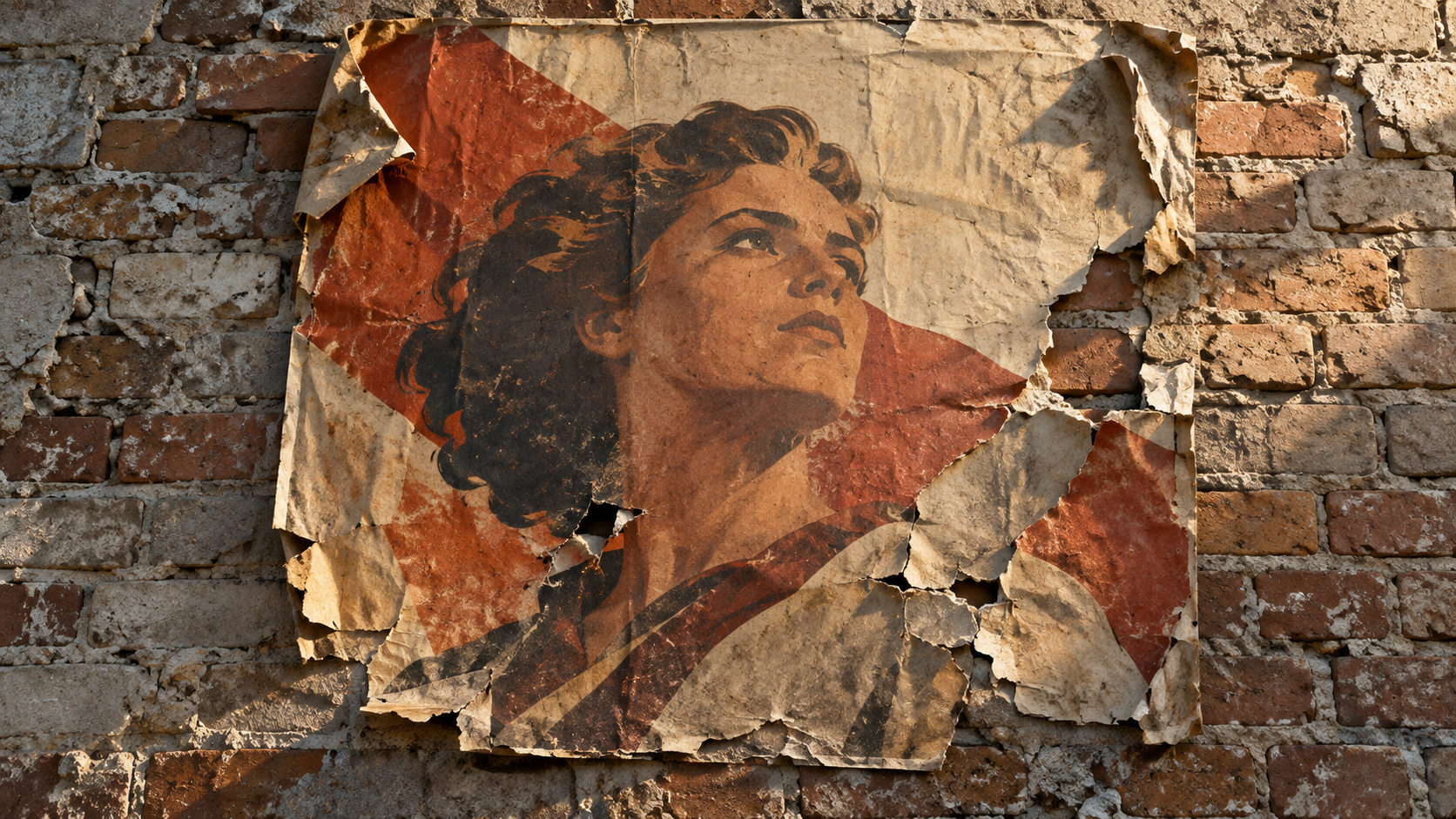
How Propaganda Gets Inside Your Head Without Lying
Propaganda Works Best When A Message Feels Like A Discovery You Made Yourself.
Propaganda is communication designed to shape attitudes or behaviour in the interests of a cause, institution or actor. It may contain lies, but it need not. Accurate facts can be selected, repeated and framed to produce a misleading overall impression. The mechanism is older than social media; the technology has changed the speed, targeting and apparent source of the message.
The useful question is not whether a message feels emotional. Many truthful reports do. Ask who created it, which evidence was selected, what response it seeks and whether its audience can check the claim independently.
The Old Machinery: Repetition, Symbols And Control
States and political movements have long used posters, pamphlets, radio and film to organise a shared account of events. The medium determines reach and rhythm. A poster condenses an argument into a symbol; a radio programme can repeat it at scale; a film can attach it to characters, music and a memorable sequence.
During war, governments have reasons to persuade people to enlist, conserve resources or accept hardship. Some campaigns communicate real dangers; others suppress losses or caricature an enemy population. Calling all wartime persuasion identical would erase the important difference between a documented claim and a fabricated one. A careful analysis asks what the public was permitted to know and what evidence was withheld.
Framing Can Be More Powerful Than Falsehood
Imagine a chart showing a genuine increase in one type of crime. If it omits the population change, a longer historical baseline or a change in recording practice, the number may lead readers towards an unjustified conclusion. The statistic need not be invented for the presentation to be manipulative.
Framing also determines who appears as an individual and who appears as a category. A persuasive message may give one group names, families and fears while presenting another only through a threat label. That asymmetry can change the audience's moral judgement before any explicit argument begins.
The Modern Distribution System
Online platforms let a message cross borders and communities at very low cost. Recommendation systems may surface material that holds attention, while users share it for their own reasons. An organised campaign can exploit that environment through coordinated accounts, paid placement, selective clipping or an apparently independent influencer. Yet popularity alone does not prove coordination.
A post's origin matters. Did a real witness upload the footage, did an official institution release it, or did an account republish an edited clip without context? Was an image made at the time claimed? Can a second source confirm the location? An authentic video can carry a false caption, and a genuine quotation can be cut to reverse its apparent meaning.
What AI Changes
Generative tools can lower the cost of producing convincing text, voices and images. A fabricated recording can imitate somebody who never spoke those words. A synthetic photograph can illustrate an event that never happened. Large volumes of tailored messages can be produced for different audiences. Those capabilities make verification more important, but they do not mean every contested recording is fake.
A common danger is the 'liar's dividend': once convincing fakes exist, a person caught on authentic footage can claim it was generated. Verification therefore needs positive evidence, such as provenance, corroborating witnesses and original files, rather than a guess based on visual oddities. Human observers and detection software both have limitations.
Persuasion Is Not Automatically Propaganda
An editorial openly argues a position and can still present strong evidence, acknowledge contrary facts and name its author. A charity may campaign for a policy using accurate information. The label becomes more useful when the communication systematically hides its sponsor, distorts material context, suppresses correction or seeks to overwhelm independent judgement.
This distinction guards against another misuse of the word. Calling an inconvenient report 'propaganda' does not rebut it. The critic still has to identify the inaccurate claim, missing evidence or misleading mechanism. Otherwise the accusation itself becomes a way to discourage scrutiny.
A Practical Verification Routine
Before sharing a striking claim, locate the original rather than relying on a screenshot. Check the date and setting. Search for the underlying speech, study, court document or dataset, and compare the quoted passage with its surrounding material. Look for independent reporting and note whether several outlets are repeating the same source.
Then ask whose interest the message serves. This does not determine whether it is true, but it helps identify incentives and omissions. If a post asks you to feel outrage before you can find the underlying evidence, pause long enough to inspect the evidence. That small delay is an effective defence against a system built to reward immediate reaction.
Why Emotional Messages Travel
A message tied to fear, anger or belonging offers a reason to pass it on immediately. A post saying 'they are hiding this from you' can turn a lack of evidence into proof of the supposed cover-up. A patriotic or moral appeal can make a request for verification feel disloyal. These mechanisms work across political positions, which is why identifying the technique is more useful than assuming only opponents are vulnerable.
Repetition has a separate effect. Familiar claims become easier to process, and ease can be mistaken for credibility. A phrase heard from several accounts may seem independently confirmed even if those accounts copied one source. Tracing the information pathway reveals whether there is corroboration or coordinated amplification.
Visuals can do the same work. A close-up of a distressed person can make a broad policy claim feel personally urgent, even when the person's story is unrelated. An old photograph can be recaptioned as a current event. Verification should examine the specific image and its original setting without dismissing the underlying issue merely because one viral example was mislabelled.
How To Tell Coordination From Popularity
Many people can independently share a credible report at the same time. Similar wording, tightly clustered posting times or a network of accounts with little other activity may justify examining possible coordination, but each observation has innocent alternatives. A definitive claim that a government directed the activity requires stronger evidence about accounts, financing or instructions.
Researchers distinguish between the message and the distribution operation. A claim may be false while being shared organically; an organised campaign may circulate some genuine material. Treating those as one question obscures both. Ask whether the information is accurate, then separately ask how and by whom it was spread.
The Problem With Simple Detection Tricks
Advice that all AI imagery has strange hands or that all synthetic voices sound robotic becomes stale quickly. Compression, lighting and editing can make authentic material appear odd; improved generation can remove obvious artefacts. Metadata may help, but it can be stripped or altered. Reverse-image searching can locate earlier uses of a picture, yet it does not establish that every new version has the same context.
For an important claim, assemble several independent checks: original upload, geolocation where appropriate, corroboration by people or records near the event, and an assessment by reliable investigators who explain their method. If those checks are unavailable, the honest conclusion may simply be that the material is unverified.
Good counter-speech also matters. Correcting a false caption with the original image and clear chronology gives an audience something verifiable to replace the false account. Insults or a vague declaration that a post is 'misinformation' may reinforce the suspicion that someone wants discussion shut down. Evidence remains the stronger response.
Why Historical Propaganda Was Often Locally Adapted
It is easy to imagine a single message broadcast unchanged across an entire country. In practice, a political cause can be framed differently for workers, soldiers, parents or traders. One group may hear a promise of security, another a warning about status and another an appeal to sacrifice. The central aim stays constant while the route to an audience's existing concerns changes.
Digital tools make that adaptation quicker and sometimes harder to observe. Different users may see different advertisements or recommended posts. The full campaign is difficult to understand from one screenshot. Researchers need to examine archives, funding disclosures where available, patterns of distribution and the content shown to multiple audiences. A single viral example may be real while still unrepresentative of the whole effort.
False Claims And True Claims Can Reinforce Each Other
A campaign can build credibility by sharing accurate documents, then attach an unsupported explanation. A real protest image may be paired with a false date; a genuine quote may be followed by a claim about secret motives. Because the authentic component checks out, readers may lower their guard around the interpretation. The solution is to evaluate the claim at each step rather than certify the entire package as true or false.
This also explains why correction needs precision. If an article challenges a false location but ignores a legitimate underlying grievance, an audience may conclude that the correction is evasive. A stronger response distinguishes what the evidence confirms, what the viral post misstates and what remains a valid matter for debate.
Who Benefits From Confusion?
Some operations do not need the audience to believe one particular false story. Flooding a conversation with incompatible claims can make reliable information harder to find and leave people exhausted. An observer may then conclude that no source can be trusted. That outcome can serve an actor who wants accountability delayed or public cooperation weakened.
Still, motive should not be reverse-engineered from a confusing result. A messy information environment can arise organically when people speculate during an emergency. To attribute a deliberate campaign, investigators need evidence about direction, resources or coordinated activity. The reader can respond to the confusion by slowing down and seeking primary material without assuming a secret organiser behind every error.
A Worked Example: The Mislabelled Clip
Imagine a short video presented as footage of a protest this morning. First, locate the earliest available upload and compare landmarks, weather and clothing. Next, check whether reliable local accounts confirm an event at that place and time. If a reverse-image or video search finds the same clip from a demonstration two years earlier, the new caption is false even if the older event was real.
The investigation has not yet established who wrote the false caption or why. A rushed repost, an engagement tactic and an organised deception remain different possibilities. Good reporting can expose the false context decisively while marking attribution as unresolved. That is what a useful verification result looks like.
How An Agenda Shapes What Is Missing
Propaganda often directs attention rather than ordering people what to think. A campaign may flood discussion with one vivid incident while ignoring a larger pattern that would change its meaning. Another may discuss a real failure only when a rival institution is responsible. The audience can leave with accurate individual facts and a distorted sense of their frequency or importance.
To test selection, define the comparison. If a message claims that a policy always fails, ask how outcomes were measured and what happened in comparable places without the policy. If it highlights one exceptional crime, ask whether it describes a trend or an isolated case. The relevant comparison does not erase the people affected by the individual event; it prevents that event being used to prove a general claim it cannot carry.
Source Laundering
An actor can make a claim appear independent by placing it through several intermediaries. An anonymous account posts a document, a partisan site reports the post, an influencer cites the site, and a prominent speaker says 'multiple reports' confirm the story. At every step the apparent number of sources grows while the original evidence remains one document of uncertain origin.
Follow the chain backwards. Who first obtained the information? Can the document be authenticated? Does another source know the fact independently? The same method applies when an institution cites a study that in turn relies on the institution's own earlier press release. Circular citation can create an illusion of independent authority without requiring every participant to be consciously deceptive.
Microtargeting And The Fragmented Public
Different audiences can receive mutually inconsistent promises without seeing one another's versions. A campaign may emphasise lower costs in one advertisement and higher service quality in another, while never explaining a trade-off between them. Targeting tools can make such messages efficient and difficult to compare in a shared debate.
The problem is bigger than one political party or platform. Commercial sellers can tailor emotionally charged claims to people who have already shown interest in a product; fraudsters can tailor a story to a victim's circumstances. Transparency about sponsorship, ad libraries and independent archiving can help reveal the full pattern, though each depends on access and enforcement.
How To Disagree Without Becoming Easy To Manipulate
Rejecting a misleading claim does not require defending every action of the institution it attacks. You can acknowledge a real policy failure and reject a fabricated statistic about it. You can recognise that a government faces a security threat and still challenge secrecy that prevents scrutiny. Propaganda benefits when audiences believe their only choices are total loyalty or total distrust.
The habit to cultivate is an evidence-based pause. Name the precise claim. Look for the earliest record. Distinguish the fact from the attached interpretation. Ask what would count as a correction. Those steps are slower than a repost but quicker than repairing a public debate built on a falsehood.
Why Official And Unofficial Sources Both Require Scrutiny
An official statement may provide valuable access to records and direct responsibility for a decision. It may also reflect the institution's incentive to defend its conduct. An anonymous account may reveal a genuine suppressed fact, but its identity and access can be difficult to establish. Neither institutional status nor outsider status settles accuracy. Evaluate the concrete evidence each offers and whether it can be checked elsewhere.
A useful report can state that a government's account is the most direct current source while identifying a material unanswered question. It can similarly describe a whistleblower allegation without treating its seriousness as verification. This balance is not a ritual of giving all sides equal weight. It assigns each assertion the weight supported by documents, direct observation and independent corroboration.
Why Correction Is Harder Than The First Impression
A false claim can be short, vivid and easy to remember. A correction often needs an explanation of dates, geography or statistical context. It may reach fewer people than the original post. That asymmetry makes early restraint valuable: waiting for a primary source before sharing can prevent an error that no later correction fully erases.
When correcting, repeat the accurate information clearly and link to the evidence. Avoid reproducing a misleading image without an obvious label, since it may be cropped and recirculated. Explain the mechanism of the mistake where it helps readers recognise a similar one later. The goal is to improve what people can verify, not merely win an argument.
A publication that publicly fixes its own errors demonstrates the same standard it asks of others. Record the change, preserve the relevant chronology and update any social post still directing people to the old claim. Trust grows from the ability to revise in response to better evidence.
The publication of a correction can itself reveal a campaign's method. If dozens of accounts continue posting the same discredited image after the original source has been identified, investigators may have reason to examine whether those accounts are automated, centrally directed or simply copying one another. The public-facing claim should remain narrow until the coordination evidence is established. A false image is confirmed by its provenance; the identity of whoever spread it requires a different inquiry.
Why This Matters Beyond Politics
Propaganda techniques can appear in commercial campaigns, fraudulent investment pitches and conspiracy communities as well as state conflict. The aim may be a vote, a purchase, a transfer of money or simple distrust. Across those settings, the strongest countermeasure is a habit of proportion: accept well-supported claims, correct false ones and leave genuinely unresolved questions open.
Media literacy does not require treating every institution as equally unreliable. It asks us to follow evidence to its source and judge how a message was built. That gives readers a way to resist manipulation without becoming cynical about the possibility of knowing anything at all.
