

How the Iran War Is Sending Shockwaves Through the Global Economy
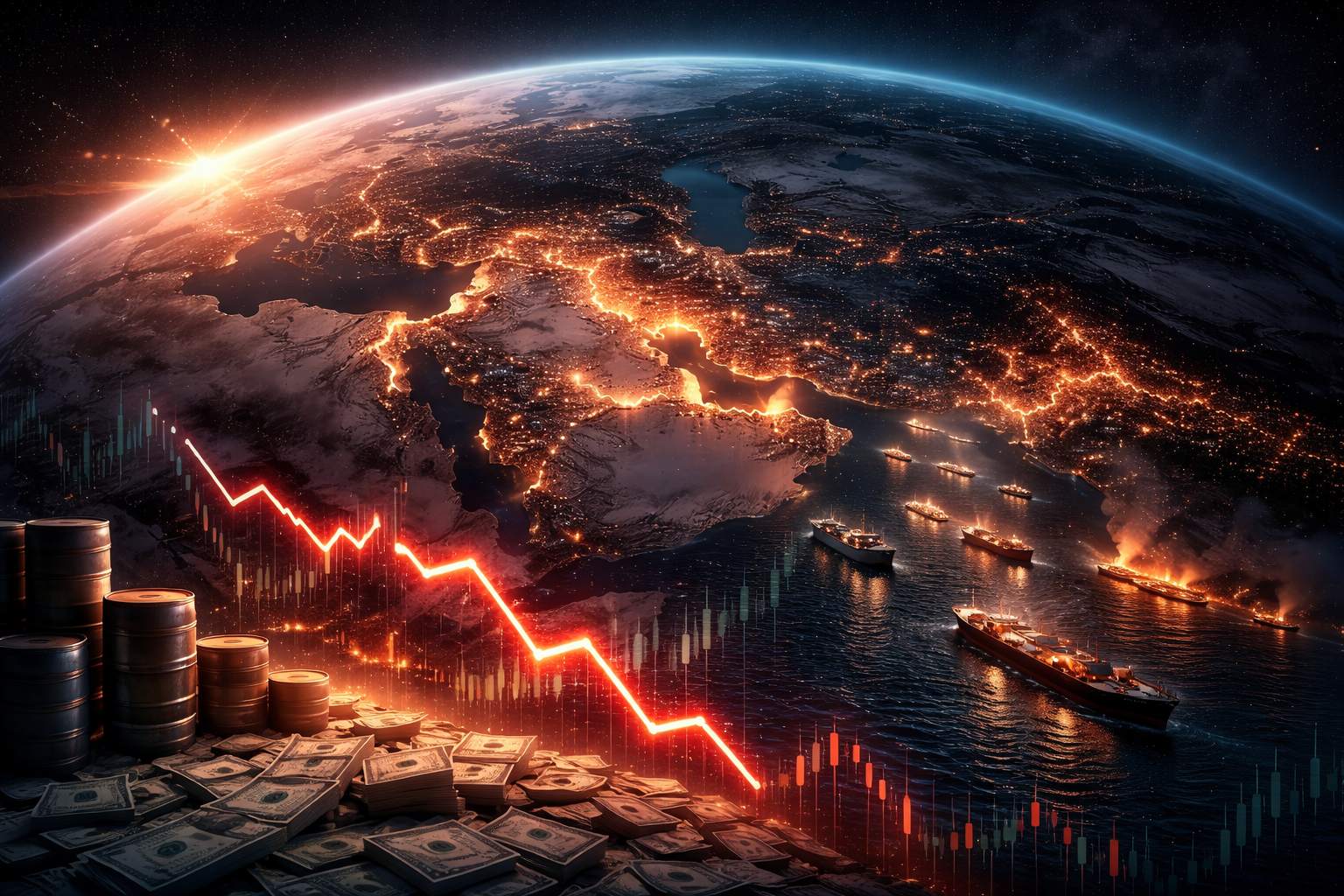
The Strait That Could Break the Global Economy
Could the Iran War Trigger a Global Recession?
The war involving Iran has rapidly moved beyond a regional conflict. In a matter of days, it has begun to ripple through energy markets, shipping lanes, and inflation forecasts worldwide.
Disruptions around the Strait of Hormuz—one of the most critical shipping routes on Earth—have already triggered spikes in oil prices, halted tanker traffic, and forced governments to prepare emergency energy measures.
The immediate shock has been energy. But the deeper story is about how a single maritime choke point can transmit instability across the entire global economy.
The story hinges on the duration of the disruption in the Strait of Hormuz and its potential to trigger a sustained global energy shock.
Key Points
Roughly 20% of the world’s oil supply normally passes through the Strait of Hormuz, making it one of the most critical economic chokepoints in global trade.
Tanker traffic through the strait has fallen dramatically as ships avoid the war zone, removing millions of barrels of oil from global markets.
Oil prices surged from below $70 per barrel in February to nearly $120 at peak volatility before easing slightly as markets reassessed the risk.
Higher energy prices are already pushing up fuel costs, shipping insurance premiums, and inflation risks in major economies.
Governments and energy agencies are now considering emergency reserve releases to stabilize global markets.
The longer the disruption lasts, the more likely it becomes that the war triggers a wider global economic slowdown.
The Strait That Powers the Global Economy
To understand the economic shock from the Iran war, the starting point is geography.
The Strait of Hormuz is a narrow shipping corridor between Iran and Oman. At its tightest point, it is only about 21 miles wide. Yet through this narrow passage flows roughly 20 million barrels of oil per day—about one-fifth of global supply.
Oil from Saudi Arabia, Iraq, Kuwait, Qatar, and the United Arab Emirates must pass through this strait to reach global markets. Asia depends heavily on these shipments, with China, India, Japan, and South Korea among the largest buyers.
When conflict erupted and Iran warned shipping to stay away, tanker traffic collapsed. Some vessels sustained damage, while others anchored offshore in anticipation of clarity, and major shipping companies halted transits entirely.
The result was immediate: the world’s most important oil artery effectively seized up.
The Energy Shock Spreading Across Markets
Energy markets reacted instantly.
Oil prices surged sharply, briefly touching levels near $120 per barrel as traders priced in the possibility of prolonged supply disruption.
Even after prices retreated from those peaks, analysts still expect elevated energy costs for months. The U.S. Energy Information Administration, a government agency that provides data on energy production and consumption, now expects Brent crude oil to stay above $95 per barrel in the near term because of the conflict.
The shock extends beyond oil.
Natural gas markets have also become volatile, particularly in Europe, which depends partly on liquefied natural gas shipments from Qatar that transit the same region. Gas prices surged as concerns spread about attacks on energy infrastructure and shipping routes.
Every increase in energy prices spreads through the economy—raising transportation costs, electricity bills, and industrial production expenses.
Shipping Chaos and the Hidden Cost of War
The war has also disrupted global shipping.
Insurance costs for vessels entering the Persian Gulf have surged, while some shipping companies have halted operations in the region entirely.
These disruptions create a cascade effect:
Oil shipments slow down.
Shipping rates spike.
Cargo delays multiply.
Supply chains tighten.
In some cases, ships are rerouting around Africa to avoid conflict zones in both the Persian Gulf and the Red Sea—journeys that add weeks to delivery times and significantly increase fuel costs.
This situation is the same pattern seen during earlier global shocks: when maritime chokepoints fail, global trade becomes slower, more expensive, and less predictable.
What Most Coverage Misses
Much of the coverage focuses on oil prices.
But the deeper economic risk lies in insurance and shipping confidence, not just physical supply.
Oil may still exist in the ground, but if tankers refuse to sail through a war zone, supply effectively disappears from global markets.
This phenomenon is why energy markets react so violently to conflicts around maritime chokepoints. The risk premium added by insurers, shipping companies, and traders can remove supply almost overnight.
In other words, the economic shock is not simply about destroyed infrastructure.
It is about the global system deciding the route is too dangerous to use.
Once that psychological shift happens, restoring normal trade becomes far harder than reopening a single pipeline or port, as it leads to a loss of trust among trading partners and a reevaluation of risk in the affected regions.
Who Feels the Economic Pain First
The economic consequences of the Iran war are uneven.
Energy exporters benefit from higher prices, at least temporarily. Oil producers outside the conflict zone—including the United States and Brazil—could see increased revenues.
Importers face the opposite problem.
Countries in Asia are particularly vulnerable because they depend heavily on oil shipments that pass through the Persian Gulf.
Europe faces risks as well. Higher energy costs threaten to push inflation back upward just as central banks were beginning to stabilize price growth after previous energy crises.
Consumers feel the shock most directly through higher gasoline and energy bills. Businesses feel it through transportation and production costs.
Financial markets then amplify the effect through volatility, weaker investment confidence, and fears of recession.
The Global Fork in the Road
The duration of the disruption will determine the economic future of this conflict.
If shipping through the Strait of Hormuz resumes quickly, energy markets could stabilize and oil prices could fall back toward pre-war levels.
But if tanker traffic remains constrained for weeks or months, the consequences become far larger:
Higher inflation.
Slower economic growth.
Energy-importing economies face potential recession risks.
Strategic oil reserves held by governments could temporarily ease supply shortages, but they are not a permanent solution.
What matters most now is confidence—whether shipping companies, insurers, and energy traders believe the route is safe again.
Until that confidence returns, the economic shock from the Iran war will continue to spread far beyond the battlefield.
And in the modern global economy, a conflict in one narrow waterway can reshape the financial outlook of the entire world.
