

Iran Conflict Sends Turkmenistan Prices Soaring Overnight
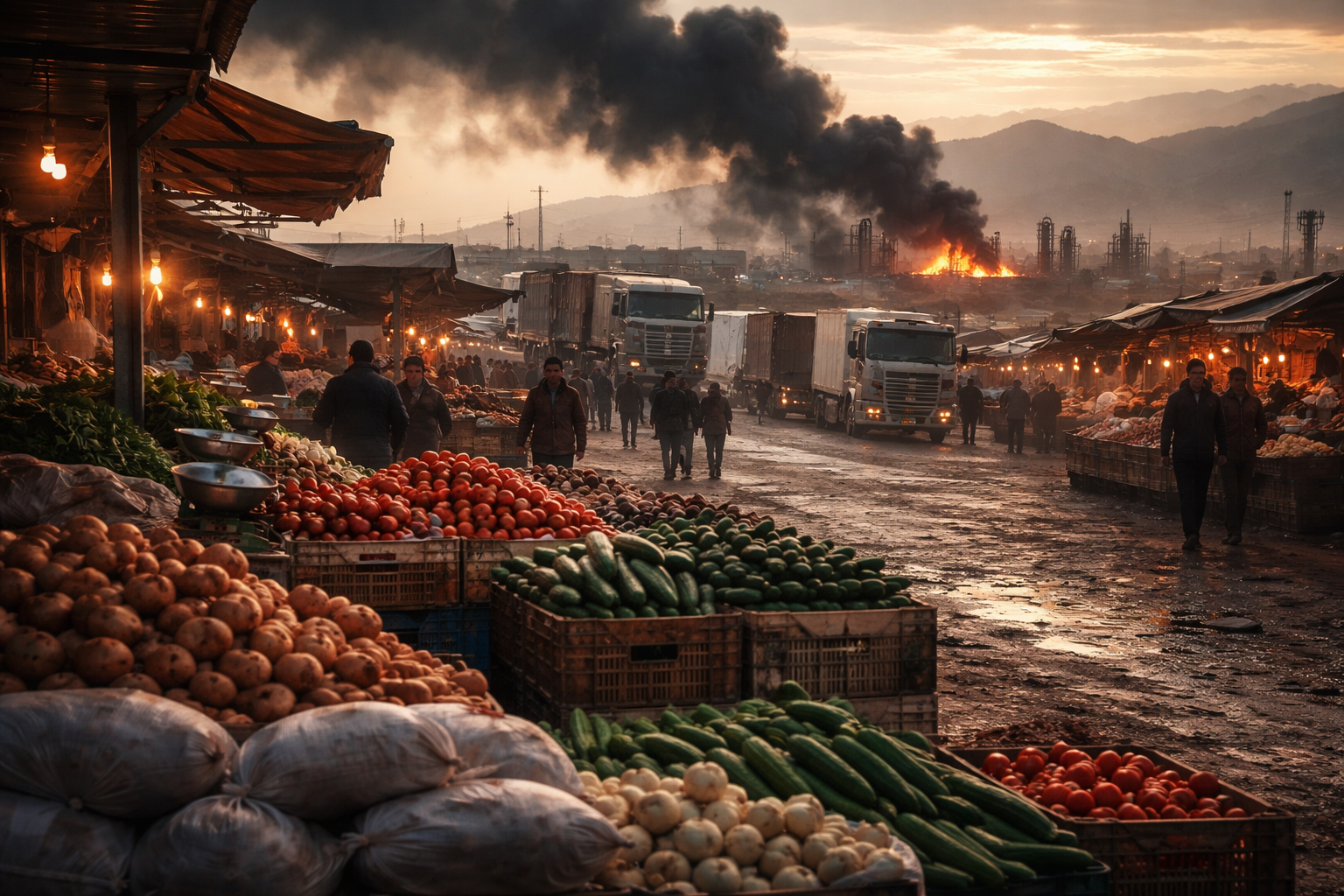
Iran War Sparks Sudden Inflation Shock in Turkmenistan
Iran War Triggers Sudden Price Shock in Turkmenistan as Imports Collapse
War rarely stays inside borders. In Central Asia, the economic shock has already arrived.
Prices across Turkmenistan are rising sharply after trade with neighbouring Iran abruptly stalled following the escalating regional conflict. Markets in the capital, Ashgabat, report steep increases for everyday goods once routinely imported from Iran — from vegetables to construction materials.
The immediate cause is a breakdown in cross-border trade. Iran has halted exports, and transport routes have become uncertain as military strikes, airspace closures, and maritime disruptions ripple through the region.
Yet the deeper story is not just about one war. It is about how fragile supply chains in landlocked economies can transform a distant conflict into a sudden domestic inflation crisis.
The story turns on whether Turkmenistan can replace Iranian imports fast enough to prevent a broader cost-of-living shock.
Key Points
Prices for key imported goods in Turkmenistan have surged as trade with Iran collapses due to the ongoing war and export bans.
Food staples imported from Iran — including potatoes, cucumbers, and fruit — have doubled in price in Ashgabat markets within days.
Retailers report Iranian goods now selling for roughly 50–70% higher than before the conflict due to shortages.
Turkmenistan's southern border trade with Iran supplies everyday consumer goods, making it unusually exposed.
The shock highlights how the Iran war is spreading economic pressure beyond oil markets into regional food and consumer inflation.
Where the Price Shock Began
For years, Turkmenistan relied heavily on imports from nearby Iran.
The two countries share a long border, and Iranian trucks routinely carried agricultural products, construction materials, cigarettes, and household goods north into Turkmen markets. This cross-border trade filled gaps in domestic production and kept prices stable in a country with limited retail diversity.
When the Iran war escalated and Tehran halted many exports, the flow stopped almost overnight.
Market traders in Ashgabat report that deliveries from Iran have slowed dramatically or stopped entirely. Inventories that once were replenished weekly are now running down, forcing sellers to ration remaining stock or raise prices sharply.
Vegetables that once arrived daily from Iranian farms are now scarce. Traders describe shelves thinning and uncertainty over when the next shipment might arrive.
In markets across the capital, prices for Iranian potatoes, cucumbers, and fruit have doubled in some cases, while retailers say remaining goods must be sold at significantly higher prices simply to cover replacement costs.
The Strategic Geography Behind the Crisis
Turkmenistan’s vulnerability stems from geography.
The country is largely desert and heavily dependent on imports for many consumer goods. Although rich in natural gas, its domestic manufacturing and agriculture sectors are limited, which exacerbates its reliance on imports and makes the economy vulnerable to external shocks.
Iran has long been the most convenient supplier.
Transport routes across the southern border are short, relatively cheap, and historically stable compared with longer routes from Russia, China, or Turkey. When that corridor closes, alternatives are not easily substituted.
This matters because landlocked economies depend heavily on predictable overland trade. When a single route is disrupted, the price shock can appear within days.
And that is precisely what is happening now.
The War’s Economic Shockwaves Beyond the Battlefield
The Iran conflict has already triggered wider disruptions across global markets.
Energy markets reacted first. Oil prices surged above $100 per barrel amid fears that fighting and maritime attacks could disrupt shipments through the Strait of Hormuz, one of the world’s most critical energy corridors.
But the price shock spreading into Turkmenistan illustrates a second economic channel: regional trade collapse.
When war interrupts logistics networks, countries closest to the conflict often experience inflation first. Imports stall, transport costs rise, and supply chains fragment.
For poorer or less diversified economies, that inflation can appear quickly and visibly — in markets, food stalls, and construction sites.
What Most Coverage Misses
The striking feature of the Turkmenistan price surge is not simply that a neighbouring war disrupted trade.
It is how concentrated the country’s supply chain had become.
Turkmenistan’s dependence on Iranian imports for everyday consumer goods created what economists call a “single-corridor vulnerability". In normal times, the proximity keeps costs low. In crisis, it means the entire supply chain can fail at once.
Because alternative suppliers are far away, replacing Iranian imports requires longer transport routes across Central Asia or through the Caspian region. That adds both time and cost.
The result is not just temporary shortages but structurally higher prices.
In other words, the inflation shock in Turkmenistan is not only a wartime disruption. It is the consequence of a supply network optimised for efficiency rather than resilience.
Why Households Feel the Shock First
In many countries, inflation begins with energy prices or financial markets.
In Turkmenistan, it appears directly in food markets.
A pensioner shopping in Ashgabat markets now faces a simple reality: the Iranian fruit and vegetables that once filled stalls have become scarce and expensive.
Because imported produce formed a large share of daily consumption, the price shock immediately affected household budgets.
Construction sectors may soon feel it as well. Iranian materials used in building projects are also becoming harder to obtain, raising costs across the economy.
The effect spreads outward from the market stall to the broader economy.
The Supply Routes Turkmenistan May Turn To
If Iranian trade remains disrupted, Turkmenistan has limited alternatives.
Imports could be rerouted through:
Kazakhstan and Russia via rail
Azerbaijan and the Caspian Sea corridor
China via longer overland logistics chains
Each option, however, carries higher transport costs and slower delivery times.
For consumers, that means price pressures may persist even if supply eventually stabilizes.
The Next Economic Dominoes to Watch
The immediate shock in Turkmenistan offers an early glimpse of the wider economic ripple effects of the Iran war.
If the conflict continues, similar pressures could spread across Central Asia. Countries such as Uzbekistan and Kazakhstan also rely on regional trade routes affected by the crisis.
Several signposts will determine how severe the inflation shock becomes:
Whether Iran’s export restrictions remain in place
Whether land trade routes reopen or remain disrupted
Whether alternative supply chains emerge quickly enough stabilises.
If those pressures persist, the Turkmenistan price surge may become the first visible domestic inflation crisis triggered by the Iran war.
And in global conflicts, the earliest economic warning signs rarely appear in financial markets. They appear in food markets.
