Putin And Xi’s Post-Trump Summit May Have Revealed The Real Shape Of The New World Order
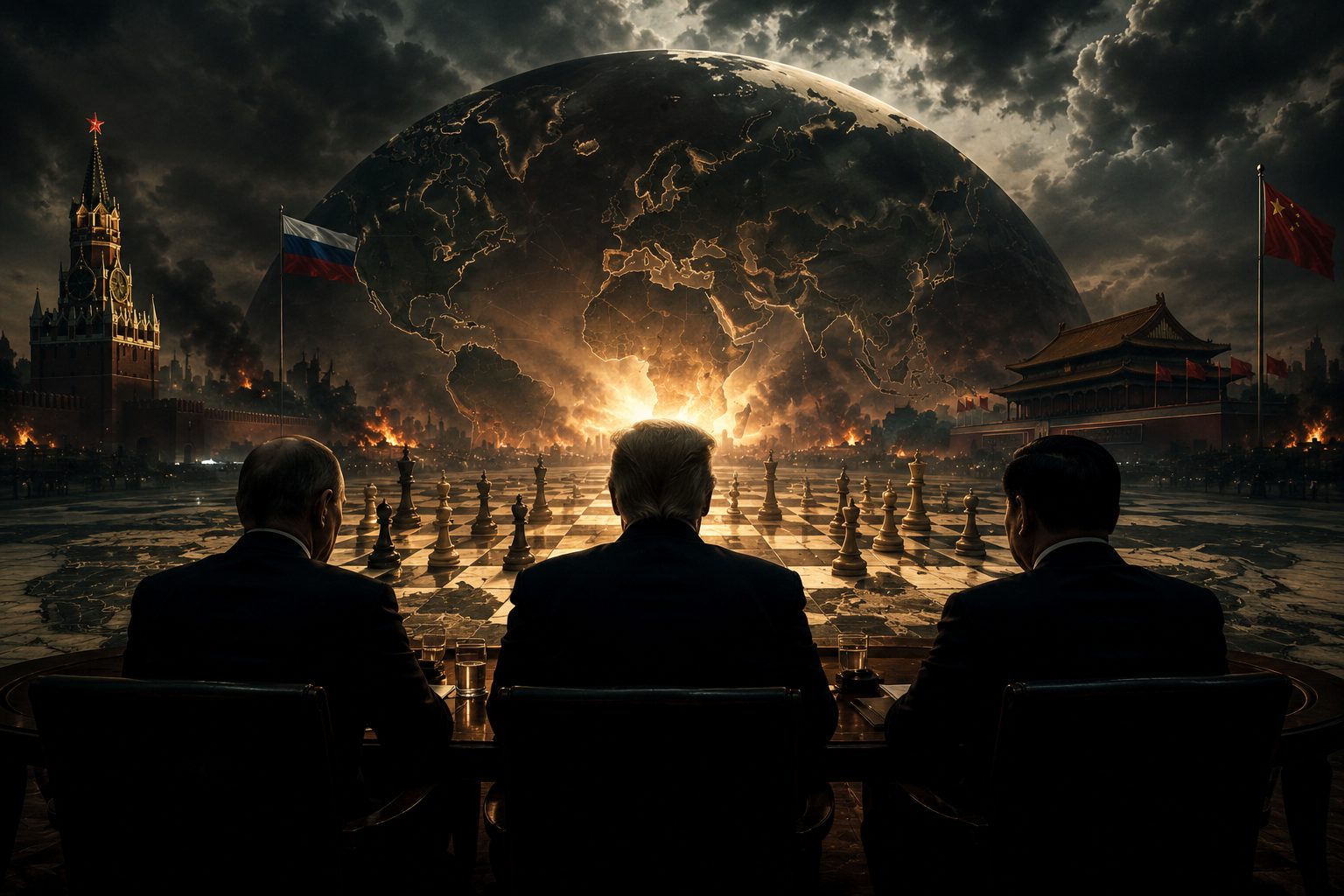
The Putin-Xi Meeting After Trump’s Visit Is Triggering A Much Bigger Global Question
The Meeting That Suddenly Feels Bigger Than Protocol
On paper, another meeting between Vladimir Putin and Xi Jinping should not feel shocking anymore. The two leaders have spent years strengthening political, economic, military, and diplomatic ties while presenting themselves as counterweights to Western dominance. Yet the timing of this summit—arriving so soon after renewed international attention surrounding Donald Trump and his foreign-policy positioning—has given the meeting a much heavier atmosphere.
The central issue is not simply whether Russia and China are cooperating. That has been obvious for years. The deeper question is whether the global system is beginning to reorganize itself around increasingly open blocs of power, influence, and economic survival. That possibility carries enormous consequences for Europe, the United States, global trade, military stability, and financial markets.
The summit also lands during a period when many governments are quietly preparing for a far more unpredictable international environment. Wars remain unresolved. Economic fragmentation is accelerating. Military spending is rising across multiple regions. Diplomatic trust between major powers has deteriorated sharply. Against that backdrop, every symbolic meeting suddenly feels more strategic.
Why Trump’s Presence Still Changes The Equation
Even outside the office, Trump continues to exert an unusual gravitational pull over global politics. Allies and rivals alike still study his rhetoric, his instincts, and his potential future influence on American foreign policy. That is particularly true in capitals like Moscow and Beijing, where long-term geopolitical calculations increasingly include the possibility of major shifts inside Washington itself.
Trump’s approach to NATO, Ukraine, tariffs, China, and international institutions created deep uncertainty during his presidency. Supporters argued he exposed inefficiencies and forced allies to contribute more. Critics believed he weakened Western unity and introduced instability into long-standing alliances. Either way, global leaders learned an important lesson: American foreign policy may no longer be as predictable as it once appeared.
That uncertainty changes how rivals behave. If major powers believe future US policy could become more transactional, less interventionist, or more domestically focused, they may accelerate efforts to secure their own strategic positions now. The Putin-Xi relationship increasingly appears shaped by that logic.
There is also a psychological dimension many people underestimate. World leaders do not merely react to current administrations. They react to trajectories. The possibility of another major shift in US leadership can influence diplomacy years before any election outcome becomes reality.
The Russia-China Partnership Is Becoming Harder To Ignore
For years, Western analysts debated whether the Russia-China relationship was truly deep or largely tactical. That debate is fading. Economic coordination has expanded. Energy cooperation has intensified. Military exercises have increased. Both governments repeatedly frame their partnership as part of a broader challenge to what they describe as Western dominance in global affairs.
Neither side claims to be formal military allies in the traditional Cold War sense. Yet their alignment increasingly affects almost every major geopolitical issue—from sanctions and trade routes to energy systems and technology competition.
The Ukraine war accelerated that dynamic dramatically. Russia’s isolation from much of the West pushed Moscow further toward Beijing economically and diplomatically. China, meanwhile, has benefited from access to discounted energy supplies while also positioning itself as a major global balancing force.
That balancing strategy matters because China does not necessarily want direct confrontation with the West. Beijing’s preferred model often appears to involve expanding influence gradually while avoiding full-scale systemic rupture. But as tensions rise globally, maintaining that balance becomes harder.
This is part of a broader trend explored in the growing fragmentation of global power structures, where economic systems, supply chains, and geopolitical alliances increasingly overlap with security concerns.
The Real Fear Is Not One Summit — It Is Bloc Formation
The deeper anxiety surrounding meetings like this is not about optics alone. It is about whether the world is drifting back toward hardened geopolitical blocs with incompatible strategic interests.
During the post-Cold War era, many governments assumed globalization would eventually reduce the likelihood of major-power confrontation. Instead, economic interdependence has increasingly become weaponized. Sanctions, export controls, semiconductor restrictions, energy leverage, cyber capabilities, and supply-chain dependencies are now treated as geopolitical tools.
That changes the entire atmosphere of international politics.
Countries are increasingly being forced to think in terms of resilience rather than efficiency. Governments once obsessed with low-cost supply chains are now prioritizing strategic security. Nations once comfortable relying heavily on rivals for energy, rare earth minerals, pharmaceuticals, or advanced manufacturing are reassessing their vulnerabilities.
The result is a world becoming less economically unified and more strategically suspicious.
This is why meetings between Putin and Xi now attract such intense scrutiny. They are not viewed as isolated diplomatic events. They are interpreted as signals within a much larger restructuring process that could define the next decade.
Europe May Face The Hardest Strategic Squeeze
One of the least discussed aspects of this evolving landscape is the pressure it places on Europe. European governments remain economically connected to China while simultaneously becoming more security-dependent on NATO coordination against Russia. That creates a difficult balancing act.
Europe also faces severe internal pressures: energy security concerns, economic stagnation fears, defense spending demands, immigration tensions, and political fragmentation across multiple countries. In that environment, any deterioration in global stability becomes harder to absorb politically and financially.
The Putin-Xi relationship indirectly amplifies those pressures because it reinforces the sense that Europe may be entering a prolonged era of strategic insecurity rather than a temporary crisis period.
That is particularly significant because much of Europe’s post-Cold War political architecture was built around assumptions of expanding stability, deepening economic integration, and declining risk of large-scale geopolitical fragmentation. Those assumptions now look far less secure than they did even five years ago.
The wider geopolitical mood increasingly resembles a world entering a more volatile era of strategic competition, where diplomacy and deterrence are becoming intertwined again.
The Bigger Question Beneath The Summit
The most important part of the story may not be what Putin and Xi said publicly. It may be what their repeated meetings symbolize psychologically to the rest of the world.
Confidence in the old international order is weakening. Many governments no longer fully trust that the systems built after the Cold War can guarantee stability, economic predictability, or strategic security. At the same time, no clear replacement order has fully emerged.
That creates dangerous ambiguity.
Periods where old systems weaken before new systems stabilize are historically volatile. Rival powers test boundaries. Regional conflicts become harder to contain. Economic shocks spread faster politically. Governments prioritize resilience, leverage, and self-interest more aggressively.
The Putin-Xi summit after Trump-linked diplomatic movement feels important because it captures all of those tensions at once. It reflects a world where major powers are no longer merely competing economically. They are increasingly competing over what the future international system itself will look like.more profound
And that is the part of the story that should probably worry people most.
