Why Is a Ceasefire Still Out of Reach?
Kyiv Wants To Know Who Would Help If Russia Attacked Again.
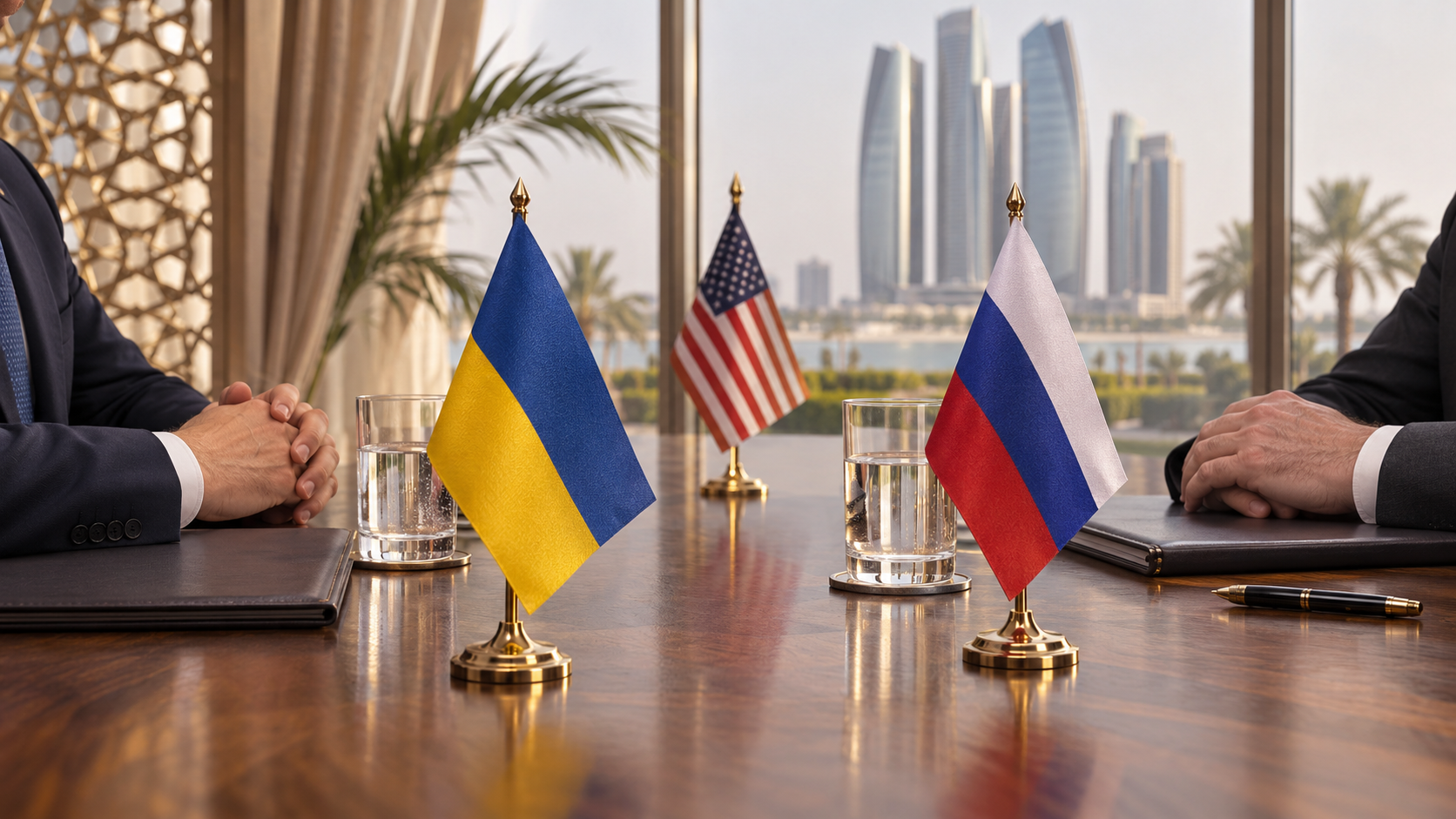
Russia and Ukraine ended their first day of US-mediated talks in Abu Dhabi on Tuesday 10 November without announcing a ceasefire. The session lasted nearly four hours, according to Russia’s state news agency RIA Novosti. Ukraine’s Foreign Intelligence Service said negotiations were expected to resume on Wednesday. It was the first time since February that Russian, Ukrainian and American delegations had met in this format.
The White House had identified future security guarantees as a focus of the meeting. For Ukraine, that raises a practical question. If its soldiers stop fighting and Russia subsequently attacks again, what could Kyiv count on its partners to do? Moscow came to Abu Dhabi with a different question about the same partners, seeking limits on Ukraine’s military ties with the West. The opening day produced no public account of how the negotiators proposed to reconcile those positions.
What Happened In Abu Dhabi?
Ukraine sent Rustem Umerov, the head of its Foreign Intelligence Service. Russia’s delegation was led by Vladimir Medinsky, a Kremlin aide who also represented Moscow in negotiations in Istanbul in March 2022. American envoys Jared Kushner and Steve Witkoff were there on behalf of President Donald Trump. Neither Volodymyr Zelenskyy nor Vladimir Putin was at the table.
Kushner offered the most optimistic public assessment. He said earlier contacts with the two sides had narrowed their differences and given the mediators ideas for bridging what remained. The timing of that remark matters. Kushner was speaking at the start of Tuesday’s meeting. His assessment described the work that brought the delegations to Abu Dhabi. It would be premature to read it as evidence of a concession made during the four hours that followed.
Why A Ceasefire Is Itself A Point Of Dispute
Kyiv wants a ceasefire first, allowing negotiations over a wider settlement to continue while the shooting stops. Putin has argued that a general pause would give Ukraine time to rest its troops and replenish its weapons. Moscow wants a comprehensive agreement on its terms. Those positions leave negotiators facing a dispute about the order of events before they even get to the terms of peace.
Territory shows what that difference means on the ground. Putin wants Ukrainian troops to withdraw from four regions that Moscow claimed to annex in 2022, including land Russian forces have never captured. Zelenskyy rejects a voluntary withdrawal. A ceasefire along the existing front and a Ukrainian withdrawal to the boundaries demanded by Moscow would therefore leave different communities under different authorities. Agreeing to discuss a map is some distance from agreeing where troops should stand when a ceasefire begins.
Why Europe Matters To A Three-Way Negotiation
Before meeting the Russian delegation, Ukrainian and American officials met representatives of Britain, France, Germany, Italy, NATO and the European Commission. Moscow had said it would hold no direct talks with the Europeans that week. A source in Russia’s delegation nevertheless described a future security arrangement for the whole of Europe as Moscow’s principal objective. That was one delegation member’s account of Russia’s priorities. Kyiv had given no public assent to that broader agenda.
That sequence helps explain why the preliminary meeting mattered. Any proposal that depends on European governments supplying weapons or making commitments after a ceasefire would require those governments to decide what they were willing to provide. Washington can discuss such an arrangement with Kyiv and Moscow. It cannot tell Ukraine precisely what Britain or France would do in a future crisis without an answer from London or Paris.
What Would Count As Progress On Wednesday?
The most revealing detail in a second-day statement would be something both delegations could describe in the same terms. An agreed proposal for monitoring a ceasefire, for example, would answer one question that matters to soldiers on either side of the line. If one side reported an attack, who would investigate it? A named government willing to undertake a specific obligation would answer another question for Ukraine. These are examples of what to look for when the talks resume. Neither emerged as an announced agreement on Tuesday.
For Ukrainians who spent the preceding night under another Russian drone and missile attack, the immediate question is simpler still. When will an order to stop firing take effect? After the first session in Abu Dhabi, the delegations had a day on which they expected to meet again. They had announced no date on which the fighting would stop.
Sources
Associated Press via ITV News — First day of talks in Abu Dhabi
Reuters via MarketScreener — Opening remarks from the US, Ukrainian and Russian delegations
Reuters via Investing.com — Russian delegation source sets out Moscow’s European security agenda
Next Reads
Russia Opens Door to New Three-Way Ukraine Peace Talks as Trump Pushes Moscow and Kyiv Back to the Table — How September’s visits to Moscow and Kyiv helped reopen the route to direct negotiations.
Ukraine peace talks Paris security guarantees: strikes, red lines, and the package meant to stop the next war — What European governments have considered offering Ukraine after a ceasefire.
Putin Envoy Holds ‘Constructive’ US Talks As Ukraine Peace Push Turns To Energy And War’s End — The separate US–Russia discussions that brought energy into negotiations over the war.
