

Russia Opens Door to New Three-Way Ukraine Peace Talks as Trump Pushes Moscow and Kyiv Back to the Table
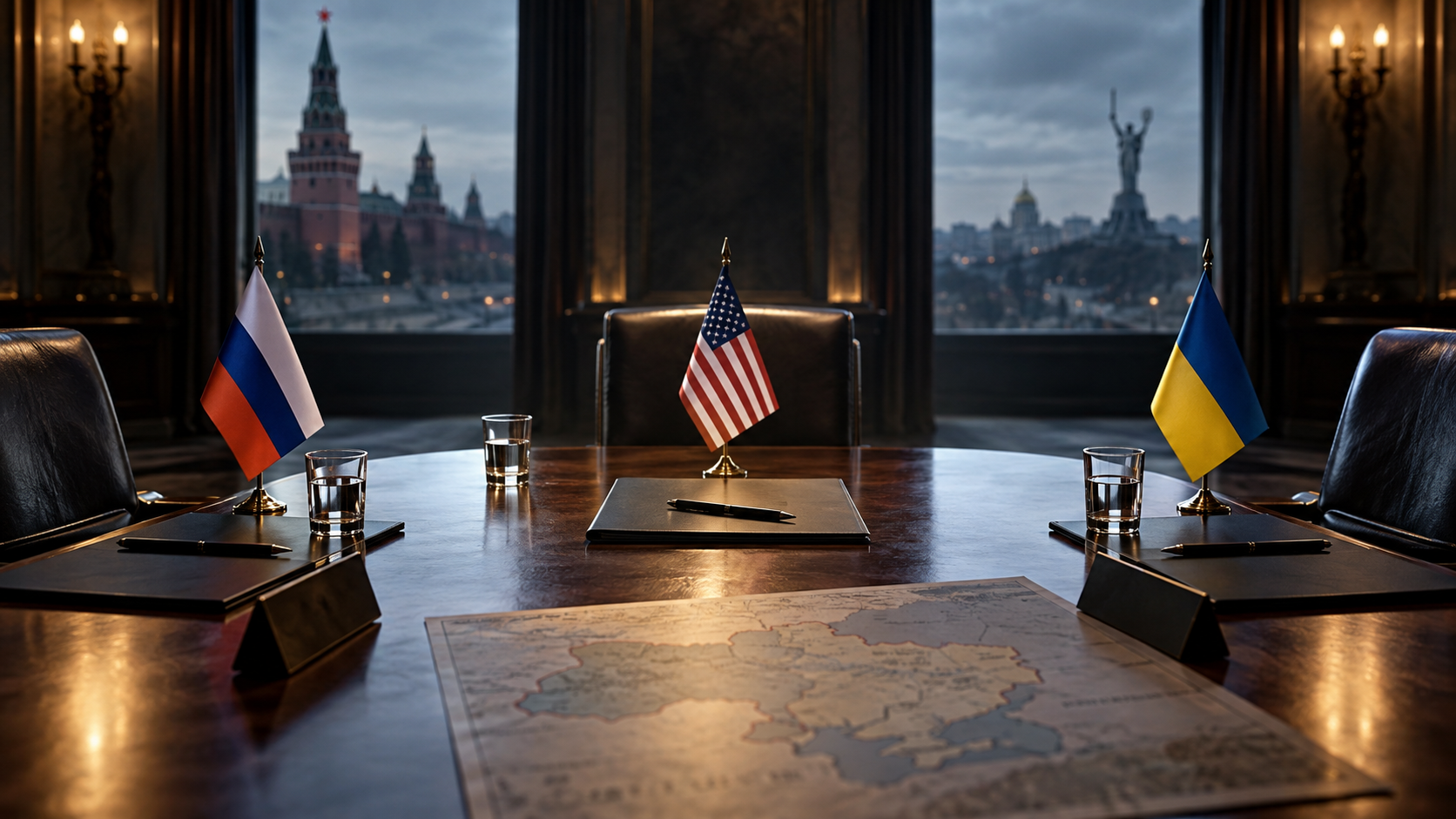
Trump Pushes Moscow and Kyiv Back Towards Talks
The Table Is Open Again
Russia has opened the door to restarting direct three-way peace talks with Ukraine and the United States after Donald Trump’s envoys completed an extraordinary diplomatic shuttle between Moscow and Kyiv. The Kremlin says a return to the trilateral format is possible, giving Washington its clearest opportunity in weeks to drag the two warring sides back into the same negotiating process.
But this is an opening, not a breakthrough. There is still no agreed date, no venue, no ceasefire and no public evidence that Moscow or Kyiv has shifted enough on territory or Ukraine’s future security to make a final settlement possible.
The Kremlin Has Put Three-Way Talks Back on the Table
Kremlin spokesman Dmitry Peskov said Moscow does not rule out restoring negotiations between Russia, Ukraine and the United States, although he cautioned that it is too early to discuss exactly where or when they could happen.
The statement followed a weekend in which US presidential envoys Steve Witkoff and Jared Kushner travelled first to Moscow for lengthy talks with Vladimir Putin and then to Kyiv for negotiations with Volodymyr Zelenskyy. That sequence matters because Washington is once again attempting to operate directly between the two governments rather than waiting for Moscow and Kyiv to narrow their differences themselves.
Peskov also left open the possibility of another telephone conversation between Putin and Trump. Moscow publicly praised the American effort, describing attempts to revive diplomacy as movement towards peace and emphasising Putin’s appreciation of Trump’s role.
That language is warmer than the atmosphere surrounding much of the previous diplomacy. It does not mean Russia has accepted the American proposals, but it suggests the Kremlin sees enough value in the process to keep it alive.
Trump’s Envoys Have Now Heard Both Sides
The renewed push accelerated when Witkoff and Kushner met Putin in the Kremlin for more than three hours. Moscow described the discussions as highly useful, while the Americans presented a series of ideas for how a settlement might be constructed.
Very little of the substance has been made public. That secrecy means the most important question — whether the United States has found a formula capable of narrowing the core Russian and Ukrainian positions — cannot yet be answered.
Putin nevertheless continued to argue that Russia was making progress militarily and that any settlement must address what Moscow calls the root causes of the conflict. That matters because the Kremlin has repeatedly used that language when discussing much broader Russian demands concerning Ukraine’s territory, strategic alignment and relationship with NATO.
The diplomatic movement therefore sits alongside a major contradiction. Moscow is willing to discuss peace while continuing to argue that the underlying conditions Russia has demanded throughout the war still have to be resolved.
That is why Russia’s insistence that any peace proposal recognise the realities created on the battlefield remains central to understanding what happens next.
Zelenskyy Also Wants the Negotiations Restarted
The American envoys then travelled to Kyiv, where Zelenskyy said three rounds of negotiations had been substantive and publicly backed efforts to restore the diplomatic process.
Ukraine’s position is significant because Kyiv is not rejecting negotiations simply because Witkoff and Kushner had just met Putin. Zelenskyy argued that talks in an imperfect format are still preferable to having no negotiating format at all.
That gives Washington something it has repeatedly struggled to obtain at the same moment: public willingness from both Moscow and Kyiv to continue talking.
Zelenskyy said security guarantees, Ukraine’s economic future and territorial questions had all been discussed. He also argued that the most difficult territorial decisions would ultimately have to be handled at leadership level rather than solved entirely by advisers and technical delegations.
This raises the possibility that another trilateral negotiating round could become preparation for something much bigger — potentially direct leader-level diplomacy if enough groundwork can first be completed.
That would represent a notable change from the position earlier this year, when Putin rejected the idea of immediately moving to a direct meeting with Zelenskyy without a settlement framework already taking shape.
Territory Is Still the Problem Nobody Has Solved
The diplomatic tone has improved faster than the underlying dispute.
Russia continues to claim Ukrainian territory that Kyiv refuses to surrender. Moscow has previously insisted Ukraine relinquish the entirety of four regions claimed by Russia and abandon its ambition to join NATO, while Ukraine considers occupied territory part of its sovereign state and fears any agreement that rewards territorial conquest.
That means a negotiator can get Moscow and Kyiv into the same room without getting them remotely close to agreeing on the map.
One possible diplomatic distinction is between de facto control and legal sovereignty. A settlement could theoretically acknowledge which side physically controls territory at the moment fighting stops without Ukraine formally recognising Russian sovereignty over that land.
Such arrangements can freeze a territorial dispute without resolving it. But there is still no public evidence that both sides are prepared to accept that formula in Ukraine.
For Moscow, battlefield control strengthens its negotiating position. For Kyiv, formally surrendering territory could legitimise gains achieved through invasion and leave enormous political and security consequences behind.
The war therefore continues to shape the negotiation even while diplomacy resumes. Every town held, lost or threatened potentially changes the leverage available when negotiators return to the table.
Security Guarantees Could Be Even Harder Than the Map
Territory attracts the headlines, but the structure of Ukraine’s post-war security may prove just as difficult.
Kyiv does not simply want fighting to stop. It wants guarantees strong enough to make another Russian invasion far more difficult after any ceasefire or settlement.
That could involve continued Western weapons, air-defence support, a powerful Ukrainian military, European commitments and some form of American backing. Ukraine is also discussing economic guarantees and reconstruction because its ability to remain militarily and economically viable after the war is part of the wider security equation.
Moscow has historically opposed deeper Ukrainian integration into Western military structures. A settlement that leaves Ukraine heavily armed and closely embedded in Western security arrangements could therefore clash directly with Russian demands.
This is why security guarantees have always been one of the most important parts of the Ukraine peace process. A ceasefire may stop the shooting. A credible settlement has to answer what prevents the shooting from starting again.
The American Role Is Becoming Much More Direct
The weekend also reveals something important about Trump’s strategy.
Instead of limiting Washington to conventional diplomatic channels, his administration is using Witkoff and Kushner as highly personal intermediaries capable of speaking directly with both Putin and Zelenskyy and then carrying proposals between the two capitals.
That gives Trump a potentially powerful position in the negotiation. The United States can offer incentives, apply pressure, shape security arrangements and influence Ukraine’s ability to sustain the war while maintaining direct contact with Moscow.
But it also places enormous responsibility on Washington.
If the United States pressures Ukraine far more heavily than Russia, Kyiv and European governments could fear that negotiations are becoming a mechanism for forcing Ukrainian concessions. If Washington demands concessions Moscow has no intention of making, the diplomatic process could collapse again.
Trump therefore has to find the narrow space where both sides conclude that compromise costs less than continuing the war.
The latest diplomatic shuttle suggests his administration believes that space may still exist.
The Biggest Test Is Whether Moscow’s Position Actually Changes
There is a danger in mistaking diplomatic activity for diplomatic progress.
Putin’s meeting with the American envoys produced positive language but no publicly announced breakthrough. Moscow continued to emphasise Russian battlefield objectives and its longstanding description of the causes of the conflict.
That matters more than the atmosphere inside the negotiating room.
The strongest evidence that the peace process has genuinely changed would be concrete movement: agreement on another trilateral meeting, military de-escalation, progress towards a ceasefire, narrowing territorial demands or greater clarity over security guarantees.
Until something like that happens, Russia can simultaneously support negotiations and continue fighting for a stronger position.
The same tension has shaped much of this war. Diplomacy does not necessarily replace military pressure. Sometimes it becomes another battlefield on which each side tries to improve the eventual terms.
What Happens Next
The immediate question is whether Washington can turn this weekend’s separate meetings into another formal Russia–Ukraine–US negotiating round.
Peskov’s statement removes one obvious obstacle because Moscow is no longer publicly dismissing the format. Zelenskyy has also made clear that Ukraine supports reviving negotiations, meaning there is now at least rhetorical agreement that the process should continue.
A Putin–Trump call could be the next major signal. Another round involving Russian, Ukrainian and American officials would be more significant still because it would test whether the private proposals carried between Moscow and Kyiv contain anything both sides are genuinely willing to negotiate.
The opportunity is real, but so is the distance separating them.
Trump has succeeded in getting Washington back into active shuttle diplomacy between Putin and Zelenskyy. He may now be closer to restarting negotiations than he was only days ago.
What he has not yet demonstrated is the much harder part: that Russia and Ukraine are prepared to give up enough of what they want to make those negotiations end in peace.
