Russia Turns To Japanese-Origin Jet Fuel As Ukraine’s Refinery War Bites
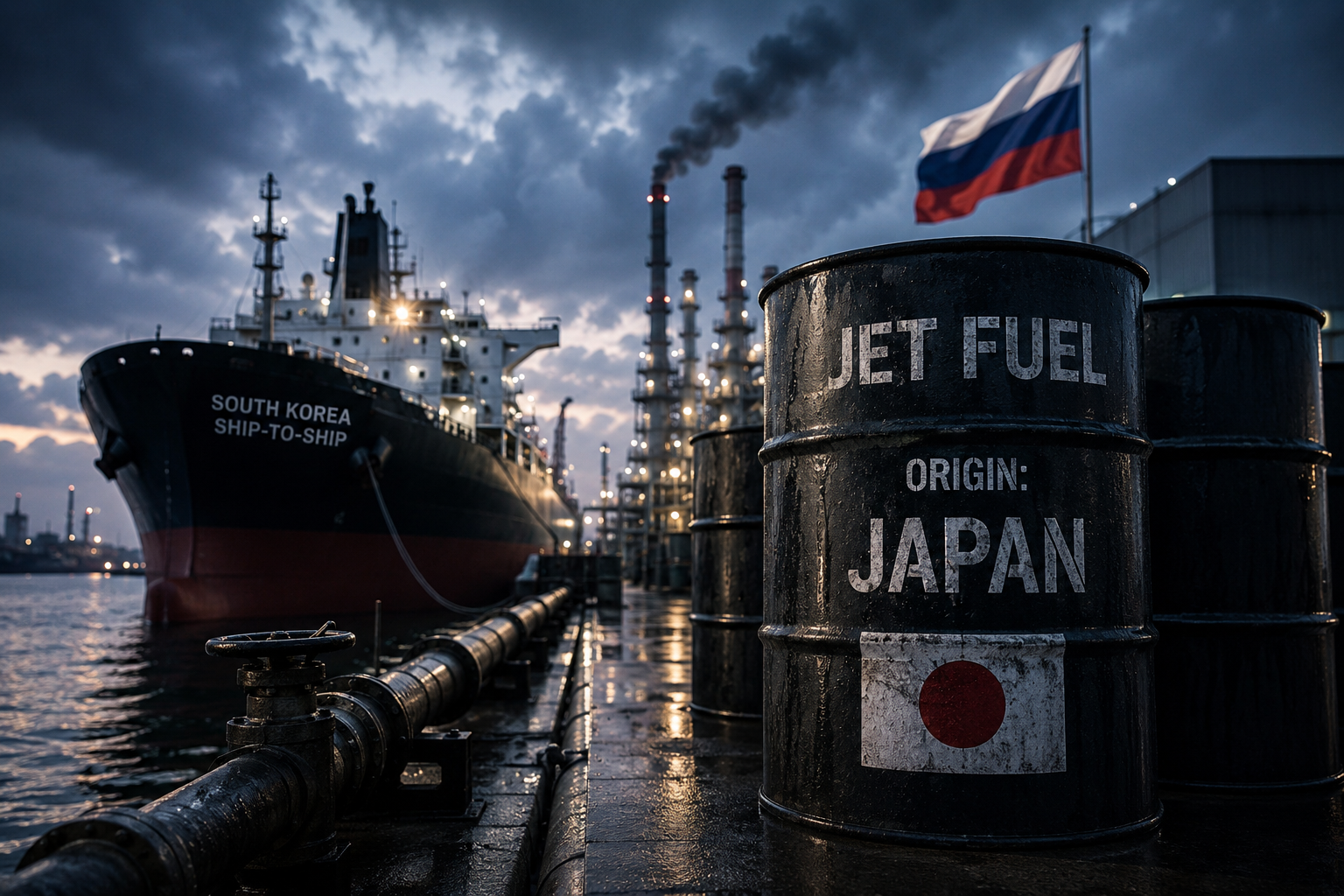
Russia Is Now Hunting For Foreign Jet Fuel As Its War Machine Feels The Strain
Russia’s Fuel Crisis Just Forced Moscow Into An Asian Lifeline
Russia is now facing one of the most politically awkward signs of pressure in its war economy: it is set to import jet fuel originating from Japan through traders, according to people briefed on the arrangement. The reported shipment matters because Russia is not short of energy in the abstract. It is short of the right fuel, in the right place, at the right time, after repeated attacks on the infrastructure that turns crude power into usable military and civilian supply.
The central humiliation is simple. Moscow has spent years presenting itself as an energy fortress, yet it is now preparing to draw aviation fuel from a North Asian supply chain while trying to stabilise shortages at home. That does not mean Russia is running out of fuel altogether. It means the refining system that supports everyday transport, aviation, agriculture and war logistics is being squeezed hard enough for imports to become useful.
The Shipment Russia Would Rather Not Need
The reported cargo is said to involve jet fuel of Japanese origin moving through traders rather than a simple state-to-state supply line. That distinction matters. It allows the transaction to sit in the murkier world of commodity routing, intermediaries, cargo swaps and maritime logistics, where the political meaning can be softened even when the strategic meaning is obvious.
The reported volume is at least 200,000 barrels, with accounts of the cargo moving through a complex trading chain and ship-to-ship handling linked to South Korea. That is not enough to transform Russia’s entire domestic fuel position. It is enough to show that Moscow is searching beyond its normal comfort zone to cover a painful gap.
This is the kind of detail that makes energy wars real. It is not a dramatic battlefield image. It is a cargo route, a trader chain, a fuel specification and a delivery problem. Yet those small mechanics reveal something larger: Ukraine’s long-range pressure campaign is not just burning isolated facilities. It is forcing Russia to rewire supply under stress.
That fits the wider pattern behind Ukraine’s drone war reaching a dangerous new scale, where the central point is no longer only how many drones are intercepted, but what happens when enough attacks force Moscow to defend, repair, ration and import at the same time.
Ukraine Has Turned Refineries Into A Strategic Target
Ukraine’s attacks on Russian oil infrastructure have shifted the war’s pressure away from the front line and into the industrial systems that keep Russia moving. Refineries are not just economic assets. They convert crude oil into gasoline, diesel, aviation fuel and other products that armies, farms, haulage firms, airports and households actually use.
That is why the refining damage matters more than crude output alone. A country can still produce oil and suffer shortages if the plants that process it are offline, damaged, overloaded or logistically cut off. Russia’s reported need for foreign-origin jet fuel sits inside that exact vulnerability.
Russia has already banned aviation fuel exports until 30 November 2026, with the stated aim of protecting stability in the domestic fuel market. That is a defensive measure. A country confident in abundant supply does not normally need to stop aviation fuel leaving the country for months while also exploring imports from abroad.
The same pressure is visible in Moscow’s drone alarm and the widening energy war, where attacks on fuel-linked infrastructure show how the war is becoming harder for Russia to keep distant from its own population and economy.
The Politics Are As Sharp As The Logistics
The reported Japanese-origin fuel route is politically sensitive because Japan is aligned with the Western response to Russia’s invasion, even while Asian energy markets remain complicated and deeply interconnected. The point is not that Tokyo is openly rescuing Moscow. The point is that global fuel markets are porous enough for Russian demand to search for cracks through traders and regional flows.
That is what makes the story powerful. Sanctions, export bans, refinery outages and war damage do not create clean moral maps. They create detours. Traders, vessels, intermediaries and cargo paperwork become the quiet machinery through which pressure is managed.
For Russia, the optics are poor. Moscow can still sell vast quantities of energy abroad, but the domestic fuel system is now strained enough for gasoline shortages, pump queues, regional rationing and price pressure to become part of the war story. President Vladimir Putin has acknowledged shortages in various regions and linked part of the problem to Ukrainian strikes, while officials have moved to protect supply through task-force measures and export restrictions.
That is a significant admission. The Kremlin’s preferred wartime bargain is that ordinary Russians feel the war as pride, not inconvenience. Fuel shortages attack that bargain because they translate geopolitics into queues, prices, closed pumps and disrupted work.
This Is Not Collapse, But It Is Exposure
The reported jet fuel import does not prove Russia’s energy system is collapsing. It does not prove its air force is grounded, its airlines are about to fail, or its war machine is out of fuel. Those claims would go beyond the evidence.
What it does show is exposure. Russia is being forced to manage a refined-fuel problem in public view, after years of insisting that Western pressure and Ukrainian strikes could not materially bend its economy. The evidence now points to a more uncomfortable reality: Russia can adapt, but adaptation is becoming more expensive, more visible and more dependent on external channels.
This is where Ukraine’s strategy becomes clearer. Kyiv does not need to destroy every refinery to create pressure. It only needs to create enough disruption that Russia must spread air defences, reroute supply, ban exports, subsidise imports, ration scarce product and explain why an energy giant is hunting for fuel.
The same structural issue sits inside Russia’s long game in Ukraine: Moscow can endure pressure for longer than many expected, but endurance is not the same as immunity.
What Happens Next
The next test is whether this reported cargo remains a one-off pressure valve or becomes part of a wider import pattern. If Russian refineries recover quickly, the shipment may look like a temporary patch. If attacks continue and outages persist, more foreign-origin fuel flows would suggest a deeper shift in how Moscow keeps its domestic market supplied.
That is why this story matters beyond one tanker. It exposes the hidden layer of the war: not the missile launch, not the drone footage, not the battlefield map, but the supply chain that decides whether a modern state can keep moving under attack.
Russia can still absorb punishment. But the reported Japanese-origin jet fuel deal shows the cost of absorption is rising. The war has reached the point where Moscow’s strength is no longer measured only by how much energy it can export, but by how much refined fuel it must quietly search for elsewhere.
