

Russia’s Ukraine War Is Now Recruiting Soldiers From Africa
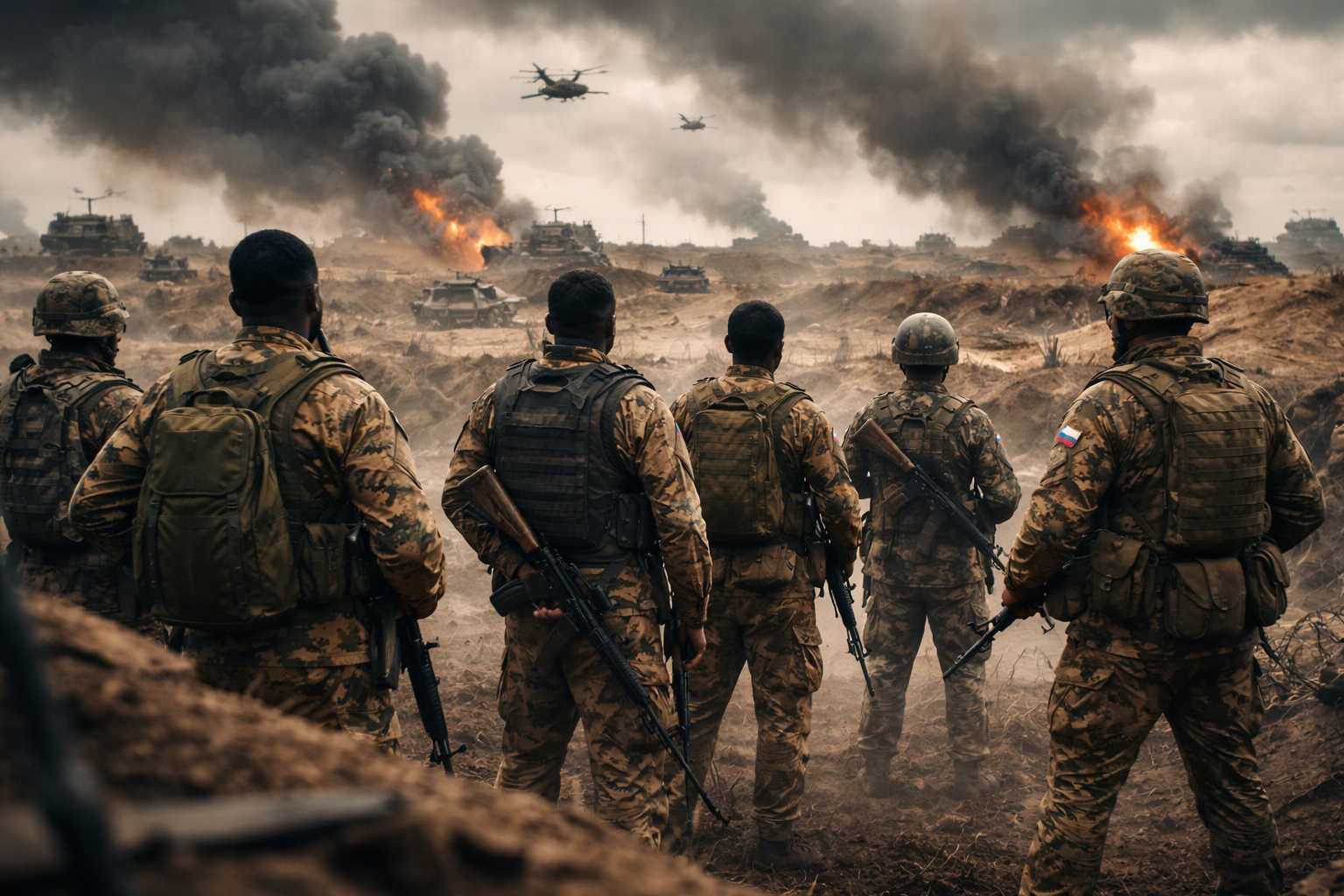
The Ukraine War’s Hidden Pipeline: African Recruits on Russia’s Frontlines
Africans Recruited to Fight in Ukraine War as Russia Searches for New Soldiers
The war in Ukraine has increasingly drawn in people far beyond Europe. Reports emerging through early 2026 indicate that citizens from dozens of African countries have been recruited into Russia’s military, often after being promised civilian jobs or lucrative contracts abroad.
Ukrainian officials estimate that approximately 1,780 African nationals from around 36 countries are currently fighting for Russia in the conflict, although the scale remains disputed.
What makes the story significant is not simply the presence of foreign fighters. The more profound issue is how the recruitment happens: many individuals appear to be drawn in through deceptive job offers, migration schemes, or intermediaries tied to military networks.
This situation has turned a regional war into a complex global manpower pipeline—one that now involves African governments, human-trafficking investigations, and diplomatic tension with Moscow.
The story turns on whether these recruits are voluntary foreign fighters—or victims of organized recruitment networks tied to Russia’s war effort.
Key Points
African nationals fighting in Ukraine: Ukrainian officials say roughly 1,780 people from 36 African countries are currently serving in the Russian military.
Recruitment through job promises: Many recruits reportedly traveled to Russia believing they were taking civilian jobs or security work, only to find themselves under military contracts.
Multiple countries affected: Citizens from Kenya, Ghana, South Africa, Cameroon, Egypt and others have been linked to the recruitment networks.
Confirmed deaths: Ghana’s government says at least 55 of its citizens have died fighting in Ukraine after being drawn into the conflict since 2022.
Government investigations: African governments are increasingly investigating recruitment pipelines, with concerns about trafficking networks and exploitation.
Russia denies wrongdoing: Moscow has rejected accusations that it is illegally recruiting foreign citizens for the war.
How Africa Became a Recruiting Ground for the War
Russia’s invasion of Ukraine began in February 2022 as a largely conventional interstate conflict. But as the war dragged into its fourth and fifth years, manpower became one of Moscow’s most pressing challenges.
Heavy casualties and the political sensitivity of mobilizing large numbers of Russian citizens pushed the Kremlin to search for additional fighters abroad.
Africa emerged as one of the most accessible recruitment pools.
Many of the countries implicated have large populations of young people facing unemployment, making them vulnerable to offers of well-paid work overseas. Recruiters advertise salaries, visa assistance, and sometimes even promises of Russian citizenship.
In some cases, the process appears straightforward: applicants knowingly sign military contracts.
In others, the situation is far murkier.
Reports describe people arriving in Russia expecting work in construction, agriculture, security, or factories, only to be presented with documents in Russian that bind them to military service.
Once signed, leaving becomes difficult. Some recruits report confiscated passports or threats of deportation.
The Countries Most Affected
The recruitment pattern stretches across much of the African continent.
Kenya has become one of the most prominent cases. Intelligence reports there suggested hundreds, possibly over 1,000 Kenyans, were recruited after being promised employment abroad.
Ghana has confirmed at least 272 citizens drawn into the conflict, with dozens killed on the battlefield.
South Africa has opened investigations into networks suspected of facilitating recruitment, including individuals accused of working with Russian military intermediaries.
Other countries connected to the issue include Cameroon, Senegal, Nigeria, Uganda, Sierra Leone, and Somalia.
The breadth of countries involved highlights how widely recruitment pipelines have spread.
Why Russia Needs Foreign Fighters
Russia’s military strategy in Ukraine increasingly relies on manpower-intensive tactics. Frontline combat in eastern Ukraine involves long trench lines, artillery duels, and repeated infantry assaults.
These operations require large numbers of soldiers.
Foreign recruits provide a politically convenient source of additional personnel. Unlike Russian citizens, their deaths carry little domestic political cost for the Kremlin.
Foreign fighters also serve another function: they allow Russia to maintain force levels without triggering additional unpopular mobilization campaigns at home.
That calculation helps explain why recruitment networks have continued despite diplomatic friction with African governments.
What Most Coverage Misses
The real hinge in this story is not simply the number of African recruits.
It is how recruitment networks intersect with migration systems already moving people toward Russia and Europe.
Russia has long hosted thousands of African students, migrant workers, and trainees through educational and labor programs. Those existing pipelines create a ready-made channel through which recruiters can identify and contact potential recruits.
Once someone arrives in Russia legally—on a work visa or student permit—they can become far more vulnerable to pressure, coercion, or contract manipulation.
This blurs the line between foreign volunteer fighters, mercenaries, and trafficking victims.
It also explains why African governments face a difficult diplomatic problem. Many of the recruitment networks operate through private intermediaries, not formal state channels, making them difficult to shut down without escalating tensions with Moscow.
The Human Cost of a Globalized War
For many of the recruits themselves, the experience has been brutal.
Foreign fighters are often placed in high-risk frontline roles, sometimes with limited training or language barriers that complicate coordination with Russian units.
Families in African countries have begun speaking publicly about relatives who disappeared after accepting job offers abroad.
Some only learn the truth months later—after a death notice from a battlefield thousands of kilometers away.
The deaths of Ghanaian fighters in Ukraine have already triggered political debate about how governments should protect citizens from recruitment scams.
In Kenya and South Africa, officials are now investigating alleged trafficking networks connected to recruiters.
Where the Story Could Go Next
Several trajectories could shape the next phase of this issue.
One possibility is diplomatic escalation. If African governments continue confirming casualties among their citizens, pressure may grow for stronger protests or restrictions on recruitment networks.
Another possibility is expansion. If the war drags on and manpower shortages deepen, recruitment efforts could spread further across the Global South.
The third path is regulatory intervention. International bodies and African regional organizations could attempt coordinated action against recruitment schemes.Egypt,
The outcome matters far beyond the individuals involved.
It reveals how the Ukraine war has evolved from a regional conflict into a global labor and security ecosystem, drawing people from multiple continents into one of the most destructive wars of the 21st century.
