

Tariffs: The Old Tax That Became a Modern Weapon
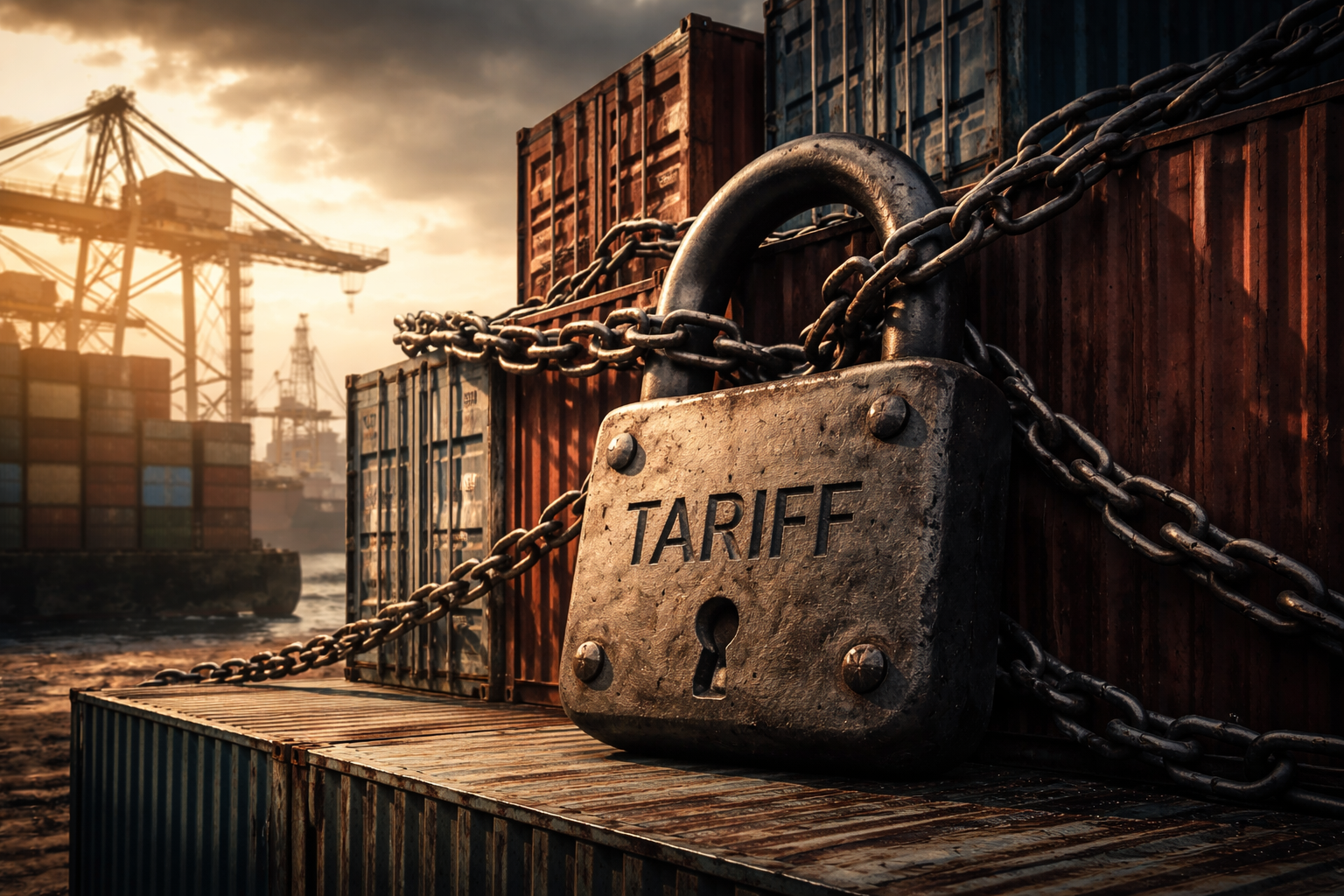
Tariffs Explained: History, How They Work, Political Leverage
Tariffs are taxes a government charges on goods as they cross a border—usually on imports, sometimes on exports. They look simple on paper: add a percentage (or a fixed amount) to the value of a product at customs, collect the money, and the price inside the country rises.
Tariffs are back at the centre of economic statecraft. They are being used not only to protect domestic industries but also to pressure rivals, to steer supply chains, and—more recently—to enforce climate and industrial standards through “carbon border” measures.
One overlooked truth lies underneath the politics: tariffs are rarely just a “trade policy”. Leaders use them as a swift, visible, and reversible method to initiate conflict (or negotiate a settlement) without resorting to violence.
The story turns on whether tariffs can be used as leverage without the domestic costs landing faster than the diplomatic gains.
Key Points
A tariff is a border tax, but its real-world impact depends on who can’t switch suppliers—often consumers and businesses at home.
Historically, tariffs began as revenue tools, then became protectionist shields, and now operate as bargaining chips and geopolitical signals.
The post-war trade system (GATT then WTO) pushed tariffs down and made them more rule-bound, but it also left legal “escape hatches”.
Significant tariff shocks have consistently sparked retaliation and broader economic harm—Smoot-Hawley is a widely cited cautionary tale.
Modern tariffs often sit inside domestic legal frameworks that let executives act quickly (national security, emergency powers, anti-dumping rules).
A new frontier is “standards tariffs”: carbon border adjustments that price emissions into imports, reshaping competitiveness and diplomacy.
Background
A tariff is collected at the border by customs authorities and can be designed in several ways:
Ad valorem: a percentage of value (e.g., 10% of the invoice value).
Specific: a fixed charge per unit (e.g., £0.50 per kilogram).
Tariff-rate quota (TRQ): low or zero tariff up to a limit, higher tariff beyond it.
Targeted trade remedies: anti-dumping and countervailing duties aimed at “unfair” pricing or subsidised imports.
Tariffs have always had two jobs: raise revenue and shape behaviour. In Britain, one of the most politically explosive examples was the Corn Laws (1815–1846), which protected domestic grain by restricting cheaper imports. Their repeal became a landmark moment in the politics of prices, class interests, and national strategy.
In the United States, tariffs were central to early state finance and industrial policy, but the modern warning label is the Smoot–Hawley Tariff Act (1930). It raised tariffs across many goods and helped drive retaliatory measures and a collapse in trade flows during the Great Depression era.
After 1945, the global system moved in the opposite direction. The GATT (from 1948) and later the WTO reduced tariffs through negotiated rounds and bound them into a rules-based framework intended “to stop the spiral”.
Analysis
Who Really Pays: The Mechanics That Decide the Winner
Politicians often describe tariffs as making “foreigners pay”. In practice, a tariff is a tax on import transactions that gets passed along a supply chain. Who absorbs it depends on bargaining power and how easily buyers can switch to alternatives.
If a country can quickly replace imports (many suppliers, easy substitution), foreign exporters may cut prices to keep market share.
If replacement is hard (specialised components, limited capacity, concentrated suppliers), domestic firms and consumers usually expect higher costs.
Plausible scenarios:
Soft pass-through: exporters absorb margins to maintain access; prices rise modestly.
Signpost: stable retail prices but falling foreign producer margins.Hard pass-through: importers pass costs forward; inflationary pressure rises.
Signpost: There are sudden price jumps in categories heavily affected by tariffs, leading to a substitution of lower-quality goods.Supply chain reroute: trade shifts to third countries or “minor processing” routes.
Signpost: sharp changes in import origin data without changes in end-product demand.
The Domestic Politics: Understanding Why Tariffs Are Tempting Even When They Cause Harm
Tariffs endure because their political benefits are concentrated and legible:
A protected industry can point to jobs saved and factories reopened.
The costs are spread across millions of buyers and thousands of downstream firms—each paying “a bit more” rather than organising a revolt.
They also let leaders tell a simple story: punish rivals, reward locals, raise revenue. That story is emotionally satisfying even when the economics are messy.
Plausible scenarios:
Symbolic tariff, quiet exemptions: headline toughness with carve-outs for key firms.
Signpost: exemption lists, waivers, or product-specific relief.Escalation for domestic signalling: tariffs rise because backing down looks weak.
Signpost: rhetoric hardens while negotiators stall.Backlash coalition forms: downstream industries and consumers push back.
Signpost: Lawsuits are filed, sector lobbying intensifies, and a clear divide emerges between producers and manufacturers.
The Rulebook: WTO Commitments, “Bound” Rates, and Legal Escape Hatches
The WTO system matters because it distinguishes between:
Applied rates: what a country actually charges today.
Bound rates: the maximum rate it has committed not to exceed for a product line.
This gap can be politically useful. Some countries have “policy space”—room to raise tariffs legally up to bound ceilings—while still claiming they are operating within global rules.
But tariffs are also imposed through exceptions and workarounds: national security claims, emergency measures, safeguards, and trade-remedy processes. In the US, for example, Section 232 has been used to justify tariffs as national security measures, creating a fast lane for action.
Plausible scenarios:
Rule-bound settlement: disputes move through formal channels and negotiated compensation.
Signpost: structured talks, mutually agreed rollbacks.Rule erosion occurs when countries use exceptions so frequently that the exceptions effectively become the standard policy.
Signpost: repeated national-security framing across unrelated sectors.Fragmentation: allies form tariff clubs with shared standards; rivals are excluded.
Signpost: parallel regimes, sector-specific blocs, conditional market access.
Tariffs as Leverage: Threat, Bargain, Retaliation, Repeat
As political leverage, tariffs work through three channels:
Credible threat: “Change behaviour or lose market access.”
Pain targeting: hit sectors that matter politically in the other country.
Negotiation token: tariffs can be lifted in exchange for concessions.
Because they are reversible, tariffs are ideal for transactional diplomacy. They can also spiral: retaliation invites counter-retaliation, and soon the “trade dispute” becomes a proxy conflict about status and sovereignty.
Plausible scenarios:
Managed trade deal: tariffs become bargaining chips for quotas and purchase commitments.
Signpost: announcements about volumes, sector carve-outs, and “phased” agreements.The retaliation ladder expands into new categories.
Signpost: widening product coverage and narrower exemptions.Permanent reorientation: firms shift investment and sourcing to de-risk geopolitics.
Signpost: multi-year capex announcements tied to “friend-shoring.”.
Climate and Industrial Policy: When Tariffs Become a Standards Tool
Carbon border measures turn the tariff concept into something broader: not just “where it’s made”, but how it’s made.
As the EU's Carbon Border Adjustment Mechanism (CBAM) enters its definitive regime, it is pricing emissions into certain imports.
This is leverage of a different kind: access to a large market is conditioned on meeting reporting and carbon-cost expectations. It pressures exporters to decarbonize—or at least measure emissions properly.
Plausible scenarios:
Compliance race: exporters invest in measurement and cleaner production to keep access.
Signpost: verified emissions data becomes standard in contracts.Diplomatic friction: countries frame CBAM as disguised protectionism.
Signpost: there are formal challenges, retaliatory instruments, and demands for exemptions.Carbon clubs: linked markets and mutual recognition reduce friction for partners.
Signpost: agreements on ETS linkage or mutual accounting standards.
What Most Coverage Misses
The hinge is this: tariffs are often more powerful as a threat than as a long-term policy.
The mechanism is political time. Leaders can impose tariffs quickly, claim instant toughness, and then trade the rollback for concessions—while the economic harm accumulates more slowly and diffusely. Tariffs are leverage because they create a negotiable hostage: market access
What to watch
More “temporary” tariffs with explicit review dates, signalling they are bargaining instruments rather than permanent protection.
There has been an increase in the structure of exemptions, such as waivers, carve-outs, and special processes, indicating that politicians are adjusting the tariff to determine who should suffer and who shouldn't.
Why This Matters
Tariffs shape far more than trade statistics. They change the price of essentials, the viability of factories, the confidence of investors, and the credibility of governments.
In the short term (days to weeks), tariffs can:
jolt prices in exposed sectors,
disrupt procurement,
trigger retaliation headlines that spook markets.
Longer term (months to years), they can:
redirect investment and supply chains,
harden blocs and rival standards,
Protectionist measures can lead to inefficiency if they remain in place after their original justification has expired.
The main consequence is behaviour: firms stop optimising for the cheapest supply and start optimising for political resilience because the rules of access can change faster than a factory can be built.
Real-World Impact
A midsize manufacturer that imports specialised aluminium components sees lead times lengthen and prices rise. It delays hiring and renegotiates contracts, not because demand collapsed, but because input costs became unpredictable.
A supermarket buyer quietly swaps suppliers and reduces variety. Shoppers don’t see a “tariff line” on the receipt; they see fewer options and slightly higher prices spread across dozens of products.
A construction contractor discovers that “green compliance” is now part of procurement. Carbon data now becomes a mandatory requirement rather than a desirable feature.
A small exporter learns that the border is no longer just paperwork—it is a policy battlefield. The risk premium shifts from shipping delays to regulatory and political risk.
The Moment Tariffs Stopped Being Boring Again
For decades, tariffs were treated as yesterday’s tool—something the post-war system had filed down into a technical detail. That era is ending.
Tariffs now sit inside a broader contest over industrial capacity, climate rules, and geopolitical alignment. The decision is clear: either countries rebuild effective safeguards for "economic conflict", or tariffs continue to shift from occasional leverage to permanent weaponry.
Watch for three signposts: expanding use of legal exceptions, the spread of carbon-linked border measures, and whether governments keep tariffs “reviewable” to preserve them as bargaining chips rather than long-term policy.
