

The EU Just Gave Britain A Brutal Preview Of Life After Starmer
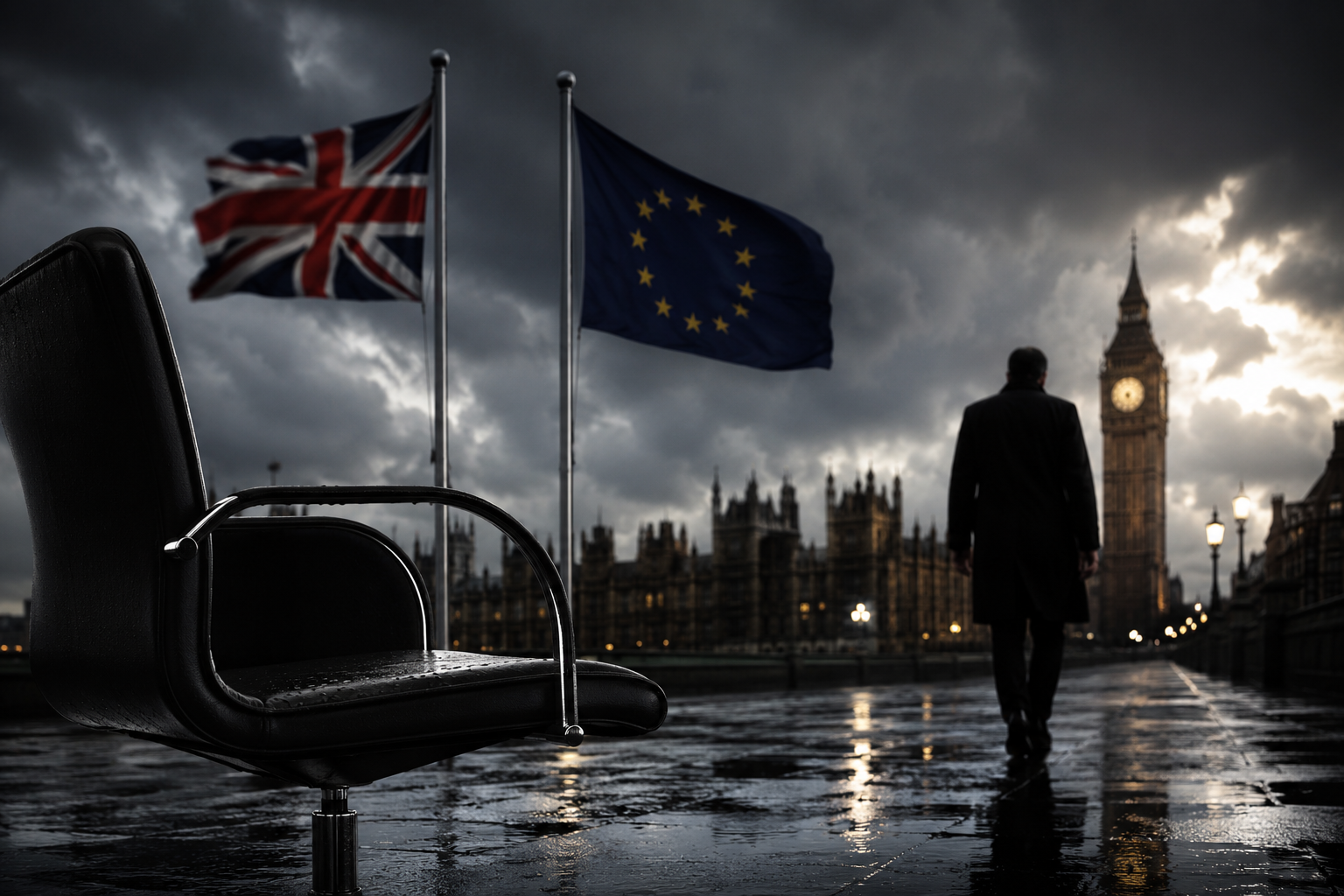
Starmer’s Exit Has Turned The UK-EU Reset Into A Test Of British Stability
The UK-EU Reset Has Just Hit Its First Real Stress Test
Europe Is Not Waiting For A Speech, It Is Waiting For PowerThe European Union’s decision to reassess the planned July UK-EU summit after Keir Starmer’s resignation announcement is not just a scheduling problem. It is a diplomatic signal. The summit had been planned for July 22, but European officials are now reviewing whether it still makes sense to hold it while Britain is changing prime minister.
That matters because the UK-EU reset was never only about warm language. It was about whether Britain could prove, after Brexit and years of political turnover, that it had become a more predictable partner. Starmer’s resignation has interrupted that story at the exact moment it was supposed to become institutional.
The Reset Was Built Around Starmer’s Stability
Starmer’s government had made repairing post-Brexit relations with the EU a central priority. The first UK-EU summit after Brexit took place in London on 19 May 2025, where EU and UK leaders framed the meeting as a new chapter in relations and agreed a renewed agenda for cooperation.
That matters because this was not just ceremonial diplomacy. The July summit was expected to continue the reset process, with live issues including trade links, energy cooperation, youth mobility, food regulation and broader strategic alignment. The problem is simple: Brussels does not want to finalise politically sensitive agreements with a British leader who is leaving office.
The EU is not necessarily punishing Britain. It is protecting itself from uncertainty. Any agreement reached with an outgoing prime minister risks being diluted, renegotiated, delayed or politically rebranded by the successor.
The Immediate Meaning Is A Loss Of Momentum
The first repercussion is delay. A postponed summit means slower movement on the practical deals that were supposed to turn the reset from symbolism into substance. That affects businesses, universities, young workers, energy cooperation and border-related sectors waiting for clearer rules.
The second repercussion is leverage. The EU now has a reason to wait, watch and test the next British leader before giving ground. If Andy Burnham or another successor wants to keep the reset alive, they may need to prove continuity quickly, reassure Brussels publicly, and avoid turning Europe into a domestic leadership wedge. Starmer’s departure has handed the EU a negotiating pause it did not previously have.
The third repercussion is political optics. Britain now looks, again, like a country whose long-term direction can be disrupted by internal party weakness. That image matters in diplomacy because credibility is partly built on the belief that today’s agreement will survive tomorrow’s reshuffle.
Brussels Is Asking A Bigger Question About Britain
The hidden question is not whether the EU likes Starmer. The deeper question is whether Britain can still make durable strategic commitments. Since 2016, Britain has cycled through Brexit negotiation, withdrawal, internal Conservative collapse, Labour restoration and now another leadership transition. Every change tells Europe to separate British intentions from British capacity.
That is why the summit delay is more than a diary adjustment. It tells the next prime minister that the EU reset is not guaranteed by goodwill. It has to be re-earned through political discipline.
This also changes the psychology of the relationship. Starmer offered Brussels a familiar type of leader: legalistic, careful, institutional, predictable, pro-alignment without openly trying to reverse Brexit. His successor may continue the same policy, but the EU will want to know whether that continuity is real or merely convenient.
The Domestic Repercussions Could Be Sharper Than The Diplomatic Ones
Inside Britain, the delay gives Starmer’s critics and Brexit-aligned opponents an easy line: the reset was too dependent on one man and too vulnerable to Brussels pressure. It also gives pro-reset voices a warning: if Britain wants better access, smoother trade and closer security cooperation, it needs a government capable of staying stable long enough to finish the work.
For Labour, this creates an awkward inheritance. The next leader does not just inherit domestic problems. They inherit an unfinished European negotiation with a clock already slipping. If the transition is clean and fast, the reset can probably be preserved. If the leadership process becomes messy, Brussels will have even more reason to delay.
This is where the danger sits. A summit postponed once can be rescheduled. A relationship that starts to feel politically risky can lose momentum much more quietly.
The EU Has Not Closed The Door
The important distinction is that this is not a rupture. European officials have stressed that relations remain strong and that talks are continuing about the viability of the summit. European leaders also praised Starmer’s role in improving relations and supporting European and Ukrainian security.
That means the reset is bruised, not dead. The EU still has strong reasons to work with Britain: security, Ukraine, energy, trade, migration pressure, defence coordination and continental stability. Britain still has strong reasons to keep moving closer to Europe without reopening the full Brexit argument.
But the tone has changed. Before Starmer’s resignation, the July summit looked like the next step in a managed thaw. Now it looks like a test of whether Britain’s new leadership can reassure Europe before the reset starts to drift.
What Happens Next Depends On The Speed Of The Succession
If the next prime minister is installed quickly and clearly commits to the UK-EU reset, the summit could be rearranged with limited strategic damage. The immediate cost would be delay, not collapse. Brussels would likely seek confirmation that existing negotiation tracks remain valid before putting leaders back in the same room.
If the transition drags on, or if the successor tries to distance themselves from Starmer’s European approach, the consequences widen. Deals on youth mobility, food standards, energy links and wider cooperation could slip into autumn or beyond. The reset would become more exposed to domestic attack, EU caution and bureaucratic slowdown.
The worst outcome for Britain is not that Europe walks away dramatically. It is that Europe quietly waits. Waiting is how momentum dies in diplomacy.
The Real Repercussion Is A Trust Deficit
The UK-EU summit delay exposes the central weakness in Britain’s post-Brexit diplomacy. Britain wants to be treated as a serious, stable, strategic partner. But stability is not declared. It is demonstrated through leadership continuity, policy discipline and the ability to keep commitments alive beyond one political figure.
Starmer’s resignation does not end the reset. But it strips away the illusion that the reset was already secure. The EU is now watching not just what Britain says next, but whether Britain can still make a promise that survives contact with British politics.
