The Power Grid Attack That Didn’t Black Out Europe—And Why That’s Not Reassuring
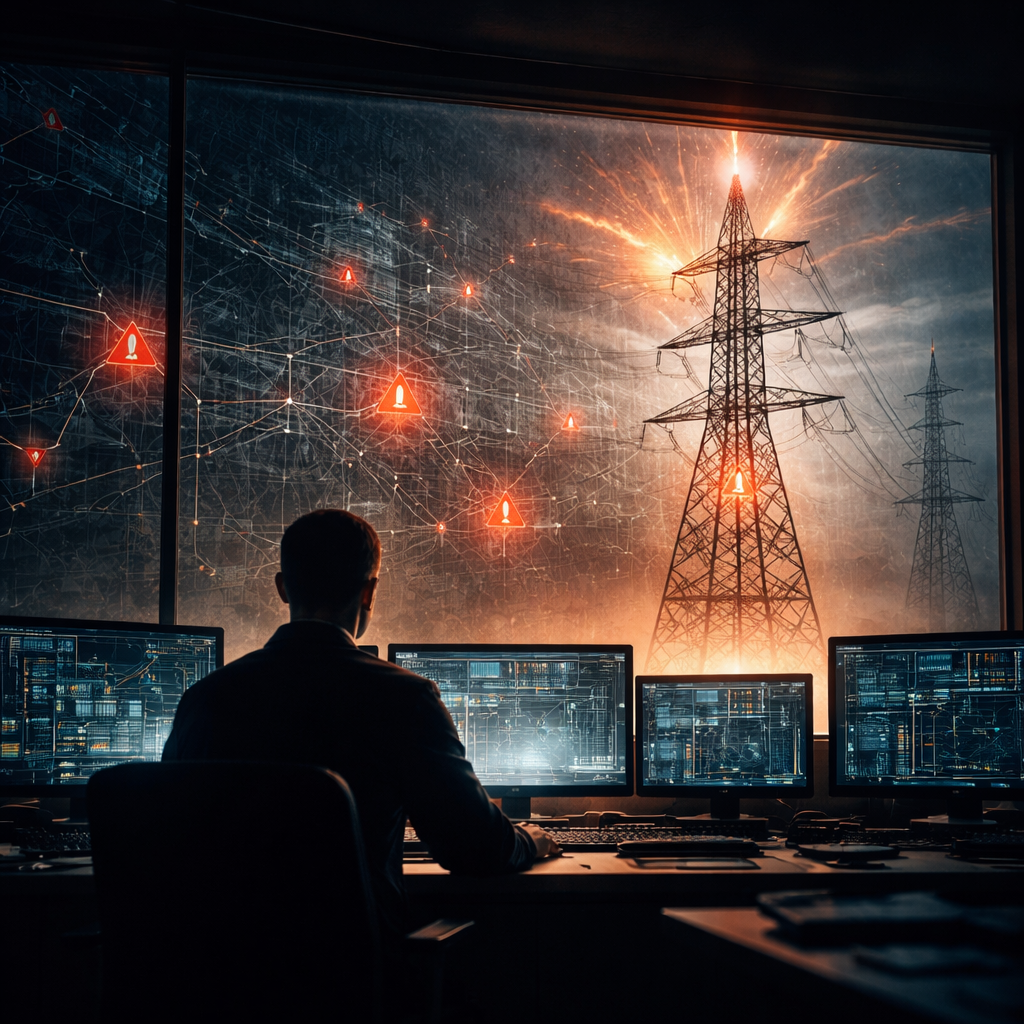
Poland says a major December attack on its power system “failed.” Here’s how grid cyber works, what “failed” can hide, and what signals to watch next.
Europe Power Grid Cyberattack “Failed”—Why That Word Might Be the Whole Story
Poland’s energy minister says the country faced its largest cyberattack on the power system in years in the last week of December—and that it “failed.”
That sounds reassuring. But in critical infrastructure cyber, “failed” often describes the outcome the public can see, not the access an attacker may have achieved.
The story turns on whether the attack failed at entry, or only failed at impact.
Key Points
Poland’s energy minister described a late-December cyberattack on the power system as the strongest in years, but said it did not succeed in its intended disruption.
The stated target was unusual: communication between renewable energy installations and power distribution operators, not a single big plant or the high-voltage transmission backbone.
In grid cyber, “failed” can mean “no outages,” even if attackers gained access, mapped systems, stole credentials, or tested pathways for a future attempt.
Modern grids are layered: corporate IT, operational technology (OT), control centres, SCADA, and field devices. The danger often sits at the seams—remote access, vendors, and data links.
Europe’s regulatory direction is tightening: NIS2 broadens requirements and accelerates incident reporting timelines; resilience obligations are also being strengthened under the EU’s CER framework.
The next disclosures that matter are not political soundbites but technical signals: what was touched, what was blocked, and what was rebuilt or rotated afterward.
Background
Poland’s government has not publicly named an attacker or provided technical detail about the method. What it has put on record is narrower and, in some ways, more revealing: the focus was on communications between renewables and distribution operators, and it was detected and stopped before its intended effect.
To understand why that matters, it helps to define terms quickly.
A power grid is not one system. It is an ecosystem. There is the high-voltage transmission network that moves electricity across regions, the distribution networks that deliver it into towns and homes, and a growing layer of “digital glue” that keeps supply and demand balanced—especially as wind, solar, batteries, and flexible demand come online.
Industrial Control Systems (ICS) are the computers and networks used to monitor and control physical processes. In power, that includes SCADA systems and the devices they talk to, such as remote terminal units and programmable logic controllers that interact with breakers, switches, and sensors.
The key point is that most successful grid attacks do not begin inside OT. They begin in ordinary office IT—email, identity systems, remote access—and then move, patiently, towards the operational layer.
Analysis
Technological and Security Implications
When officials say a grid attack “failed,” the public naturally hears “nothing happened.” Engineers hear a different question: failed at which stage?
A “failed” operation can include:
Failed disruption: the attacker intended outages or unsafe switching and didn’t get there.
Successful access: the attacker reached systems, accounts, or data but was evicted before they could act.
Successful reconnaissance: the attacker mapped networks, learned vendor dependencies, and left quietly.
Successful credential theft: the attacker stole logins that can be used later, even if this specific attempt was contained.
The minister’s description suggests the attackers were aiming at the connective tissue—data and command pathways that link renewable assets to distribution operators. That matters because renewables are often distributed: many sites, many owners, many communications links, and plenty of third parties. A single large power station is a fortress. A thousand small endpoints are an attack surface.
Communications attacks do not need to “take over the grid” to cause damage. If you can distort telemetry (what operators think is happening) or interfere with control signals (what operators tell devices to do), you can create cascading confusion: unnecessary disconnections, wrong curtailment decisions, false alarms, and mis-timed responses. Even when protections stop the worst outcomes, the incident can still force emergency operating modes, manual workarounds, and expensive recovery.
The uncomfortable reality is that the public-facing indicator—no blackout—does not prove there was no compromise.
Political and Geopolitical Dimensions
Poland sits on the sharp edge of Europe’s security map, and the government has been explicit that cyber pressure on critical infrastructure has intensified since Russia’s full-scale invasion of Ukraine began in 2022.
That context shapes how disclosures are made. Governments often communicate outcomes (“no disruption”) before methods (how it was attempted) because the method can educate copycats or expose defensive blind spots. It also shapes why attribution is frequently delayed: naming an actor has diplomatic, legal, and deterrence consequences, and it can be hard to do credibly without revealing sensitive intelligence sources.
Scenarios to watch:
Routine but serious intrusion attempt: noisy, quickly detected, used to measure readiness.
Signposts: generic indicators shared to utilities, no public attribution, rapid closure language.
Pre-positioning operation: access and mapping were the goal, not outages.
Signposts: unusual credential resets, vendor access reviews, extended forensic timelines.
Hybrid pressure campaign: cyber attempts paired with disinformation about grid stability.
Signposts: coordinated online narratives, scam waves, and political claims outpacing technical detail.
Economic and Market Impact
Even a “failed” grid cyberattack can have real costs. The expensive part is rarely the malware. It is the recovery discipline: forensic work, network segmentation changes, replacement of devices that cannot be trusted, accelerated patching, and the operational drag of running more cautiously.
There is also an insurance and investment angle. Utilities and operators are increasingly judged on cyber maturity, not just reliability metrics. More scrutiny typically means more spending—on monitoring, identity controls, and secure-by-design procurement. Those costs show up somewhere, and in regulated markets that often becomes a debate about bills versus resilience.
Scenarios to watch:
Cost absorption: operators fund remediation inside existing budgets.
Signposts: limited public procurement, minimal tariff discussion.
Regulatory uplift: new mandated audits and reporting expand compliance costs.
Signposts: regulator statements, parliamentary hearings, accelerated controls programs.
Vendor ripple: third-party systems in renewables and distribution get new security demands.
Signposts: contract changes, new access rules, tougher onboarding for vendors.
Social and Cultural Fallout
Grid cyber incidents are trust events. People do not need a blackout to feel uneasy; they need uncertainty. “Massive attack” plus “failed” creates a psychological gap that the public fills with either complacency (“fine”) or paranoia (“they’re hiding it”).
The fastest way to calm that gap is not reassurance. It is specificity: what layer was targeted, what was prevented, what was confirmed untouched, and what changes are being made. The slower the detail arrives, the more space opens for speculation—especially during winter when energy costs and reliability are already politically sensitive.
Scenarios to watch:
Transparent technical brief: measured details reduce panic.
Signposts: scope statements, defensive measures described, clear timelines.
Information vacuum: low detail fuels rumour and politicisation.
Signposts: repeated “failed” messaging with no further granularity.
Copycat attempts: publicity increases opportunistic probing.
Signposts: follow-on alerts, rising attempted intrusions, sector-wide warnings.
What Most Coverage Misses
The hidden hinge is definitional: official statements are written around consequences, not compromise.
A grid operator can truthfully say an attack “failed” while still treating the incident as a major security event—because “failure” often means the attacker did not achieve disruption. That is a much lower bar than “the attacker never got in.”
The other overlooked hinge is architectural: the shift towards renewables increases digital complexity in the distribution layer. That does not mean renewables are “unsafe.” It means the grid is becoming more software-dependent, more networked, and more reliant on third-party integrations. In that environment, attacks against communications links—especially between distributed assets and operators—become strategically attractive.
Finally, the time lag matters. December incidents disclosed in mid-January usually mean one of two things: either the system worked as intended (detect, contain, disclose), or investigators are still trying to answer the uncomfortable questions (how far did they get, and what must be rebuilt to be confident?).
Why This Matters
In the short term (the next 24–72 hours and the coming weeks), the key issue is operational confidence. If there is any doubt about which credentials or systems were exposed, operators tend to tighten access, slow changes, and increase manual verification. That can be invisible to the public but costly and stressful for the people keeping the lights on.
In the long term (months and years), the incident sits inside a European policy direction that is moving towards stricter cyber hygiene and faster disclosure. The EU’s NIS2 framework expands coverage and sets tighter reporting expectations, while resilience requirements are also being reinforced under the Critical Entities Resilience approach.
What to watch for next:
Whether Poland’s authorities clarify what was targeted (IT, OT, vendor links, or data platforms).
Whether an incident report distinguishes attempted disruption from confirmed access.
Whether the event triggers sector-wide guidance to operators beyond Poland.
Real-World Impact
A regional grid control team spends a week running “belt and braces” operations: more manual checks, more approvals, fewer remote actions, longer shifts. There is no outage, but everything runs slower.
A renewable operator receives new access rules overnight: multi-factor authentication, tighter network segmentation, and stricter vendor approvals. Commissioning a new site takes longer, and costs rise.
A mid-sized manufacturer quietly increases backup planning after hearing “massive attack” with few details. It invests in UPS capacity and operational contingency—an added cost driven by uncertainty, not confirmed damage.
What Happens Next in the Next Seven Days
This story will either become a footnote or a template.
If investigators can credibly say the attackers were stopped at the perimeter, “failed” will mean what people hope it means. If, instead, the next disclosures point to stolen credentials, lateral movement, or partial access to operational environments, then “failed” will mean something colder: the lights stayed on this time, but the map may have been drawn for the next attempt.
The signposts that matter are concrete: scope statements, technical advisories, access-control changes, and whether law enforcement moves from “investigating” to “naming.” If those arrive, Europe’s power-grid cyber story shifts from scare headline to measurable reality—and that shift will shape policy, spending, and public trust for years.
