The Revolt in the Fields: How Farmers Turned Against Government Policy
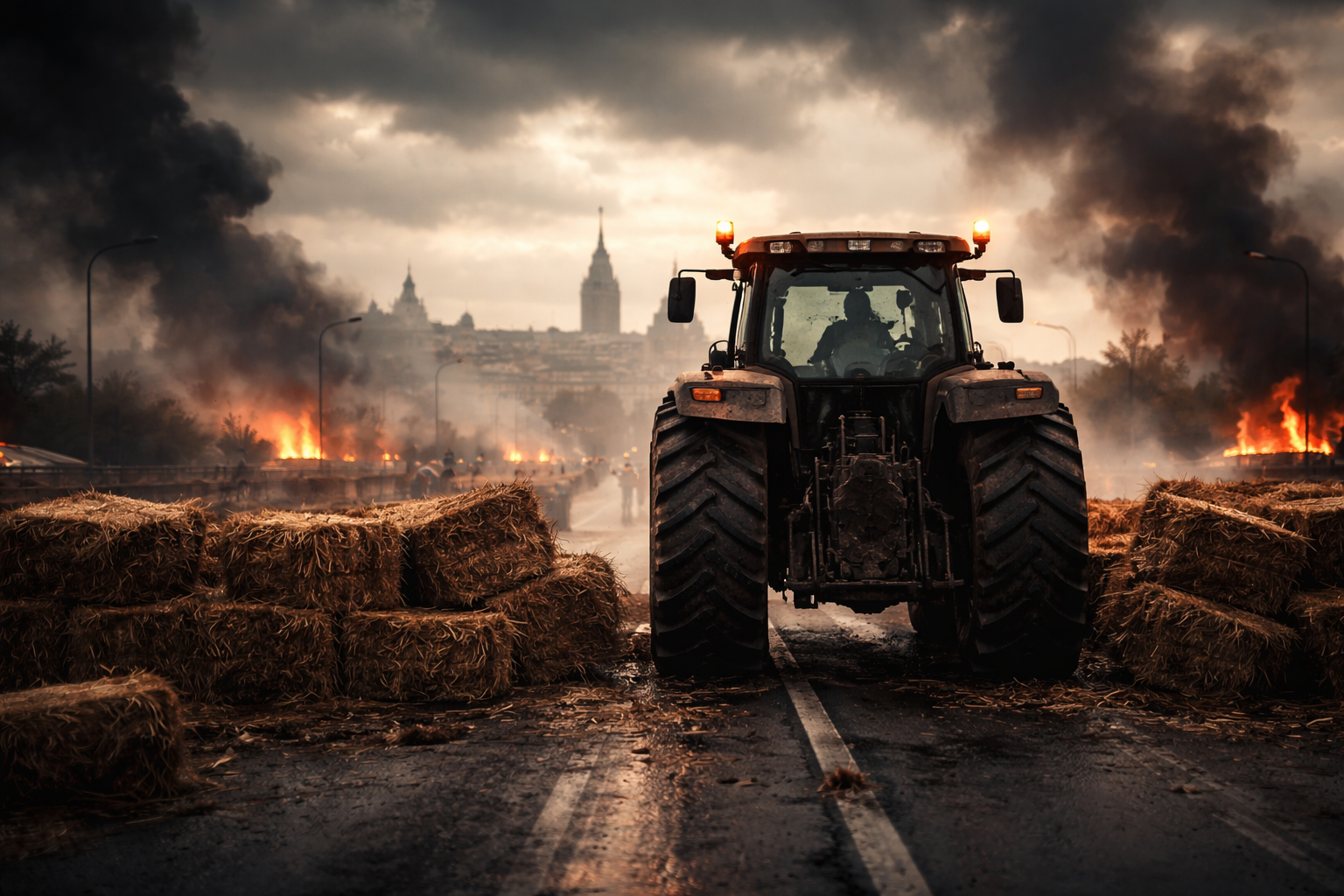
British and French Farmer Protests: What’s Driving the Revolt?
Why British and French Farmers Are Revolting Against Government Policy
Farmer anger in both France and Britain has moved beyond routine grumbling into recurring street politics: tractors in capital cities, coordinated rallies, and a steady escalation of demands. The immediate triggers vary by country, but the underlying tension is the same: governments are asking agriculture to absorb the costs of trade openness, climate and environmental compliance, and fiscal pressure—while farmgate prices and margins stay fragile.
In France, the heat is being stoked by fears of “unfair competition” from imports—especially around the EU–Mercosur trade deal—alongside long-running complaints about paperwork, bans on certain crop-protection tools, and low incomes. In Britain, outrage has been sharpened by inheritance-tax reform debates, plus a broader sense that post-Brexit trade and subsidy redesign have shifted risk onto producers faster than the market can pay them back.
One overlooked hinge sits underneath both stories: protests are not only about “support” but about enforcement—what standards are actually policed at the border and in supply chains, and who gets punished when reality doesn’t match political promises.
The narrative hinges on whether governments can genuinely provide equal opportunities to farmers without violating trade strategies, climate commitments, or public finances.
Key Points
Farmers are protesting because they feel trapped between rising compliance costs (environment, animal welfare, admin) and weak pricing power in markets dominated by processors and retailers.
France’s latest flashpoint includes opposition to the EU–Mercosur deal and demands to reduce “constraints,” with policy moves now targeting permitting rules and farm expansion.
Britain’s protests have been driven by inheritance-tax reform fears (often framed as a “family farm tax”), plus anxiety over import standards and trade deal impacts.
In both countries, “double standards” in trade are a core grievance: farmers argue imports can undercut domestic producers if production rules differ or enforcement is uneven.
Governments have begun responding with targeted concessions and messaging—yet each concession risks clashing with environmental goals, consumer prices, or trade negotiations.
The near-term risk is political contagion: once farm protests become routine, every budget, trade vote, or regulation change becomes a mobilization trigger.
Background
Farming is politically sensitive because it touches food prices, rural employment, national identity, and land use. But economically, farmers often sit in the least powerful position in the chain: they buy inputs (fuel, fertilizer, feed) in global markets and sell into highly concentrated buying structures. That makes them vulnerable to cost spikes and policy change.
In France, the state traditionally plays a more interventionist role in agriculture and has a long history of large-scale farmer mobilization. Recent protest waves have repeatedly targeted administrative burdens, pesticide rules, water and land-use restrictions, and income pressure—now increasingly fused with trade politics.
In the UK, Brexit replaced the EU’s Common Agricultural Policy payments with a shifting mix of schemes that increasingly pay for environmental outcomes. At the same time, Britain signed or implemented major trade deals and faced renewed scrutiny of import standards. That combination has created a narrative—fair or not—that policy is asking farmers to do “more for less” while exposing them to new competition.
Analysis
France’s Spark: Trade, “Unfair Competition,” and the Price Squeeze
French farmers’ public argument is straightforward: if domestic producers must meet strict EU rules on welfare, environment, and inputs, imports produced under different regimes can undercut them. Opposition to the EU–Mercosur deal has become a rallying point because it symbolizes the fear that trade policy is being used to deliver lower prices while asking French agriculture to carry higher compliance costs.
But the subtext is income. “Unfair competition” is not only about principle; it’s about margins. If the market clears at an imported price, then domestic producers effectively pay for national ambition—greener farming, higher standards—without guaranteed compensation.
Plausible scenarios:
Policy pause or hardening stance on trade: France pushes for delays, carve-outs, or stricter safeguards. Signpost: official voting positions, new conditions, or coalition-building inside the EU.
Domestic concessions to reduce burdens: more permitting flexibility and fewer procedural constraints. Signpost: new decrees, accelerated approvals, or widened exemptions.
A cycling protest pattern: periodic blockades linked to major political moments (agriculture fairs, EU meetings, budget cycles). Signpost: coordinated calls by major farm unions and repeat targets in Paris.
Britain’s Flashpoint: Inheritance Tax, Trust, and Post-Brexit Risk Transfer
In the UK, the emotional core of recent protests has been inheritance tax and the fear that families will be forced to sell land to pay tax bills. Even where technical allowances raise thresholds, the political damage comes from distrust: many farmers see the policy direction as proof that the government does not understand “asset-rich, cash-poor” businesses.
Layered on top is a wider fear that Britain is importing more competition while domestic support is being redesigned and environmental requirements are tightening. That anxiety has been amplified by high-profile scrutiny of import standards in Parliament and ongoing debates about whether trade policy is consistent with food and farming promises.
Plausible scenarios:
Late-stage compromise on tax design: thresholds, relief structure, or payment terms are adjusted to dampen the political fallout. Signpost: finance bill amendments, ministerial statements with clear numeric changes.
Shift from tax to standards as the headline fight: protests broaden into “level playing field” campaigns on imports. Signpost: parliamentary pressure on border measures and stronger enforcement language.
Prolonged, low-level mobilization: rallies become the default response to each policy milestone. Signpost: recurring London tractor actions tied to legislative dates and budget events.
The Shared Fuel: Standards, Borders, and “Double Standards” Politics
What unites both movements is the conviction that governments promise one thing—high standards, food security, fairness—and deliver another: exposure to competition that appears cheaper because the costs are simply borne elsewhere. This is why “import standards” has become a political pressure point: it is a visible mechanism for turning abstract fairness claims into something enforceable.
But enforcement is hard. Testing for residues, tracing supply chains, verifying production standards, and policing fraud require money, staff, and legal clarity. It is easier to announce a principle than to build a system that consistently delivers it.
Plausible scenarios:
Tightening at the border: more targeted controls and new residue or standards enforcement rules. Signpost: official start dates, inspection regimes, published enforcement actions.
Symbolic policy without capacity: strong rhetoric but limited real change. Signpost: few prosecutions, few seizures, weak audit outcomes, and continued price pressure.
Retail chain reform push: governments lean on processors/retailers to share margin risk. Signpost: strengthened grocery code enforcement or new transparency requirements.
What Most Coverage Misses
The hinge is enforcement capacity: farmers revolt when governments promise “fair competition” but cannot prove it at the border or in supply chains.
The mechanism is simple. If domestic producers must follow stricter rules, then the only way to stop undercutting is either (a) compensate farmers for higher costs or (b) enforce equivalent standards on imports. When budgets are tight and compensation is politically contested, the entire story collapses onto enforcement—inspections, testing, traceability, and penalties—because that’s the only lever left that looks like fairness without writing a check.
Two signposts will confirm this is the real battleground in the coming weeks:
whether governments announce concrete enforcement actions (not just principles), such as inspection ramps, penalties, or import blocks with operational detail;
whether protest leaders shift from broad slogans to technical demands about thresholds, testing, and verification—because that’s where “level playing field” becomes real.
What Changes Now
The short-term change is political: farming policy is now a mobilization trigger. Over the next 24–72 hours and into the next few weeks, any movement on trade votes, finance legislation, or farm “burden reduction” packages can prompt renewed action because farmers believe these decisions directly affect survival.
Who is most affected:
Small and mid-sized family farms face the biggest stress because they have less financial buffer and less ability to absorb compliance and tax uncertainty.
Livestock and mixed farms can be especially exposed to feed and energy costs and to permitting rules for buildings and expansion.
Export-sensitive producers face added risk if standards disputes trigger retaliation or shifting market access.
The longer-term shift is strategic: governments are being forced to choose where the adjustment cost lands—on taxpayers, on consumers via higher prices, on farmers via squeezed margins, or on trade policy via new constraints.
The main consequence is trust breakdown because farmers will not accept “fairness” promises unless enforcement or compensation is visible and repeatable.
Decisions and events to watch:
legislative milestones on UK fiscal measures affecting farm succession;
EU-level movement on trade agreements that are politically toxic to domestic producers;
operational announcements on import standards enforcement, inspections, and penalties.
Real-World Impact
A dairy operation runs the numbers for next year’s upgrades and pauses investment because it cannot predict whether new permitting rules and input costs will be offset by any improvement in farmgate prices.
A family partnership planning succession speaks to lenders and accountants and quietly considers selling a parcel of land—not to expand, but to reduce uncertainty about future tax exposure.
A produce grower watches a new residue or import-rule change and worries about paperwork and rejected shipments, because a single compliance failure can wipe out a season’s margin.
A rural contractor who builds barns and maintains equipment sees demand swing wildly: when farmers feel policy risk rising, they postpone projects, and local employment takes the hit.
The New Farm Politics in Europe and Britain
This is no longer a one-off protest cycle. It is the emergence of a new farm politics where agriculture behaves like a permanently activated constituency—ready to mobilize at speed and target the most visible symbols of state power.
The fork in the road is stark. Governments can treat protests as a nuisance and offer occasional concessions, but that only entrenches the pattern. Or they can build a durable settlement that links standards, trade, and enforcement to a credible economic model farmers can survive under.
Watch the signposts that matter: operational enforcement actions, not slogans; legislative text, not reassurance; and whether farm groups start demanding technical verification systems rather than headline-friendly promises. The historical significance is that food policy is becoming social stability policy—and Europe is learning that lesson the noisy way.
