

The Vatican Meeting That Suddenly Put Trump, Rubio And Pope Leo XIV On A Collision Course
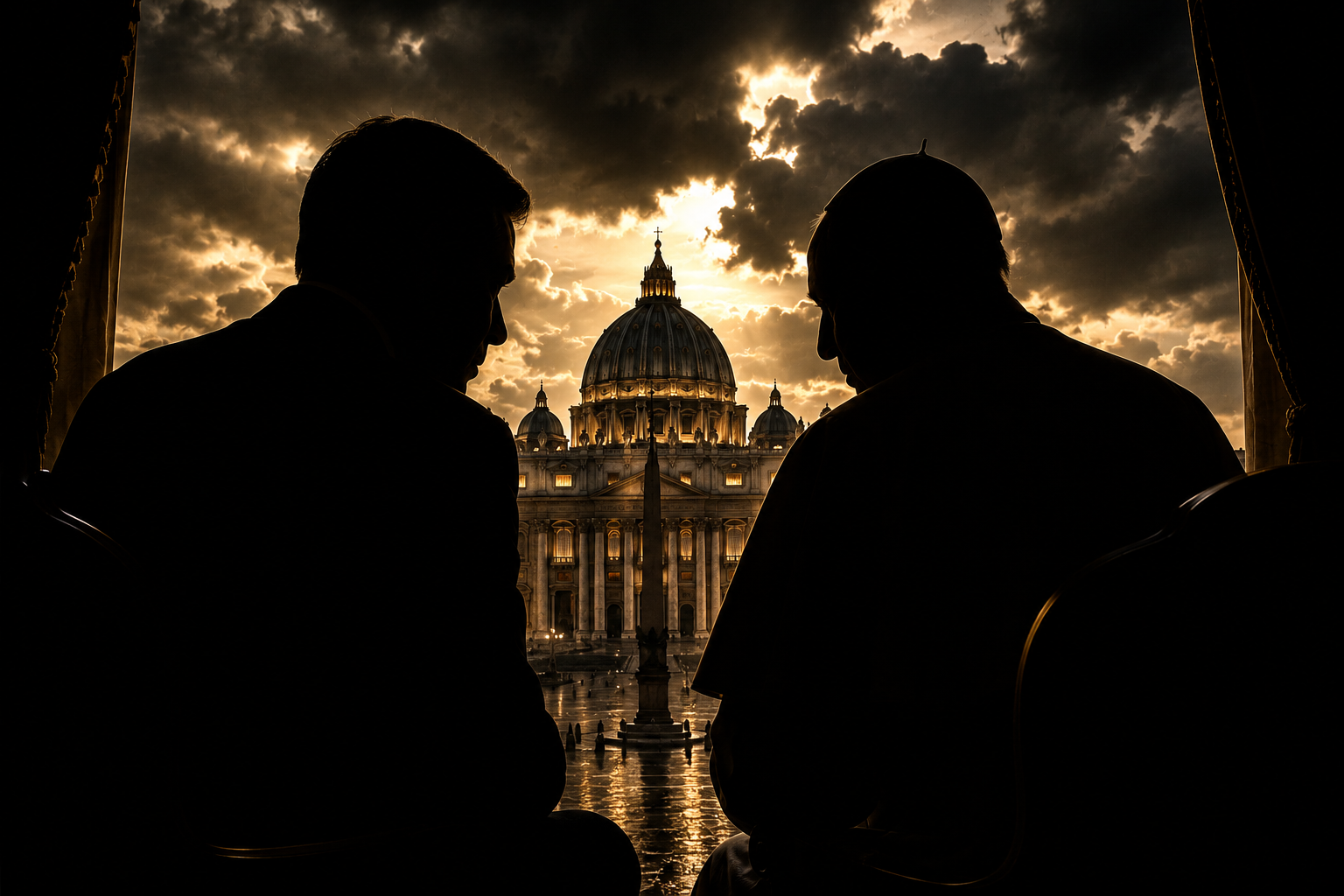
The Hidden Stakes Behind Rubio’s Dramatic Vatican Meeting With Pope Leo XIV
Why Marco Rubio’s Closed-Door Vatican Meeting With Pope Leo XIV Matters Far More Than It Looks
When U.S. Secretary of State Marco Rubio walked into the Vatican to meet Pope Leo XIV, the images looked calm, ceremonial, and carefully controlled.
But almost nobody believes this was just another diplomatic courtesy visit.
Behind the handshakes, symbolic gifts, and carefully measured statements sat a much larger problem suddenly hanging over Washington, Rome, and the Vatican itself: the growing public clash between President Donald Trump and the first American pope in modern history.
That alone would have been extraordinary a decade ago.
Now it is becoming one of the strangest and most politically explosive tensions in global diplomacy.
Rubio’s visit came after weeks of escalating attacks from Trump aimed at Pope Leo XIV over the Vatican’s criticism of war rhetoric, nuclear escalation fears, and wider U.S. foreign policy positions connected to Iran. The White House and the Vatican have found themselves drifting into increasingly visible conflict, with Pope Leo emerging as one of the most internationally recognizable moral critics of the current geopolitical trajectory.
The meeting itself reportedly lasted far longer than many expected, with discussions covering peace efforts, religious freedom, Cuba, humanitarian crises, and wider international tensions. Vatican officials later described the talks as constructive and friendly.
That was the official version.
The real story may be what the meeting revealed underneath.
Why This Suddenly Matters Far More Than A Routine Vatican Visit
American presidents have disagreed with popes before.
But this situation feels different because the conflict is now intensely personal, highly public, and politically dangerous for both sides.
Trump has repeatedly criticized Pope Leo XIII in recent weeks, accusing him of weakness on Iran and suggesting the pontiff’s comments could endanger Catholics. Pope Leo pushed back publicly, defending the Vatican’s long-standing anti-war and anti-nuclear positions while warning against escalating global conflict.
That matters because Pope Leo XIV is not just any pope.
He is the first American-born pontiff in Catholic history.
That changes the emotional and political pressure around every public disagreement.
The Vatican is no longer criticizing the United States from a purely European distance. The criticism is now coming from an American pope speaking directly into America’s political, religious, and cultural fractures.
That creates a tension Washington may not fully know how to handle.
The symbolism alone is extraordinary: America’s top diplomat attempting to calm relations between the White House and an American pope while global wars, nuclear fears, and domestic political tensions all intensify simultaneously.
The meeting therefore became about much more than diplomacy.
It became about authority itself.
The Hidden Risk Buried Inside The Trump-Pope Clash
The real danger for the White House is not theological.
It is political.
Catholic voters remain one of the most important swing blocs in American politics. Public warfare with the Vatican carries risks that extend far beyond foreign policy headlines, particularly when the pope involved is American-born and increasingly willing to speak forcefully on war, humanitarian suffering, and international morality.
That is part of why Rubio’s role suddenly became so important.
Rubio is not merely secretary of state in this context. He is also a practicing Catholic capable of acting as a bridge between two sides now drifting toward open hostility.
The Vatican appeared fully aware of the symbolism.
During the meeting, Rubio reportedly presented Pope Leo XIV with a crystal football, while the pope gave Rubio an olive-wood pen associated with peace. The optics were carefully chosen.
Diplomacy often hides its sharpest messages inside polite gestures.
An olive branch inside a geopolitical storm is rarely accidental.
The Question Washington May Not Want To Face
What happens if Pope Leo XIV becomes even more outspoken?
That possibility now hangs over everything.
Over the past year, Pope Leo has evolved from a relatively cautious figure into a far more assertive global voice. He has criticized war escalation, defended humanitarian principles, and positioned himself increasingly as a moral counterweight to nationalist and militaristic rhetoric.
That trajectory matters enormously.
The Vatican does not operate like a normal state. Its influence is cultural, moral, symbolic, and emotional. When a pope consistently frames global conflict in ethical terms, political leaders can suddenly find themselves fighting not just another government, but a wider moral narrative spreading internationally.
That is especially risky during periods of war anxiety and global instability.
The Vatican understands symbolism better than almost any institution on Earth. Every photograph, every phrase, and every diplomatic audience is carefully constructed to project meaning.
Rubio’s presence in Rome therefore carried an implicit admission: tensions had become serious enough that Washington could no longer ignore them.
What Most People Are Missing About The Vatican’s Position
Many headlines have framed this clash simply as a disagreement over Iran or foreign policy.
That is too narrow.
The deeper issue is that Pope Leo XIV appears to be positioning the Vatican against a wider culture of escalation itself.
That includes war rhetoric, nuclear normalization, migration crackdowns, and the increasingly aggressive tone shaping global politics.
In that sense, the conflict is philosophical as much as geopolitical.
The Vatican’s messaging under Leo increasingly emphasizes restraint, peace, and humanitarian caution at precisely the moment many governments are moving in the opposite direction.
That tension is unlikely to disappear after one meeting.
If anything, Rubio’s visit may simply mark the beginning of a longer and more visible confrontation between political power and moral authointerested in wider geopolitical instability may also find context in Taylor Tailored’s ongoing coverage of fears about global conflict escalation and growingrs and mounting nuclear anxiety in modern geopolitics, both of which increasingly overlap with the Vatican’s public messaging.
The Detail That Changes The Entire Story
The most important detail may not be what was said publicly at all.
It is the fact that the meeting happened in the first place.
Washington needed this audience.
The Vatican did not urgently need Rubio.
That changes the balance of perception dramatically.
Rubio arrived in Rome during a moment when the White House was facing growing criticism from European allies, escalating tensions around Iran, and increasingly uncomfortable headlines surrounding Trump’s attacks on Pope Leo XIII.
The Vatican understood the leverage embedded inside that moment.
Pope Leo did not need to shout.
He simply needed to remain calm while the world watched an American administration attempt to repair relations with an American pope it had publicly attacked.
That image alone carried enormous symbolic power.
Why The Vatican Suddenly Feels Like A Geopolitical Battleground
For decades, many people treated the Vatican as spiritually important but geopolitically secondary.
That assumption now looks increasingly outdated.
The Vatican sits at the intersection of morality, diplomacy, migration, war, humanitarian crises, and global public opinion. Under Pope Leo XIV, it appears increasingly willing to use that influence more aggressively.
That creates an uncomfortable reality for governments built around power projection and hardline rhetoric.
Military power can dominate territory.
Moral authority can shape perception.
And perception often shapes politics.
Rubio’s meeting with Pope Leo XIV, therefore, mattered because it exposed a growing global tension that reaches far beyond religion itself: the battle between force and legitimacy in an increasingly unstable world.
That is why this story suddenly feels much bigger than one Vatican audience.
Because behind the smiles, gifts, and diplomatic language sat a question neither Washington nor the Vatican could fully control anymore:
What happens when one of the world’s most powerful governments finds itself publicly challenged by one of the world’s most influential moral institutions—and millions of people start listening?
