

Trump’s Global Exit Strategy: Cost Cutting or Power Move?
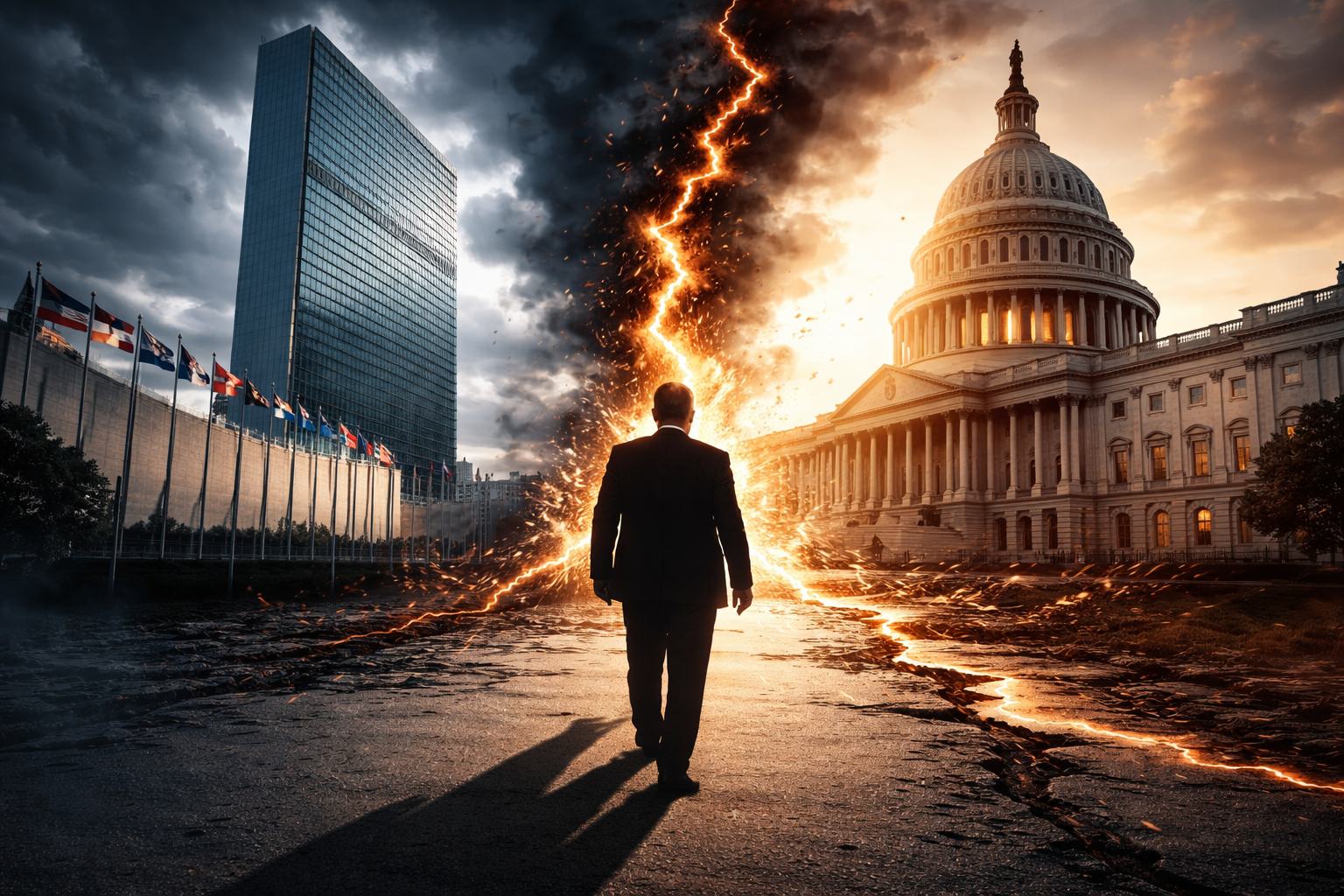
America Walks Away From the UN System — What Comes Next
Trump Just Pulled the US Out of 66 Global Bodies — He’s the Real Play
Donald Trump ordered the United States to withdraw from 66 international organizations, including major UN-linked bodies such as UN Women and climate institutions.
The move is one of the most sweeping rejections of global governance in modern U.S. history. The administration argues these organizations are wasteful, politically biased, and undermine American sovereignty.
But beneath the headline is a deeper shift: the decision is not just about saving money—it is about redefining how the U.S. exercises power globally.
The story turns on whether America gains more leverage by stepping back—or by staying inside the system and shaping it.
Key Points
The U.S. is withdrawing from 66 international organizations, including 31 UN-related bodies.
Targets include UN Women, climate agreements, and development agencies considered misaligned with U.S. interests.
The administration frames the move as protecting sovereignty, taxpayer money, and national priorities.
Critics warn it risks ceding global influence to rivals like China and weakening international coordination.
Some withdrawals—especially from treaties—may face legal and procedural challenges.
This continues a broader trend: exits from WHO, UNESCO, and climate agreements under Trump’s second term.
Where This Story Really Begins
This decision was not made in isolation.
In early 2025, the Trump administration launched a full review of every international organization the U.S. participates in. The goal was simple: identify which ones deliver value—and which don’t.
The conclusion was blunt.
Many organizations were labeled:
redundant
mismanaged
ideologically driven
or actively working against U.S. interests
That framing matters. This approach is not being sold as isolationism—it’s being sold as efficiency and control.
What Exactly the U.S. Is Leaving
The list is broad and strategic.
It includes:
Climate bodies like the UN Framework Convention on Climate Change (UNFCCC)
Social and development agencies like UN Women
Population and aid organisations such as UNFPA
A mix of non-UN international partnerships and policy forums
Some of these organizations shape global rules. Others distribute funding or coordinate policy across countries.
The key point: this isn’t one sector—it’s climate, development, governance, and diplomacy all at once.
The Strategic Logic Behind the Move
Sovereignty first
International bodies can influence domestic policy—especially on climate, migration, and gender issues. The administration sees this as overreach.Cost vs return
The U.S. is often the largest funder. The argument is that the return on that spending is poor.Control vs consensus
Acting alone—or in smaller alliances—gives faster decision-making than multilateral systems do.Ideological pushback
Some organizations are viewed as advancing agendas that conflict with U.S. policy priorities.
In simple terms, why pay into systems you don’t control?
What Most Coverage Misses
The real shift isn’t withdrawal—it’s where power moves next.
When the U.S. exits these bodies, two things happen simultaneously:
First, it loses formal influence inside them—no seat at the table, no voting power, no agenda-setting.
But second—and often overlooked—it frees itself from constraints those bodies impose.
That creates a trade-off:
Inside the system: influence but compromise
Outside the system: freedom but reduced coordination
The overlooked hinge is this: the U.S. is betting that bilateral deals and economic leverage hold greater significance than institutional rules.
If that bet is right, this strengthens U.S. flexibility.
If it’s wrong, it accelerates a world where rules are written by whoever stays in the room—likely China and others increasing their presence in global institutions.
Who Gains, Who Loses
Potential winners:
The U.S. (short-term control, cost savings, policy independence)
Countries looking to expand influence in global institutions (notably China)
Potential losers:
UN agencies that rely on U.S. funding
Global coordination efforts (climate, development, health)
U.S. influence in long-term rule-setting
The outcome is not a clean win or loss—it’s a redistribution of influence.
Real-World Stakes
For most people, the change won’t show up overnight.
But the effects compound over time:
Climate policy becomes more fragmented globally
Development funding shifts or shrinks
International standards (trade, tech, governance) may evolve without U.S. leadership
Diplomatic leverage increasingly moves outside formal institutions
For businesses and governments, such a shift means less predictability—and more bilateral negotiation.
What Happens Next
The withdrawal process is not instant.
Some organizations require the following:
formal notice periods
legal steps
or congressional involvement
In some cases, the U.S. hasn’t yet completed the official legal process, meaning uncertainty remains around timing and enforceability.
Watch for three key signals:
Whether Congress challenges or limits specific withdrawals
Whether allies follow the U.S. or double down on multilateral systems
Whether rival powers expand influence in the vacated spaces
A New Model of Power—or a Strategic Gamble?
This moment is bigger than any single organization.
It’s about how the U.S. chooses to operate in the world:
Lead from inside global systems
Or operate outside them, on its own terms
The trade-off is clear:
control versus influence.
If this strategy works, it marks a shift toward leaner, more direct power projection.
If it fails, it risks leaving the architecture of global governance to others.
The next few years will show which model actually delivers results.
