Trump’s Two-Week Extension Has Changed the War—and Forced Every Major Power To Choose A Side
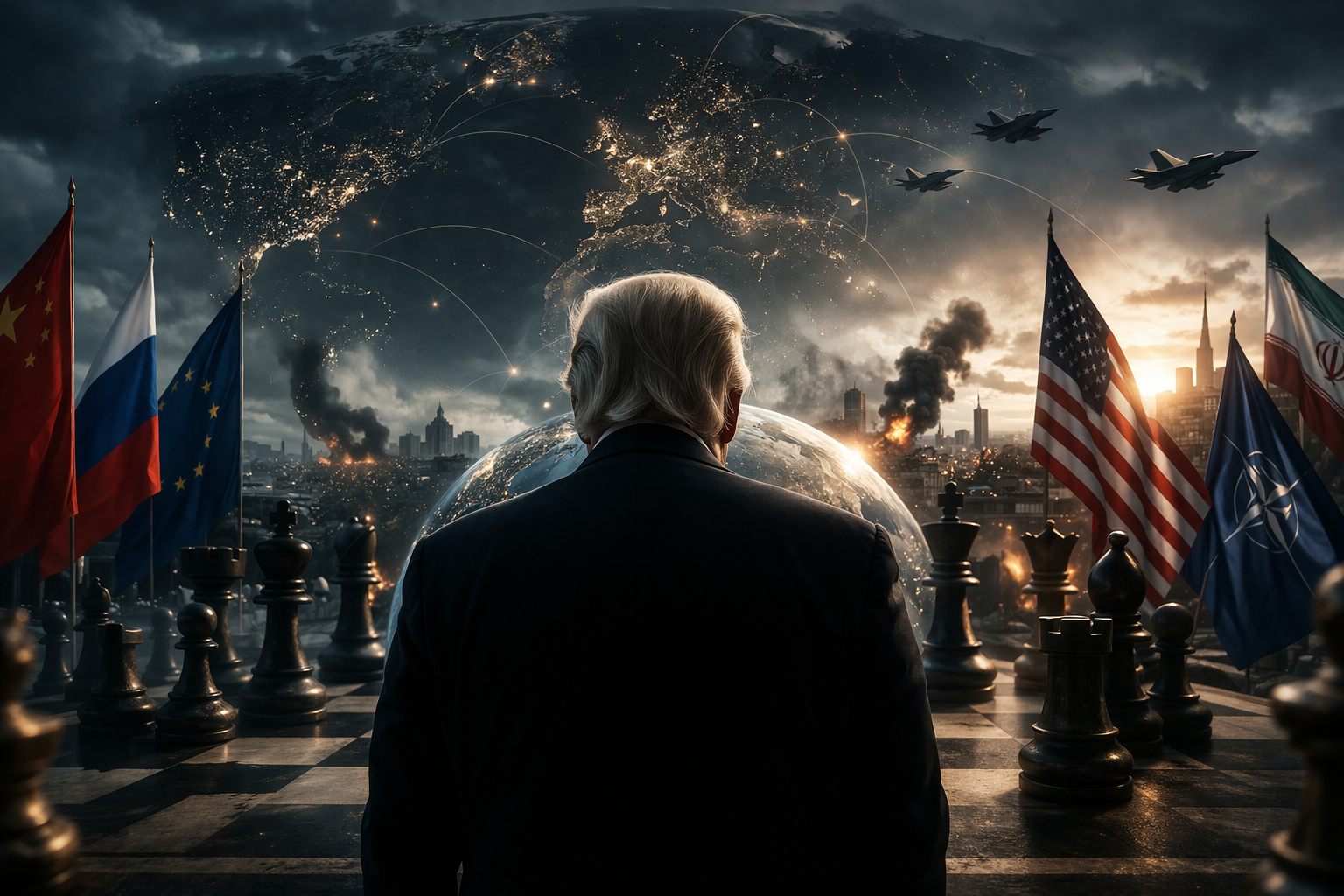
Trump Delayed The Strike. Now The World’s Major Powers Must Reveal What They Really Want
Trump’s last-minute extension was not just a ceasefire gesture. It was a geopolitical forcing mechanism that exposed who wants de-escalation, who wants leverage, who wants trade routes reopened, and who is preparing for the next round if diplomacy fails.
This Is Not Really About The Pause
Donald Trump’s decision on April 7 to suspend threatened bombing of Iran for two weeks, after previously insisting his deadline was final, instantly changed the meaning of the crisis. It did not end the war. It did not settle the strategic dispute. It did not even produce a stable peace. What it did do was force every major power to react to a new reality: Washington had stepped back from the brink at the last possible moment, but only conditionally, and only after making threats so extreme they had already reshaped the diplomatic battlefield.
That matters because the extension is not being read internationally as a clean peace move. It is being read as a test. A test of whether Iran will actually reopen the Strait of Hormuz. A test of whether Trump wants a deal or just a stronger bargaining position. A test of whether America’s allies can trust Washington’s judgment. And a test of whether rival powers such as China and Russia can turn U.S. pressure into diplomatic advantage.
The immediate market response told one part of the story. Oil fell sharply, equities rallied, and investors treated the pause as a partial reduction in catastrophe risk after days of fear over energy disruption and wider war. But markets were reacting to the avoidance of immediate escalation, not to the arrival of durable stability. The fact that gold still rose and traders remained cautious showed the deeper truth: the danger has been delayed, not dissolved.
America’s Allies Will Welcome The Pause—But Not The Method
Europe’s broad reaction is likely to be relief mixed with alarm. Relief, because a U.S. strike on Iranian civilian-linked infrastructure or broader national infrastructure would have risked a major regional explosion, intensified energy shock, and deepened legal and moral outrage. Alarm, because Trump got to this pause by first threatening devastation on a scale that drew fierce criticism from European and religious voices alike. France publicly warned against carrying through with the threat, and the Pope called Trump’s rhetoric “truly unacceptable” and contrary to international law.
That is the first big reaction among Western powers: most will prefer the extension to escalation, but many will see the underlying U.S. conduct as reckless. That distinction matters. European governments do not want a war that destroys regional energy flows, crushes fragile growth, and drags them into yet another security emergency. Before the extension, European shares were already under pressure as oil surged above $110 and inflation fears returned. The pause helps Europe economically, but it does not rebuild confidence in American strategic discipline.
There is also a deeper alliance problem here. Reuters reported that European states had already declined to join U.S. naval patrols in Hormuz after the war began, while Spain said U.S. rhetoric around NATO and the wider crisis was pushing Europe to think more seriously about alternative security options. Italy’s defense minister warned the Iran war was jeopardizing U.S. global leadership. That does not mean Europe is breaking with Washington overnight. It means the extension will be welcomed as an offramp while simultaneously reinforcing a European conclusion that Trump’s America is a source of volatility as much as protection.
In other words, the extension lowers immediate danger but strengthens the European case for greater strategic distance. That is a bad trade for Washington if the United States wants de-escalation without long-term erosion of alliance credibility.
China And Russia Will Try To Turn The Pause Into A Diplomatic Defeat For Washington
China and Russia have already shown the line they intend to take. On April 7, both vetoed a U.N. Security Council resolution aimed at encouraging international coordination to protect commercial shipping through the Strait of Hormuz. They argued the text was biased toward the U.S. position and could be used to legitimize further escalation. They backed an alternative emphasis on de-escalation and diplomacy instead.
That tells you almost everything about how Beijing and Moscow will react to Trump’s extension. Publicly, they will welcome the pause because it validates their argument that the crisis should be handled through diplomacy rather than an American-led coercive framework. Strategically, they will use it to paint Washington as the power that created the brink, then stepped back only after threatening catastrophe. The pause gives them a propaganda opening and a diplomatic opportunity at the same time.
China’s core interest is brutally simple: keep energy moving, stop the Gulf from spiraling, avoid a U.S.-managed security architecture tightening around a vital trade artery, and frame itself as a defender of restraint. Russia’s interest is slightly different but overlaps. Moscow wants to frustrate U.S. diplomatic control, preserve ties with Tehran, weaken the moral authority of the West, and present itself as part of any alternative peace channel. Neither power wants uncontrolled regional collapse. But both want any eventual settlement to look less like an American victory than an American retreat from maximalism. That last point is partly inference, but it is strongly supported by their veto, their criticism of the U.S.-backed text, and their push for a de-escalatory alternative.
This is why Trump’s extension is dangerous for Washington even if it avoids bombs. It creates a narrative battle the U.S. may struggle to win. If diplomacy succeeds, rivals will say American threats failed and diplomacy worked. If diplomacy fails, they will say Trump’s theatrics helped wreck the chance.
The Gulf States Will Back De-escalation—But Demand Hard Guarantees
For Gulf powers, the reaction will be more fearful, practical, and transactional. The extension is good news because it reduces the immediate chance that their territory, infrastructure, and shipping lanes become the direct next targets in a U.S.-Iran spiral. But Gulf governments do not have the luxury of reading this like a Washington messaging exercise. They sit next to the blast zone. Reuters reported that Iran struck the Saudi petrochemical complex at Jubail and that missile threats and alerts continued across the region even as ceasefire efforts took shape.
That is why the likely Gulf reaction is not sentimental support for peace language. It is insistence on enforceable guarantees around Hormuz and regional security. The UAE had already said any U.S.-Iran deal must guarantee use of the Strait of Hormuz and warned against allowing the waterway to be weaponized. Bahrain backed the U.N. effort to secure shipping, even after the text was watered down to avoid authorizing force. These are not abstract diplomatic positions. They are survival positions for states whose economies and domestic stability depend on trade flow, investor confidence, and not being caught between Iran’s coercive leverage and America’s escalation ladder.
So expect Gulf reactions to follow a double track. Publicly: support the extension, support talks, praise any reopening of Hormuz, and urge calm. Privately: press Washington for clearer security guarantees, strengthen air and missile defense readiness, and hedge against the possibility that the two-week window collapses into an even uglier round of attacks. The extension is welcome in the Gulf because it creates breathing space. It is not trusted because the region has already seen how quickly rhetoric turned into near-war.
Pakistan Has Just Become More Important Than Many Expected
One of the most striking reactions to Trump’s extension is not from a superpower at all. It is from Pakistan, which emerged as the key mediator in the last-minute diplomatic scramble. Reuters reported that Pakistan formally sought a two-week ceasefire and extension, that Trump later agreed to suspend bombing for two weeks, and that he explicitly credited discussions with Pakistani leaders while describing Iran’s 10-point proposal as a workable foundation.
That changes Pakistan’s position overnight. Islamabad now looks like the state that delivered a diplomatic offramp when major powers were stuck between public posturing and strategic paralysis. That does not mean Pakistan becomes the master of the crisis. It does mean other powers will now treat it as a serious channel rather than a peripheral actor. AP reported that talks are expected in Islamabad and that Pakistan’s mediation helped generate the provisional ceasefire framework.
Why does that matter? Because in a fragmented crisis, the broker matters almost as much as the terms. Pakistan can speak to Washington, Tehran, and key Muslim-majority audiences in ways others cannot. The extension gives it diplomatic relevance well beyond South Asia. Other major powers will react accordingly: China will welcome a mediation role that complicates exclusive U.S. control of the process; Gulf states will appreciate any channel that reduces strike risk; Europe will back any real diplomatic mechanism; and Washington itself, despite its instinct for unilateral pressure, may find it needs Pakistan more than it wants to admit. That final judgment is an inference, but it follows directly from the reported sequence of events.
Israel Will Support The Window—But Distrust The Clock
Israel’s reaction is likely to be the most skeptical among America’s close partners. Reports indicated Israel agreed to the ceasefire arrangement, but Reuters also showed that Israeli military warnings and operational tension remained active even after the extension. AP likewise noted that missile alerts continued and that this is not being treated by Tehran as the end of the war.
That means Israel will accept the pause if it preserves U.S. coordination and buys time for pressure on Iran. But it will almost certainly distrust the idea that a two-week extension changes Tehran’s long-term intentions. From an Israeli security perspective, a pause that leaves Iran space to bargain, regroup, or preserve strategic assets is not automatically a success. The extension is useful only if it produces either meaningful concessions or a stronger legitimating base for later action.
So the most likely Israeli reaction is support without illusion. Support, because immediate U.S.-Iran escalation carries massive regional consequences. No illusion, because a temporary reopening of Hormuz and scheduled talks do not settle the core issue of Iran’s military posture and long-term capabilities. In practice, that means Israel will treat the extension as an interval, not an endpoint. The diplomacy may proceed, but the military clock has not really stopped.
Iran Will Try To Turn The Extension Into Leverage, Not Submission
The mistake many observers make is to assume Trump’s extension puts Iran on the defensive. In reality, it gives Tehran room to convert pressure into bargaining leverage. Reuters reported that Iran has set preconditions for lasting peace, including an immediate halt to U.S. strikes, assurances against renewed attacks, and compensation for damage. AP reported that Iran accepted a two-week ceasefire but stressed that this is not the end of the war.
That is the key point. Iran is not reacting as a defeated state signing terms. It is reacting as a pressured but still dangerous actor trying to trade partial de-escalation for legitimacy, time, and concessions. Even its willingness to allow passage through Hormuz has been framed conditionally and under oversight, not as unconditional surrender of leverage.
So other global powers will read the extension through that lens. China and Russia will see an Iran that still has bargaining chips. Europe will see an Iran that must be engaged but not trusted. Gulf states will see an Iran that can still hit them. Israel will see an Iran that remains the same strategic problem under a new timetable. And Washington will be forced to decide whether this two-week period is designed to produce a real settlement or merely a better justification for renewed force.
What Media Misses
The easiest way to frame this story is as Trump backing down, or Trump choosing peace, or Trump blinking, or Trump being pragmatic. None of those framings is complete enough.
The real significance of the extension is that it moves the center of gravity from battlefield escalation to coalition behavior. The next phase is not mainly about what Trump says on Truth Social or what Tehran says in response. It is about how other powers behave inside the two-week window. Do they reinforce diplomacy, harden military postures, push alternative resolutions, prepare shipping protection, or quietly position themselves for the collapse of talks? That is where the real story now lives.
In that sense, Trump’s extension has globalized the decision. He did not simply delay an attack. He forced everyone else to show whether they are primarily trying to prevent war, manage war, profit from America’s overreach, or prepare for the next shock.
That is the deeper meaning. The pause is not the story. The distribution of reactions is the story.
Why The Markets Cheered — And Why Governments Will Stay Nervous
Markets like shorter horizons than governments do. Traders saw the immediate danger of a large U.S. strike reduced, the chance of Hormuz reopening increased, and the prospect of energy panic partly unwound. That is why oil plunged and stocks jumped.
Governments, however, have to think in second-order terms. They know that a two-week extension can fail in at least three different ways. First, Iran may cooperate only partially, keeping ambiguity over shipping and preserving leverage. Second, talks may begin but break down on the core demands around sanctions, military guarantees, and regional presence. Third, even if formal talks continue, events on the ground—missile attacks, Israeli operations, Gulf strikes, and militia activity—may outrun diplomacy. Reuters and AP both indicated that attacks and alerts continued even as the ceasefire framework emerged.
That is why serious powers will not behave like the crisis has passed. They will behave like the volatility has changed form.
What Happens Next
The most likely next phase is intensive diplomatic positioning around the Islamabad talks, combined with heavy behind-the-scenes pressure on Iran to keep Hormuz open and on Washington to avoid returning immediately to maximalist threats. Pakistan’s role becomes central, Gulf states push for enforceability, Europe backs negotiations, and China and Russia continue trying to frame the diplomatic process in anti-escalation terms rather than anti-Iran terms.
The most dangerous next phase is a breakdown inside the ceasefire window after one more major regional strike. That could produce the worst of both worlds: Trump would return to force after having already escalated rhetorically, rivals would accuse the U.S. of sabotaging diplomacy, and allies would be dragged into a crisis they never fully supported. Continued alerts in Israel, the Gulf, and the wider region are why that risk cannot be dismissed.
The most underestimated next phase is a longer strategic fallout inside the Western alliance. Even if the pause holds, Europe is learning that it may need more autonomous crisis capacity when Washington swings between absolutist threats and abrupt reversals. That lesson will outlast this particular deadline. Reuters’ reporting from Spain and Italy suggests that in some European capitals, that reassessment is already under way.
The Real Verdict On The Extension
Trump’s extension will be welcomed almost everywhere in public because the alternative was immediate catastrophe. But the reactions beneath that public relief will diverge sharply.
Europe will see necessity mixed with recklessness. China and Russia will see a chance to weaken the U.S. diplomatic frame. Gulf states will see a narrow lifeline that still leaves them exposed. Pakistan will see a sudden rise in strategic importance. Israel will see a temporary pause, not a solved threat. Iran will see a chance to bargain for survival, not surrender.
That is why this extension matters far beyond the next 14 days. It has become a referendum on how power is exercised in a fractured world: by ultimatum, by mediation, by veto, by leverage, by alliance management, by energy pressure, by legal criticism, by strategic patience—or by bluff so extreme that even success looks unstable.
Trump may have bought time. What the world’s major powers do with that time will decide whether this was the beginning of de-escalation or just the most dramatic pause before something worse.
