Why Washington Can Hold Up the Chagos Islands Deal Britain Signed With Mauritius
Why Is Britain Reopening A Deal That Already Offers Its Military Base Another 99 Years?
Prime Minister Andy Burnham wants to change the Chagos Islands deal because there is one country Britain needs to keep the Diego Garcia military base running that never signed the treaty. Britain and Mauritius reached an agreement in May 2025. The United States, which operates the base with Britain, subsequently withdrew its support. That left London with a signed treaty it could not put into effect.
On 5 November 2026, Burnham said he wanted to “recast the arrangement”. For now, Diego Garcia continues to operate under the existing British-American arrangements. The islands remain under British administration, the treaty’s 99-year term has yet to begin, and Burnham has announced no replacement terms. What he has offered is a clue about where he might look for them: Greenland.
What Did Britain Agree to Give Mauritius?
Under the treaty signed by Keir Starmer’s government on 22 May 2025, Britain would recognise Mauritian sovereignty over the whole Chagos Archipelago in the Indian Ocean. That includes Diego Garcia. In return, Mauritius would authorise Britain to exercise the powers needed to run the joint UK-US base there for an initial 99 years. The two countries could agree to extend that period by a further 40 years.
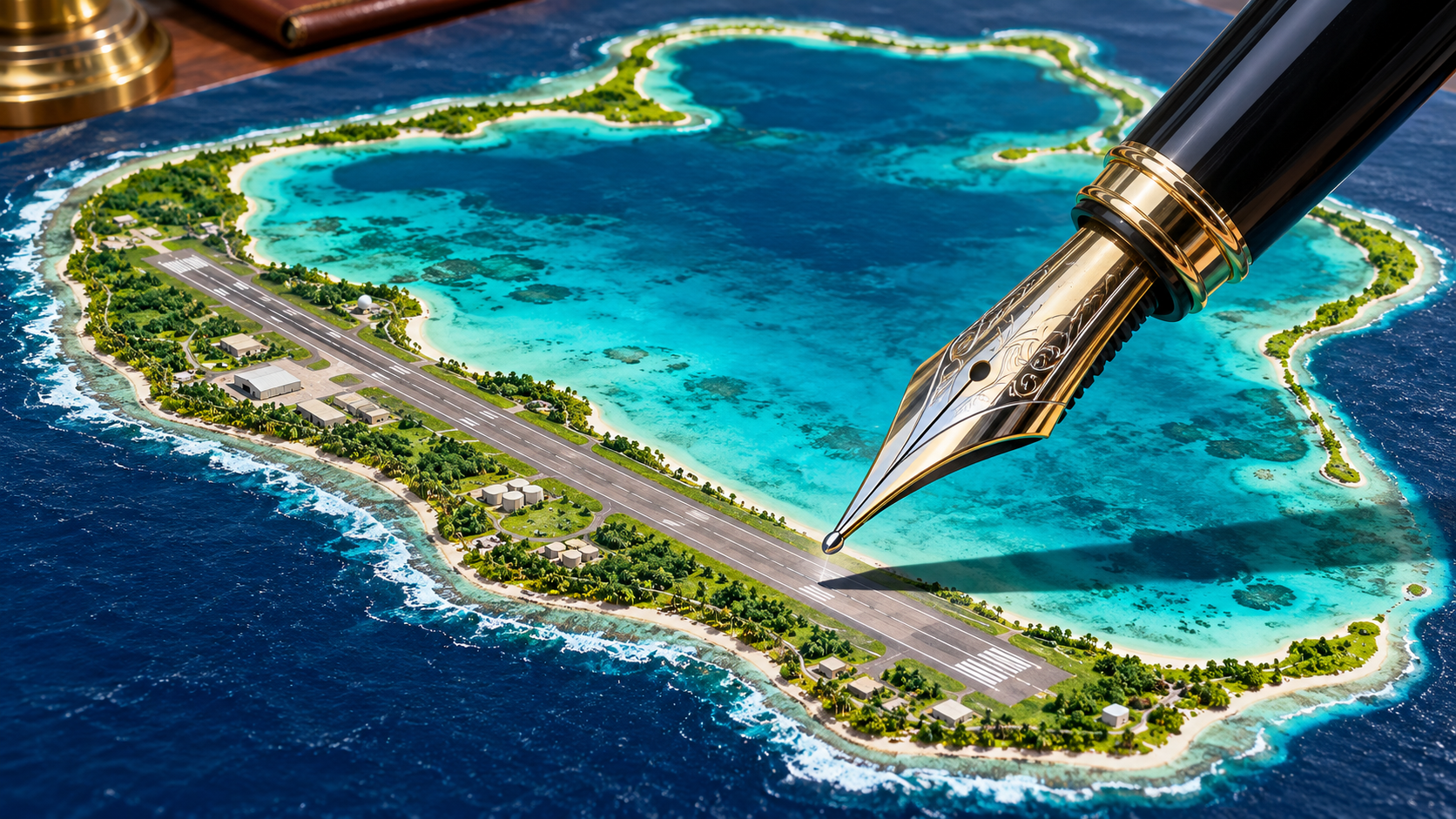
The distinction is easiest to see at the airfield. On a map, Diego Garcia would fall under Mauritian sovereignty. At the runway, Britain would retain the authority to control access and operate the base with the Americans. The treaty also covers the surrounding waters and airspace. A military aircraft has little use for a guaranteed landing strip if its right to approach the island is in doubt.
Britain would pay Mauritius under the agreement. The planned annual payments have been put on hold while ratification is paused. Their purpose helps explain why the two governments could describe the same bargain in different terms. For Mauritius, it offered recognition of sovereignty over territory Britain detached before independence. For Britain, it offered a long-term legal basis for keeping a military installation on one of those islands.
How Could Donald Trump Hold Up a British-Mauritian Treaty?
The answer lies in a separate agreement dating from 1966. Britain and the United States exchanged diplomatic notes setting the terms on which the territory would be available for defence. Moving Diego Garcia onto the footing envisaged by the Mauritius treaty required London and Washington to update or replace that arrangement.
American support initially appeared secure. By April 2026, British ministers were telling Parliament that President Donald Trump’s change of position had made it impossible to agree the update at a political level. The British bill needed to implement the treaty then fell when the parliamentary session ended. In September, after meeting Burnham in New York, Trump again made clear that he opposed the deal.
Washington therefore has considerable leverage, even though Mauritius and Britain are the parties that signed the sovereignty treaty. London could negotiate territorial terms with Mauritius. It could hardly guarantee how the Americans would use a joint base for the next century without their agreement.
For Burnham, that makes the problem more specific than whether he likes the bargain his predecessor struck. Even if he endorsed every word of it tomorrow, the British government would still need an agreement with Washington and legislation at Westminster.
Why Has Burnham Looked to Greenland?
Burnham has identified the American defence arrangement with Denmark and Greenland as one possible model for Diego Garcia. The appeal is understandable. An agreement can give Washington extensive military access while reserving sovereignty to someone else. The difficulty is that the Chagos treaty already makes that distinction. For the Greenland comparison to mean anything in practice, Burnham would have to say which rights he wants to change.
There is also a difference in what the Americans start with. The Greenland agreement concerned expanding the US military presence. On Diego Garcia, American forces already use an established base. Offering access to an island where the US already operates leaves open the harder questions. Would Washington seek different terms for the missions it can launch? Would Britain retain the same say over the use of the airfield? Would Mauritius accept the revised terms?
Burnham’s remarks supplied no answers to those questions. In particular, he has announced neither a transfer of Diego Garcia to the United States nor an agreement to remove it from the territory covered by the Mauritius treaty. Greenland tells us something about the kind of negotiation he is considering. It tells us very little yet about the eventual map.
Why Would Mauritius Agree to Reopen the Deal?
For Mauritius, the starting point is 1965. Britain separated the Chagos Archipelago from Mauritius three years before the country became independent. In 2019, the International Court of Justice concluded in an advisory opinion that the decolonisation of Mauritius had been unlawfully completed and that Britain should end its administration of the islands as rapidly as possible.
An advisory opinion carries a different legal status from a binding judgment between two states. Its practical importance was that Britain faced an authoritative international finding against the way it had retained the islands. That helps explain a feature of Starmer’s policy that can otherwise seem perverse. His government argued that an agreement recognising Mauritian sovereignty gave the base a more secure future than continuing to rely on Britain’s disputed claim.
Mauritius had already accepted extensive British powers on Diego Garcia in exchange for recognition of sovereignty over the entire archipelago. Burnham can ask Mauritius to revisit that balance. He cannot assume that concessions negotiated with one British prime minister will be available to another on less favourable terms.
Could Chagossians Return to Diego Garcia?
The 2025 treaty draws a sharp distinction between Diego Garcia and the outer islands. Article 6 would allow Mauritius to establish a programme for Chagossians to resettle elsewhere in the archipelago. It expressly excludes Diego Garcia. Even on the eligible islands, the wording gives Mauritius the power to organise resettlement. It sets no date on which a family could go home.
That distinction matters because Britain forcibly displaced the Chagossians from their islands as the military base was established. For a family whose home was on Diego Garcia, the island excluded from resettlement is the very place to which a right of return would matter. For a family from an outer island, an agreement could open a route home, but someone would still have to provide the transport, housing and services that make living there possible.
The treaty gives a precise initial term for military use: 99 years. Its provision for civilian return contains no comparable timetable. That is one measure by which Chagossians will be able to judge any revised text, regardless of which government claims a diplomatic victory.
What Happens to Diego Garcia Now?
As of 5 November 2026, the base continues to operate. Burnham’s interview changes Britain’s public negotiating position. It gives no new instructions to the people running the airfield, confers no new rights on Washington and sets no handover date for Mauritius.
The first consequential announcement would be one that identifies exactly what Britain wants to amend. An update to the UK-US military arrangements could address Washington’s objections while preserving much of the bargain with Mauritius. A proposal to alter sovereignty over Diego Garcia itself would reopen the central concession that persuaded Mauritius to sign. Those are very different negotiations.
When new terms appear, three questions will tell readers more than the word recast: who would hold sovereignty over Diego Garcia, who would decide how its runway could be used, and which islanders could live there again? The 2025 treaty gave a different answer to each. Burnham has yet to say which answer he wants to change.
Sources
The Guardian — Burnham Says He Wants to ‘Recast’ Chagos Islands Deal — The 1.06pm entry on 5 November records Burnham’s words in his interview with The Economist and identifies Greenland as a possible model.
UK and Mauritian Governments — Agreement Concerning the Chagos Archipelago Including Diego Garcia — The signed text sets out sovereignty, military authority, duration and the exclusion of Diego Garcia from the resettlement provision.
House of Commons Library — International Law and the Chagos Archipelago — The October 2026 briefing explains the court proceedings, the stalled British legislation and the separate agreement needed with Washington.
Next Reads
Why the UK-US Special Relationship Looks Broken — How disagreements over Iran put British authority over the use of military bases to a practical test.
Trump Announces ‘Massive’ Greenland Oil Exploration After Arctic Defence Deal — A closer look at the Greenland agreement Burnham has in mind and the limits of the access it provides.
Trump Has Lost Congress. What Happens to His Presidency—and the Iran War? — Where American presidential authority over military operations meets the powers of Congress.
