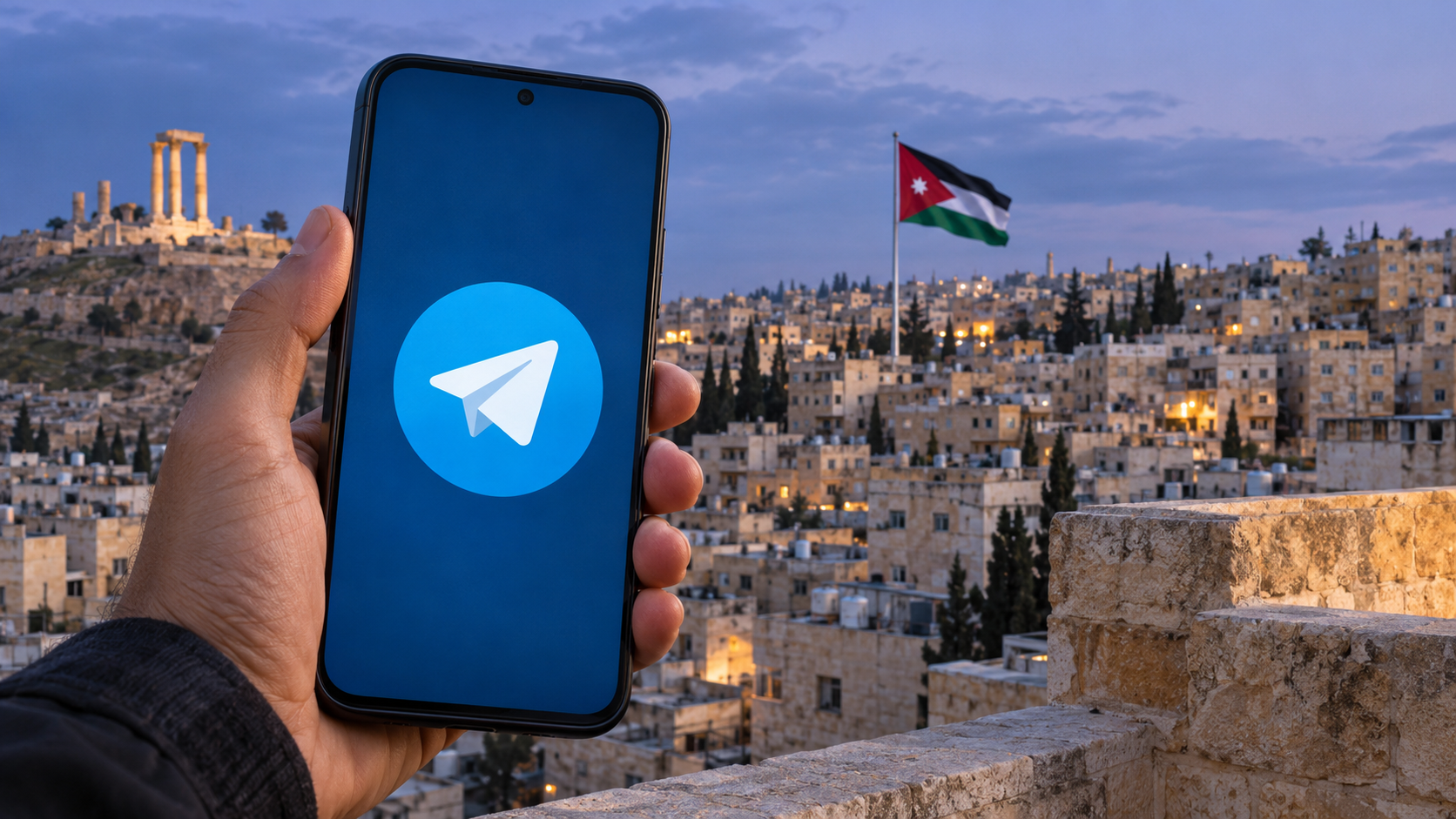
Understand why Jordan blocked the entire messaging service, how the decision affects users and whether access could return.
Why Did A Warning About Suspicious Messages Become A Nationwide Block?
Jordan blocked Telegram on Monday 16 November 2026 because its Public Security Directorate said people were using digital platforms to threaten and extort others, commit cybercrime and spread extremist material. Its announcement gave families advice as specific as avoiding links from strangers. The decision itself went much further. It restricted access to the messaging service across the kingdom, including for people using it to speak to relatives or follow the news.
The directorate explained what it wanted to prevent. It left open the question at the heart of the decision: why did those risks require blocking Telegram for everyone in Jordan?
What Jordan Said About the Threat
The directorate described two different kinds of harm. One can begin with a message to a single person. Someone who receives a threat or a demand for money has already become a target, even if nobody else ever sees the exchange. The other depends on finding an audience. Someone distributing extremist material can use a public channel to reach people they have never contacted individually.
That distinction helps explain the advice accompanying the block. The directorate asked people to report illegal activity through official channels and to take care with unfamiliar accounts. It also encouraged parents to talk to children about their online activity and use parental controls. That guidance applied across social media and messaging services, wherever the next suspicious message might arrive.
Officials said they were acting under existing legislation. Their public explanation gave no figures for extortion complaints linked to Telegram and identified no particular account whose conduct prompted the decision. The authorities named several dangers without saying which carried the most weight.
Why Telegram’s Public Channels Matter
Think of two people opening Telegram. One taps a relative’s name to ask whether they have arrived home. The other opens a channel to read an update from a publisher they follow. On the first screen, two people are having a conversation. On the second, one publisher can address an unlimited number of subscribers.
Telegram’s public channels have searchable usernames, and posts can be forwarded beyond their original audience. That helps explain why the platform features in discussions about how claims spread during a Middle East crisis. A reader may encounter a statement several steps removed from whoever first published it. Islamic State has used Telegram to circulate statements in the past, giving Jordan’s concern about extremist material a documented history.
Telegram already has a process for reporting illegal public content. Removing a channel through that process targets a particular publisher. A countrywide block acts on the reader’s access to Telegram itself. It can interrupt both the public broadcast and the family conversation, while the original channel may remain available elsewhere. Jordan’s announcement did not say whether officials had requested particular removals or what response they received.
Did the Church Attack Trigger the Block?
The timing invites that question. In October, nine people were killed in an attack on St George’s Orthodox Church in Jordan’s Karak governorate. On 5 November, the authorities said a security officer had been killed and another wounded in a separate stabbing in Amman. On Sunday 15 November, three men received death sentences over the church killings. The Telegram announcement followed on Monday.
Those events explain why extremist violence was an immediate public concern in Jordan. They do not establish how the attackers communicated. The directorate identified no Telegram exchange, channel or post connected to either attack. A claim that the church attack was organised on the app would go beyond the evidence Jordan made public.
What the Block Means for People in Jordan
The restriction applies to one service across the country. Jordanians can still use other means of communication. For a family, however, switching apps requires everyone to know where to find one another. A reader who loses access to a local news channel faces a different problem. The publisher may have no equivalent feed elsewhere.
There is a further distinction for anyone who already has Telegram installed. Blocking access is a different action from closing an account or deleting its history. The directorate announced an access restriction. It gave no indication that the authorities had ordered existing accounts or messages erased.
When Could Telegram Return?
The 16 November announcement gave no end date. It also set out no conditions Telegram could fulfil to have access restored. Anyone deciding whether to move a long-running group chat elsewhere has no official timetable to work with.
For Jordan, judging the result will require more than knowing whether the app is reachable. A fall in Telegram-related extortion reports, for instance, would mean something different if victims began reporting the same threats on another service. Comparing complaints across platforms could help answer the question that matters to someone receiving a demand for money: has blocking Telegram made that threat less likely to arrive?
Sources
Jordan News Agency — Telegram Blocked Nationwide Over Cybersecurity Concerns — The directorate’s reasons, the scope of the restriction and its advice to families. The Jordan News Agency
Reuters — Jordan blocks Telegram app over national security concerns — The chronology of the attacks and sentencing, and the historical use of Telegram by Islamic State. Reuters
Telegram — Telegram FAQ — How private messages, public channels, forwarding and reports of illegal content work. telegram.org
The National — Jordan and Iraq ban Telegram over national security concerns — Identifies the church and gives further detail on the sentencing. The National
Next Reads
UK Regulator Targets Telegram in Explosive Child Safety Probe — How Britain approached child safety on the same platform through a regulatory investigation.
Why Social Media Suddenly Feels Convinced The Middle East Is About To Explode Again — How speculation travelled across Telegram and X during a regional security scare.
Iran Goes Dark as the Streets Revolt — What a wider communications shutdown meant for people trying to verify events inside Iran.
