

Why the US Still Treats the Persian Gulf as a Red Line
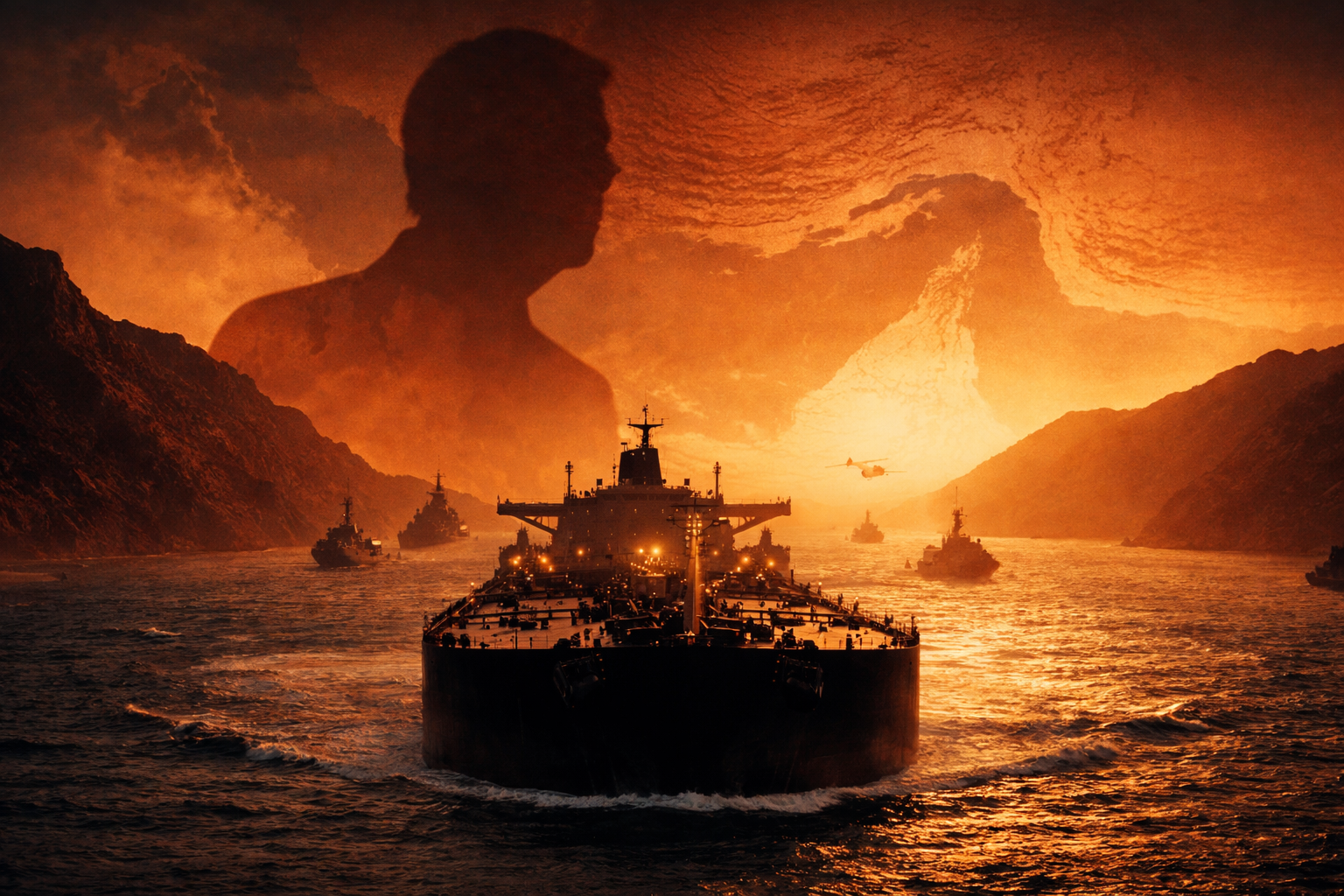
The Carter Doctrine Is Back — And the Strait of Hormuz Proves It
The Carter Doctrine Never Really Ended—It Just Changed Targets
The Carter Doctrine was a US policy declared by President Jimmy Carter on January 23, 1980, stating that any outside attempt to gain control of the Persian Gulf would be treated as an assault on vital US interests and could be repelled with military force. It mattered then because Washington feared that the Soviet move into Afghanistan, combined with upheaval in Iran, could threaten the oil lifeline running through the Gulf. It matters now because the same core logic still shapes US behavior: prevent any hostile power from choking off Gulf energy flows and strategic sea lanes.
This logic is not outdated. The Strait of Hormuz is once again at the center of a live crisis, with the G7 publicly stressing the need to protect maritime routes there, Iran saying the strait is open except to “enemy-linked” vessels, and energy markets reacting to disruption around a chokepoint that still carries about one-fifth of global oil supply and a large share of LNG trade.
The deeper point is that the Carter Doctrine was never just about one president or one Cold War moment. It created a durable strategic rule: the Persian Gulf is too important to the global economy for Washington to leave its security entirely to chance. The story turns on whether the United States still sees Gulf access as a global-system issue rather than just an oil issue.
Key Points
The Carter Doctrine began as a direct warning in 1980 that the US would use force, if necessary, to stop an outside power from dominating the Persian Gulf. It was framed in the shadow of the Soviet invasion of Afghanistan and the Iranian Revolution.
Its original target was Soviet expansion, but its lasting effect was broader: it anchored a permanent US military and naval role in the Gulf. The Rapid Deployment Joint Task Force created in 1980 became CENTCOM in 1983.
Today, the doctrine’s logic survives less as a named doctrine than as a standing strategic habit. Washington still treats the Strait of Hormuz and surrounding waters as critical to global order, shipping security, and allied economic stability.
The most significant change is that the threat picture has shifted. In 1980 the fear was a rival superpower seizing the Gulf; disruption by Iran, proxies, mines, missiles, drones, and shipping intimidation.
The doctrine also matters because the US now depends less directly on Gulf oil than many Asian economies do. That means Washington is still defending a global economic artery even when its own immediate import exposure is lower than it once was.
What happens next depends on whether the Hormuz disruption remains partial and coercive or becomes a sustained blockade that forces a much larger multinational military response.
Where the Carter Doctrine came from
The Carter Doctrine was born from a very specific panic in Washington. In late 1979, two shocks hit at once. First came the Iranian Revolution and the US hostage crisis. Then the Soviet Union invaded Afghanistan in December 1979. To the Carter administration, that combination suggested a frightening possibility: instability in Iran, Soviet military momentum to the north, and the chance that the balance of power around the Gulf could tilt against the West.
That is why Carter’s 1980 State of the Union framed the Gulf in such stark terms. He warned that the region contained a vast share of the world’s exportable oil and explicitly tied Soviet military positioning near Afghanistan to the security of the Strait of Hormuz. The famous line was the policy itself: any outside effort to control the Persian Gulf would be seen as an attack on vital US interests.
This was not just rhetoric. It helped drive institutional change. CENTCOM’s own official history traces its roots to Carter’s establishment of the Rapid Deployment Joint Task Force in March 1980, which was then turned into a permanent unified command under Ronald Reagan, becoming US Central Command in 1983. In other words, the doctrine did not just declare a red line. It built the machinery to enforce one.
How the doctrine evolved after the Cold War
The interesting thing about the Carter Doctrine is that the original enemy largely disappeared, but the doctrine did not. The Soviet Union collapsed. Yet the US military footprint in and around the Gulf persisted because the strategic problem never fully went away. The question changed from “How do we stop Moscow from dominating the Gulf?” to “How do we keep any state or actor from threatening the flow of energy and trade through it?”
That shift explains why the doctrine outlived the Cold War. It fed into the logic behind the tanker war escorts of the late 1980s, the response to Iraq’s invasion of Kuwait in 1990, the long US naval presence in Bahrain, and the repeated use of Gulf security as a test of US credibility. Even when Washington talked less about oil in absolute terms, it kept treating the region as a place where disruption could ripple across allies, markets, and military posture worldwide.
Why it still matters in Today
Today’s version of the problem is more fragmented but no less dangerous. The Strait of Hormuz still handles more than one-quarter of global seaborne oil trade and about one-fifth of global oil consumption, while around one-fifth of LNG trade also transits the chokepoint. Most of those flows head to Asia. The United States imported only about 0.5 million barrels a day from Persian Gulf countries through Hormuz in 2024, a much smaller exposure than many of its partners. Yet the system-level importance of the strait remains enormous.
That is why present tensions feel so recognizably Carter-like. The current crisis has produced warnings from the G7 on safeguarding maritime routes, Iranian statements about restricting passage for “enemy-linked” ships, and an emergency release of more than 400 million barrels from IEA reserves after disruption around Hormuz helped trigger an energy shock. The mechanism is different from 1980, but the core fear is the same: a hostile actor gaining leverage over the world economy by threatening the Gulf’s arteries.
What Most Coverage Misses
What most coverage misses is that the Carter Doctrine is not mainly about America needing Gulf oil for itself. That was always part of the picture, but the stronger logic was systemic. The doctrine treated the Gulf as a pressure point in the wider international order. If an adversary can choke energy flows, intimidate shipping, spike prices, and fracture allied economies, it can change the global balance without conquering territory in the old-fashioned sense.
That matters even more now because the vulnerability is broader than crude oil alone. Hormuz is a junction for LNG, insurance markets, shipping schedules, and allied energy security, especially in Asia. The US may be less directly dependent on Gulf imports than in 1980, but it remains deeply invested in keeping the global system from being held hostage there. That is why the doctrine’s logic survives even in an era of higher US domestic production.
The second thing often missed is that today’s threat is not a straightforward invasion. It is denial, harassment, coercion, and selective closure. That makes response harder. A doctrine built around stopping an “outside force” now has to operate against drones, mines, fast boats, missile fire, proxy warfare, and ambiguous maritime pressure. The principle is durable; the battlefield is messier.
From superpower deterrence to chokepoint defense
In 1980, Carter was deterring a superpower. Today the US and its partners are trying to defend a chokepoint. That sounds smaller, but in practice it can be just as strategically explosive. Closing or partially controlling Hormuz does not merely hit one country. It scrambles oil prices, raises inflation risk, pressures insurers and shippers, tests alliance cohesion, and forces governments to decide how much military risk they are willing to absorb to keep trade moving.
There is also a geographic expansion to the problem. Disruption around Bab al-Mandeb and the Red Sea has already shown how pressure on one maritime corridor can push cargo, tankers, and security burdens elsewhere. EIA noted that shipping disruptions around Bab al-Mandeb in 2024 altered Saudi routing decisions and affected flows linked to Hormuz. In other words, the modern version of the Carter Doctrine is not just about one narrow strait; it is about defending an interlinked map of trade routes running across the Gulf and into the Red Sea.
The doctrine’s real test now
The Carter Doctrine relates to today because its core question has returned in updated form: how far will the United States go to stop a hostile actor from using the Gulf’s chokepoints as strategic leverage? The answer is no longer delivered in one famous sentence from a State of the Union. It is expressed through force posture, naval coalitions, crisis diplomacy, reserve releases, and repeated efforts to keep shipping lanes open.
The real fork in the road is whether the current model of partial coercion stays manageable or crosses into a sustained closure that demands a much larger military answer. The signposts to watch are concrete: whether commercial traffic resumes at scale, whether insurers and shipowners judge passage viable, whether multinational naval protection expands, and whether Iran’s pressure remains selective or becomes total. The doctrine’s historical significance is that it turned Gulf access into a test of American power, and that test is plainly back.
