Xi’s Chilling “Clash” Warning To America Reveals How Dangerous The US-China Relationship Has Become
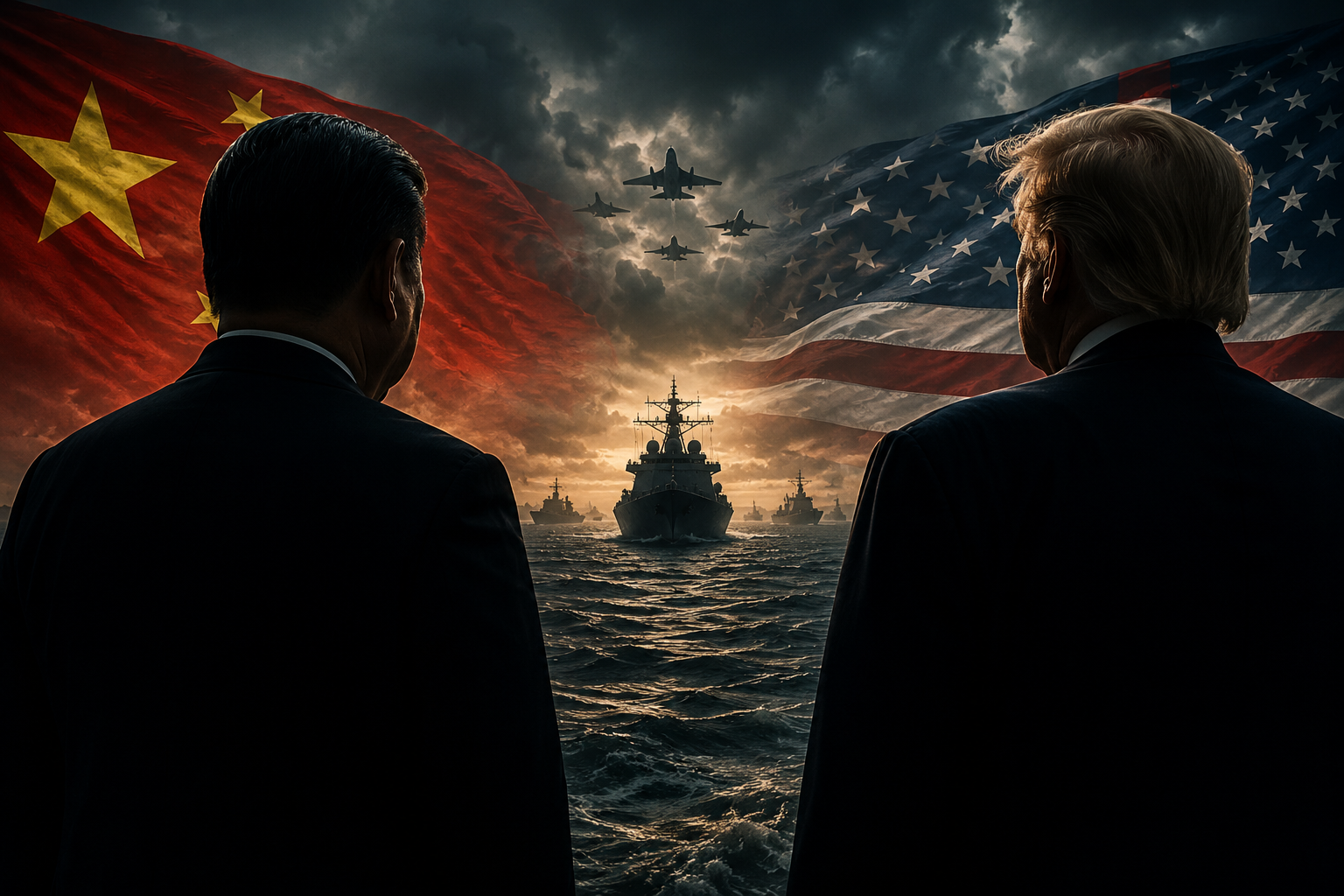
Xi’s Stark Taiwan Message Shows How Fragile US-China Stability Really Is
The Taiwan Warning That Exposed How Close The US And China May Be To A Historic Collision
Xi Jinping rarely uses language lightly.
That is why his warning to Donald Trump about the risk of “clashes and even conflicts” over Taiwan landed with such force. The wording sounded controlled. Diplomatic. Carefully measured. But the implication underneath was brutal.
The leader of China was effectively warning that the relationship between the world’s two most powerful nations now contains a genuine pathway toward military confrontation if the Taiwan issue spirals out of control.
This is no longer just a trade rivalry.
It is no longer just tariffs, technology bans, sanctions, AI chips, or naval maneuvers in the Pacific.
The United States and China are increasingly behaving like rival superpowers trying to avoid the exact historical trap both sides privately fear.
And Taiwan sits directly in the middle of it.
The Taiwan Question Has Become The Most Dangerous Flashpoint On Earth
China views Taiwan as part of its sovereign territory. The United States officially recognizes the “One China” framework while simultaneously supporting Taiwan militarily and strategically.
That contradiction has always been unstable.
Now it looks combustible.
Xi reportedly warned that mishandling Taiwan could push relations into a “dangerous place,” with Chinese officials framing the issue as the central pressure point in the entire US-China relationship.
The problem is that neither side believes it can afford to appear weak.
For Beijing, Taiwan is tied to nationalism, territorial legitimacy, regime credibility, and Xi Jinping’s long-term political legacy. Reunification is not treated as a secondary issue inside modern Chinese political thinking. It is treated as unfinished history.
For Washington, Taiwan has become deeply connected to military deterrence, Pacific alliances, semiconductor supply chains, strategic credibility, and the wider balance of power in Asia.
That means the room for compromise is shrinking.
And the closer both powers move toward direct military preparation, the more dangerous even small mistakes become.
The Calm Diplomatic Language Is Hiding Something Much Bigger
One of the strangest features of the modern US-China relationship is that both countries still publicly speak the language of cooperation while preparing for long-term rivalry underneath.
During the summit, Xi reportedly spoke about the need for the United States and China to become “partners, not rivals.”
At the same time, China warned about conflict.
That contradiction matters.
Because it reveals the deeper reality behind modern geopolitics: neither side actually wants open war, but both sides increasingly believe they must prepare for the possibility anyway.
That creates an atmosphere where every disagreement becomes loaded with strategic meaning.
AI chips become national security issues.
Shipping lanes become military issues.
Trade policy becomes geopolitical pressure.
Even energy routes suddenly become strategic vulnerabilities, particularly as the Strait of Hormuz has become a growing global flashpoint.
The result is a relationship built on mutual dependency and mutual suspicion at the same time.
That combination is historically dangerous.
Taiwan Is Not Just A Political Dispute Anymore
Taiwan now sits at the center of several different global systems simultaneously.
Military strategy.
Technology production.
AI infrastructure.
Semiconductor manufacturing.
Pacific naval positioning.
Global trade stability.
Cybersecurity.
National prestige.
That is why the stakes feel so enormous.
The island’s semiconductor dominance alone gives Taiwan extraordinary strategic importance in a world increasingly shaped by AI infrastructure, computing power, and advanced chip production. The battle for technological dominance is already reshaping global politics, economics, and national security thinking.
The pressure surrounding chips, AI systems, and compute power also fits a wider reality where the semiconductor race has become a contest for global power.
This is part of the reason tensions feel different now compared to previous decades.
The US and China are no longer competing inside a stable global order.
They are competing over what the next global order will look like.
The “Thucydides Trap” Fear Is Becoming Harder To Ignore
Xi reportedly referenced the idea of avoiding the “Thucydides Trap” during discussions surrounding the summit.
That phrase matters enormously in geopolitical circles.
It refers to the historical theory that conflict becomes more likely when an emerging power threatens an established dominant power.
Athens versus Sparta.
Imperial Germany versus Britain.
Cold War nuclear rivalry.
Now many analysts increasingly apply the framework to China and the United States.
The fear is that both sides might inadvertently escalate tensions.
The fear is that rising tension, military positioning, domestic political pressure, economic fragmentation, cyber conflict, and strategic miscalculation gradually create a situation where crisis becomes harder to control.
That is what makes Xi’s wording so striking.
He was not talking like a leader managing a normal diplomatic disagreement.
He was talking like someone trying to prevent a structural collision between two competing systems of power.
The World Economy Is Trapped Inside This Rivalry
The terrifying part is that the global economy remains deeply dependent on both nations simultaneously.
China and the United States are strategic rivals.
But they also intertwine economically at a scale almost impossible to untangle cleanly.
Trade.
Manufacturing.
Consumer markets.
AI supply chains.
Rare earth minerals.
Energy demand.
Technology infrastructure.
Debt markets.
Shipping routes.
Everything overlaps.
That is why global markets react nervously whenever US-China tensions intensify. Even institutions like the IMF have stressed that reducing tension between Washington and Beijing matters for global economic stability.
A major rupture between the two countries would not resemble a contained regional dispute.
It would hit supply chains, inflation, energy markets, technology access, global manufacturing, investor confidence, and geopolitical alliances simultaneously.
That is why so much diplomatic language now sounds strangely tense even during supposedly positive meetings.
The stakes are simply too large.
The relationship is becoming more militarized underneath the surface.
Military exercises around Taiwan have intensified recently, alongside rising cyber pressure, naval maneuvers, and regional security anxiety.
At the same time, the United States continues strengthening alliances and military positioning across the Indo-Pacific.
Neither side openly says it expects war.
But both sides increasingly act as if they must prepare for one.
That distinction matters.
This is because history shows that prolonged strategic rivalry can slowly normalize escalation.
The danger is not always one deliberate decision.
Occasionally the danger comes from accumulated pressure, nationalism, domestic politics, military signaling, technological competition, and a growing inability to back down without looking weak.
That is the atmosphere now surrounding US-China relations.
And Xi’s warning exposed it more clearly than many diplomatic statements usually do.
The Real Fear Is That Both Sides Already Believe Conflict Is Possible
The most unsettling detail about this entire moment is something other than the rhetoric itself.
It is the fact that the rhetoric now feels believable.
A decade ago, many people still assumed economic integration would steadily calm tensions between China and the West.
That assumption has collapsed.
Instead, the modern relationship increasingly looks like controlled strategic rivalry between two superpowers trying to avoid confrontation while simultaneously preparing for it.
That does not mean war is inevitable.
Far from it.
Both countries still have overwhelming incentives to avoid catastrophic escalation.
But the language coming out of Beijing shows something important has changed psychologically.
China is no longer speaking like a rising power hoping to quietly integrate into an American-led world.
It is speaking like a rival civilization-scale power demanding recognition, strategic space, and respect for its red lines.
And the Taiwan issue has become the point where those competing visions collide most dangerously.
