Britain’s Biggest Political Scandals, Ranked: How Power Collapses at the Top
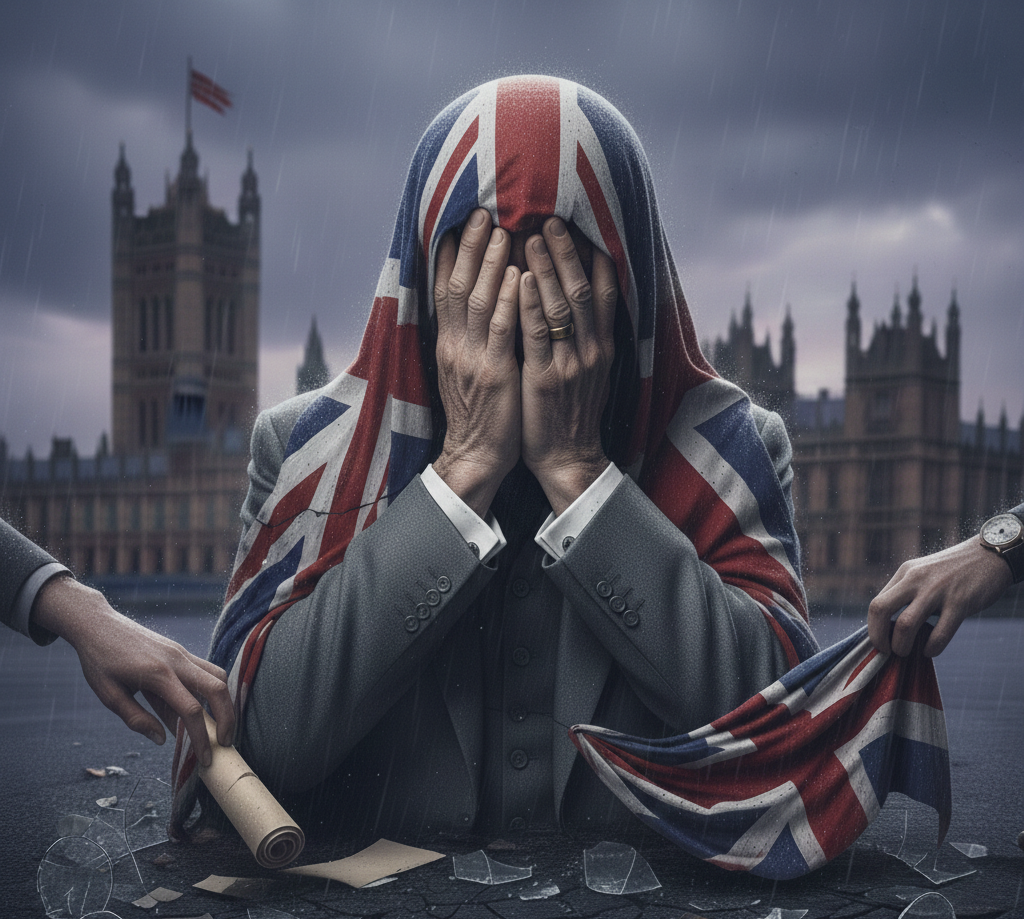
UK Ministerial Scandals Ranked: Biggest Downfalls
The Scandals No Spin Could Save, Britain’s Political Collapses
“Standards" crises—episodes where the issue is not solely about what transpired but also about the credibility of the public record—remain a persistent threat to British politics. That matters because UK ministers do not fall only for misconduct. They fall when a scandal hardens into something that cannot be argued away: an official finding, a court process, a documented contradiction, or a clear breach of rules everyone else had to follow.
This ranking covers the 20th and 21st centuries and includes prime ministers, cabinet ministers, and the biggest resignations-for-cause. It is not a morality list. It is a “political damage” list that identifies which episodes most reshaped public trust, the workings of government, or the career prospects of the people involved.
One sentence that keeps coming up across decades is this: the decisive moment is rarely the allegation—it is the evidence becoming unavoidable.
The narrative hinges on whether a scandal remains debatable or transitions into an official, verifiable violation.
Key Points
This checklist is a damage-based ranking: scale of office, rule-breaking, official findings, and lasting impact—not just “how salacious.”
Boris Johnson is central to the 21st-century story because Partygate moved from political controversy to formal records (fines, reports, and parliamentary findings) and ended with resignation and a Commons privileges process.
The most lethal accelerant is often “misleading Parliament” (or being found to have done so), because it turns politics into a truth test.
Some of the biggest “downfalls” were not personal scandals at all—they were resignations tied to constitutional responsibility or national crises.
The modern era compresses timelines: receipts spread instantly, and the window for denial closes faster.
Background
In the UK, a minister’s fall usually follows a familiar arc: allegations, denial, drip-fed facts, then a trigger event. That trigger is often institutional—Parliament, a public inquiry, a prosecutor, or an ethics investigation. Those processes convert political noise into a stable record. Once the record takes shape, colleagues begin to question whether defending this individual would be more costly than replacing them.
That is why a private failing sometimes survives and a technical breach sometimes kills. It depends on whether the breach can be demonstrated cleanly and whether it strikes at the system’s core currency: credibility.
Analysis
How This Ranking Works: What Counts as “Biggest”
This list weighs four things.
First, we consider the seniority of the office and the state capacity at stake, which includes war, security, the premiership, the Treasury, and the Home Office. Second, the existence of significant triggers—official reports, parliamentary findings, criminal proceedings, or documented rule breaches. Third, the “trust blast radius”: how far the fallout spread beyond the individual to damage a government or a wider institution. Fourth, the afterlife: did the scandal become a reference point that changed expectations of ministerial behavior?
The result is a ranking of downfalls that were not merely loud—they were structurally consequential.
Rank 1—The Profumo Affair (1963)
Who/role: John Profumo, Secretary of State for War (a senior Cabinet security post).
What happened: Profumo had an affair with Christine Keeler, who was also linked in the wider scandal to figures that triggered Cold War security fears, including a Soviet naval attaché in the public narrative of the time.
The fatal move: Profumo made a categorical denial in the House of Commons—then later admitted it was untrue. The scandal’s core became misleading Parliament, not just the affair.
Downfall mechanics: Once the denial collapsed, Profumo resigned from government and sought to vacate his seat; parliamentary debate then spiraled into a wider crisis of credibility around government handling.
Why it mattered: It became the modern archetype of the UK scandal rule: a lie to the House is often more fatal than the underlying conduct—because it turns politics into a truth test.
Rank 2—Boris Johnson and Partygate (2021–2023)
Who/role: Boris Johnson, Prime Minister.
What happened: Downing Street lockdown gatherings became a national legitimacy crisis because the rules had demanded personal sacrifice from the public.
The proof threshold: Johnson received a Fixed Penalty Notice for a Downing Street event (he said it related to 19 June 2020) and publicly acknowledged paying the fine.
Institutional judgment: The Commons referred the matter to the Privileges Committee, which investigated whether he misled the House; its report is the “record” moment that makes this scandal historically sticky.
Why it mattered: It fused law-breaking, official documentation, and parliamentary standards into one story—so the scandal couldn’t be managed as “just optics” once formal processes kicked in.
Rank 3—Crichel Down (1954)
Who/role: Sir Thomas Dugdale, Minister of Agriculture and Fisheries.
What happened: A dispute over government handling and disposal of requisitioned land triggered a public inquiry and a parliamentary reckoning.
Downfall mechanics: Dugdale addressed the House during debate on the inquiry report—then resigned, creating the reference point for ministerial responsibility (“on my watch” accountability).
Why it mattered: Crichel Down is still cited because it shows resignation as a constitutional act, not a morality play—accountability for departmental failure, not personal scandal.
Rank 4—The Westland Affair (1986)
What it was: A Cabinet civil war over the rescue/ownership of Westland, Britain’s last major helicopter manufacturer, with competing visions (European-linked vs. US-linked solutions).
The dramatic rupture: Michael Heseltine stormed out of a Cabinet meeting on 9 January 1986 and resigned—an exceptionally theatrical break in collective government discipline.
The secondary blast: The affair escalated with leaks of confidential legal advice and questions about who authorized them; Leon Brittan’s resignation followed amid pressure over leak handling and candor to the Commons.
Why it mattered: Westland became shorthand for how governments rot internally: leaks, briefing wars, and collapsing collective responsibility—the state looking ungoverned from the inside.
Rank 5—Lord Carrington and the Falklands (1982)
Who/role: Lord Carrington, Foreign Secretary.
Trigger event: Argentina’s invasion of the Falkland Islands detonated an immediate crisis of competence and warning failure.
Downfall mechanics: Carrington resigned on 5 April 1982, framing it as an honor-based acceptance of responsibility as the minister in charge of policy. Thatcher’s response letter explicitly reflects that logic.
Why it mattered: It stands as one of the clearest modern examples of resignation-by-responsibility after a major national shock—rare, and therefore unforgettable.
Rank 6—John Stonehouse (1974–197
Who/role: A former cabinet minister and MP whose career imploded into a criminal spectacle.
What happened: Stonehouse faked his death in 1974 (a staged disappearance narrative), triggering international attention and a surreal political crisis.
What the case turned on: The story eventually hardened into fraud, forgery, and deception findings—including identity misuse—ending in conviction after a long trial.
Why it mattered: It is the ultimate example of scandal “changing category”: once a ministerial disgrace becomes a criminal record, politics loses the power to contain it.
Rank 7—Jonathan Aitken (1999)
Who/role: Former cabinet minister.
What happened: Aitken’s attempts to defend his reputation in a public dispute collapsed into admissions of perjury and perverting the course of justice.
The “proof threshold” moment: He pleaded guilty and was jailed—a decisive conversion from political scandal to judicial fact.
Why it mattered: It reinforced a brutal rule: when a scandal becomes a courtroom credibility contest, the system stops negotiating—because evidence and sworn truth take over.
Rank 8—The MPs’ Expenses Shock and Jacqui Smith (2009–2010)
Who/role: Jacqui Smith, Home Secretary, caught in the wider expenses eruption.
What happened: The expenses scandal landed hardest because it felt like public money + private benefit, at scale. In Smith’s case, reporting included claims covering adult films plus major second-home claims—fueling a “rules for them” narrative.
Downfall mechanics: Even when particular claims sat within the messy allowances culture of the time, the politics turned on legitimacy, not technical compliance.
Why it mattered: Expenses reset the public’s baseline: not “Did you break a law?” but “Did you treat the taxpayer like an ATM?”—a reputational wound governments still carry.
Rank 9—Peter Mandelson’s Resignations (1998, 2001)
First collapse (1998): Mandelson resigned after an undisclosed home loan arrangement became public—specifically an interest-free loan from Cabinet colleague Geoffrey Robinson that had not been declared in the Register of Members’ Interests.
Second collapse (2001): Peter Mandelson resigned again after a controversy arose over his intervention in a passport and naturalization matter related to S. P. Hinduja; this episode was framed as an unnecessary failure of ethics and candor.
Why it mattered: Mandelson serves as a prime example of "influence optics," demonstrating that one can endure intense political pressures—until they appear to blur the line between office and access.
Rank 10—Liam Fox and the Werritty Access Storm (2011)
Who/role: Liam Fox, Defence Secretary.
What happened: Revelations about Adam Werritty’s informal role and access pattern raised conflict-of-interest and governance questions—who had access, who traveled, who was present, and under what authority?
The formal anchor: The Cabinet Secretary produced a report focused on potential Ministerial Code issues—exactly the kind of official “record” that turns a messy story into a standards breach question.
Downfall mechanics: Fox resigned as the drip of new details kept widening the perceived gap between official structures and informal influence.
Rank 11—Chris Huhne (2012)
Who/role: Chris Huhne, Energy and Climate Change Secretary (and a senior Liberal Democrat figure).
Trigger: He resigned after being charged over an alleged speeding points arrangement (points swapping), moving the issue from political embarrassment to criminal process.
Why it became fatal: Prosecutors and the courts treat interference with justice as a serious offense; sentencing remarks in the case underline why “points swapping” is not viewed as trivial when it involves dishonest legal forms.
Why it mattered: It reinforced a near-binary rule in Cabinet life: criminal proceedings = resignation, because the office becomes operationally and reputationally paralyzed.
Rank 12—COVID-era hypocrisy and Matt Hancock (2021)
Who/role: Matt Hancock, Health Secretary—one of the defining faces of COVID rules and messaging.
What happened: Images showed him embracing/kissing an aide in his office during a period of strict COVID guidance—turning the scandal into a visceral hypocrisy story, instantly legible to the public.
Downfall mechanics: Hancock resigned after the breach became public; medical and policy commentary emphasized the collision between rule-making authority and personal compliance.
Why it mattered: In crisis politics, the penalty for visible rule-breaking is amplified because millions complied at personal cost—so legitimacy collapses faster than it would in normal times.
Why Some Scandals Kill Instantly and Others Linger
The key stakeholder is always the governing party because it decides whether to absorb pain or amputate it. The constraint is arithmetic: majorities, leadership alternatives, and what the news cycle is crowding out.
The incentive shift happens when a scandal becomes legible to a rule. A fixed penalty notice, a published report, or a formal finding changes the cost-benefit math overnight. This explains why leaders often maintain their position during periods of uncertainty and change course when the situation becomes more definitive.
Two plausible future paths tend to repeat. In one case, ministers fall quickly after a clear institutional trigger; the signpost is an official finding that leaves minimal wiggle room. In the other, leaders attempt endurance until the scandal touches Parliament-truthfulness; the signpost is a shifting defense that moves from denial to “I misremembered” to apology.
What Most Coverage Misses
The pivotal point is that evidence thresholds, not outrage levels, typically determine the UK's most significant downfalls.
The mechanism is institutional: allegations can be contested indefinitely, but an inquiry report, a prosecutor’s charge, or a parliamentary finding pins the story to a durable record. That record changes incentives for everyone around the minister—because defending them now means defending a document, not just a person.
Two indicators consistently indicate the critical moment. First, language shifts from political framing to procedural language: “breach,” “contempt,” “code,” “charge,” and “finding.” Second, allies stop arguing about what happened and start arguing about what punishment is “proportionate.” That is the moment survival usually becomes math, not loyalty.
Why This Matters
The short-term impact is government time and capacity. Scandals force reshuffles, stall policy, and turn senior attention toward damage control because credibility becomes the scarce resource.
The longer-term impact is public compliance and trust. When rule-making is considered optional for the powerful, voluntary cooperation drops—because people do not just follow rules; they follow the belief that rules are real.
The next big test will not be whether scandals exist. It will depend on whether enforcement is consistent enough to rebuild the expectation that truthfulness and boundaries still matter.
Real-World Impact
A public-sector manager delays decisions because every email could become evidence, and caution becomes a survival strategy.
A civil servant stops escalating concerns upward, fearing that an already weakened minister will treat the warning as a political risk rather than an operational reality.
A contractor builds contingency plans for sudden leadership change because an ethics report or resignation can reset priorities overnight.
A household that followed restrictions or paid costs during a crisis feels the system is asymmetric and disengages from politics because “accountability” looks selective.
The Next Downfall Will Look Familiar
The UK’s biggest ministerial collapses rarely come from a single headline. They come from a narrowing corridor: fewer defensible explanations, fewer credible allies, and one institutional moment that makes the story unavoidably concrete.
That is why Profumo still echoes in Johnson-era arguments, and why expenses-era anger still colors modern standards fights. When credibility breaks at the top, the aftershock is not only political—it becomes part of how a country decides whether it believes its own government.
