What If the Russian Revolution Had Failed: How Russia and Europe Might Have Changed After 1917
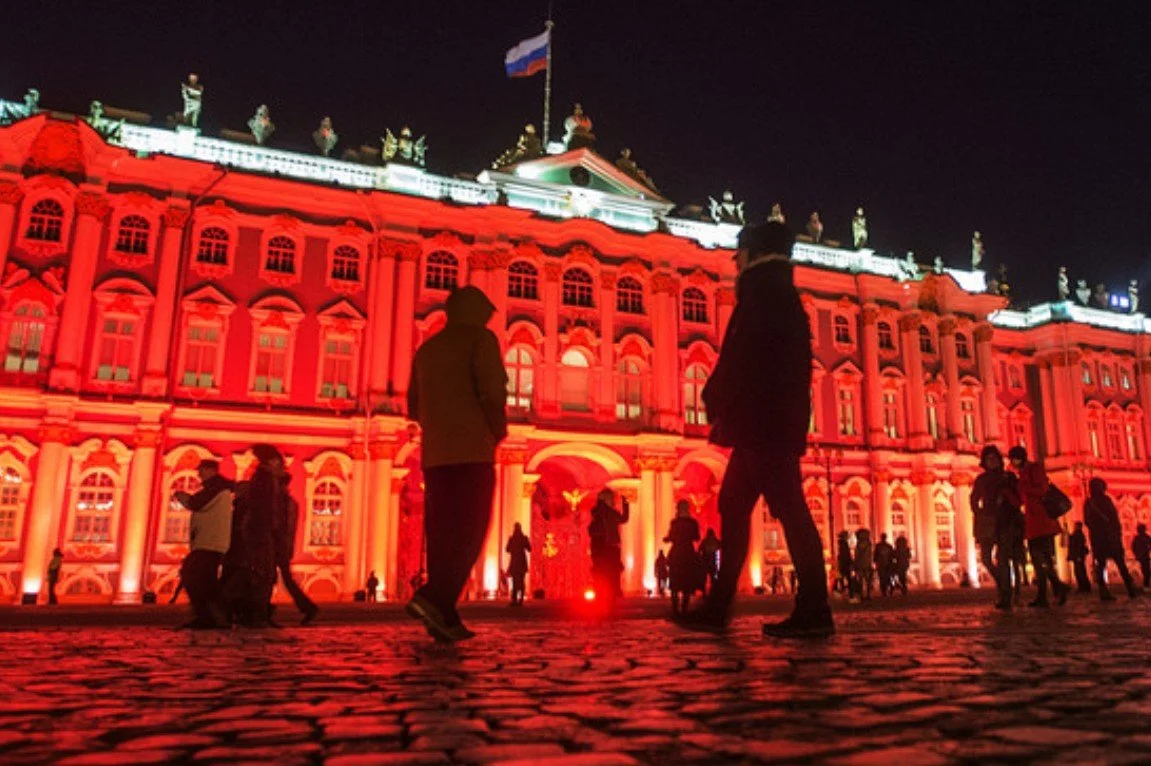
In real history, the Russian Revolution ended with the Bolsheviks taking power in Petrograd in late 1917. In this scenario, the Russian Revolution fails in 1917 because the Provisional Government lands a single, early blow that breaks the uprising’s coordination at the moment it matters most.
It matters because 1917 was not only a Russian crisis. It was a war-year, a credit-year, a rail-year. Who controlled Petrograd’s telegraph lines, bridges, stations, and ministries shaped whether Russia stayed in World War I, how quickly it collapsed, and what kind of state—if any—replaced the empire.
The tension is simple and ugly: stopping a coup does not fix a country that cannot feed its capital, pay its soldiers, or enforce its own orders. The same shortages, mutinies, and rival authorities remain.
What follows is not prophecy. It is a constraint-driven map of what plausibly changes—and what stubbornly does not—when the Bolsheviks miss their narrow window.
The story turns on whether a battered republic can hold the rails, the army, and the cities together long enough to become legitimate.
Key Points
Divergence: the Provisional Government successfully disrupts the Bolshevik command centre in Petrograd, breaking coordination during the October uprising.
First-order effect: without clean control of telegraph lines, rail hubs, and government buildings, the seizure fragments into clashes and arrests rather than a decisive takeover.
Biggest constraint: food and fuel still move by rail into starving cities, and the state’s authority still depends on soldiers who may refuse orders.
Branch 1: an elected government forms and seeks a messy peace, trading territory and prestige for survival.
Branch 2: a “restoration of order” coalition pushes a strongman solution, deepening repression and civil conflict.
Branch 3: the centre holds Petrograd but loses the periphery, accelerating fragmentation.
One signal that matters most: whether front-line armies obey the capital through the winter, when bread and transport decide politics faster than speeches.
Baseline History
The week before the Bolshevik coup attempt, Russia was already living in two political worlds. After the February Revolution, the monarchy had fallen, and a Provisional Government tried to rule while soviets of workers and soldiers held street-level legitimacy in key cities.
The war magnified every weakness. Prices rose, supply chains snapped, and garrisons in Petrograd became political actors rather than tools. The government needed the army; the army wanted relief; the cities wanted bread; the countryside wanted land. The system could not satisfy all three at once.
Through mid-1917, the Bolsheviks were pressed and then revived. After the July unrest, the state cracked down, Lenin went into hiding, and the government tried to keep fighting the war. The Kornilov episode deepened fear on the left and panic on the right, showing how quickly armed force could become politics.
Real history then hinged on timing and infrastructure. The Bolsheviks aimed to seize transport, communications, and state finance in Petrograd, then present the country with a finished fact before opponents could coordinate.
The Point of Divergence
On the night the Provisional Government moves against the Bolshevik nerve centre at the Smolny Institute, the operation works.
In real history, attempts to disrupt Bolshevik communications faltered as soldiers and Red Guards occupied rail stations, telephone exchanges, and government buildings. In this scenario, one thing changes: the loyal detachment assigned to secure the telephone exchange and approaches to Smolny does not stall, bargain, or defect. It holds.
Smolny is cut off long enough to break the chain of orders. Several key organisers are arrested in the confusion, and the committee’s papers become evidence rather than instructions.
What does not change is the wider landscape: the garrison remains volatile, the capital still depends on rail-fed food, and legitimacy remains split between ministers and mass organisations.
The First Ripples
The First 24 Hours
The government’s first problem is not ideology. It is routing and message traffic.
With Smolny disrupted, Bolshevik-aligned units do not receive synchronised orders. Some move anyway, driven by rumours. Others wait. The city fills with partial action: a bridge held here, a print shop raided there, patrols stopping trams and searching for rifles.
Ministers scramble to keep communications coherent. Telegraph lines, telephone exchanges, and rail stations become the fight itself.
The constraint is obvious. The state cannot rely on a single disciplined force. It patches together cadets, police, and fragments of units still willing to obey. Speed matters more than speeches.
The First Month
The crackdown spreads beyond Petrograd. Not because the state is suddenly strong, but because it must prove that orders still mean something.
Bolshevik newspapers are shut down again. Meetings are broken up. Organisers are detained. Officially, this is framed as defending the coming national vote and the war effort. On the streets, it feels like the old state returning under a new name.
The soviets do not disappear. They argue that the government has shown its true face, and that “order” is a mask for hunger and privilege. Even moderate socialists begin to fear a rightward turn.
At the front, discipline remains fragile. Units bargain for leave, food, and an end to futile offensives. A government that has just used force in the capital must now ask those same soldiers to fight for it.
The First Year
By late 1918, the country is still unstable, but the map of danger has shifted.
The Bolsheviks are weakened, not erased. Their failure splits supporters over strategy: mass politics versus conspiracy, coalition versus purity, cities versus land.
The Provisional Government seeks legitimacy through elections and parliamentary authority. Instead of dissolving the Constituent Assembly, it depends on it.
But the arithmetic remains brutal. Grain deliveries falter. Fuel shortages idle factories. A war-state without victory bleeds authority by the week.
Analysis
Power and Strategy
A failed October seizure changes who can claim inevitability.
In real history, capturing the capital allowed the Bolsheviks to present themselves as the state. Here, the state survives just long enough to claim legality. That matters to foreign diplomats, bankers, and provincial officials who need signatures and seals.
Yet legality is not control. Soviets remain parallel authorities. Decrees alone do not unload coal or end strikes.
The right gains confidence. If the government must fight revolution, many argue, it should stop pretending to be fragile. Emergency powers begin to look permanent.
Economics, Industry, and Supply
The revolution was always, in part, a supply crisis.
Petrograd’s politics depend on bread arriving by rail. Coal and kerosene heat homes and power plants. When fuel fails, factories stop. When factories stop, wages collapse. Authority follows.
A surviving government inherits the same ledger. It needs foreign credit and domestic compliance. Repression frightens workers; concessions alienate officers. Either choice disrupts production.
Land is the trap. Delay reform and the countryside revolts. Endorse seizures and the officer corps fractures. There is no painless solution.
Society, Belief, and Culture
Stopping the coup changes the moral story people tell.
A successful revolution creates clarity: a new regime rules. A failed uprising breeds suspicion—lists, informants, revenge. Fear of the next attempt reshapes daily life.
Identity hardens. A worker who patrolled with a Red Guard is now suspect. An officer who backed arrests becomes a target. Moderates are squeezed from both sides.
Village and church endure not as ideology, but as stability when ministries wobble.
Technology and Logistics of the Era
Everything moves at the speed of rail and wire.
Petrograd is a city where controlling a bridge, station, or switchboard can decide the outcome. Winter slows everything. Coal freezes. Roads vanish. Small delays become political facts.
Communications are brittle. Hours without coordination turn disciplined plans into local guesses. This divergence works because it breaks timing, not belief.
What Most Coverage Misses
The core limiter is not personality. It is dual power.
After February, Russia had a formal government and a mass network capable of paralysing it. That structure survives the failed coup.
The Bolsheviks resolved dual power by seizing the state and suppressing rivals. The Provisional Government cannot do the same without destroying its own claim to legitimacy.
The republic walks a narrow corridor: too soft and it falls to the next armed move; too hard and it creates a stronger, more popular radicalism.
Scenario Paths
The Wobbly Republic
An elected coalition governs and trades ideology for survival.
The Constituent Assembly sits. Land reform advances. The government seeks an exit from the war, accepting humiliation to stabilise the army and cities.
The logic is simple: no parliamentary state can survive owning an unwinnable war and empty bakeries.
Break point: the winter supply crisis. If bread rations stabilise, the republic limps on. If they shrink, legitimacy evaporates.
Plausibility: Most likely, because it aligns with mass demands while using the only nationwide mandate available.
The General’s Bargain
Order becomes the ideology.
Elites and officers push emergency rule. Soviets are curbed. Discipline is restored by force. Bread is promised by command.
The temptation is speed. Institutions have failed; coercion seems faster.
Break point: whether troops fire on civilians when ordered. Obedience hardens the regime. Refusal fractures it.
Plausibility: Plausible, given the era’s fear and the appeal of uniformed authority.
The Fractured Map
The centre holds, the edges slip.
Petrograd survives, but distance defeats control. Borderlands drift toward autonomy or independence. Local commanders rule by default.
Break point: rail junctions. Hold them and fragmentation slows. Lose them and the state dissolves.
Plausibility: Less likely, but possible if winter shortages and front collapse coincide.
Least likely are clean outcomes: a stable liberal democracy or a smooth return to empire. The pressures that broke 1917 do not allow neat recovery.
Why This Matters: If the Russian Revolution Failed in 1917
Short term (1–3 years): Europe’s war and peace change shape. A non-Bolshevik Russia still struggles to fight and may exit the war chaotically, altering diplomacy across the continent.
Long term (10–50 years): the ideological engine of the twentieth century runs differently. Without a revolutionary state as model and patron, radical movements abroad evolve more cautiously. Repression still exists, but fear has a different focus.
Russia remains the hinge—drifting toward authoritarian restoration, loose federation, or fragmentation. Each path reshapes borders, migration, and industry across Eurasia.
Real-World Impact
A dockworker in Liverpool watches food prices swing with rumours of Russia leaving the war. Union meetings grow louder, then cautious, as fear shifts from revolution to unemployment.
A farmer near Kyiv navigates land seizures that are legal one month and criminal the next. Grain is hidden, sold, or surrendered based on which authority arrives first.
A civil servant in Delhi sees censorship justified as wartime necessity as unrest grows at home.
A textile mill owner in New England plans production around volatile European demand, discovering that a non-Bolshevik Russia does not mean a stable market—only a different uncertainty.
What If?
A failed Russian Revolution in 1917 does not remove the cliff edge. It merely shifts the weakest footing.
The choices remain brutal: peace or military collapse; land reform or rural revolt; repression or paralysis. Each trades one risk for another.
The real signals are practical: trains running, rations stabilising, taxes collected beyond the capital, armies obeying without mutiny. If those hold, the republic survives. If they fail, stronger hands or fractured maps take over.
