How Democracies Collapse: The Warning Signs, Ranked
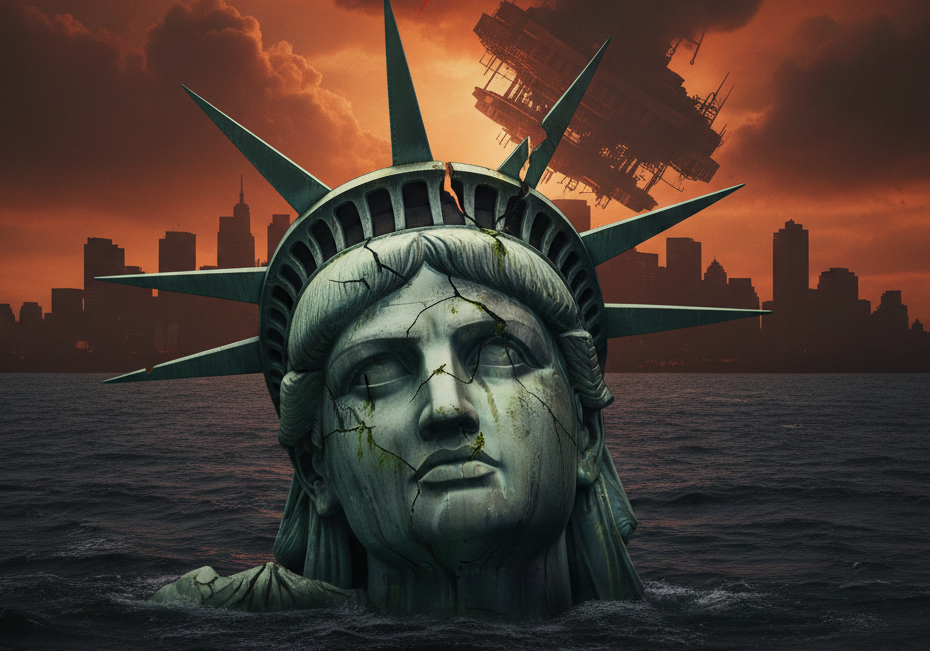
In the past few days, a familiar pattern has shown up across very different places: fights over who gets to vote, whether votes will be counted the same way for everyone, and whether critics can speak without fear. None of this is new in human history. What’s new is how quickly small “procedural” changes can compound, and how fast distrust can be turned into a kind of political fuel.
Democracy rarely collapses in one dramatic moment. It more often degrades in steps that can sound boring on paper: a rule tweak here, a court clash there, a “temporary” restriction that becomes permanent by habit. By the time the outcome is obvious, many of the guardrails have already been bent out of shape.
This piece ranks the warning signs that most reliably predict democratic breakdown. It also explains why some signs are more dangerous than others, how they interact, and what to watch next when the system is under stress.
The story turns on whether institutions can still enforce limits when powerful actors decide those limits no longer apply.
Key Points
Democratic collapse is usually a process, not a single coup. The early stages often look like routine governance disputes that pile up.
The most dangerous warning signs are the ones that change how power can be won and kept: election administration capture, court subordination, and selective enforcement.
Information control has evolved. Pressure on media now travels through licensing, lawsuits, platform rules, and internet access, not only through overt censorship.
Polarisation matters, but it becomes lethal when it is paired with intimidation and the normalisation of political violence.
“Emergency” measures are a common accelerant. They concentrate power quickly and create precedents that are hard to unwind.
The next flashpoints to watch are specific decision points: court rulings, election certification deadlines, voter roll changes, and security-force deployments.
Background
A democracy is not only elections. It is a chain of institutions that make elections meaningful: independent courts, professional election administration, basic civil liberties, and predictable rules that apply to winners and losers alike.
Most collapses follow one of three pathways. The first is executive aggrandisement, where elected leaders steadily weaken constraints while claiming a popular mandate. The second is captured pluralism, where elections continue but the playing field becomes so tilted that alternation of power is no longer realistic. The third is crisis-driven suspension, where a security, economic, or social emergency is used to justify extraordinary powers that never fully roll back.
Recent disputes around vote counting, voter eligibility, protest rights, and press freedom are reminders that the same stress points recur. The details differ by country. The mechanics rhyme.
Analysis: How Democracies Collapse
The Warning Signs, Ranked
1) The rules of winning change.
The clearest red flag is when the system for gaining power is reshaped by those already in power. This includes politicising election commissions, changing district boundaries for advantage, rewriting ballot access rules to block competitors, or creating new hurdles that fall unevenly across groups. Democracy becomes fragile the moment losing an election stops being a normal, survivable outcome.
2) Courts are bent, packed, or bypassed.
Courts do not have armies. They rely on legitimacy and enforcement by other institutions. When leaders attack judges, ignore rulings, or restructure the judiciary to ensure friendly outcomes, legal limits become theatre. Once people believe the law will not protect them impartially, politics shifts from persuasion to domination.
3) Selective enforcement becomes the governing style.
Corruption alone does not end democracy. Selective enforcement does. If tax authorities, prosecutors, regulators, and police are used aggressively against critics while allies are shielded, opposition becomes personally dangerous. People adapt by self-censoring, defecting, or leaving politics altogether.
4) Information space is captured.
Modern control often looks administrative: licensing pressure, defamation suits, “national security” charges, ad-market manipulation, or platform restrictions. Internet shutdowns and throttling during protests or elections are blunt tools, but they are effective at breaking coordination and limiting documentation.
5) Violence and intimidation become normal.
Democracies can survive ugly rhetoric. They struggle to survive when threats move from online to physical life and are excused as “passion” or “patriotism.” Once political participation carries credible personal risk, turnout, recruitment, and activism shrink. Power becomes easier to monopolise.
6) Emergency powers become routine.
True emergencies happen. The warning sign is not the first emergency decree. It is the pattern: repeated “temporary” measures, weak oversight, and vague definitions of threats that conveniently include dissent.
7) Opposition is allowed to exist, but not to compete.
This is the staged-democracy model: parties can campaign, but key candidates are barred, funding is restricted, media access is uneven, or results can be challenged only in controlled venues. The country still has elections, but not uncertainty.
8) The public stops believing facts exist.
A democracy requires losing gracefully, which requires a shared belief that the process is real. When large blocs come to see all institutions as conspiracies, a strongman pitch becomes easier: “Only I can fix it, and rules just get in the way.”
Political and Geopolitical Dimensions
Domestic democratic erosion is often enabled by external incentives. Leaders learn tactics from one another, hire the same political consultants, and borrow the same legal language about “sovereignty” and “foreign interference.” International pressure can deter some abuses, but it can also be turned into propaganda: criticism is framed as an attack on national dignity.
Geopolitics can also create cover. A government facing security threats may win genuine public support for tougher controls. The risk is that controls expand beyond the threat and begin targeting political competition itself. Allies may look away for strategic reasons, especially when cooperation is needed on migration, trade, or defence.
Economic and Market Impact
Democratic backsliding tends to raise the “rules risk” premium. Businesses and investors can tolerate many political styles, but they struggle with unpredictability: sudden regulatory shifts, politicised courts, or contracts that depend on proximity to power.
At household level, the economic channel is often indirect but real. When power is concentrated and oversight weakens, corruption becomes less costly. Public spending becomes more political. Competence can be replaced by loyalty. Growth slows, inequality can widen, and the state’s capacity to respond to future shocks declines.
Social and Cultural Fallout
Polarisation is not just disagreement. It is identity conflict: people experience politics as a battle over belonging. In that environment, compromises look like betrayals and procedural rules feel like obstacles. Leaders can exploit this by presenting opponents as existential threats rather than legitimate rivals.
The most corrosive shift is moral permission. When citizens begin to accept that “our side” should bend rules because the other side is worse, democratic culture degrades from within. Institutions do not collapse only because leaders attack them. They also collapse when the public stops demanding restraint.
Technological and Security Implications
Technology has widened the toolkit for both protection and repression. Surveillance can be justified as crime prevention. Data systems can be framed as efficiency reforms. But the same infrastructure can be turned into political control: tracking opponents, mapping networks, limiting mobilisation, or shaping information flows.
Cyber incidents and disinformation can become a pretext for broad restrictions. A real problem is used to justify an overly broad solution. The danger is not only censorship. It is the creation of a permanent “security state” logic in everyday politics.
What Most Coverage Misses
The overlooked factor is institutional fatigue. Democracies rely on thousands of people doing unglamorous work: civil servants processing ballots, judges writing decisions, journalists verifying claims, auditors reviewing budgets, and police enforcing the law without fear or favour. When these roles are constantly attacked, underfunded, or politicised, quality drops. Errors rise. Distrust grows. That feeds the next round of power grabs.
Also missed: democratic decline is often legally literate. It is built through statutes, regulations, procedural tweaks, and court interpretations. That makes it harder to spot and easier to defend. The system still looks “constitutional” while its substance changes.
Why This Matters
The most affected groups are those who rely on impartial institutions to balance unequal power: minority communities, small opposition parties, independent media, and civil society organisations. But the effects do not stay contained. Once rule-of-law predictability weakens, everyone pays through higher costs, weaker services, and less credible dispute resolution.
In the short term, expect sharper swings: protests, contested results, legal standoffs, and sudden security measures. In the long term, the risk is a locked system where leadership changes only through internal party deals, not through voters.
Concrete events to watch next are the decision points where rules harden into precedent: publication of final voter lists, recount and certification milestones, court rulings on election disputes, and any announced limitations on assembly or internet access during sensitive periods. When elections are scheduled soon, scrutiny should rise around candidate eligibility decisions and the independence of the bodies that certify results.
Real-World Impact
A small shop owner in a capital city watches protests delay a vote recount. Deliveries stop. Customers stay home. The question is no longer “Who won?” but “Will anyone accept the result?” Even a temporary pause becomes a hit to daily income.
A university student in a major state worries their name has disappeared from the voter roll. They spend days gathering documents, standing in lines, and trying to understand rules that changed quickly. Politics becomes administrative stress, not civic participation.
A journalist in a global financial hub edits a story with a lawyer present. Certain phrases are avoided. Sources go quiet. The newsroom still operates, but the boundaries of what can be said shrink month by month.
A logistics manager in an East African port city loses internet access during a tense political moment. Payments lag. Tracking systems fail. Rumours fill the gap. The shutdown is framed as “public order,” but the cost lands on ordinary commerce.
Conclusion
Democracies collapse when competition becomes dangerous, when referees become players, and when rules turn into weapons. The first cracks usually appear around elections and courts, because those are the choke points for peaceful transfer of power.
The fork in the road is straightforward but not easy: either institutions remain strong enough to apply rules evenly, or politics shifts toward a system where power protects itself. Leaders can choose restraint, transparency, and independent oversight, or they can choose speed, control, and loyalty tests.
The signs that will show which way things are breaking are practical: whether election bodies can operate without intimidation, whether court decisions are obeyed even when inconvenient, whether information remains open during moments of tension, and whether violence is punished rather than excused. When those tests start failing in sequence, collapse is no longer a theory. It is a trajectory.
