Mojtaba Khamenei History: The Shadow Son Who Could Inherit Iran’s Most Powerful Office
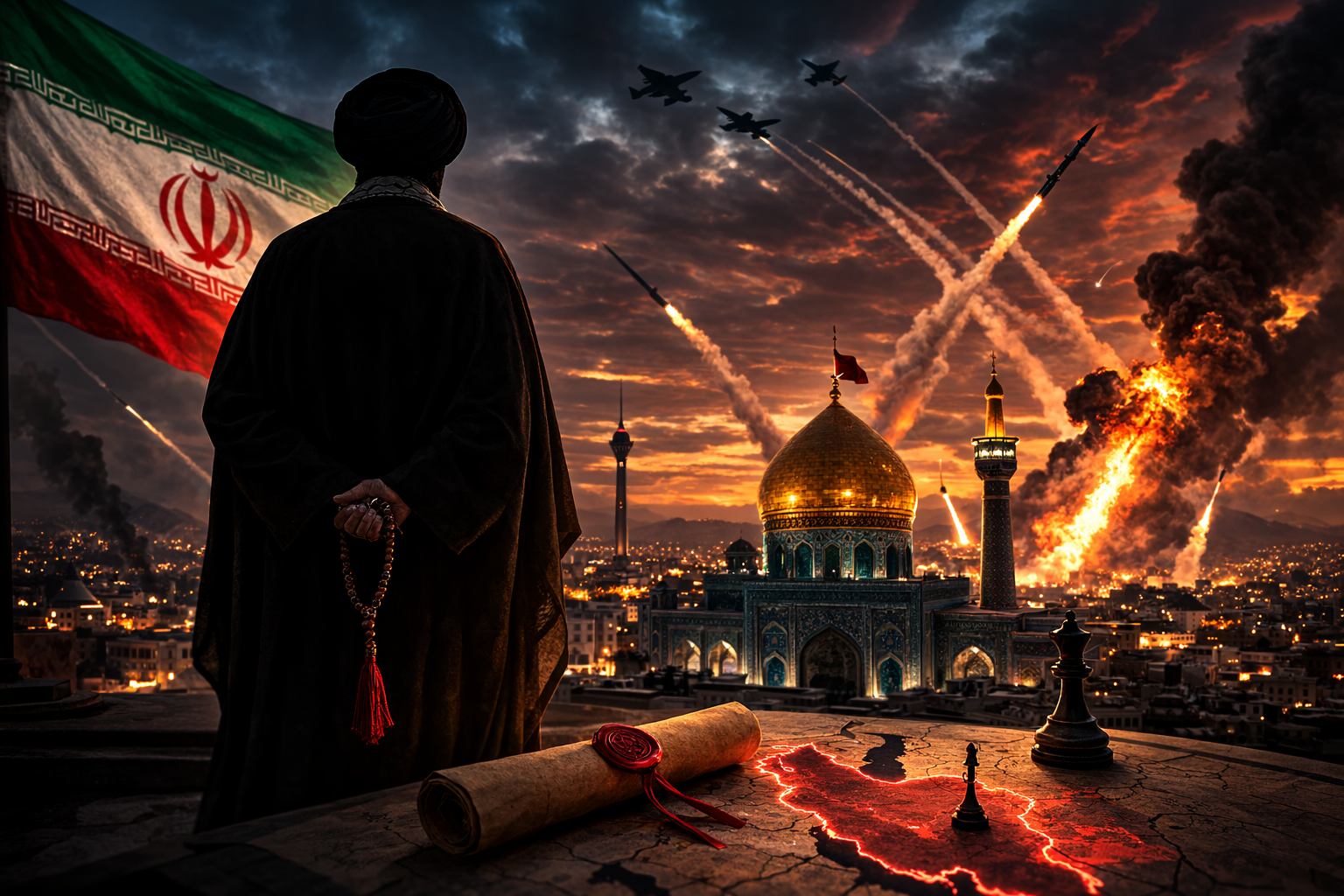
Inside Mojtaba Khamenei’s Rise From Shadow Figure to Succession Frontrunner
The Secretive Son Poised to Shape Iran’s Future
Mojtaba Khamenei sits at the center of one of the most consequential succession struggles in the modern Middle East. He has never held a senior elected office. He rarely speaks in public. Yet for years he has been treated inside Iran and abroad as a serious contender to succeed his father, Ayatollah Ali Khamenei, as supreme leader. In the current wartime crisis, that possibility has moved from long-running speculation to immediate strategic reality, even though no final public confirmation has yet settled the question.
That is what makes Mojtaba Khamenei such an important figure to explain now. His story is not just the biography of a powerful cleric’s son. It is the story of how the Islamic Republic built an unofficial center of power around family, security networks, revolutionary legitimacy, and gatekeeping. The overlooked hinge is this: his path to the top has never depended mainly on public charisma or even formal rank. It has depended on whether the coercive core of the system trusts him enough to keep the regime intact under stress.
For that reason, any history of Mojtaba Khamenei has to be read as both a life story and a map of how power really works in Iran. His rise makes little sense if it is treated as simple inheritance. It makes much more sense if it is considered the slow construction of influence inside the office, militia, and clerical machinery that outlasts elections and often overpowers formal institutions.
The story turns on whether Mojtaba Khamenei can convert inherited access into recognized authority.
Key Points
Mojtaba Khamenei was born in Mashhad in 1969 and grew up in a family already embedded in the revolutionary struggle against the shah, giving him political exposure from childhood rather than after the 1979 revolution.
He later studied in Qom, served as a young man in the Iran-Iraq War, and built a reputation not as a public statesman but as a hardline insider with deep links to the Revolutionary Guards and Basij.
Over time, he became widely described as a gatekeeper to his father, exercising influence behind the scenes despite lacking a major formal government role.
His name became especially controversial after the disputed 2009 Iranian election, when he was accused by critics of backing Mahmoud Ahmadinejad and benefiting from the violent suppression of the Green Movement.
The United States sanctioned him in 2019, saying he represented the supreme leader in an official capacity without election or appointment and worked with the Quds Force, an elite unit of the Iranian Revolutionary Guard, and Basij, a paramilitary force, to advance repressive and destabilizing goals, which included suppressing dissent and undermining democratic movements in Iran.
In March 2026, amid war and leadership disruption, other major outlets reported that Mojtaba was widely considered the leading candidate to become Iran’s next supreme leader, though official confirmation remained pending.
Born Into Revolution Before the Revolution Won
Mojtaba Khamenei was born in 1969 in Mashhad, one of Iran’s holiest cities, roughly a decade before the Islamic Revolution transformed the country. That matters because he did not grow up in the afterglow of power. He grew up in a household shaped by struggle, repression, and clerical opposition to Shah Mohammad Reza Pahlavi. An official biography of his father recounts SAVAK, which stands for Sazeman-e Vaziyat-e Keshvar, the shah’s secret police, raiding the family home and beating Ali Khamenei. For Mojtaba, politics was not an abstract doctrine first encountered in seminary. It was family life.
After the revolution, the family moved to Tehran. Ali Khamenei's ascension to supreme leader in 1989 permanently altered the family's proximity to the state's commanding heights. But before that transition, Mojtaba had already passed through one of the defining experiences of his generation: the Iran-Iraq War. Reporting by the AP says he served as a young man during that war, a credential that still carries symbolic weight inside the Islamic Republic because wartime service remains bound up with sacrifice, revolutionary authenticity, and ties to the security class that emerged from the conflict.
That early phase helps explain why Mojtaba’s later career never looked like a normal political ascent. He did not need to build a mass constituency from scratch. He was raised in a revolutionary family during wartime and later in the expanding orbit of a father who became the state’s ultimate authority.
From Seminary Student to Backroom Power Broker
describes Mojtaba as a mid-ranking cleric who studied under religious conservatives in the seminaries of Qom. He carries the clerical rank of Hojjatoleslam, which places him below the ayatollah rank associated with both Ruhollah Khomeini and Ali Khamenei. That gap has long been one of the arguments against his candidacy. Critics say the office of supreme leader demands deeper religious standing. Supporters counter that the real system has never run on theology alone. It runs on political control, elite consent, and command over the security state.
His practical influence rose through his father’s office, which provided him with significant political connections and authority within the regime. Over time, Mojtaba became known as the person many insiders had to pass through to reach the supreme leader. notes that U.S. diplomatic cables published by WikiLeaks described him as an avenue to Ali Khamenei. AP similarly reports that cables referred to him as “the power behind the robes,” a revealing phrase because it captures how his authority developed: not through speeches or ballots, but through access, filtering, relationships, and trusted proximity.
This arena is the stage on which Mojtaba’s real political identity took shape. He became less a visible national figure than an organizer of invisible power. In systems like Iran’s, that can matter more. Presidents come and go. Parliament changes composition. But the people who manage channels into the supreme leader’s office can help shape appointments, access, priorities, and internal alignments for years, influencing the political landscape and decision-making processes that affect governance and policy direction.
The Elections That Turned Him Into a Symbol
Mojtaba Khamenei’s reputation hardened in the mid-2000s. Reports widely believed he had supported Mahmoud Ahmadinejad's sudden rise in the 2005 presidential election. Reformist cleric Mehdi Karroubi objected at the time and alleged Mojtaba had played a role. Ali Khamenei rejected the charge, but the allegation stuck because it fit a broader fear: that a man with no electoral mandate was shaping electoral outcomes from behind the curtain.
The dispute became far more explosive in 2009. Ahmadinejad’s disputed re-election triggered the Green Movement, one of the largest political crises in the Islamic Republic’s history. Both AP and the U.S. Treasury later linked Mojtaba’s name to the hardline camp around that moment, as well as to the Basij and Revolutionary Guard networks associated with violent protest suppression. From then on, Mojtaba ceased to be merely a powerful son. He became, for many Iranians, a symbol of the unofficial security state and the possibility that the republic was drifting toward dynastic rule in everything but name.
That symbolism has never left him. Protesters have invoked his name in later waves of unrest, including the broad anger that followed the 2022 death of Mahsa Amini in morality police custody. notes that Mojtaba was again a focus of public anger during that period. The pattern is important because it shows the duality of his position: he may be trusted by key hardline institutions even as he remains deeply contentious among large parts of the population, particularly in light of the protests and unrest that have erupted in response to government actions.
What Most Coverage Misses
The biggest mistake is to frame Mojtaba Khamenei’s rise as a simple father-to-son handover. Iran is not a monarchy in constitutional form, and hereditary succession remains ideologically awkward in a state founded on overthrowing a shah. That is why the formal procedure still runs through the Assembly of Experts, which is a body responsible for selecting the Supreme Leader, and why dynastic optics, or the appearance of hereditary rule, are so politically dangerous.
But the reverse mistake is just as serious: assuming that because dynastic succession is controversial, it is therefore implausible. The true key lies in institutional strength. Reporting makes clear that Mojtaba’s strength lies in long-built ties to the Revolutionary Guards, the Basij, and his father’s office. In a succession crisis, the question is not simply who looks best on paper. It is the one who can command obedience across the security apparatus quickly enough to prevent fragmentation.
That changes the interpretation of his whole biography. His low profile is not just personal style. This is part of how he accumulated his power. The more the Islamic Republic shifted toward enforcement, insulation, and controlled access, the more someone like Mojtaba became structurally important even without a grand public role, as his influence allowed him to navigate and manipulate the political landscape effectively, particularly in the context of the increasing sanctions and the need for secrecy within the regime.
Sanctions, Secrecy, and the Burden of Inheriting a System
In 2019, the U.S. Treasury sanctioned Mojtaba Khamenei, saying he represented the supreme leader in an official capacity despite never being elected or formally appointed to government, apart from his work in his father’s office. Treasury also said he had worked closely with the Quds Force, an elite unit of Iran's Islamic Revolutionary Guard Corps, and the Basij, a paramilitary volunteer militia, to advance his father’s regional and domestic objectives. Whether one adopts Washington’s framing or not, the sanctions crystallized the Western view of Mojtaba as more than a relative. He was treated as an operative node inside the regime’s power structure.
This period also exposed the central contradiction of his public image. The less formally visible he remained, the more significant he appeared to outsiders trying to understand how the Islamic Republic really functioned. He rarely appeared in public, yet his name kept resurfacing whenever the conversation turned to elite coordination, coercive power, and succession. says that even after years of criticism over dynastic implications and limited clerical rank, he stayed firmly in the frame, especially after the death of another leading potential successor, Ebrahim Raisi, in 2024.
By then, Mojtaba’s candidacy had become less about whether he looked like an ideal supreme leader and more about whether he was the least disruptive option for a system under strain. That is a very different standard, and in authoritarian or semi-theocratic systems it is often the standard that matters most.
Why the Succession Fight Is Suddenly Immediate
The office Mojtaba may inherit is not ceremonial. Britannica notes that Iran’s supreme leader sets political direction, commands the armed forces, appoints key officials, and can intervene across the state. adds that the constitution envisages the Assembly of Experts choosing a new leader within three months, while a temporary leadership council operates in the interim. That means the succession fight is not just about symbolism. It is about control of the military, the security services, the state’s strategic posture, and the authority to navigate war.
As of March 8, 2026, it was reported that the Assembly of Experts had reached a majority consensus on a successor, with widespread speculation centered on Mojtaba Khamenei, though no definitive official naming had yet resolved the issue publicly. also described him as widely considered the most likely candidate, while emphasizing that hereditary succession remains sensitive and controversial. In other words, the system seems to be progressing, albeit amidst challenges and pressures.
That makes Mojtaba’s life story feel newly urgent. The child of a dissident cleric became a war veteran, then a seminarian, then an unofficial gatekeeper, then a hardline power broker, then a sanctioned figure associated with repression, and now potentially the man who could inherit the Islamic Republic’s highest office at one of its most dangerous moments. Whether he is formally selected or not, his trajectory already reveals the deeper truth: in Iran, succession has never been only about who is qualified to lead. It is about who can hold together the machinery that keeps the state alive.
The Signposts That Will Decide His Future
The decisive question now is not whether Mojtaba Khamenei has long been in the succession conversation. He has. The question is whether he can move from shadow influence to accepted authority without deepening the very legitimacy crisis that has haunted the Islamic Republic for years. A son may be able to inherit networks. He cannot automatically inherit revolutionary credibility.
The key signs to look for are clear: if the Assembly of Experts publicly backs his choice, if the Revolutionary Guards support him, if other clerical or political groups resist him, if state messages focus more on martyrdom and continuity, and if public protests increase around the idea of dynastic succession. Those signals will reveal whether Mojtaba Khamenei is merely the best-known heir apparent or the next man to define the Islamic Republic’s direction under extreme pressure. If he takes the office, it will mark not just a leadership change but a test of whether Iran’s post-revolutionary system has finally become the kind of dynasty it was created to overthrow.
