Who Really Controls China?
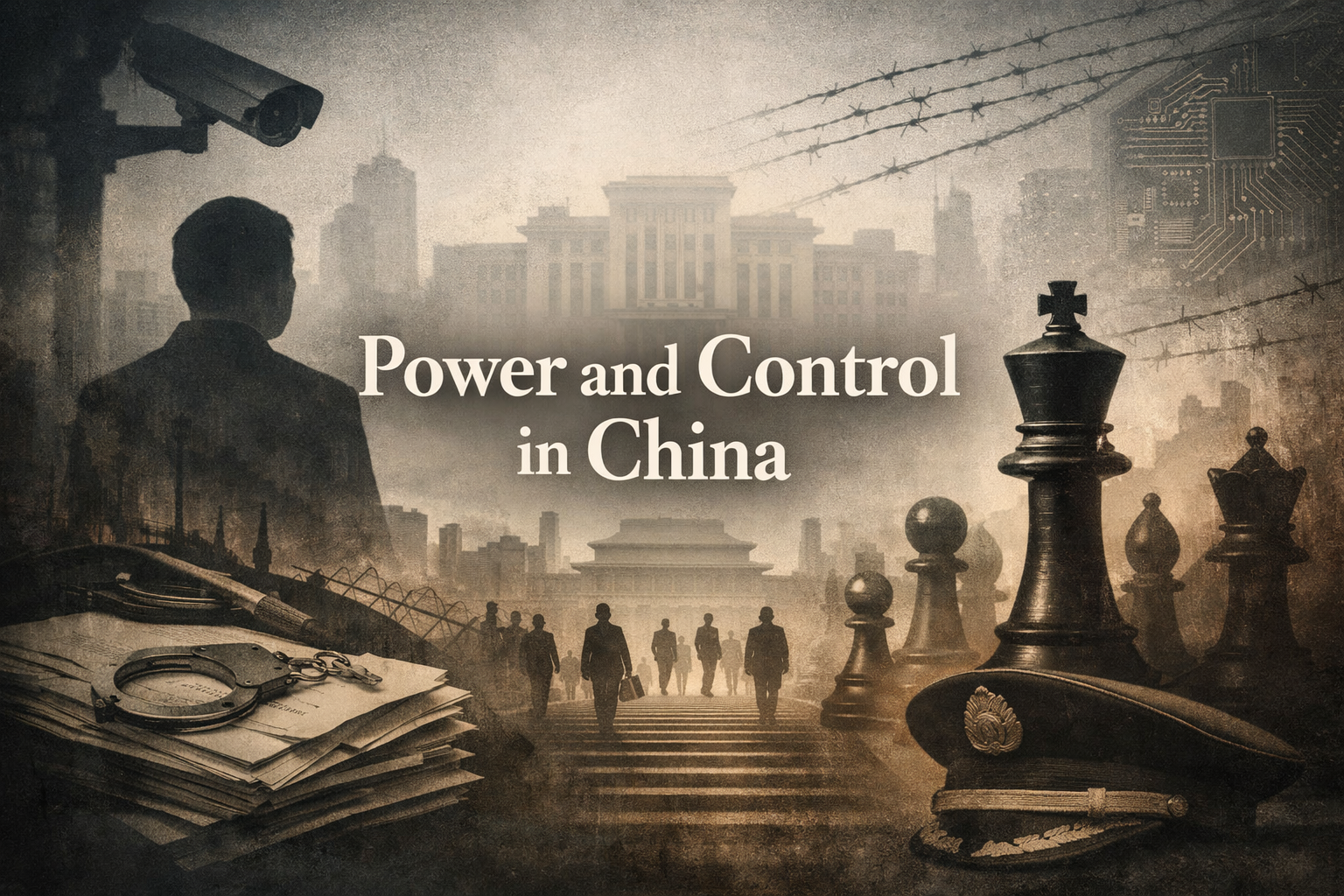
Xi Jinping rise to power explained: how discipline, кадров control, ideology, and term-limit changes built dominance—and shaped his standoffs with Trump.
Xi Jinping’s Rise to Power: How He Built Control and Faced Trump
Modern China is built to prevent one man from becoming indispensable. Xi Jinping spent a decade reversing that.
This is the story of how a cautious party technocrat became the system’s centre of gravity, then rewired the system so it could not easily move without him.
The timeframe here runs from Xi’s formative years through his consolidation phase (2012–2022), then ends with the sharper US–China power test that played out under Donald Trump—first in the 2017–2020 trade war, and again after Trump’s return to office in 2025.
The tension is simple: China’s Communist Party needs order and continuity, but it also fears the stagnation and succession chaos that strongman rule can bring. Xi solved the first fear by intensifying the second.
The story turns on how power in China flows through appointments, discipline, and control of the security state—and how Xi learned to command all three.
“The story turns on how legitimacy is manufactured inside the Party, then enforced through institutions that look bureaucratic until they suddenly aren’t.”
Key Points
Xi Jinping became powerful by mastering the Party’s internal machinery: кадров appointments, discipline, and the military chain of command—more than public popularity.
The decisive starting point was the early 2010s in Beijing, when a leadership transition collided with elite corruption, slowing growth, and fear of Soviet-style collapse.
A major turning point was the anti-corruption campaign after 2012, which simultaneously punished graft and neutralised rival patronage networks.
Another turning point was the elevation of “Xi Jinping Thought” into Party doctrine in 2017, turning loyalty into an ideological test, not just a career calculation.
The biggest constraint shaping outcomes was the Party’s obsession with regime security: instability is treated as existential, so concentration of authority is framed as a safety measure.
The hinge decision was the 2018 constitutional change that removed presidential term limits, signalling that succession norms were optional when “national rejuvenation” was at stake.
What changed most was the shift from collective leadership to centralised command; what endured was the Party’s need to control information, coercion, and elite rotation.
The clearest legacy signal is institutional: a governance model where “leading groups” and security organs concentrate decision rights at the top, then cascade compliance downward.
Background
Xi’s early life sits inside a Chinese political fact that never goes away: family lineage can open doors, but it can also ruin you when the winds change.
He was born into the Party’s revolutionary aristocracy through his father, Xi Zhongxun, then watched that status collapse during Mao-era turmoil. That experience produced a durable incentive structure: survival comes from understanding the system’s moods, not from standing outside it.
By the time Xi rose, the Party had already built a post-Mao bargain: deliver growth, keep social order, and avoid another personality cult by sharing power among elites on predictable terms. But that bargain carried its own rot—corruption, local fiefdoms, and a centre that often negotiated with provinces rather than commanding them.
Xi stepped into a moment when the Party’s fear sharpened. Leaders saw colour revolutions abroad, the Soviet Union’s failure, a more networked society at home, and slowing economic tailwinds. The centre wanted tighter control, yet the old rules were designed to stop any one man taking it.
That contradiction became Xi’s opportunity. The next section shows where it first became decisive.
The Origin
The origin is not a single speech or a single promotion. It is Xi’s discovery—learned over decades—that the safest route to supreme authority in China is to look like a stabiliser while you quietly rearrange the locks.
His climb through coastal provinces mattered because it trained a governing style: practical, disciplined, and relentlessly attentive to кадров control—who gets promoted, who gets investigated, who gets sidelined. Those are the levers that turn a sprawling Party-state into something that can move as one.
When Xi entered the top tier in the late 2000s, he did not arrive as an obvious strongman. He arrived as a compromise figure with the right pedigree, the right résumé, and the right instincts for internal balance.
What changed after 2012 was that he treated “balance” as temporary—something to be harvested for power, then replaced with command. The timeline below tracks how that replacement happened, step by step.
The Timeline
1) Formed by fracture, trained by the system (1953–2007)
Xi’s formative constraint was political volatility: status could flip overnight, and the only reliable shelter was Party membership and disciplined compliance.
The mechanism was patience. He built credibility through unglamorous assignments, local governance, and visible personal austerity—signals that reduce suspicion in a system that punishes flamboyance.
Capacity shifted gradually: he gained a reputation as safe hands who could manage growth and Party discipline without triggering factional alarm bells.
Carry-over was critical. By the time he reached national office, he understood that ideology and coercion were less important than the appointment pipeline that controls both.
That understanding set up the key move when he took the top job.
2) 2012: Anti-corruption as a power engine (2012–2014)
The hinge was the decision to launch an anti-corruption drive at scale and sustain it, not as a campaign that burns out, but as a permanent governing method.
On the ground, officials became cautious. Decision-making slowed in some places, but fear also re-centred authority: the safest career move was to align with the centre.
The mechanism was discipline enforcement through Party bodies rather than normal courts—meaning the process stayed inside the organisation’s control and could be targeted with precision.
The constraint was legitimacy. Corruption was widely resented, so cracking down created public approval, but it also created elite terror. Xi turned that trade into an advantage.
Capacity shifted upward. Rival patronage networks lost their protective shields; the centre gained the ability to reshuffle cadres and enforce compliance across provinces, state firms, and the military.
What it locked in next was momentum: once fear becomes a governance tool, stepping back looks like weakness.
3) Governing through “commissions” and bottlenecks (2014–2017)
Xi’s consolidation was not only about removing people. It was about redesigning how decisions travel.
The mechanism was central coordination bodies—small, top-led groups that set direction across ministries, then demand execution. This compresses debate and expands the leader’s reach without rewriting every formal law.
The constraint was complexity. China’s scale makes micromanagement impossible, so the solution was to control bottlenecks: agenda-setting, кадров appointments, and the security apparatus that monitors compliance.
Capacity shifted toward the Party centre and away from technocratic ministries. The state becomes less an independent machine and more an instrument.
Carry-over followed naturally: if you control the bottlenecks, you do not need to control every valve.
That paved the way for ideology to become an enforcement tool, not just a slogan.
4) Ideology as a loyalty test, not a decoration (2017–2018)
In 2017, Xi’s political line was elevated into Party doctrine while he was still in office. That matters because doctrine is an internal hiring policy as much as a belief system.
On the ground, messaging hardened. Education, media, and corporate governance were pulled closer to Party supervision, and “political correctness” inside the organisation became a career necessity.
The mechanism was institutional: once a leader’s line is embedded in the Party constitution, dissent is no longer disagreement—it becomes disloyalty.
The constraint was succession anxiety. The post-Mao system tried to normalise leadership rotation; Xi reframed continuity as national mission, making rotation look risky.
Then came the signal that succession norms were no longer sacred: the 2018 constitutional change removing presidential term limits.
Alternatives were limited because stepping away after concentrating power would expose the leader—and his network—to future internal retaliation. The system begins to require permanence.
5) Security-first governance and the tightening spiral (2019–2022)
As growth slowed and external pressure rose, governance leaned further into control: information discipline, surveillance capacity, and a security framing for economic and social policy.
The mechanism was “stability maintenance” scaled for the digital era—rapid censorship, platform regulation, and pre-emptive policing of organisation and protest.
The constraint was trust. Centralisation reduces local improvisation and can trap leaders in filtered reporting, but the Party often prefers control to uncertain experimentation.
Capacity shifted inside the elite, too. Collective leadership weakened; loyalists mattered more than balancing factions.
Carry-over was a system that could act quickly, but also one that increasingly depended on a narrow top layer for direction—especially during crisis moments.
That set the context for Xi’s external showdowns, where prestige and resolve became part of domestic legitimacy.
6) Xi and Trump: transaction versus endurance (2017–2020, then 2025 onward)
Xi and Trump exposed each other’s governing styles in real time.
From 2017 to 2020, Trump’s approach was overtly transactional: tariffs, deals, leverage, public pressure. Xi’s approach was endurance: absorb pain, control the domestic narrative, and avoid concessions that look humiliating inside China. The trade war became a contest over who could tolerate disruption longer—and who could frame compromise as victory at home.
The mechanism on the US side was economic coercion and restrictions aimed at supply chains and technology access. The mechanism on China’s side was managed retaliation, selective openings, and a propaganda line that cast the struggle as national revival under siege.
The constraint for Trump was electoral time. The constraint for Xi was elite perception: he could not appear to have been “bullied” without weakening the authority he was still consolidating.
In 2025, after Trump returned to office, the dynamic sharpened again: bargaining over tariffs, fentanyl-linked pressure points, and strategic materials like rare earths. The pattern stayed consistent—Trump seeking visible, immediate wins; Xi seeking controlled concessions that protect long-term autonomy and domestic prestige.
What it locked in next was structural rivalry: both sides learned that leadership style is a national asset in bargaining, and also a national vulnerability.
Consequences
Immediately, Xi’s China became more coherent at the centre: fewer independent power bases, tighter message discipline, and faster capacity to enforce directives.
Second-order effects mattered more. The anti-corruption system became a permanent instrument of кадров management. “National security” expanded beyond spies and soldiers into tech policy, education, capital flows, and speech.
Institutionally, the Party moved from steering to commanding. Ministries execute; commissions coordinate; discipline bodies intimidate; the security state monitors.
Externally, Xi’s consolidation produced a China that negotiates with a thicker sense of historical mission and a thinner tolerance for perceived disrespect. That makes compromise harder, because prestige becomes policy.
The next section explains the hidden machinery that makes this feel inevitable.
What Most People Miss
Most profiles treat Xi’s power as charisma or fear. The deeper driver is administrative plumbing.
China’s Party-state is a staffing empire. If you control promotions, investigations, and the security narrative, you do not need daily popularity. You need predictable obedience from the people who run provinces, companies, and commands.
That is why ideology mattered in 2017 and term limits mattered in 2018: they were кадров signals. They told every ambitious official what the safe future looked like, and what kind of language would be rewarded.
The Trump dynamic also looks different through this lens. Tariffs hurt, but the more serious threat was narrative: could Xi be made to look weak? His internal machinery is built to prevent that outcome.
The limits on the story appear in what endured.
What Endured
China’s top priority stayed regime security, meaning the centre’s default response to uncertainty remained control, not liberalisation.
Geography endured: a vast country with uneven development still forces bargains between centre and localities, even when the centre pretends it does not.
Information control endured as a governing reflex, now executed through digital infrastructure rather than only police files and newspapers.
Nationalism endured as a legitimacy reservoir, especially when growth is less reliable as a source of consent.
Finally, elite politics endured: factions did not vanish; they adapted, becoming quieter, more personal, and more dependent on the leader’s favour.
Those constants shape the debates historians still argue over.
Disputed and Uncertain Points
Some historians treat the anti-corruption campaign primarily as governance reform; others argue it functioned mainly as a political weapon, with cleaner governance as a by-product.
There is disagreement over how much genuine elite opposition existed to the 2018 term-limit change, because dissent is hard to observe in a system designed to hide it.
Analysts differ on whether “Xi Jinping Thought” represents a coherent ideological programme or a flexible banner that disciplines elites while allowing policy shifts underneath.
There is debate about whether centralisation improved state capacity overall, or whether it reduced adaptive problem-solving by making officials risk-averse.
Finally, historians argue about durability: whether this model remains stable long-term, or whether it becomes brittle as feedback loops tighten and succession uncertainty grows.
The legacy shows up in institutions more than slogans.
Legacy
Xi’s legacy is a governance template: concentrate decision rights at the top, enforce discipline through Party organs, and treat ideology as a кадров filter. It is a model built for control under pressure.
You can see it in concrete administrative habits: commissions that bypass ministries, security framings that swallow economic policy, and staffing systems that reward political alignment as much as technical competence.
Internationally, the legacy is a China that expects deference to its core interests and is more willing to absorb costs to avoid looking coerced—especially in negotiations with leaders like Trump who prize public wins.
This is not a return to Mao-era chaos. It is a modern command system that uses bureaucratic tools to achieve political permanence.
