55 Dead In Myanmar Village Blast As One Explosion Exposes The Brutal Fragility Of A Country Already At War
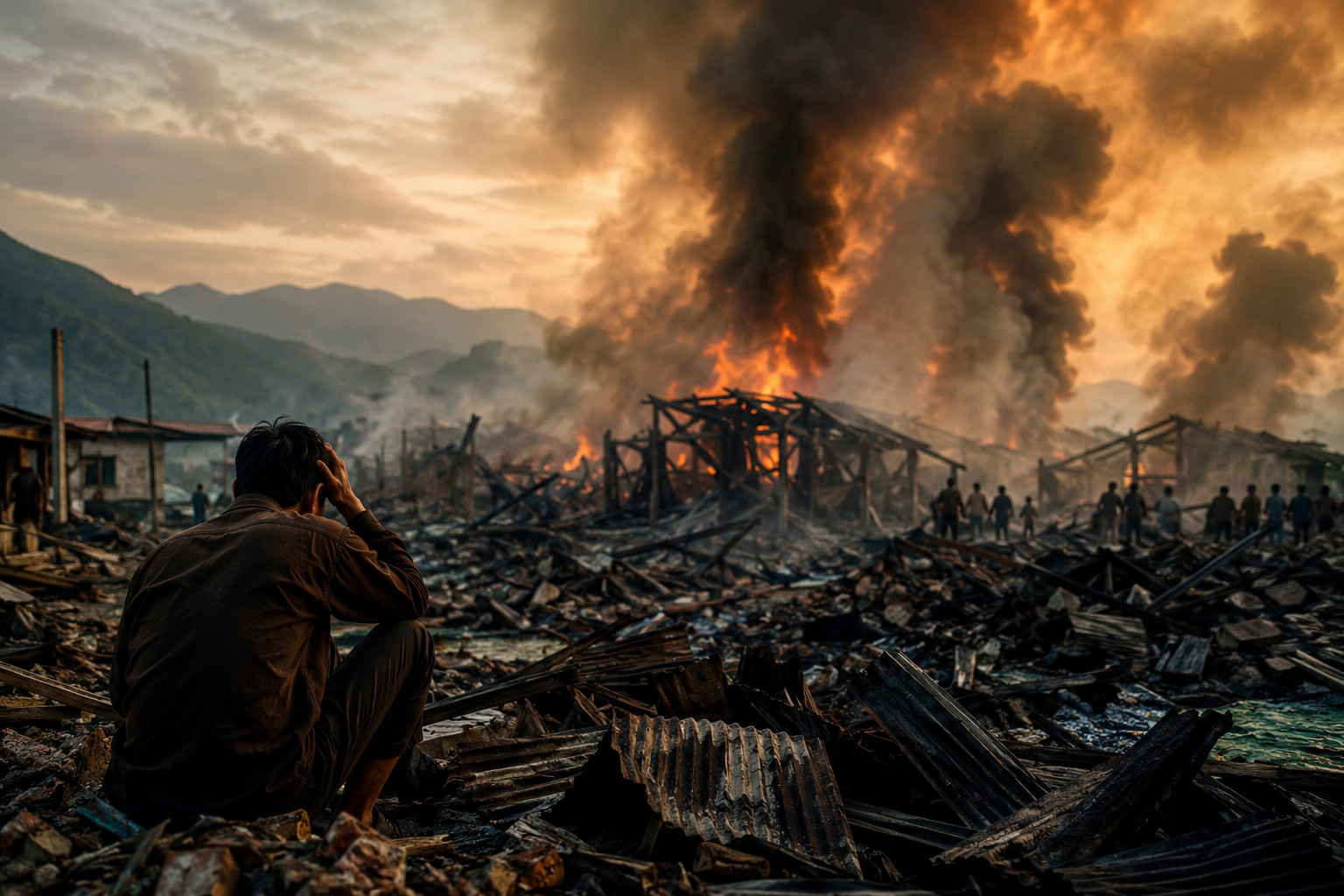
Myanmar Explosion Kills Dozens Near Chinese Border And Raises New Questions About A Nation Under Pressure
A Village Disaster With A Rapidly Rising Death Toll
At least 55 people have reportedly been killed following a massive explosion in Kaung Tat village in Myanmar’s Shan State, according to multiple reports emerging from the region. Early accounts indicate dozens more were injured, while rescue teams continued searching damaged areas long after the blast occurred.
The explosion reportedly struck an area near the Chinese border in Namhkam Township, a region that has experienced years of political tension, military conflict and shifting territorial control. Initial reports suggest the blast was linked to materials stored for mining operations, though investigations into the exact cause remain ongoing.
What makes the incident particularly devastating is the concentration of casualties. Reports indicate that entire sections of the village were affected, with homes damaged and families caught inside the blast zone. Local accounts suggest women, men and children were among the dead.
The Hidden Danger Behind Mining Explosives
According to statements emerging from the area, the explosion appears to have originated from a facility storing mining explosives, including gelignite used in quarrying and extraction operations. Gelignite remains widely used across mining industries but can become highly unstable if stored incorrectly or left for extended periods.
That detail matters because disasters like this often appear sudden while actually being the final stage of a much longer chain of risk. Storage standards, oversight, infrastructure quality, political stability and emergency response capability all become part of the story long before the explosion itself.
In wealthier and more stable countries, dangerous industrial materials are typically managed within extensive regulatory frameworks. In conflict zones, those safeguards can become weaker, inconsistent or impossible to enforce. The result is that a single mistake can produce catastrophic consequences.
The Reality Of Life In Myanmar’s Border Regions
The blast did not occur in a peaceful industrial district. It happened in a region shaped by years of armed conflict and political fragmentation.
The area is reportedly controlled by the Ta’ang National Liberation Army (TNLA), one of several ethnic armed organisations operating within Myanmar’s wider civil conflict. The group has controlled significant territory in the region following major military developments over the past several years.
That broader context is crucial. When infrastructure exists inside conflict zones, the distinction between civilian systems, economic activity and military realities often becomes blurred. Communities continue trying to live normal lives while operating inside environments where governance, security and regulation remain uncertain.
The result is a landscape where ordinary people can become vulnerable not only to violence but also to accidents, infrastructure failures and industrial disasters that might otherwise have been prevented.
More Than 100 Homes Reportedly Damaged
Beyond the death toll, reports suggest the explosion caused extensive structural damage across the surrounding area. Local accounts indicate that more than 100 houses may have been affected by the blast. Images emerging from the scene reportedly showed damaged buildings, debris fields and large plumes of smoke visible across the village.
For survivors, the crisis does not end when rescue operations conclude. Families face displacement, loss of property, medical costs and long-term trauma. Even communities that avoid direct casualties often experience lasting economic damage after major explosions.
This is why casualty numbers alone rarely capture the true scale of these events. A village can lose homes, livelihoods, local businesses and community infrastructure all at once.
Myanmar’s Wider Crisis Continues To Deepen
The explosion arrives against the backdrop of a country that has faced years of turmoil since the military takeover in 2021. Large areas of Myanmar remain affected by conflict, territorial disputes and ongoing instability.
That environment creates conditions where risks compound. Conflict damages institutions. Damaged institutions weaken oversight. Weak oversight increases the likelihood of disasters. When disasters occur, already-stretched emergency systems struggle to respond.
The result is a cycle that becomes increasingly difficult to break. Communities are forced to navigate security concerns, economic uncertainty and infrastructure risk simultaneously.
The tragedy in Kaung Tat therefore feels larger than a single explosion. It reflects the reality of what happens when dangerous materials, fragile systems and prolonged instability collide.
The Story Behind The Numbers
The most striking aspect of this disaster is not simply the reported death toll. It is the reminder that behind every statistic sits an entire human network.
Fifty-five deaths does not mean fifty-five isolated tragedies. It means parents, children, relatives, friends, neighbours and entire social circles suddenly pulled into grief. It means communities trying to understand how an ordinary day became a catastrophe.
Investigators will now focus on the technical cause of the explosion. That answer matters. But the larger question is whether conditions existed that made such a disaster more likely in the first place.
Because when dozens of people die in a single blast, the story is rarely just about the explosion. The story is about everything that allowed it to happen.
