

China energy: a new South China Sea offshore oil project starts production
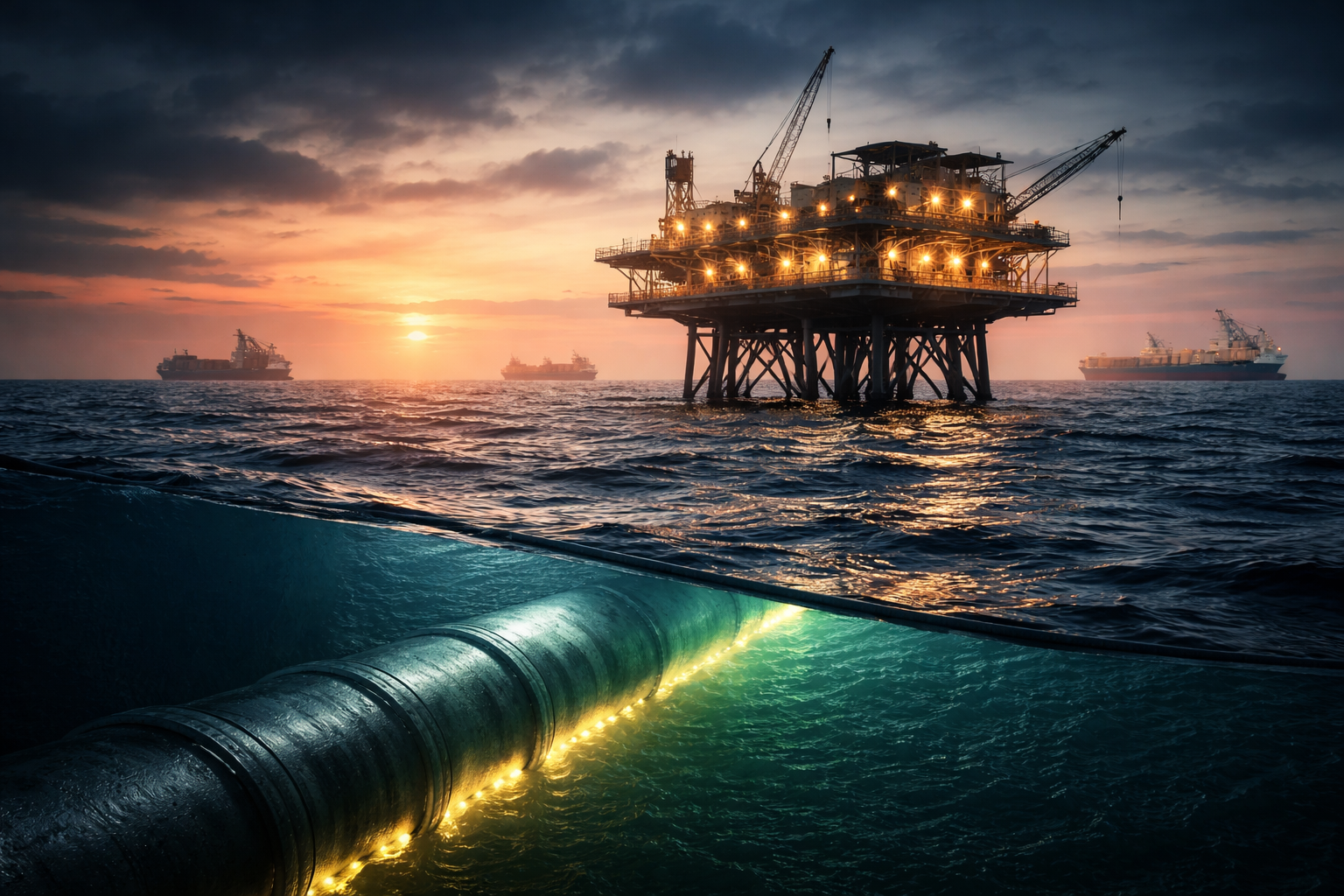
As of December 22, 2025, China’s largest offshore producer has started up a new oil development in the South China Sea. The Xijiang Oilfields 24 Block Development Project has begun producing from shallow waters in the Pearl River Mouth Basin, with a stated goal of reaching plateau output of about 18,000 barrels of oil equivalent per day in 2026.
On paper, that volume is not a game-changer for a country that still relies heavily on imported crude. But it matters for three reasons right now. First, it reflects a steady push to keep domestic supply rising even as global energy politics hardens. Second, it showcases a specific engineering response to a persistent offshore headache: managing hot produced fluids without damaging subsea pipelines. Third, anything branded “South China Sea” lands in a region where energy, security, and sovereignty arguments constantly collide.
This piece explains what exactly has started, why the technical choices are interesting, how it fits into China’s broader energy posture, and what to watch for next in a sea that carries an outsized share of the world’s oil and gas trade.
The story turns on whether China can turn incremental offshore additions into real resilience without adding fresh friction in a strategically crowded waterway.
Key Points
China has started production at the Xijiang Oilfields 24 Block Development Project in the Pearl River Mouth Basin, part of the northern South China Sea.
The project is designed around existing nearby infrastructure, aiming for faster, cheaper tie-backs rather than a major standalone build.
Plateau production is targeted at roughly 18,000 barrels of oil equivalent per day in 2026, with light crude described as the main output.
A new unmanned wellhead platform, Xijiang 24-7, is positioned as a technical step forward in managing high-temperature fluids before export.
The project plan includes 10 development wells, signalling a compact development footprint and a focus on rapid delivery.
The strategic impact is less about size and more about reliability: keeping offshore barrels flowing while import exposure and shipping risks remain central.
Background
China’s offshore oil and gas buildout has shifted from splashy frontier announcements toward repeatable projects that lean on existing hubs, pipelines, and processing facilities. The Pearl River Mouth Basin sits off the Pearl River Delta, a dense manufacturing and logistics zone where small changes in supply reliability can matter more than headline volume.
This new start-up sits inside that “incremental resilience” playbook. Rather than a massive floating production system built from scratch, the development is designed to leverage adjacent facilities from the Huixi Oilfields. That approach typically reduces construction time, cuts cost per barrel, and lowers commissioning risk.
The wider backdrop is simple: China remains a major crude importer, and it has been actively building inventories when market conditions look favourable. Domestic output increases help at the margin, but the bigger vulnerability is the sea lane itself. The South China Sea is one of the world’s most important energy corridors, carrying huge flows of crude, petroleum products, and liquefied natural gas.
At the same time, the South China Sea is politically sensitive. Multiple countries claim parts of the sea and its features. Many hydrocarbon resources are believed to sit closer to shorelines and in less contested areas, but energy activity still feeds narratives about control, presence, and long-term rights.
Analysis
Political and Geopolitical Dimensions
This project’s geography matters as much as its engineering. The Pearl River Mouth Basin is in the northern part of the South China Sea, closer to China’s coastline and major southern ports than the most intensely disputed reefs farther south. That reduces the chance that a single platform becomes the focal point of a regional standoff.
Even so, the “South China Sea” label functions like a geopolitical amplifier. Energy projects in the region tend to be read through three lenses at once: national energy security, industrial policy, and maritime sovereignty. A modest production start can still be framed domestically as proof of technological competence and steady-state expansion of offshore capability.
For neighbours and outside powers, the key question is precedent and tempo. If more projects are rolled out quickly, using unmanned systems and smaller wellhead platforms, the cumulative effect could be a denser offshore footprint. That footprint can blur the line between commercial infrastructure and persistent maritime presence, even when each individual project is routine.
Economic and Market Impact
At roughly 18,000 barrels of oil equivalent per day at plateau, this is not a price-moving development on its own. Its market relevance is local and operational: marginal barrels for regional refineries, and marginal reduction in exposure to import disruptions.
Where it fits economically is in a broader pattern: China benefits when it can buy crude cheaply, stockpile, and keep domestic output growing steadily. Domestic offshore projects also tend to support a supply chain of engineering, fabrication, subsea equipment, and services that the country wants to keep competitive.
The more immediate market implication is psychological rather than volumetric. A steady cadence of start-ups can signal that offshore capex is still flowing even during periods of weaker crude prices, and that operators are prioritising quick-payback, infrastructure-led developments over riskier bets.
Technological and Security Implications
The technical headline here is not the number of wells. It is the platform concept.
The new Xijiang 24-7 platform is described as an unmanned wellhead installation designed for high-temperature fluid cooling and export. In plain terms: produced fluids can be hot, and heat can degrade equipment and raise risks for subsea pipelines and flow assurance. Cooling and temperature control are about protecting integrity so production stays stable rather than interrupted by technical limits.
Unmanned platforms also change the operating model. They can reduce routine staffing needs, lower exposure to harsh offshore conditions, and rely more heavily on remote monitoring, automation, and secure communications. That brings cybersecurity and resilience into the core of offshore operations: the more remote the asset, the more you care about sensor integrity, control systems, and reliable connectivity.
In a sensitive maritime environment, these choices can have second-order effects. Remote platforms require surveillance, maintenance logistics, and dependable response capability. Over time, that can increase the operational presence of coast guard, maritime safety, and support vessels, even when the project itself is purely commercial.
Social and Cultural Fallout
Offshore projects rarely trigger mass public debate unless something goes wrong. The day-to-day social story is mostly indirect: jobs in engineering and services, predictable feedstock for refineries, and a sense of national capability tied to complex offshore work.
The sharper social risk is environmental. Any offshore production increases the importance of spill prevention, emergency response readiness, and transparency around incidents. In a region where coastal livelihoods depend on fisheries and tourism, a single operational failure can become a political event quickly, even if the development itself sits far offshore.
What Most Coverage Misses
Most attention will land on the “South China Sea” phrasing and treat this as a sovereignty signal. That misses the more revealing point: the project’s defining feature is operational reliability under technical constraint.
A platform purpose-built for cooling high-temperature fluids suggests a broader offshore trend. As “easy” reservoirs decline, operators are forced toward more challenging geology and harsher production conditions. Temperature, pressure, and flow assurance become central bottlenecks. Solving those bottlenecks is how you keep domestic output rising without taking on huge frontier risk.
The other overlooked factor is that small, fast tie-backs are an organisational strategy, not just an engineering choice. They let a company add barrels in digestible increments, learn from each start-up, and scale a repeatable model across multiple fields. In the long run, that can matter more than any single megaproject.
Why This Matters
In the short term, the impact is straightforward: a new stream of domestic production, plus a small but real improvement in supply diversity for southern China. It also reinforces a signal that offshore developments are continuing at pace, which matters for contractors, equipment makers, and regional energy planners.
In the long term, the bigger story is resilience. China’s exposure is not only the volume it imports, but the routes those imports travel. The South China Sea remains a critical artery for crude, petroleum products, and LNG trade. Any increase in domestic offshore reliability reduces the stress on that import system at the margin, even if it does not change the overall balance.
Concrete events to watch next are operational rather than diplomatic:
First sustained months of stable output from Xijiang 24-7 under high-temperature conditions.
Further start-ups in the Pearl River Mouth Basin that use similar unmanned, automation-heavy designs.
Any policy signals that push for faster domestic offshore additions as part of a broader energy security posture.
Real-World Impact
A refinery planner in Guangdong: A steady trickle of local light crude can simplify blending plans and reduce last-minute procurement when imports are delayed.
A shipping risk analyst in Singapore: More attention on offshore infrastructure density means more focus on navigational safety, insurance pricing, and incident response capacity in busy sea lanes.
A small seafood business on a Southeast Asian coastline: Any offshore spill, even far away, can trigger consumer fear and short-term demand shocks, hurting livelihoods regardless of fault.
A manufacturing exporter in the Pearl River Delta: Stable local energy supply supports predictable industrial output, which matters when global logistics and trade conditions are already volatile.
What’s Next?
The immediate question is whether this project delivers what it promises: stable production at scale, with the high-temperature cooling system working as designed, and with minimal downtime.
Beyond that, the fork in the road is strategic. One path is incremental offshore growth: more tie-backs, more unmanned platforms, and a steady rise in domestic barrels that quietly improves resilience. The other path is intensified competition over space and presence, where energy infrastructure becomes entangled with maritime signalling and security dynamics.
The clearest signs will be practical: whether similar projects are rolled out quickly, whether operating reliability remains high, and whether the broader South China Sea security environment stays stable enough that commercial energy projects remain mostly about engineering rather than confrontation.
