Are Iranians celebrating the strikes—or bracing for something worse?
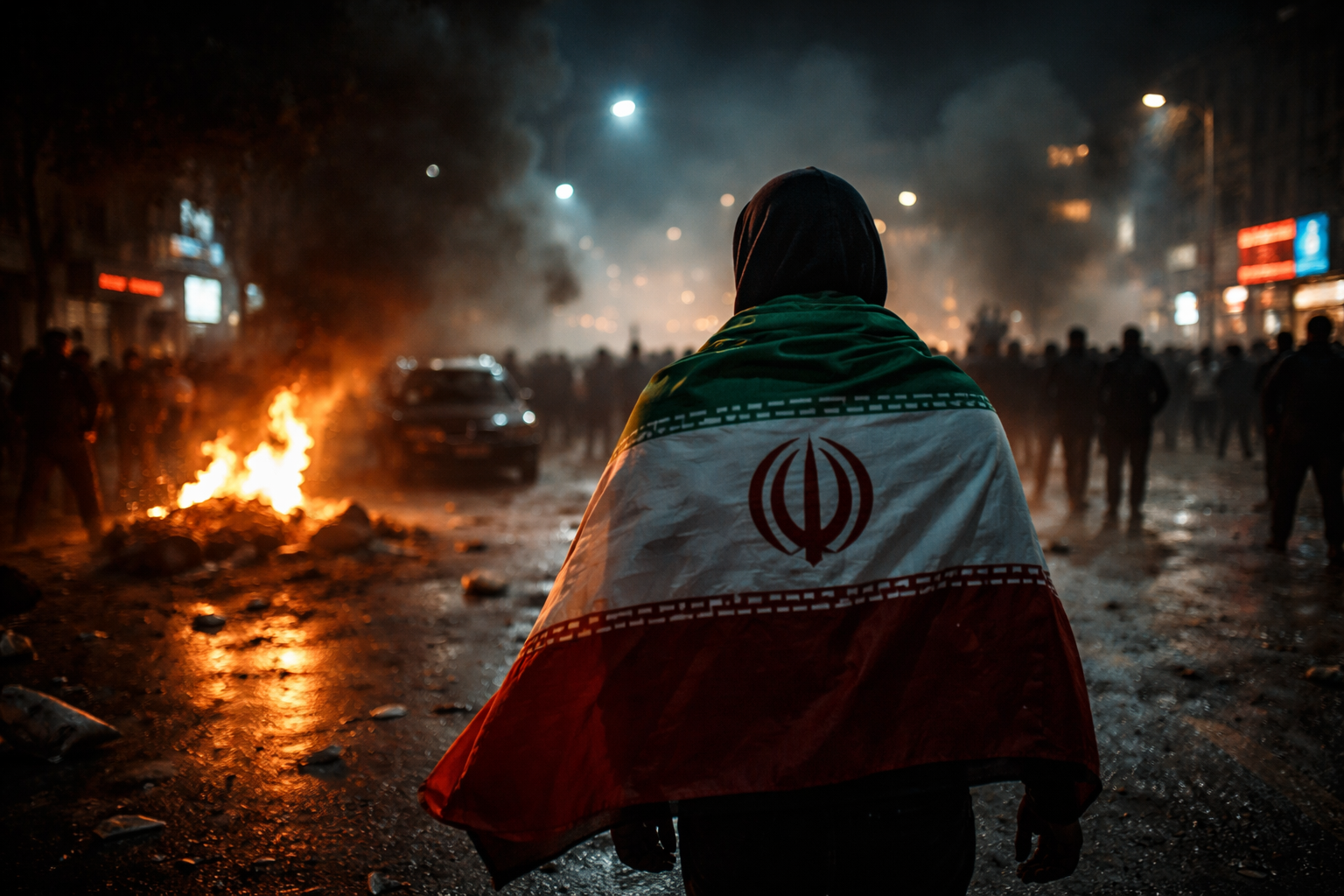
Inside Iran After the Strikes: Panic, Blackouts, and the Pressure Test
Iran Under Fire, and the Streets Split: Fear vs. Defiance
People inside Iran are not responding with one unified emotion. The clearest read from credible reporting is a split reality: fear and disruption for many, alongside pockets of visible, sometimes defiant celebration among anti-regime Iranians—especially in videos circulating online.
The distinction matters because public mood is not just “sentiment” right now—it’s a battlefield variable. If the regime can keep people isolated, offline, and scared, it can ride out the shock. If the strikes crack elite cohesion and people believe the state is losing control, the streets can move fast.
The story turns on whether Iran’s security apparatus stays cohesive while ordinary people remain too disrupted—or too afraid—to coordinate.
Key Points
Reporting and circulating footage suggest some Iranians have celebrated strikes on regime targets, but this is not representative of the whole country, and it may be hard to verify the scale amid outages and chaos.
Credible accounts also describe panic, fear, and daily-life disruption inside Iran as attacks hit multiple locations and communications are affected.
The U.S. and Israel have framed operations as major combat aimed at eliminating threats from the Iranian regime; Iran has answered with regional retaliation.
President Trump has publicly urged Iranians to seize control of their government, portraying it as a unique opportunity that heightens the risk of internal unrest and regime crackdowns.
Next moves are likely to hinge on (1) the regime’s internal cohesion, (2) the intensity of further strikes, and (3) whether communications and cash/food logistics hold.
The United States and Israel launched strikes in Iran, describing them as major operations aimed at neutralizing Iranian military and strategic threats.
Iran retaliated with missile and drone attacks across the region, drawing urgent safety guidance from several governments, including shelter-in-place advisories for citizens in parts of the Gulf.
Inside Iran, information is uneven. Some outlets and observers point to fear, confusion, and infrastructure disruption, while other clips show celebration or relief among segments of the population opposed to the Islamic Republic.
The public mood fracture is a power contest, not a vibe
Celebration—where it’s real—doesn’t necessarily mean “the country is rising.” It can mean small groups are expressing hope, often in places with a history of dissent. At the same time, widespread fear and dislocation can make even frustrated citizens stay indoors. The regime does not need love to survive; it needs passivity and fragmentation.
Competing models of what people do under attack
One path is rally-around-the-flag pressure: the state frames the strikes as a national assault, even critics fall quiet, and security forces tighten control. Another is opportunity pressure: people read the moment as regime weakness, local networks reactivate, and protest escalates rapidly. Both can be true in different cities at the same time, which is why single viral videos can mislead.
The core constraint is coordination under blackout conditions
Mass protest is not just anger; it’s logistics—messaging, meeting points, transport, medical support, and a belief that others will show up. If communications are degraded and movement is dangerous, coordination collapses. That’s how a population can be furious and still look “quiet.”
The hinge is elite cohesion inside the security state
Street action becomes decisive only if parts of the coercive apparatus hesitate, fracture, or refuse. If the command remains intact, the regime can impose curfews, mass arrests, and deterrent violence quickly. If elites split—over survival, succession, or blame—then protests can become a cascading event rather than a recurring one.
The measurable signals to watch are boring—but decisive
Watch for signs of communications restoration vs. tightening, fuel and cash availability, movement restrictions, and any evidence of security defections or public elite disputes. If those signals tilt toward disruption and division, street momentum becomes more plausible. If they tilt toward control and normalization, the regime gains time.
What Most Coverage Misses
The key point is that a break in the regime's enforcement chain, not a larger crowd, is the fastest path to "taking the country back".
Mechanism matters. If senior security units stay aligned, they can suppress unrest even when legitimacy is thin. But if strikes, uncertainty, and succession fears create a loyalty shock—especially in the organs that enforce order—then protests stop being symbolic and start becoming structural.
Two signposts could confirm this in the coming days: (1) credible reports of security force refusals/infighting and (2) a visible shift from scattered celebration to sustained, organized demonstrations despite repression.
What Happens Next
In the next 24–72 hours, the most likely pressures are further strikes and counterstrikes, tighter domestic control inside Iran, and elevated regional risk around bases, airspace, and shipping routes because retaliation can be distributed and hard to predict.
Over weeks, there are three broad scenarios. One: containment—the regime absorbs damage, intensifies repression, and opposition remains fragmented because coordination is too costly. Two: prolonged conflict pressure—a grinding cycle of strikes and regional retaliation creates economic and social stress without producing regime collapse. Three: internal fracture—elite cohesion cracks, and street mobilization becomes sustained enough to trigger a political transition attempt.
Decisions to watch include any clear statements of war aims from Washington and Jerusalem, any emergency UN action attempts, and any concrete moves by Iran to broaden retaliation beyond the current pattern.
Real-World Impact
A family in Tehran that already distrusts the government may still stay inside, not because they support it, but because travel is dangerous and information is unreliable.
A shop owner may face a sudden squeeze if cash access, fuel deliveries, or supply routes tighten, pushing prices up and shrinking daily trade.
A student who shares celebratory clips might be taking real personal risk if surveillance and arrests spike.
A dual-national household may scramble to reroute flights and protect relatives as regional airspace restrictions ripple outward.
The next test is whether fear or momentum spreads faster
This moment is more complex than a simple “uprising or not” story. It is a contest between state control and collective coordination under pressure, with foreign military action accelerating every timeline.
If the regime stabilizes basic services and keeps the security machine aligned, it can outlast the shock. The street has the potential to transform from isolated signals into a persistent force if disruption continues and enforcement loyalty falters.
Watch the unglamorous indicators—communications, cash, fuel, defections, and visible elite splits—because they decide whether a situation becomes a contained crisis or a political rupture.
Whether Iran's internal power structure bends, breaks, or hardens will judge the significance of this consequential inflection point.
