

At Least 14 Killed as Huge Explosion Tears Through Weapons Depot in Syria
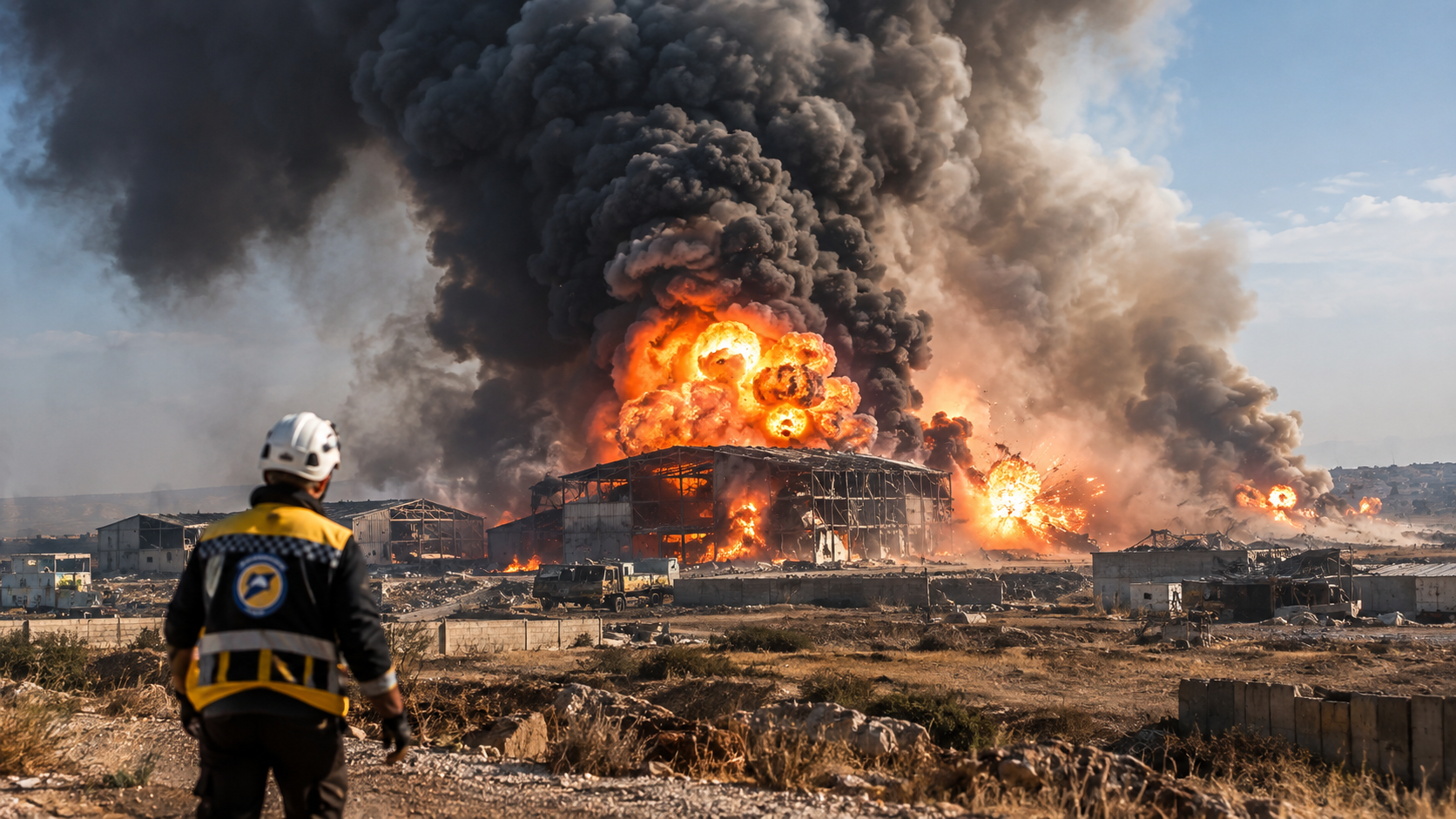
Huge Explosion Rips Through Syrian Weapons Depot as Death Toll Hits 14
Sarmada Weapons Warehouse Explosion
At least 14 people have been killed and 11 injured after a huge explosion tore through a temporary weapons depot near Sarmada in Syria’s northwestern Idlib province on Wednesday, 9 September. The facility was being used to collect weapons and remnants left by years of war before they could be transported elsewhere, according to Syrian authorities.The initial blast was followed by successive explosions as ammunition detonated inside the site, sending thick smoke above the surrounding area and making it harder for emergency crews to control the resulting fire. Rescue teams continued searching rubble for people who may have been trapped, while authorities had not established what triggered the first explosion.
Death Toll Rises to 14
The Idlib Health Directorate put the preliminary toll at 14 killed and 11 wounded. Syria’s Defence Ministry also said some of its personnel were among those injured, although officials had not released a complete breakdown of civilian and military casualties.
The figures represented a sharp change from the first information emerging from the site. An early official report said there were no casualties, but that assessment was overtaken as emergency teams gained access to the damaged area and the scale of the explosion became clearer.
That changing toll matters because the depot continued to pose a danger after the first blast. Secondary explosions delayed efforts to extinguish fires and reach damaged sections of the site, while reports indicated that rescuers were still looking for missing people.
Weapons and Remnants of Syria’s War Were Stored at the Site
The Syrian Defence Ministry described the site as a temporary storage facility containing weapons and remnants of war that were due to be moved elsewhere. That places the explosion within one of the most difficult security problems facing post-war Syria: what to do with enormous quantities of ammunition, abandoned weapons and unexploded material accumulated through more than a decade of fighting.
Syria’s civil conflict transformed large parts of Idlib into a heavily militarised landscape. The province became one of the most important strongholds of armed opposition factions during the war before forces led by the movement associated with Syria’s present leadership swept across the country and Bashar al-Assad’s government collapsed in December 2024.
The depot near Sarmada therefore appears to have been part of the effort to collect and relocate material remaining from that conflict rather than a conventional active military weapons base. What remains unanswered is why such a large quantity of potentially unstable material detonated.
Secondary Explosions Hamper Rescue Operation
Civil Defence crews, firefighters and Syrian Red Crescent personnel were sent to the area as the scale of the disaster became apparent. But ammunition inside the warehouse continued exploding after the initial detonation, complicating attempts to suppress the fire and search damaged structures safely.
Images from the area showed a huge column of smoke rising above the depot. Reports from the scene described vehicles being burned and extensive material damage around the warehouse, while concerns remained that fragments or unexploded ordnance could have been scattered into surrounding areas.
An eyewitness described hearing a smaller explosion before the much larger blast, followed by further detonations. That sequence may eventually become important to investigators, but it does not yet establish what caused the disaster.
Second Deadly Ammunition Explosion in Idlib This Month
Wednesday’s disaster comes only eight days after another deadly ammunition explosion in Idlib province.
On 1 September, a vehicle carrying ammunition exploded in Binnish, killing five people and injuring others. Authorities did not announce a definitive cause for that incident either.
The two events are not known to be connected. Their proximity nevertheless underlines the continuing physical danger created by weapons and ammunition remaining across a region shaped by years of conflict.
For Syria’s new authorities, removing those remnants is not simply a military housekeeping operation. Transporting, storing and destroying unstable ammunition creates its own risk, particularly when storage facilities lie near civilian communities.
Why the Location Is Coming Under Scrutiny
The human toll is also likely to intensify questions about why weapons and ammunition were being accumulated close enough to populated areas for civilians to be exposed to a catastrophic explosion.
Local criticism reported after the blast focused on exactly that issue. People living around the area questioned why dangerous military material was stored close to communities already carrying the legacy of Syria’s war.
The Defence Ministry’s description of the depot as temporary may eventually become important. Investigators will need to establish how long the material had been there, what types of weapons and ammunition were stored inside, what safety procedures applied and whether the site was considered suitable for such material.
None of those questions has yet been answered publicly.
What Caused the Explosion?
The most important fact remains unknown: what triggered the first detonation.
An early emergency assessment indicated that munitions were responsible for the explosion, but that describes what exploded rather than necessarily explaining why it happened. Syrian authorities had not announced evidence of an attack, sabotage or any other deliberate cause by the latest available reports.
There is therefore no credible basis at present to describe the incident as an air strike, bombing or intentional attack. An accident, instability within stored ammunition or another technical cause may ultimately be investigated, but assigning one now would go beyond the evidence.
That distinction is particularly important in Syria, where unexplained explosions can rapidly generate political and military speculation.
Syria Is Still Living With the Weapons Its War Left Behind
The immediate priority remains the people caught in Wednesday’s explosion. Rescue workers have been searching damaged areas while authorities secure a site made especially dangerous by ammunition capable of producing further detonations.
But the wider problem extends far beyond one warehouse. Syria emerged from more than a decade of war with weapons, unexploded ordnance and military debris spread across areas that are also trying to rebuild homes, roads and ordinary civilian life.
The Sarmada explosion exposes the dangerous overlap between those two realities. Weapons from Syria’s past are being collected as the country tries to move beyond the conflict, yet the process of storing and removing them can itself become lethal.
With at least 14 people already dead, the investigation must now determine not only what caused Wednesday’s first explosion but whether the way Syria is collecting and storing the remnants of its war is creating new dangers for the communities it is supposed to protect.
