At Least 48 Civilians Killed in Mali Attacks Blamed on Islamic State Affiliate
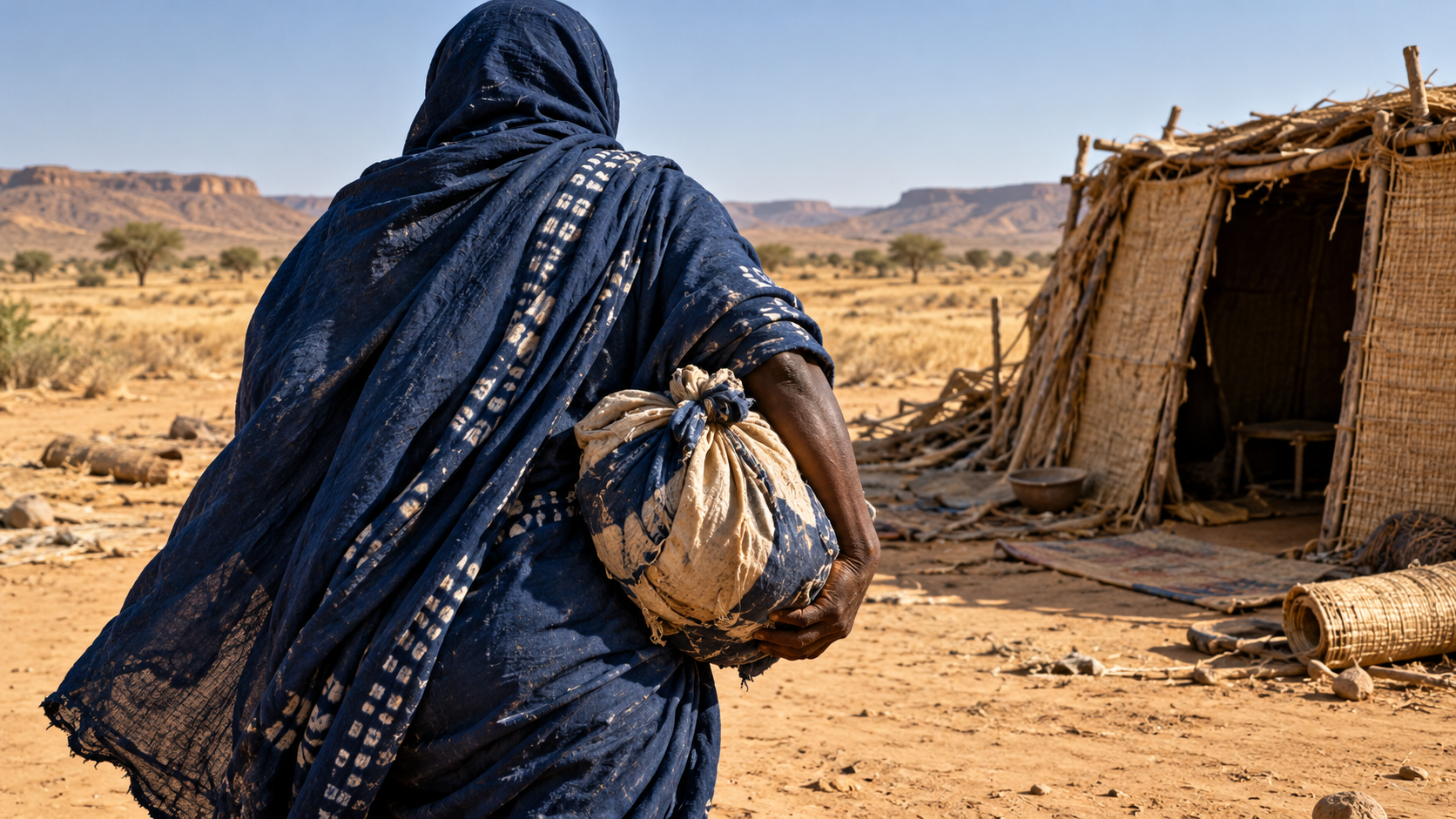
Civilians Flee Menaka Region After Gunmen Attack Rural Camps
Civilians Caught in Mali’s Conflict
The Daoussahak community has appealed for emergency aid after Sunday’s killings, while the full death toll remains uncertain.
At least 48 civilians have been killed in attacks in eastern Mali blamed on Islamic State-linked militants, according to the Daoussahak community’s executive bureau and accounts from local and security officials.
The violence took place on Sunday, 18 October, in the Menaka region. Families fled towards Menaka town, and the community’s leaders called for urgent humanitarian assistance. The bureau put the death toll in Tagadayat at 48. A final accounting across the affected area was still unavailable on Tuesday.
The provisional figures require care. The community’s count refers to a named locality, while other accounts describe several places. They cannot safely be added together or treated as a complete register of victims.
Camps Targeted Outside Menaka
The targeted camps mainly housed members of the Daoussahak community. Local accounts describe gunmen arriving on motorcycles near Tinabow and in the Tagadayat area, roughly 50 kilometres from Menaka town.
The community’s executive bureau blamed Islamic State for the killings. That is a direct accusation from community representatives, rather than a publicly established finding identifying the individual attackers.
The distinction matters in a conflict with several armed organisations. Assigning responsibility accurately is essential both to understanding the attack and to avoiding further accusations against people who had no part in it.
The immediate humanitarian appeal concerns those who escaped. Reaching a town provides somewhere to seek protection, but it does not establish that displaced families have shelter, food or the means to return home.
Allegations of Retaliation
Local and security officials described the violence as possible retaliation for earlier operations involving pro-government forces. Their accounts implicated the Movement for the Salvation of Azawad, known as the MSA, and Russia’s Africa Corps in alleged abuses against people suspected of assisting Islamic State.
Those allegations have not been independently established here. Nor does a claimed connection between the incidents prove who ordered Sunday’s attacks.
The MSA is aligned with Mali’s government and originated within the Daoussahak community. That association does not make the community’s civilian members participants in hostilities. Treating a population as interchangeable with an armed organisation risks turning a military confrontation into collective punishment.
Mali’s army separately said it had conducted an operation on Saturday about 65 kilometres south-west of Menaka, targeting what it described as a militant base. Its account establishes the military’s stated target; it does not resolve the allegations about civilian harm.
A Conflict With Several Armed Fronts
Mali’s insecurity involves government forces and their allies, separatist movements and competing jihadist organisations. Islamic State’s Sahel affiliate is distinct from the al-Qaeda-linked Group for the Support of Islam and Muslims, usually known as JNIM.
The expansion of al-Qaeda’s regional affiliates helps explain why Mali’s conflict cannot be understood as a single insurgency with one chain of command. Local alliances and rivalries matter alongside the international labels.
For civilian communities, several overlapping conflicts can make allegations of loyalty especially dangerous. An accusation of helping one side may expose people to violence from another, regardless of whether the accusation is true.
The broader pressure on state authority across the Sahel also makes protection a practical question. A government’s ability to conduct an operation is different from its ability to keep surrounding settlements safe afterwards.
Separate Evidence of Wider Abuses
On 19 October, Human Rights Watch published findings on other incidents in Mali. It accused the military and allied Africa Corps of killing and wounding civilians, and Islamist and separatist fighters of grave abuses, including executing captured soldiers.
The organisation said its investigation included remote interviews with 30 people and analysis of visual evidence. It urged the African Union to scrutinise all parties and press for civilian protection and accountability.
That investigation provides context, not independent confirmation of Sunday’s killings. Its documented incidents and evidence-gathering period must remain separate from the emerging accounts around Menaka.
The outstanding tasks are specific: establish the identities of the dead, determine the full geographic extent of the attacks and assess what displaced families need. The community’s emergency appeal puts assistance alongside the casualty count as an immediate priority.
Sources
Reuters — Islamic State-linked militants kill at least 48 civilians in eastern Mali, sources say — Published 20 October 2026; local and security officials’ accounts, provisional tolls and allegations involving pro-government forces. Syndicated by Internazionale.
AFP via Channels Television — Gunmen Kill Over 40 Civilians In Mali — Published 20 October 2026; the Daoussahak bureau’s statement, camp locations, displacement and the army’s stated operation.
Human Rights Watch — Mali: Military Attacks on Civilians, Insurgent Abuses — Published 19 October 2026; separate investigations into abuses and the organisation’s call for African Union action.
Next Reads
The History Of Al-Qaeda: Afghanistan, 9/11 And Beyond — Explains the development of regional affiliates, including JNIM in the Sahel.
Countries Most at Risk of Collapse by 2040: Fault Lines in a Fractured World — Examines the pressures on state authority in Mali and neighbouring countries.
Niamey airport gunfire: what’s confirmed and what to watch — Provides a separate Niger case study of insecurity and the limits of early information.
