Austin Mass Shooting: Why “Suspect Down” Changes the Timeline and the Noise
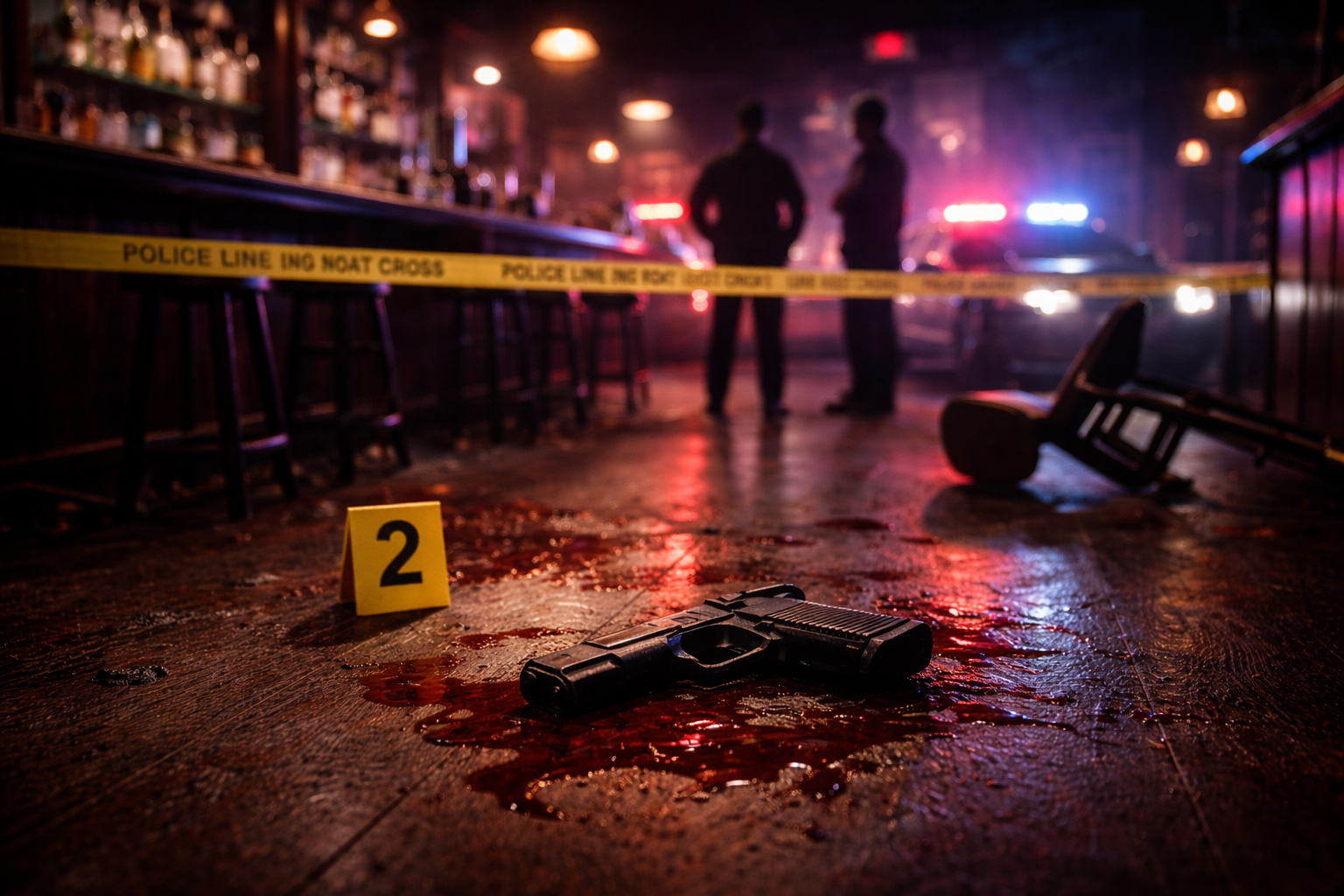
Austin Shooting at Packed Bar Tests Downtown Safety as Casualties Rise
The Critical Detail Behind Conflicting Early Casualty Reports
A late-night shooting at a bar in Austin, Texas, left at least three people dead and 14 injured, according to officials. Early Sunday, March 1, 2026, police and medics responded to reports of gunfire in the city’s entertainment district as venues were closing.
The first facts arrived quickly: a crowded scene, multiple victims, and a suspect confronted by officers. The harder questions—why it happened, whether anyone else was involved, and what exactly unfolded minute by minute—typically come later, after witnesses settle, video is reviewed, and forensics locks in the sequence.
One detail is already shaping everything that follows: authorities say the suspect was shot and killed at the scene, which lowers immediate public-safety risk but increases the chance that the motive stays unclear for longer.
The story turns on whether investigators can produce a clean, verified timeline that separates what is known from what is assumed.
Key Points
Officials said a shooting at a bar in Austin left three dead and 14 injured; some of the injured were reported in critical condition.
Police leadership said officers quickly encountered an armed suspect and shot and killed him during the response.
The location was reported as Buford’s on West 6th Street in downtown Austin’s entertainment area.
Early updates did not publicly confirm the identities of the victims, the suspect, or their motive.
The most common early failure mode in mass-casualty events is misinformation about counts, sequence, and “who shot whom,” especially before video review and ballistics.
Next official steps usually include victim notifications, a clearer minute-by-minute reconstruction, and confirmation of whether the suspect acted alone.
Austin’s West 6th Street corridor is a dense nightlife zone where crowds peak near closing time.
That concentration creates two pressures at once during an attack: high casualty potential and rapid law-enforcement contact, because officers and medics are often already nearby.
In early reporting, casualty numbers often change for simple reasons: some victims self-transport to hospitals, some injuries are reclassified, and initial “dead” counts sometimes include the suspect or reflect deaths pronounced later. That is why official updates can look inconsistent even when they are consistent.
When a suspect is killed at the scene, investigators lose a direct path to motive through interrogation, but they may gain clearer physical evidence (weapon recovery, casing patterns, body-worn camera footage) that can tighten the timeline.
The first boundary: casualty counts move faster than verification
In the first hour, officials typically prioritize triage, scene security, and stopping further harm. That means public numbers can lag or shift as patients are identified and moved.
The practical constraint is that “injured” is not one category. Some people are treated and released, some arrive later, and severity assessments change. A stable count usually takes longer than the first press briefing because hospital, EMS, and police records need to align.
Two explanations compete early: personal grievance vs. crowd event
When shootings happen in nightlife settings, two broad models often compete in early narratives: a targeted dispute that spills into a crowd or an indiscriminate attack on a packed venue. Those models lead to different public assumptions about risk and motive, but early evidence rarely supports a clean conclusion.
Officials generally move slowly based on motive. A single witness statement can be wrong under stress, and early social media claims can harden into “fact” before investigators have mapped who was where.
The constraint that blocks clarity: witnesses, trauma, and mixed evidence
The investigative bottleneck is not a lack of information but an excess of unfiltered inputs: panicked eyewitness accounts, partial phone video, and chaotic movement in a dark, loud environment. Even honest witnesses can disagree on basics like the number of shots, the direction of the fire, or the moment police arrive.
The cleanest version of events usually comes from stitching together time-stamped sources: 911 logs, dispatch records, body-worn camera footage, surveillance video, and EMS timelines. Until that synthesis happens, certainty should stay limited.
The hinge lever:“suspect down” changes threat, flow, and errors
If officials are correct that the suspect was killed at the scene, the immediate public-safety risk is narrower than in a situation with an at-large shooter. That changes operational priorities: fewer resources go to a manhunt, and more go to scene processing, victim services, and evidence preservation.
But it also changes the information environment. In the absence of a suspect interview, rumors can fill the void, leading to an increase in motive speculation. The consequence is a predictable “noise spiral” where partial facts—like whether the suspect is included in the death count—are repeated without the underlying definitions.
The signal to watch: video, ballistics, and a clean minute-by-minute map
The measurable test for competing claims is a verified minute-by-minute reconstruction that aligns police, EMS, and hospital records. If officials release a precise call time, arrival time, and confrontation time, it will sharply reduce confusion about sequence and responsibility.
In coming updates, the most credibility-building move is a simple, consistent definition set: how officials are counting “victims,” whether the suspect is included in the fatalities, and how many patients were treated on scene versus transported.
What Most Coverage Misses
The hinge is that “suspect killed at scene” makes motive harder to confirm even as it makes the immediate threat easier to contain.
Mechanism matters here. When there is no interrogation, investigators lean more heavily on digital traces, witness networks, and video reconstruction—methods that can produce a strong timeline but may still leave intent ambiguous. That delay creates space for misinformation to spread, which can distort public understanding and complicate community response.
Two signposts will confirm whether clarity is coming quickly: officials releasing the suspect’s identity with a verified connection (or no connection) to the venue, and the publication of a tight, time-stamped sequence anchored to dispatch and EMS logs.
What Happens Next
In the next 24–72 hours, expect officials to focus on victim notifications, hospital status updates, and confirmation of the suspect’s identity. If the suspect was killed at the scene, the investigation will likely shift rapidly into forensics and video review rather than pursuit operations, because the primary consequence is evidentiary: prosecutors and investigators need a defensible reconstruction.
Over the next weeks and months, the longer-term effects usually concentrate in three places: security practices in nightlife districts, public trust in official communication, and the legal aftermath for any secondary actors (if they exist). The core “because” line is simple: crowded late-night venues compress response times but expand uncertainty, so policy debates often follow the same cycle—shock, security changes, then gradual rollback as attention fades.
Decisions and events to watch include the release of a verified timeline, confirmation of whether the suspect acted alone, and any public briefing that clarifies how casualty figures are being defined and updated.
Real-World Impact
A parent in Austin checks their phone repeatedly, trying to confirm whether a loved one who went out on West 6th made it home.
Even before the announcement of new rules, a bar manager across town quietly adds extra door staff for the next weekend.
An ER nurse works overtime as hospitals handle a surge of trauma patients and worried walk-ins.
A local worker avoids downtown for days, not out of politics, but because uncertainty feels like risk.
The forward risk: misinformation, fear, and the next crowded weekend
This event will be remembered for its violence and how quickly partial information became narrative. Whether officials can quickly publish a simple, verified timeline to prevent rumor from becoming "common knowledge," or if the vacuum persists and trust erodes, is a critical decision.
The trade-off is speed versus certainty: rapid updates reduce panic but can introduce errors that linger. Watch for concrete signposts—time-stamped logs, consistent definitions for casualty counts, and a clear statement on suspect status and identity—because those are the tools that turn chaos into record.
The historical significance of this moment is that it shows, again, how modern public safety crises are fought on two fronts at once: the scene itself and the information battlefield that follows.
